On May 8, Iranian media Fars News released reports of sporadic confrontations between Iranian armed forces and U.S. Navy vessels in the Strait of Hormuz. This news was quickly relayed by several Chinese-language media outlets, and the rumors surrounding a potential disruption to the world's most critical oil trade route have brought geopolitical premiums and inflation expectations back to the forefront. Almost concurrently, the preliminary one-year inflation expectation in the U.S. for May landed at 4.5%, lower than the market expectation of 4.8%. On one side, whispers of oil supply disruptions are rampant, while on the other, inflation data surprisingly appears "moderate," leading to a rare dislocation in the macro narrative. The movements of on-chain and off-chain funds have also begun to resonate with this: Arkham reports that a newly created wallet deposited 29 million BILL tokens into Bybit, equivalent to about $2.45 million, interpreted as a preparation for potential selling pressure or liquidity maneuvering; the day before, the MegaETH Foundation had just announced and completed its first MEGA buyback, and the related USDm supply had reached around $480 million, symbolizing an emerging liquidity pool using "corporate buyback-like" tools to stabilize the market; amidst this macro backdrop, the Financial Times disclosed that Chris Hohn's TCI sold nearly $8 billion worth of Microsoft shares, pulling funds away from the most core tech weights. Rising geopolitical risks, cooling inflation expectations, and institutional repricing of tech assets intertwined, leading to a dual re-examination of crypto assets as both a safe-haven container and a high-elasticity risk wager. The liquidity structure surrounding BTC, ETH, and related assets is being pressured to reprice within this dislocated macro framework.
The Sparks in Hormuz Ignite Energy Risk Premiums
The Strait of Hormuz itself is a "throat" that has been repeatedly bet on by global asset pricing: a significant portion of Middle Eastern oil exports must pass through here, and any military friction, even just the "sporadic conflict" mentioned by Iranian media, and lacking official confirmation from the U.S., instinctively leads the market to treat it as a trailer for rising oil prices and inflation risk. The reason is straightforward—once a transportation route is deemed to carry a probability of disruption, supply uncertainty will be quickly capitalized into energy risk premiums, reflected in expected oil prices and inflation risk compensation, then transmitted through interest rate curves and asset discount rates, impacting global risk appetite layer by layer.
The macro chain under this narrative is clear and brutal: rising oil price expectations → mid-term inflation risk premiums increase → the market bets that the Federal Reserve will struggle to turn to easing too quickly → the "imagination space" for risk-free rates shrinks → high-valuation growth assets face valuation discounts. Meanwhile, rising demand for safe-haven assets also drives up interest in "anti-inflation assets," drawing everything from gold to certain crypto assets into the same basket. The issue lies in that BTC and ETH happen to stand at the intersection of two storylines: on one hand, they have been regarded as alternative value storage tools during periods of fiat currency depreciation and inflation concerns, naturally attracting buying for "high-inflation hedge assets"; on the other hand, they are high-volatility, high-beta assets that belong to the same category as tech stocks, making it easy for them to be sold off in a sweeping "duration cut" sequence under rising interest rates and elevated growth discount rates. Every spark rumor in the Strait of Hormuz recalibrates the weights of these two narratives, determining whether BTC and ETH resemble gold more or more like a basket of leveraged tech stock options.
29 Million BILL Into Bybit: Hedging Selling Pressure
During the same phase when rumors of conflicts in Hormuz raised energy and inflation risk premiums, a highly sentiment-driven chip movement occurred on-chain. According to Arkham data, a new wallet deposited 29 million BILL into Bybit, amounting to approximately $2.45 million at the time. BILL has recently entered a "spotlight moment," and in this context, such a large volume of chips concentrated into a centralized exchange is naturally interpreted by traders as a potential precursor to selling pressure—not because it is being sold off already, but because the holders have moved the "smash at any time" button closer at hand. At a time when oil prices and interest rate expectations are in limbo, this "first go online, then make decisions" action essentially serves as insurance for high-beta positions: should macro risks spread and liquidity tighten again, tokens like BILL can be rapidly reduced or hedged with almost zero friction.
On the flip side, funds have not purely retreated from risk but are restructuring their risk exposures. Address 0x3Ed simultaneously deposited 1.7 million USDC into HyperLiquid and opened long contracts on MU and SNDK. USDC, as a mainstream dollar-denominated asset, establishes a bridge for these funds from on-chain accounts to risks in U.S. tech stocks: on one side, the chips that could potentially be sold from BILL are pushed into the exchange order book, while on the other, there is leverage betting on the rebound of U.S. tech stocks through crypto derivatives. This combination indicates that some participants are not simply "reducing risk" but rather transitioning from on-chain high-volatility tokens to tech assets they are more familiar with and easier to price based on macro narratives, transforming geopolitical and inflation uncertainties into new opportunities for maneuvering, hedging, and gaming across different markets.
MegaETH Buyback and USDm: Signals of Project Self-Rescue
Just a day before the rumors of conflicts in Hormuz, the MegaETH Foundation announced and completed its first MEGA buyback on May 7, representing an active addition of a "project-level firewall" at a time when geopolitical and inflation narratives are overlapping and the overall risk premium for altcoins is increasing. In this environment, buybacks are not merely textbook actions of "reducing circulation and boosting prices," but also a signal management to market participants—when the foundation is willing to buy back with real money, it signifies that it does not wish for MEGA to be simply treated by the market as a high-beta token that can be cut at any moment. Instead, it attempts to transform itself from a "passively following BTC and ETH's volatile asset" into a "protocol equity with a willingness for lower limit management." When risk aversion rises, and funds are more willing to embrace BTC and ETH, which are seen as having "clear narratives," the buyback essentially serves as a counter against the market's urge to raise the risk premium of project tokens, shifting some selling pressure from public order books back to project positions.
Parallel to this is the existence of USDm as the mainline of dollar liquidity. Currently, the USDm supply stands at about $480 million, making it an undeniable dollar-denominated chip pool within the MegaETH ecosystem, but its issuance body is organizationally separate from the foundation, a design interpreted by the market as a "separation of funds and governance": on one hand, some may view it as a risk isolation—should the foundation fail to support MEGA, the USDm asset pool theoretically is not directly bound to its on-balance-sheet risks; on the other hand, this also implies the coexistence of two power centers, where buyback decisions and dollar liquidity management are not run by the same hand. For traders relying on the ecosystem for leverage and hedging, they must separately evaluate "whether MEGA still has ammunition for support" and "whether USDm maintains sufficient redemption and on-chain liquidity." When the foundation uses funds to buy back MEGA, it is effectively reallocating from on-chain dollar chips (including some USDm liquidity) to its own token: the circulating supply of MEGA is retracted, short-term selling pressure mitigated, but the disposable risk-free dollar positions within the ecosystem are compressed, leading holders’ demands for MEGA to return to a simple question—at a time when BTC and ETH are again treated as macro safe-haven containers, can the project rely on continuous, transparent buybacks and clear funds separation to achieve even a slight compression of risk premiums?
Cooling Inflation Expectations and the Dislocation of TCI's Reduction
As geopolitical tensions continue to brew, the U.S. May one-year inflation expectation has unexpectedly landed at 4.5%, below the market expectation of 4.8%. For interest rate traders and growth assets, this effectively cools the imagination of "another round of aggressive rate hikes": discount rate pressures ease, and the valuation denominator for long-term cash flow assets marginally shrinks. According to textbook theory, high-duration risk assets like the Nasdaq should benefit, and within crypto, BTC and ETH should also be repriced along the same curve—they carry both the label of "alternative value storage during inflation concerns" and are treated as high-beta positions when liquidity eases. This inflation expectation data comes across more like a gentle cap-removal for their risk premiums.
However, almost concurrently, the Financial Times reported that Chris Hohn’s TCI sold nearly $8 billion in Microsoft shares and publicly expressed concerns about the AI-driven software business outlook. Microsoft is viewed as one of the core targets of this AI wave, and such a level of divestment is interpreted by the market as a repricing signal for overvalued tech and AI narrative assets: the clouds of macro rates slightly disperse, but what is truly doubted is the growth story itself. At the same time, on-chain address 0x3Ed deposited 1.7 million USDC into HyperLiquid, establishing long positions on MU and SNDK, indicating that there are still funds leveraging on-chain dollars to bet on U.S. tech rebounds, while leading hedge funds are withdrawing from the AI leaders, creating a dislocation between "bottom-up under-allocation" and "top-down positives." In the crypto market, the "crypto tech narrative sector" highly correlated with tech stocks—including AI narrative coins and projects targeting high valuations through computing and infrastructure stories—are more likely to be collectively discounted following Microsoft-style targets, as funds withdraw from the most aggressive long-tail narratives, flowing back into BTC, ETH, and on-chain assets pegged to the dollar, evolving into a structural market that rebalances from high-valuation tech and narrative coins to more liquid and certain mainstream coins and dollar positions, while macro conditions continue to support overall risk assets.
Trading Positioning of BTC and ETH Under Geopolitical Impacts
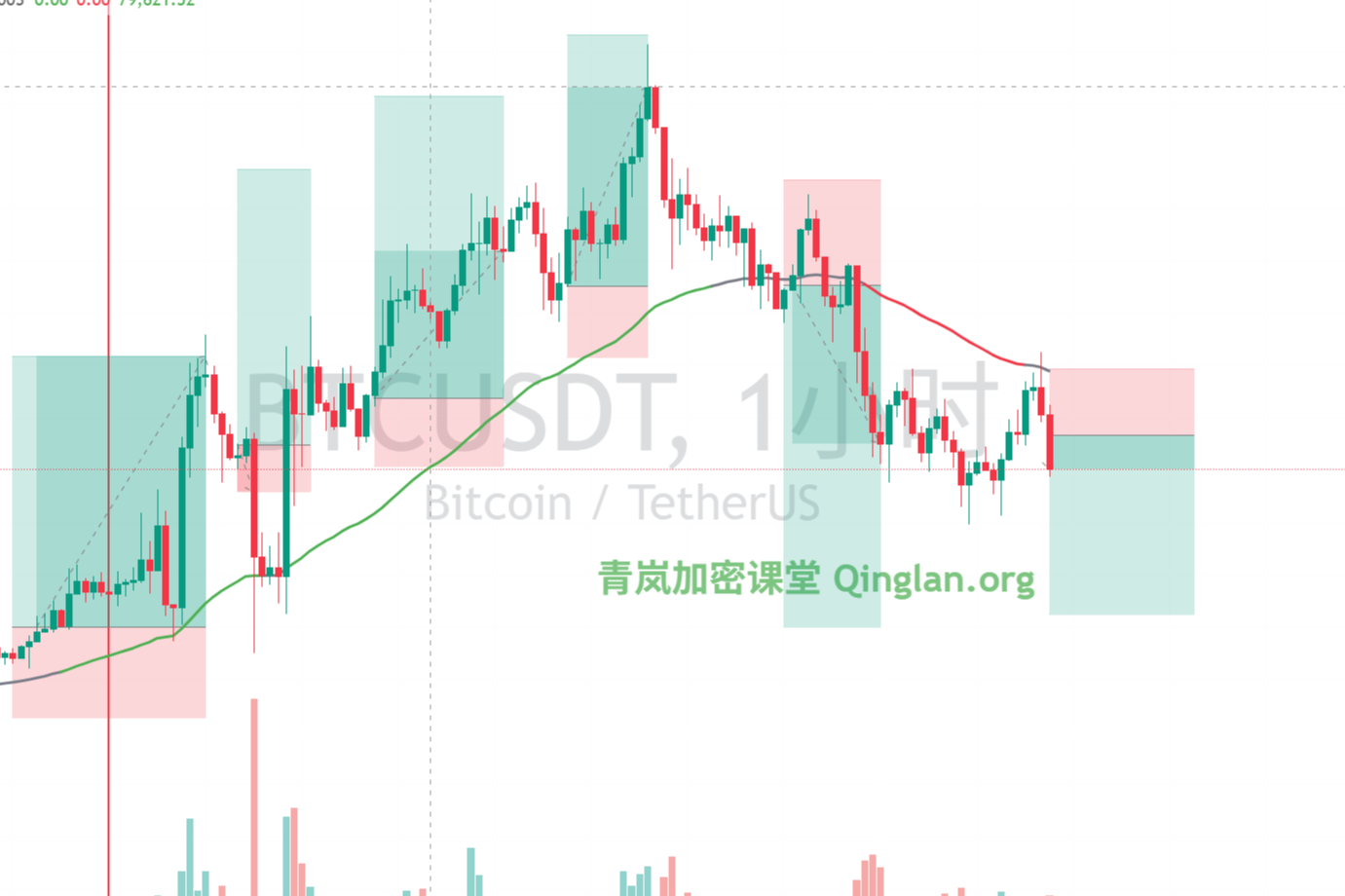
Amid the intertwining factors of rumors of conflicts in Hormuz, the U.S. one-year inflation expectation dropping to 4.5% and beneath the 4.8% expectation, TCI divesting nearly $8 billion of Microsoft shares, substantial BILL deposits in exchanges, the MegaETH Foundation initiating and completing its first MEGA buyback, and on-chain operations by 0x3Ed leveraging USDC to go long on U.S. tech stocks, the roles of BTC, ETH, and long-tail tokens are being repositioned: historical experience has shown that BTC and ETH can also fluctuate dramatically like high beta assets when risk appetite recedes, while being treated as a relatively independent value anchor to hedge against macro uncertainties during periods of fiat and inflation concerns. In this scenario, on one end, there are potential worries about uncertainties related to Hormuz raising oil prices and inflation risk premiums, while on the other, the inflation expectation data itself has not spiraled out of control, with tech leaders starting to see reductions from institutions. Coupled with the perception of concentration in BILL deposits as potential selling pressure, and the $480 million stock of USDm along with its organizational separation from the MegaETH Foundation bringing feelings of fund safety, one can observe that funds are shifting from high-valuation tech and high-beta altcoins into BTC, ETH, and on-chain positions pegged to the dollar: in an environment still unclear on energy and inflation risks, with traditional tech assets under pressure, BTC and ETH are more likely to obtain pricing as a "relative safe haven," while project tokens represented by BILL and MEGA are prioritized for liquidation or hedging risks within the ecosystem, potentially causing their relative risk premiums compared to BTC and ETH to continue rising. Moving forward, the market needs to focus on three threads simultaneously: first, how the official characterization of the Hormuz incident, the evolving U.S.-Iran relations, and the resultant paths for oil prices reshape inflation expectations; second, subsequent adjustments to U.S. inflation expectation data and repricing of interest rate trajectories; third, whether the real selling volume of BILL, the subsequent pace of MEGA buybacks, and the fund safety perceptions of USDm holders remain stable, thus deciding the risk premium differential between project tokens and dollar-pegged assets, which will ultimately reflect in the valuation center of BTC and ETH relative to the entire altcoin curve.
Join our community, let’s discuss and grow stronger together!
Official Telegram community: https://t.me/aicoincn
AiCoin Chinese Twitter: https://x.com/AiCoinzh
OKX benefit group: https://aicoin.com/link/chat?cid=l61eM4owQ
Binance benefit group: https://aicoin.com/link/chat?cid=ynr7d1P6Z
免责声明:本文章仅代表作者个人观点,不代表本平台的立场和观点。本文章仅供信息分享,不构成对任何人的任何投资建议。用户与作者之间的任何争议,与本平台无关。如网页中刊载的文章或图片涉及侵权,请提供相关的权利证明和身份证明发送邮件到support@aicoin.com,本平台相关工作人员将会进行核查。