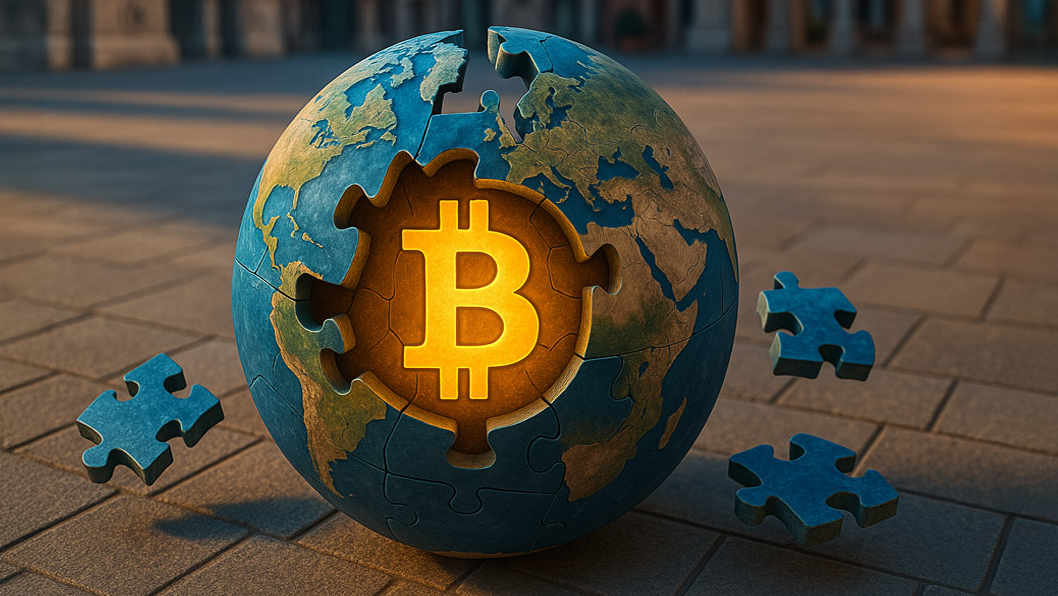
On May 8, 2026, for many Coinbase users, it was not the price that first collapsed, but their most trusted trading portal that first "went offline." That day, several media outlets reported in succession: this leading compliant cryptocurrency exchange in the U.S. faced service interruptions due to a temperature anomaly in the use1-az4 availability zone of AWS US-East-1, upon which it relies, causing key services to be disrupted, and users were unable to place orders and match trades as usual for some time. Following the outage, Coinbase could only announce that it would soon initiate the process to restore market trading, and prior to the restoration, all markets were switched to "Cancel Only" mode—users could revoke existing orders but could not create new orders or transact normally, leaving the entire market in an awkward state of "half pause." Public information did not specify how long this disruption lasted or the scale of monetary losses incurred, and Coinbase has not clearly stated whether "user funds are completely secure." However, for Coinbase, which prides itself on compliance and stability and is deeply tied to AWS for its infrastructure, this sudden halt itself was a heavy blow to user trust and industry sentiment, raising a pointed question: how can a localized temperature anomaly in a specific availability zone escalate into a systemic risk that sweeps across global trading rhythm in just a few hours when core operations are heavily dependent on a single cloud service?
From Data Center Heating to Trading Silence: How Failures Transmit
When AWS reported the occurrence of "temperature anomalies" in the use1-az4 zone of the US-East-1 region, the story's origin remained at the data center level: overheating cabinets indicated that physical servers handling compute and storage were in an unsafe range. For cloud providers, this typically triggers automatic load shedding and equipment protection—some hosts are taken offline, disk arrays and network devices are throttled to ensure the safety of the data center itself. But above the abstract layer of the cloud, these hosts correspond only to "unavailable instances" and "abnormally responding storage volumes," resulting in restricted access to higher-level applications deployed in that availability zone. Public reports have directly linked this temperature anomaly to the decline in service availability within use1-az4, marking the point where the connection truly began to sever for tenants relying on resources in that area.
Infrastructure of trading platforms like Coinbase is heavily dependent on AWS; when core matching, account systems, and API gateways are highly centralized within the same cloud provider and region, a physical environmental issue in one availability zone can easily escalate into a functional collapse of the entire platform. In a typical industry architecture, the matching engine relies on compute resources from this region to maintain the memory and CPU for order books and matching queues; account and balance systems depend on databases and storage volumes within the same region; external REST/WebSocket APIs are exposed to global users through gateways and load balancers in the same area. Once lower-level instances are widely unavailable, access to ledger data by the matching engine frequently times out, the account system struggles to confirm commands in a timely manner, and the API gateway starts dropping connections and losing long links. On the front end, this manifests as the market information freezing, order buttons becoming inactive, trapping users in a mode where "only cancellations are allowed, no new orders accepted." The rising temperature in the physical data center climbs layer by layer up the cloud infrastructure stack, ultimately resulting in the complete silence of trading pages, a dreadful state for any platform that has staked its critical systems on a single area; this link is like a taut yet fragile nerve.
Cancel Only Mode: The Safety Valve Coinbase Engaged
For most users, "Cancel Only" sounds like a technical option, but upon stepping in, they realize it effectively turns the exchange into a semi-paralyzed system with only a "withdrawal channel" left. According to common industry design, "Cancel Only" means you can still revoke the previously placed orders on the order book, but the system will no longer accept any new orders, nor will it conduct normal matching transactions—the depth and price at which the market stood are immediately fixed as a screenshot. In an official statement, Coinbase said it would "soon initiate the process to restore platform market trading," and before recovery, all markets would switch to this mode. Several Chinese crypto media outlets also quoted this wording, effectively broadcasting to the market: no one should think of adding more risk here, only allowing users to pull back their hands that had already reached out.
From a risk control standpoint, this seems like the last safety valve that Coinbase could push when the situation is unclear and the system unstable: by freezing new matching and positions, it prevents further accumulation of risk exposure under conditions where monitoring and risk controls fail, while retaining the most basic order management capability, allowing those willing to exit the opportunity to pull their orders. However, from the user's perspective, the experience is entirely different—the trading page is stuck at prices from minutes ago, the buying and selling depths remain motionless, but the order list still flickers cold light; the only button you can press is "cancel," unable to open new positions, unable to add to positions, and unable to leverage fluctuations from other platforms for arbitrage. As time passes, with no word from the official source on how long the outage lasts or how much was lost, nor the familiar promise of "funds are completely secure," the emotions in group chats and social platforms shifted from initial anxiety to gradual doubts about Coinbase's technological resilience and decision-making on cloud dependency. The longer users wait in front of a "only able to retreat, unable to act" interface, the harder it becomes to quell their questions about how much initiative this leading platform truly possesses.
Exposed Single Point Dependency in the Cloud: The Fragile Back of Crypto Exchanges
This time, Coinbase's technology stack was laid bare: on the surface, it was "partial services affected," but in essence, just a temperature anomaly in one use1-az4 availability zone of the AWS US-East-1 region was enough to bring the entire trading experience to a standstill. When infrastructure heavily leans on AWS, the options the platform can pursue quickly shrink to the press of one button—set all markets to "Cancel Only," quietly allowing users to retreat without further competition. What appears as a technical failure in a single availability zone translates to users as if the entire platform has been paused; this type of single point dependency in the cloud felt its repercussions on May 8.
From a broader industry perspective, this is not an isolated incident unique to Coinbase, but rather a shared architectural path that an entire generation of exchanges has bet on: core systems hosted atop a few major cloud platforms like AWS, Google Cloud, or Azure, with matching engines, account systems, and external APIs typically centralized in a single cloud vendor or even a single region. As early as 2021, discussions about "cloud concentration risk" and "the potential for a single cloud provider's outage to lead to systemic chain reactions" emerged during multiple AWS outages. However, in practical choices, compliance, availability, and cost efficiency have pushed most exchanges back to the same answer—relying on a handful of leading cloud providers. To meet regulatory expectations for compliant operations and security, support peak transaction pressures, and control infrastructure investments, the threshold for establishing own data centers or complex multi-cloud architectures is far higher than "simply using the big clouds." Therefore, while the front end touts decentralization, the back end ties its lifeline to a few centralized cloud platforms and limited regions; when a particular availability zone loses thermal stability, it exposes not only one company's mishap but also the collective weakness of the entire industry's technical backbone.
Historical Echoes: From the AWS Outage in 2021 to Today
Turning the clock back to 2021, AWS experienced service interruptions and performance anomalies at multiple points in time, with large internet services worldwide consecutively "shutting down," and cryptocurrency trading platforms were no exception: some went offline briefly, some interfaces malfunctioned, and some trading and withdrawal processes became extremely sluggish. The direct causes of these failures varied, but the commonality lay in the malfunction originating from the cloud infrastructure side, rather than faults of the business itself. That year, warnings against "tying the entire business chain to a single cloud provider and a single region" were repeatedly discussed in the tech community, and popular keywords in forums included multi-region deployment, multi-availability zone redundancy, and multi-cloud strategy, making it seem like the industry was just one layer of implementation detail away from the answer of "high availability in the cloud."
Years later, looking back at the incident on May 8, 2026, the narrative structure can almost be reused: the trigger point remains in the cloud—this time it is the temperature abnormality in the use1-az4 availability zone of AWS US-East-1; the victims are still the users of online trading platforms heavily dependent on AWS—Coinbase users were unable to complete transactions as usual for a period and could only pull their orders to limit losses under "Cancel Only" mode. On the surface, everyone has long been aware of the need for multiple availability zones and regions or even multi-cloud redundancy, historical events have provided enough cautionary tales, yet from the related outage of Coinbase, the overall structural risk exposure in the industry has not been fundamentally reshaped—even if we do not know what architectural adjustments Coinbase made post-2021, as long as single cloud and single region continue to hold critical control over the matching and account systems, a single point failure at the cloud infrastructure level remains a shared vulnerability that the entire market must face.
The Tug of War Between Cloud and Chain: The Technical Dilemmas Before the Next Outage
From the temperature anomaly in AWS US-East-1 use1-az4 to Coinbase's matching halt and the entire site being forced to switch to "Cancel Only" mode, this chain of events lays out the industry's most fundamental contradictions in the sunlight: on one end is the front depicting the decentralized financial narrative, and on the other is the centralized backend highly reliant on a single cloud provider and a single region. The temperature fluctuations of that physical data center in the cloud are enough to hit the pause button on the entire trading chain. No one knows when the next outage will occur, but prior to its arrival, exchanges at least face a few clear technical choices: are they willing to incur costs for the matching engine and account systems, establishing true multi-availability zone and multi-region redundancy, or even finding balance between multi-cloud and self-built data centers to reduce absolute dependence on any specific cloud resource; do they consider "cloud failures will occur" as a premise, rather than an exception. Simultaneously, the perspectives of users and potential regulators are also changing quietly—traditional finance has long been accustomed to requiring critical infrastructure to have clear disaster recovery plans, geographically diverse active-active architectures, and quantifiable business continuity metrics. After this event, expectations around real-time status disclosure, transparency of architectural vulnerabilities, regular drills, and resilience scoring are increasingly directed at these centralized platforms wielding matchmaking power. The true dilemma lies in whether this industry, which shouts the mantra of decentralization, is willing and capable of establishing resilience standards worthy of its scale and narrative for the layer of centralized infrastructure that underpins it.
Join our community to discuss and grow stronger together!
Official Telegram Community: https://t.me/aicoincn
AiCoin Chinese Twitter: https://x.com/AiCoinzh
OKX Benefits Group: https://aicoin.com/link/chat?cid=l61eM4owQ
Binance Benefits Group: https://aicoin.com/link/chat?cid=ynr7d1P6Z
免责声明:本文章仅代表作者个人观点,不代表本平台的立场和观点。本文章仅供信息分享,不构成对任何人的任何投资建议。用户与作者之间的任何争议,与本平台无关。如网页中刊载的文章或图片涉及侵权,请提供相关的权利证明和身份证明发送邮件到support@aicoin.com,本平台相关工作人员将会进行核查。