What to know : Aave will assess all future collateral assets on cybersecurity, interoperability, and technical architecture — not just price volatility — and will publish a minimum-standards playbook for issuers seeking to list on the protocol. The changes follow April's KelpDAO bridge exploit, in which an attacker minted $293 million in unbacked rsETH tokens and used them as collateral on Aave, leaving the protocol with hundreds of millions in bad debt. Rather than a government rescue, DeFi self-organised through an industry coalition called "DeFi United" to plug the gap — a response Jeng compared favourably to the government-led bank bailouts of 2008.
Aave Labs is set to fundamentally reshape how it assesses and lists collateral assets on its protocol, following the largest DeFi exploit of 2026, and the overhaul could set a new standard across the entire industry.
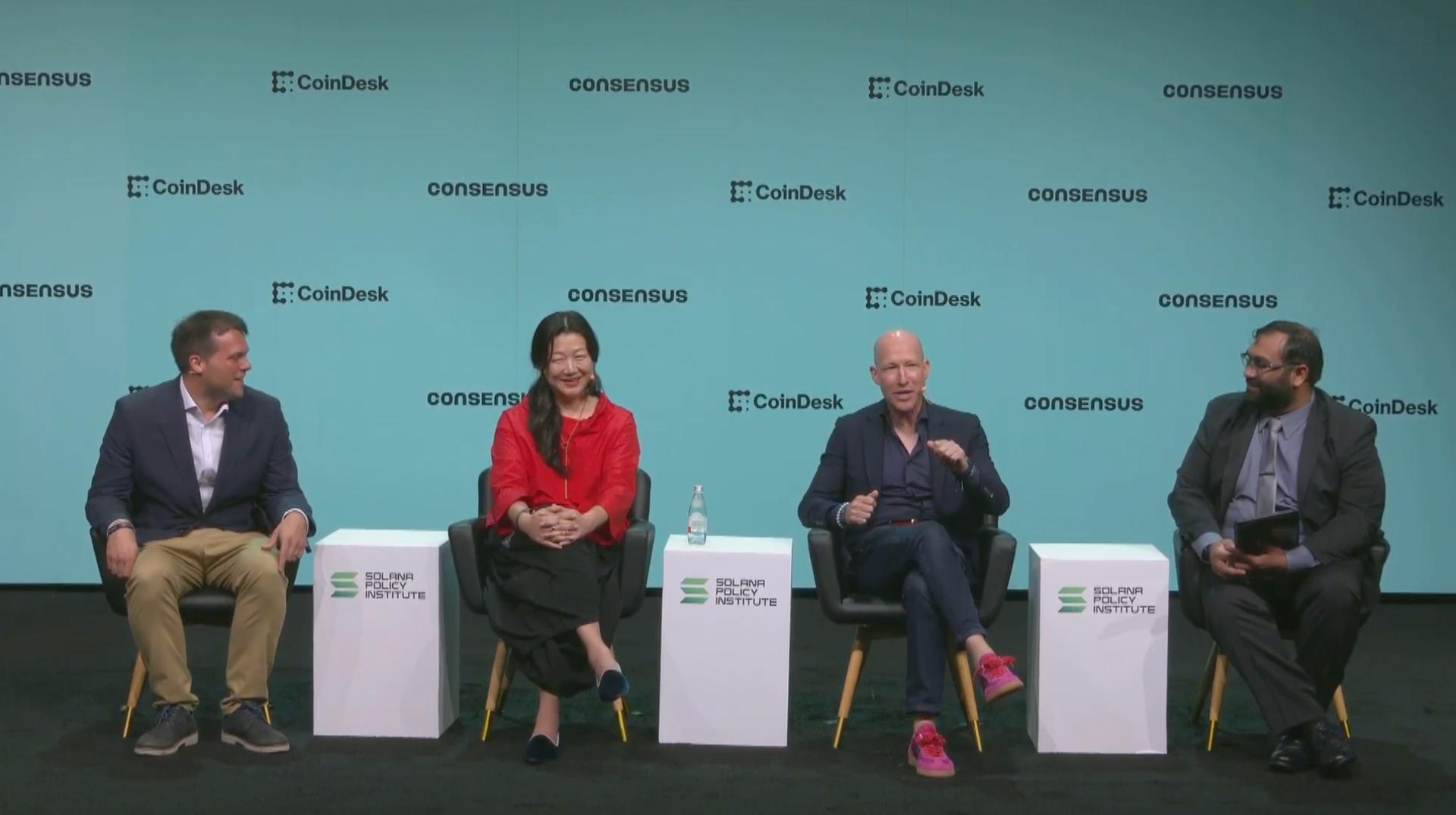
Linda Jeng, chief legal and policy officer at Aave Labs, said at Consensus Miami that the protocol's existing risk framework, while robust, had been too narrowly focused on financial risk and volatility.
Going forward, every asset seeking to be listed on Aave will face a broader assessment covering interoperability, cybersecurity vulnerability, and the underlying architecture of how the asset is built. She cited rsETH, the restaking token issued by KelpDAO that sat at the centre of April's crisis, as the catalyst for the change.
Beyond the new assessment criteria, Jeng announced that Aave would publish a formal playbook for asset issuers — a set of minimum standards that projects must meet before they can list on the protocol. She also said Aave would begin examining systemic interconnections across protocols, moving away from analyzing pools in isolation to understanding how exposure in one corner of DeFi can ripple into another.
"Out of a crisis like this, it ups our standards," she said.
The remarks came as Jeng reflected on a month she described as "two weeks of no sleep." An attacker had exploited KelpDAO's cross-chain bridge, minting 116,500 unbacked rsETH tokens worth roughly $293 million, then depositing them into Aave as collateral to borrow real wrapped ether — leaving the protocol holding hundreds of millions in impaired debt.
Jeng, who worked as a regulator during the 2008 financial crisis, said the episode triggered a strong sense of déjà vu. But the resolution, she argued, was markedly different. Rather than a government-led bailout, the industry mobilised itself. An initiative called "DeFi United," drawing commitments from Lido, EtherFi, Ethena and others, was launched to cover the collateral shortfall and prevent systemic bad debt spreading further across DeFi lending markets.
"In the financial crisis, we had to bail out the banks," she said. "Here, we came together as an ecosystem to bail ourselves out."
免责声明:本文章仅代表作者个人观点,不代表本平台的立场和观点。本文章仅供信息分享,不构成对任何人的任何投资建议。用户与作者之间的任何争议,与本平台无关。如网页中刊载的文章或图片涉及侵权,请提供相关的权利证明和身份证明发送邮件到support@aicoin.com,本平台相关工作人员将会进行核查。


