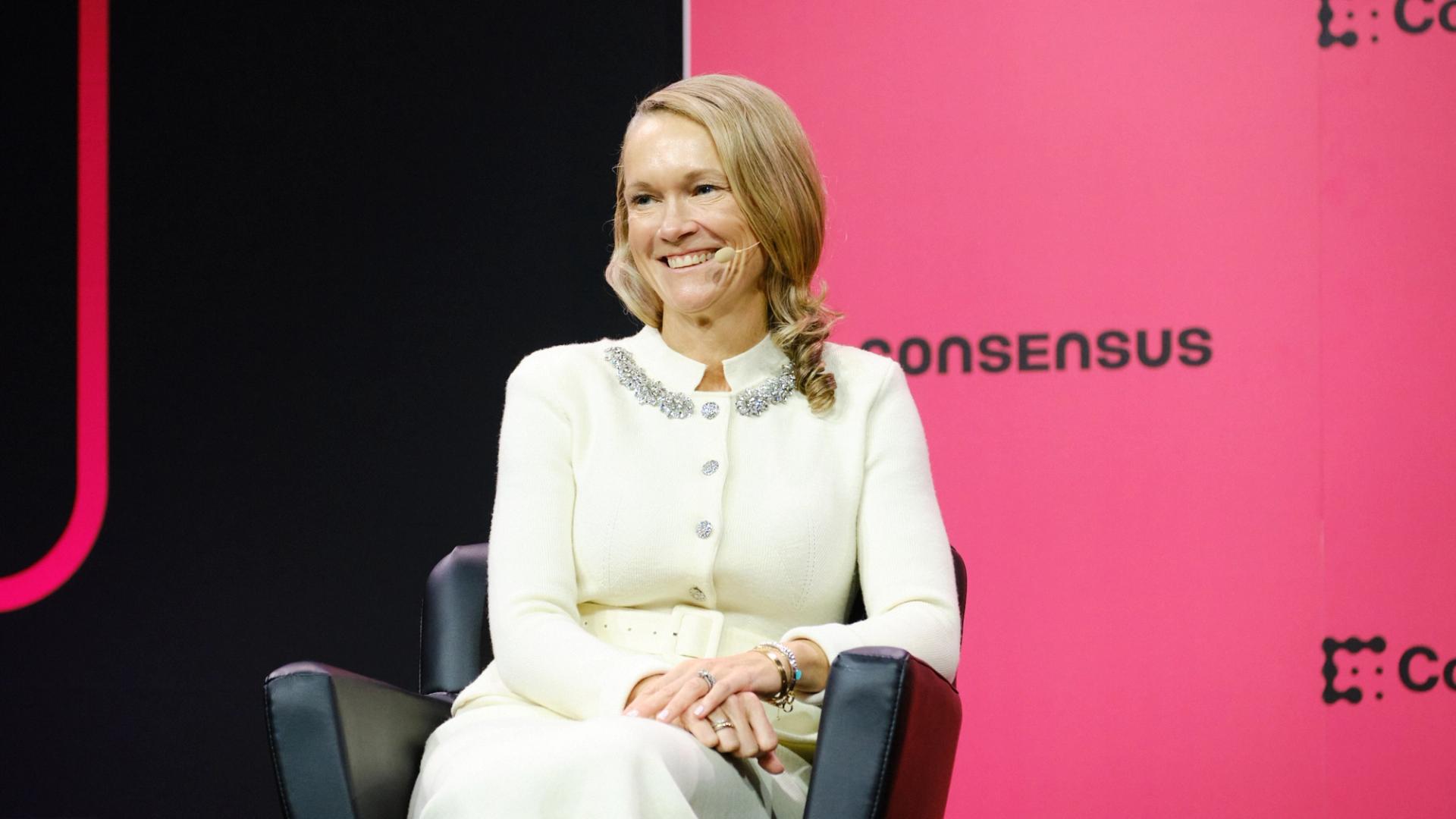
What to know : Citigroup's Ryan Rugg warned that tokenized money will fall short of its potential if it remains confined to single-bank systems instead of working across multiple institutions. Large corporate clients, which often juggle hundreds or thousands of accounts at many banks, are demanding real-time, always-on payments that can move seamlessly across networks. Rugg said the future of tokenized finance hinges on shared, industrywide infrastructure and clear regulation, rather than isolated bank platforms, to support global-scale money flows.
Miami Beach, FL — Tokenized money will fail to deliver on its promise if it remains siloed within individual banks, according to Ryan Rugg, Citigroup's head of digital assets for treasury and trade solutions.
Speaking at Consensus in Miami, Rugg said large corporate clients are not looking for single-bank solutions but systems that work seamlessly across financial institutions. “No one wants just a Citi token,” he said. “They want that multi-bank aspect of it.”
The comment reflects a core challenge in the push to bring blockchain-based payments into mainstream finance. While banks have begun issuing tokenized deposits and building internal platforms, many of those systems operate within closed networks.
For global companies, that approach falls short. Rugg said Citi’s clients often manage “hundreds, if not thousands of bank accounts across multiple banks globally,” creating complexity in moving money for payroll, suppliers and investments.
Those clients are increasingly asking for real-time capabilities. In a survey Citi conducted several years ago, Rugg said the response was “basically unanimous” that faster, always-on payments were a top priority.
Blockchain technology offers one path to that goal, but only if systems can connect. Citi has built its own tokenized platform and linked it to its broader banking network, including a 24/7 U.S. dollar clearing system with more than 300 banks. Still, Rugg emphasized that internal upgrades alone are not enough.
“This is another tool in the toolkit,” he said, adding that banks must also modernize traditional infrastructure and connect it with digital systems.
The broader industry faces fragmentation. A growing number of banks, fintech firms and crypto projects are building separate networks, often using different standards. That risks recreating the same inefficiencies blockchain aims to fix.
Rugg argued that shared infrastructure — built “for the industry, by the industry” — will be key to scaling tokenized finance, citing models such as Swift’s global messaging network.
At the same time, regulation remains a constraint. Large banks require clear legal frameworks before rolling out new products. “Unless it is 100% permissible, we are not going to do that,” Rugg said.
免责声明:本文章仅代表作者个人观点,不代表本平台的立场和观点。本文章仅供信息分享,不构成对任何人的任何投资建议。用户与作者之间的任何争议,与本平台无关。如网页中刊载的文章或图片涉及侵权,请提供相关的权利证明和身份证明发送邮件到support@aicoin.com,本平台相关工作人员将会进行核查。


