Author: Ba Jiuling, Wu Xiaobo Channel
In South Korea, a novel form of "baby investment" is becoming popular among young parents.
Parents start selecting investment targets as early as the late stages of pregnancy, and at the moment their baby is born, they use their smartphones to open accounts and place orders.
Thus, South Korean babies, still in swaddling clothes, have already become "baby shareholders" of well-known companies like SK Hynix and Samsung Electronics.
The remarkable practices of South Korean parents are partly related to government policies.
Investing in Semiconductor Leaders for Babies?
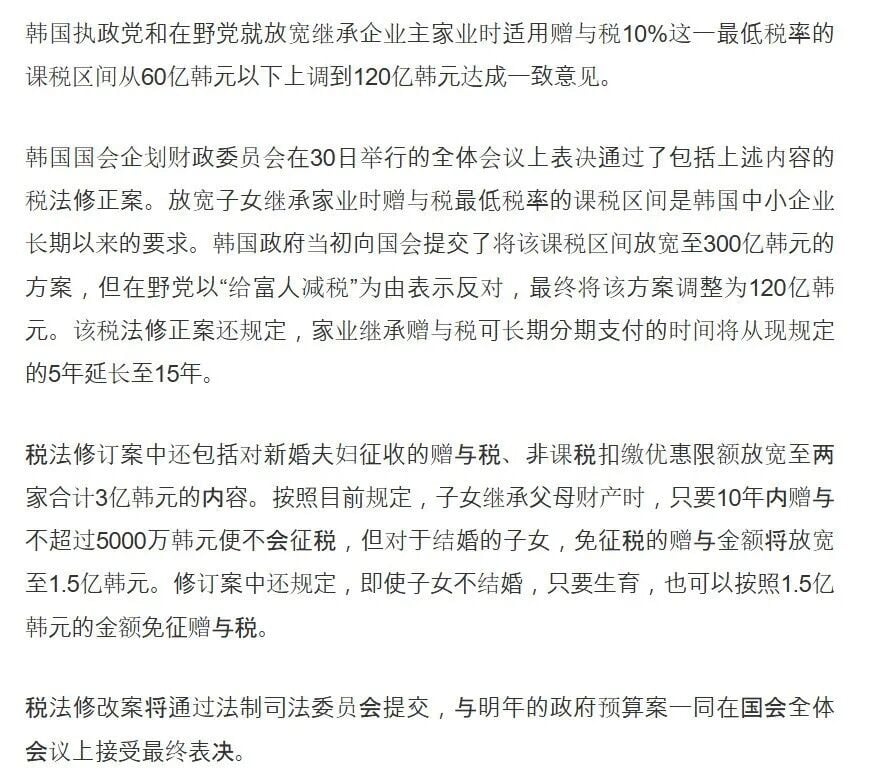
According to the current South Korean "Inheritance Tax and Gift Tax Act": minors under 19 years of age have a tax-free allowance of 20 million Korean won every 10 years. The tax-free allowance for adult children increases to 50 million Korean won every 10 years.
Source: "Central Daily News" Chinese website
By leveraging this policy, many South Korean parents begin transferring assets as soon as their child is born: opening a securities account for the child with an initial transfer of 20 million won, followed by another 20 million won at age 10, and then 50 million won when they turn 20 and 30, allowing them to legally obtain 140 million won, approximately 100,000 USD, in assets tax-free from their parents by age 30.
South Korean parents choose to open stock or ETF accounts for their children instead of transferring cash, as the gift tax is based on the value at the time of giving, and subsequent gains are not taxed further. Thus, early investments in ETFs can exempt them from a maximum inheritance tax of 50% in South Korea.
According to data released by South Korean securities depositories, by the end of 2025, there were 343,694 minority shareholders in South Korea, accounting for 8.19% of total shareholders, with a total holding value of approximately 26.8 trillion won.
In December 2025, the number of new accounts opened by minors in South Korea reached 34,590, nearly triple that of January 2025. The scale of holdings indicates that transactions involving inheritance and gifts through accounts opened in children's names are quite frequent.
While we accumulate red envelopes from friends and relatives as an education fund each year, South Korean "children" have already begun investing in semiconductor ETF funds.
On the other hand, the urgency of South Korean parents to "start early" with their children is also linked to the current booming bull market in South Korea.
The Bull Market in South Korean Semiconductors
Over the past year, the ranking of the South Korean stock market has soared as if on a rocket.
As of April 30, the KOSPI index closed at 6,598.87 points, with a year-to-date increase of 56.59%. Meanwhile, the KOSPI index reached a historic high on April 28, surpassing the UK, a long-standing capitalist nation, to rank eighth globally.
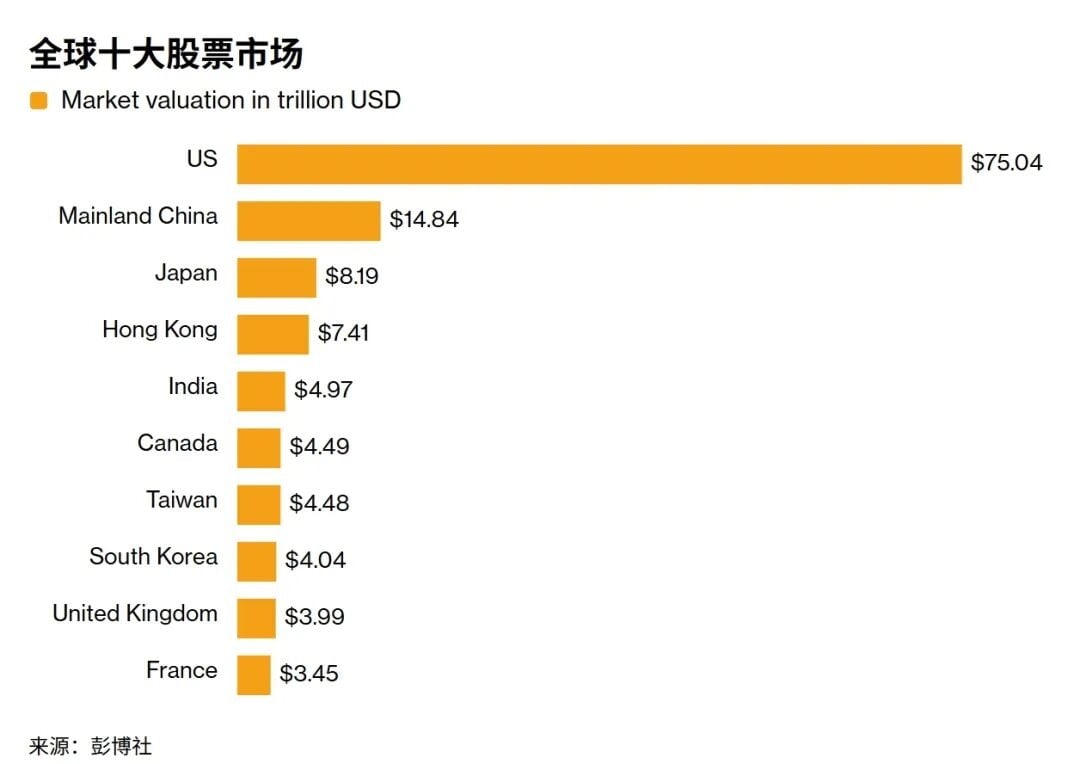
The South Korean stock market surpassing the UK
The surge in the South Korean stock market is primarily driven by two world-class semiconductor giants: SK Hynix and Samsung Electronics.
Although the KOSPI index has over 800 constituent stocks, more than 40% of its market value is concentrated in these two memory chip giants, Samsung Electronics and SK Hynix.
As such, it is more accurate to say that the performance of these semiconductor giants is strong, rather than the South Korean stock market as a whole.
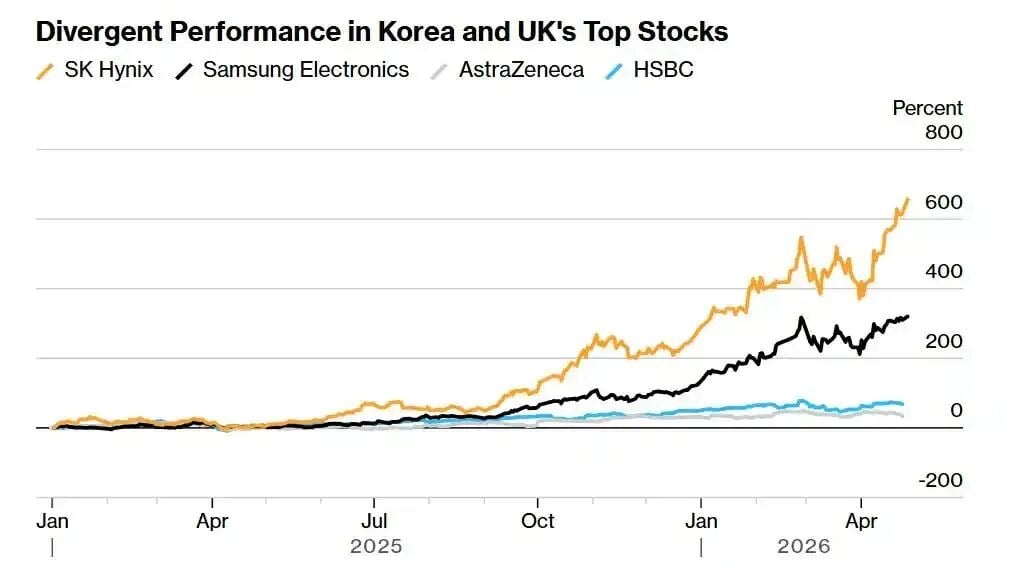
As of now, SK Hynix's stock price has increased by 97.54% this year, with a cumulative rise of 624.51% over the past year; Samsung Electronics' stock price has risen by 83.90%, with a cumulative increase of 297.3% over the past year.
Source: Sina Finance
The rapid iteration in the AI industry is a major driver of the soaring stock prices of these two giants.
Currently, the parameters of AI large models have reached trillion levels, meaning that a greater number of powerful flash memory chips are required to load large models, commonly referred to in the industry as "HBM (High Bandwidth Memory)."
Furthermore, in AI inference scenarios, the context length of large-scale user requests is continuously growing, leading to a demand for high-throughput, low-latency storage systems that far exceeds previous needs, thus requiring even more powerful "NAND flash memory" to store data.
The South Korean stock market is simultaneously benefiting from both of these major trends.
SK Hynix is the absolute leader in global HBM, with a market share of 62% as of the second quarter of 2025.
Looking at Samsung Electronics, their financial report shows that they have begun mass sales of the HBM4 products targeted at Nvidia, and the next generation of HBM products is also in development, with production capacity expected to continue catching up to SK Hynix, potentially reaching market share of around 28%.
In addition, Samsung Electronics also has a storage business. Due to the enormous demand from the AI industry, sales in the storage business for the first quarter of 2026 doubled quarter-on-quarter and surged by 292% year-on-year, setting a new record for single-quarter sales. Overall, the company's consolidated revenue for the first quarter was $89.7 billion, a 43% increase from the previous quarter; operating profit reached $38.83 billion, exploding by 756% year-on-year, reaching an all-time high.
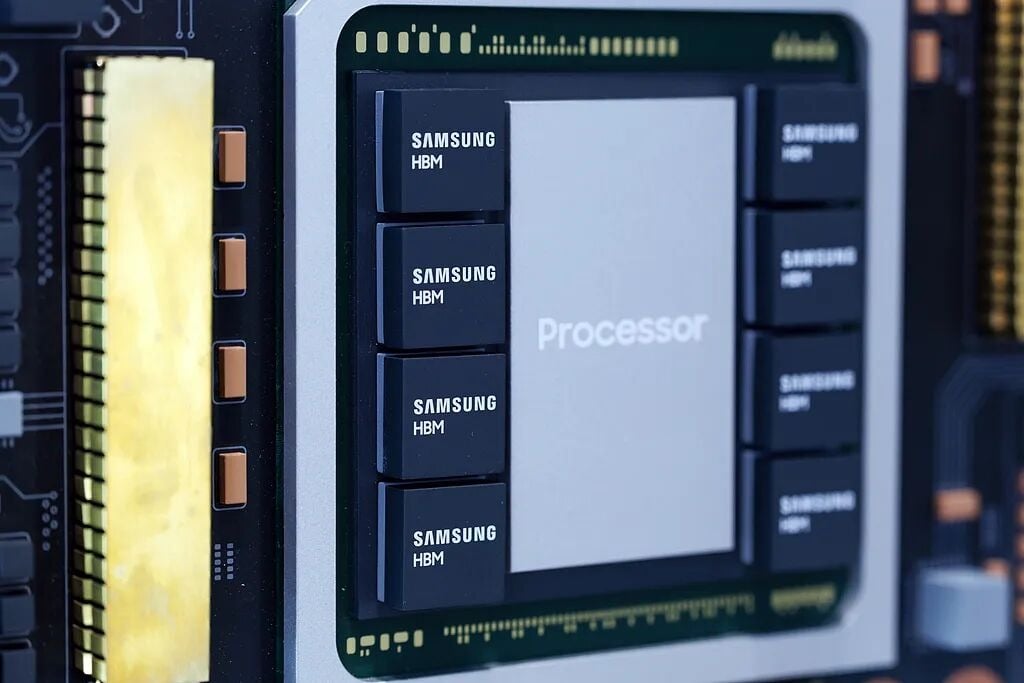
High-bandwidth storage chip model for artificial intelligence systems
When a Crazy Bull Market Meets Crazy Investors
In addition to semiconductor manufacturers raking in profits, the skyrocketing South Korean capital market owes much to the full engagement of South Korean investors; buying semiconductors for babies is just one of the many ingenious maneuvers.
In China, investors going all-in has been considered an extreme investment style, but in South Korea, buying stocks with leverage is the norm for investors.
Previously, South Korean investors liked to invest in "US stock giants" like Nvidia and Tesla, but now, they are more inclined towards semiconductor funds, particularly those leveraged ETF products.
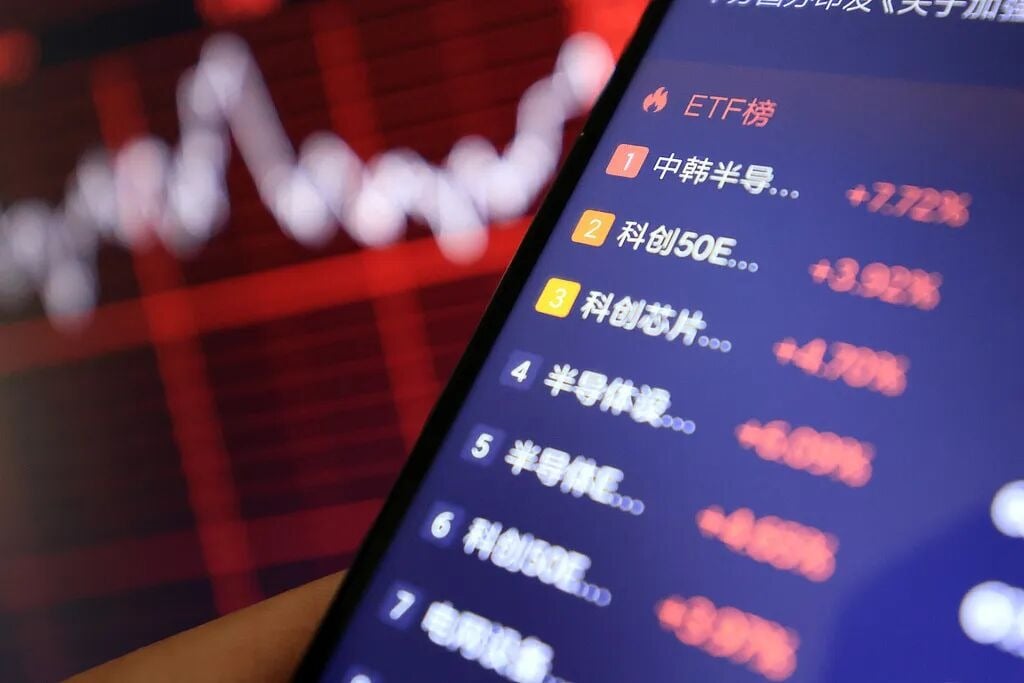
Domestic ETF rankings
Data from South Korea's securities depository agency on April 6 indicates that after the outbreak of the Middle East war in March, the ETF SOXL, which tracks the semiconductor index with a leverage of 3 times, attracted $1.2542 billion in funds, topping the net purchase amount list; following closely were leveraged products like the Nasdaq 3x (TQQQ) and KOREA 3x (KORU), both with 3 times leverage.
Shin Se-whee, a researcher at the Korea International Financial Center, pointed out in a report: "The trend of aggressive investment by South Korean investors, centered around leveraged ETFs and other high-risk assets, has intensified, with a rising proportion of fixed-income assets used for risk hedging."
In addition to leveraging their stock investments, South Korean investors also favor "borrowing money to invest in stocks."
According to a report by the Korea News Agency on April 22, the balance of credit trading financing in the South Korean stock market, which refers to the amount invested by borrowing, has for the first time exceeded 34 trillion won (about $23.08 billion). Due to the evident enthusiasm for leveraged investments, many South Korean brokerage firms have urgently taken measures to raise margin requirements and suspend certain leveraged trading to curb irrational market expansion.
Despite the cooling measures at the policy level, the enthusiasm of South Korean investors for borrowing money to invest in stocks remains unstoppable. Just the day after brokerage firms took action, the balance of credit trading reached a new high, with the balance hitting 35.69 trillion won (approximately $24.23 billion) as of April 28.
In the eyes of South Korean investors, this is an unprecedented super bull market for semiconductors—borrow more, buy more, earn more.
Global Capital Embraces "HALO"
Like the South Korean stock market, the stock market in Taiwan has also shown remarkable performance, riding the AI wave.
Before South Korea surpassed the UK, the capital market of Taiwan had already exceeded that of the UK, becoming the seventh largest capital market globally.
Compared to the dual giants of the South Korean stock market, the Taiwanese market is primarily represented by TSMC.
On Monday, April 27, TSMC's stock price reached a new high of 2,330 New Taiwan Dollars. As of May 1, TSMC’s increase this year has reached 32.21%, with a staggering 140.80% rise over the past year, giving it a market value of about $1.75 trillion, in comparison, the total market value of the Taiwanese stock market is only $4.47 trillion.
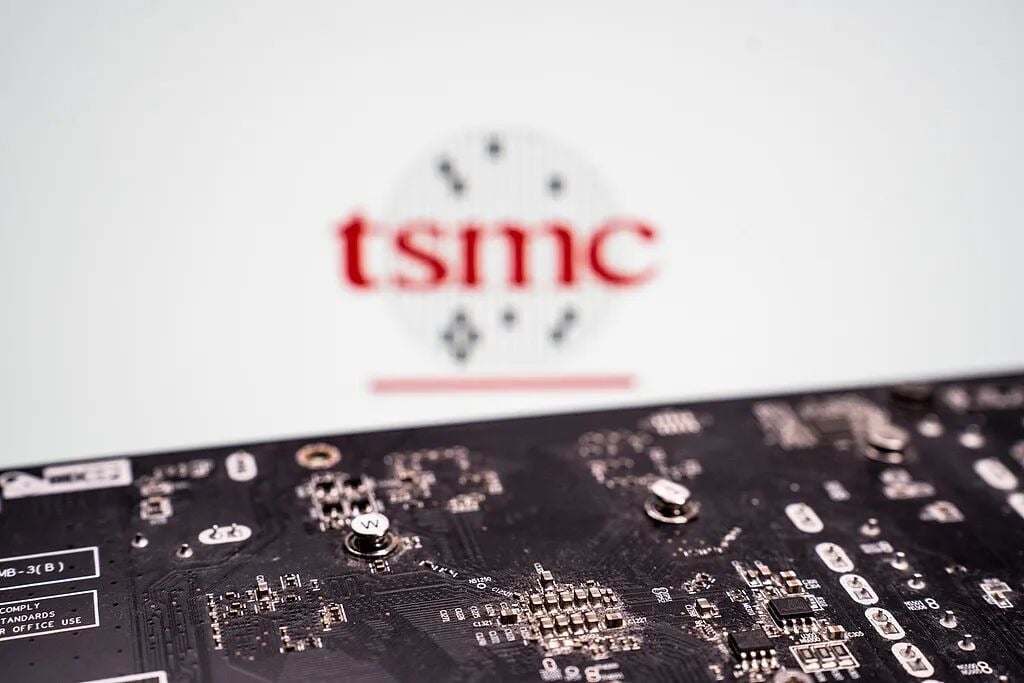
Semiconductor chips manufactured by TSMC
In its 2025 annual report, TSMC emphasized: the AI market is growing rapidly, particularly the rise of large language models (LLMs) is driving a significant increase in computing power demand. Enterprise-level AI and sovereign AI applications are also expanding simultaneously, becoming an important driver for the long-term demand in the semiconductor industry.
Currently, nearly all core chips for AI computing, whether GPUs or AI-based dedicated chips, must go through TSMC's advanced process to achieve physical existence.
The strong performance of the stock markets in Taiwan and South Korea stems from both being positioned in the hottest market trend—"HALO assets."
In February 2026, Goldman Sachs proposed looking for "HALO" assets, which are physically irreplaceable and not easily overturned by AI technology, against the backdrop of the global AI surge and geopolitical uncertainties. Typical sectors include energy and utilities, basic resources and materials, transportation infrastructure, and high-end manufacturing equipment.
The stock markets in South Korea and Taiwan are also home to the high-end chip manufacturing industry, which represents "HALO assets" while playing the role of "digging for gold" in the AI wave.
Additionally, amid the conflict between the US and Iran, "HALO" has also become a tool for hedging against global systemic risks—more capital is attempting to avoid past systemic risks tied to "American centralism," seeking assets with more "scarcity."
Julian Albertini, a fund manager at Eagle Asset Management with $72 billion in assets under management, once pointed out: "Energy security, defense, and supply chain resilience have become the core of strategic autonomy for various countries, prompting global capital to undergo a substantial rebalancing from 'financial assets' in the US to 'real assets' in non-US regions."
In simple terms, he believes the era of the US dominating the globe and reaping financial gains is coming to an end. The most critical survival objectives of countries worldwide are no longer "following the US for quick financial gains," but rather three issues related to national survival: energy security, defense security, and supply chain security.
The search for "HALO" assets has also made its way to the A-share market.
Macro analyst at CICC believes: "HALO trading" is a hot trading wave as global funds seek new anchors amid the loosening of the old order; Chinese assets have become a representation and deepening of this wave in the Chinese market.
Yang Chao, chief strategy analyst at China Galaxy Securities, thinks: "The global capital's repricing of 'certainty and scarcity' under high uncertainty environments has endowed Chinese assets with 'safe asset' qualities."
It is noteworthy that the "safety attributes" of Chinese assets are largely derived from the macro systemic level, with the pricing foundation based on the integrity of the economic entity, policy space, and resilience of domestic demand, representing a reevaluation of "system stability and growth certainty."
Conclusion
However, whether betting on the AI wave or actively embracing "HALO," behind the market frenzy, some heavyweight figures have maintained reason and clarity.
The stock market sage Warren Buffett, while retreating into the background, candidly told the media during the recent Berkshire shareholder meeting: "The current investment environment is not ideal," stating that the true buying opportunity will come when the market is so fearful that "no one picks up the phone."
The latest financial report shows that Berkshire held a record cash reserve of $397 billion in the first quarter.
Berkshire’s new leader Abel also emphasized: "We will not pursue AI for AI's sake; AI must create real value for the business."
He reiterated Berkshire's five cornerstones: cash and treasury security cushion, financial independence, flexible allocation, tax efficiency, and eliminating arrogance, bureaucracy, and complacency.
Some investors might think that all global investors are embracing "HALO" and AI while Buffett and his followers are getting old.
But investment master Howard Marks once said a profound truth: "Buying good assets at the peak of optimism often leads to disaster."
Therefore, in the pursuit of "HALO," maintaining a hint of calm may be the rarest quality in this so-called banquet of scarcity.
免责声明:本文章仅代表作者个人观点,不代表本平台的立场和观点。本文章仅供信息分享,不构成对任何人的任何投资建议。用户与作者之间的任何争议,与本平台无关。如网页中刊载的文章或图片涉及侵权,请提供相关的权利证明和身份证明发送邮件到support@aicoin.com,本平台相关工作人员将会进行核查。


