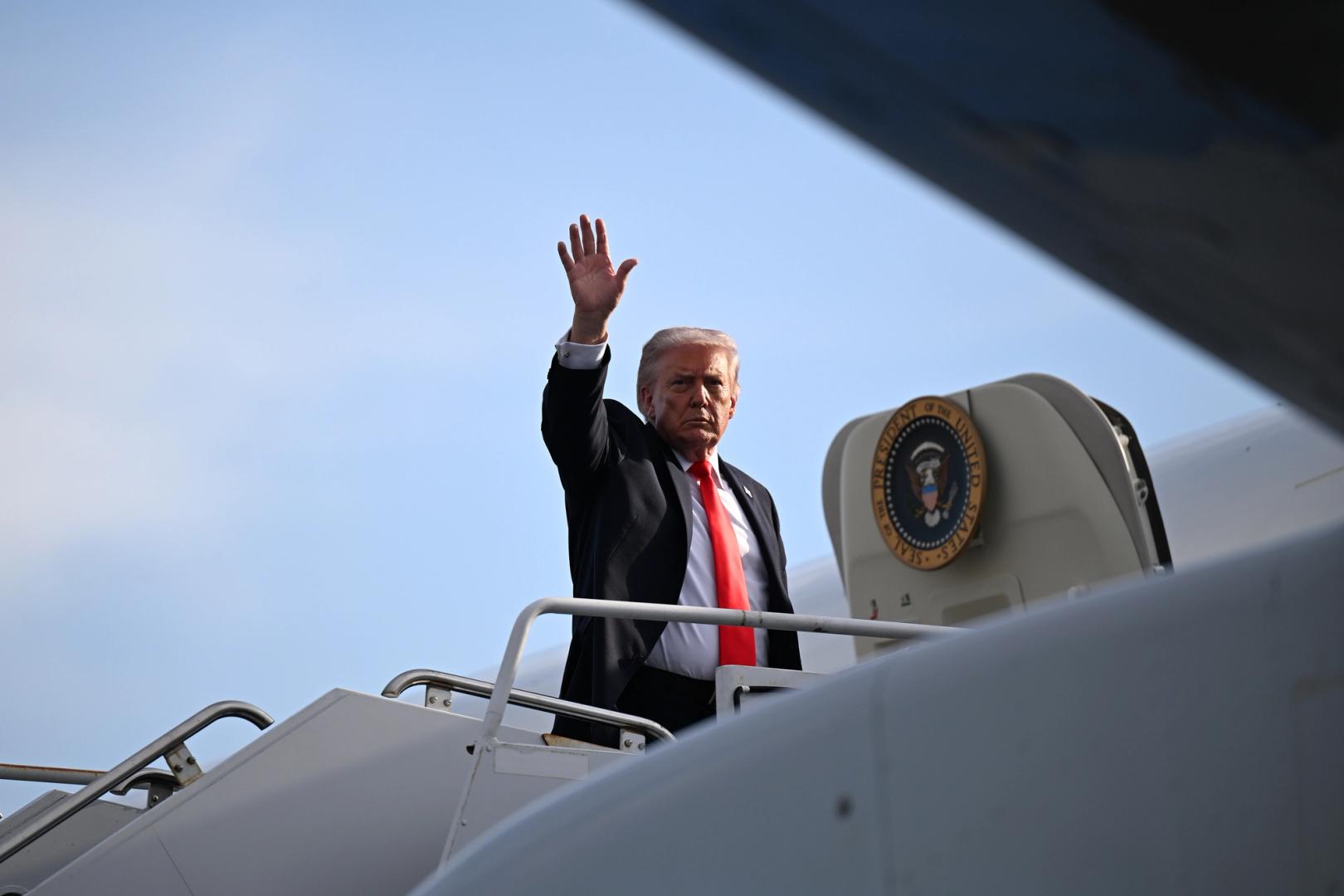
Most voters in the U.S. aren't comfortable with President Donald Trump's hand on the wheel of crypto industry oversight, with 62% saying they don't trust his administration on that point, according to a survey commissioned by CoinDesk.
After the previous administration's heavy hand on crypto, Trump's promise to make the U.S. the "crypto capital of the world" reignited hopes in the sector. The president has deployed his White House to pave a wide road toward friendly crypto regulation. His administration named a high-profile crypto czar, issued executive orders to map out an industry agenda, named regulators who vowed to support friendly new rules and shepherded legislation to create the first major U.S. crypto law.
However, the polling trend seems to show that Trump's broader political popularity beyond crypto has steadily waned, and his approval rating among U.S. voters is sinking, with this latest polling putting it at 40%.
This article is part of a CoinDesk series on voters' views for the 2026 midterm election.
- Crypto is at the bottom of U.S. voters' priorities heading into the midterm, CoinDesk survey shows
- Americans still prefer banks over crypto for financial access, CoinDesk's survey shows
Almost half of the respondents (45%) are also aware that the president and his family have built a profitable personal stake in the crypto industry, which includes partial ownership and control of World Liberty Financial and other digital assets interests. The poll revealed that 73% of the public opposes its senior government officials — without identifying any in particular — having personal business dealings in the industry.
While Republicans are the most flexible on that point, a strong majority of 59% of GOP voters also can't stomach those kinds of ties.
However, most people don't know the extent of Trump's financial involvement, with only 17% of those polled being aware that he and his sons backed the launch of World Liberty. Though the Trumps have many irons in crypto fires, World Liberty has drawn special attention for a number of potential conflicts and controversies.
The online survey conducted last week was split evenly between voters who supported Trump and Democrat Kamala Harris in the last presidential election, so a large majority of respondents doubting his administration's crypto capabilities would seem to demonstrate a shift since 2024 in the sentiment of some of Trump's voters.
The White House didn't respond to requests for comment, but a spokesman for World Liberty responded to the polling data with a statement that Trump "pledged to make the United States the crypto capital of the world, and World Liberty wholeheartedly supports this vision."
"The president has continually delivered on his promise to ensure that one of the most important technological breakthroughs of the century develops and thrives in America," the company spokesman said.
Apart from people's thoughts on Trump and government officials' involvement in crypto, the survey of 1,000 registered voters performed by research firm Public Opinion Strategies delved into perceptions of crypto and the voters' intentions in this year's elections, revealing that most retain a distrust — or at best an uncertainty — about cryptocurrencies and their place in the economy and politics. The snapshot of public opinion carries a "credibility interval" of about 3.5%, representing the statistical uncertainty of the survey's results.
The crypto industry has had a delicate relationship with the president, rejoicing at his regulatory appointments and policy choices, but having to quietly weather his own business involvement in the sector, which brought a host of challenges in lobbying for crypto legislation. The crypto world's biggest aim in Washington is to get a new law that formalizes U.S. regulation of the industry, but Trump's political opponents argue it benefits his own interests. The current effort is known as the Digital Asset Market Clarity Act, and while Trump's White House has been one of its major boosters, his own crypto ties may get in the way.
The Clarity Act has already passed the U.S. House of Representatives and remains a few steps away in the Senate, but one of the last sticking points is a Democratic request that it should include a ban on the kind of personal crypto ties that CoinDesk's poll revealed most people oppose. The provision to halt senior officials from crypto interests clearly had Trump in mind when the lawmakers called for it, and the bipartisan talks over its potential form have stretched across months and have included back-and-forth exchanges of language ideas in recent days.
In previous attempts, White House officials have said they won't stand for a bill that targets the president or his family members. It's unclear how the final version will avoid affecting Trump while also living up to Democrats' expectations that it prevents government conflicts of interest.
The bill will need plenty of Democrats if it's expected to eventually win the 60 votes typically required for legislation to get Senate approval.
Last weekend, President Trump spoke at an event for a few hundred of the top investors in his self-branded memecoin $TRUMP. There, he assured the crowd that the U.S. is the "leader in crypto." He also told them the assets have "become mainstream."
According to the CoinDesk survey, the industry has only become a regular part of the lives of a small segment of the population — not quite mainstream. And most haven't embraced the industry's most important political booster, Trump, as an industry watchdog they're ready to trust.
CoinDesk will release data from this survey on Tuesday at Consensus Miami.
免责声明:本文章仅代表作者个人观点,不代表本平台的立场和观点。本文章仅供信息分享,不构成对任何人的任何投资建议。用户与作者之间的任何争议,与本平台无关。如网页中刊载的文章或图片涉及侵权,请提供相关的权利证明和身份证明发送邮件到support@aicoin.com,本平台相关工作人员将会进行核查。


