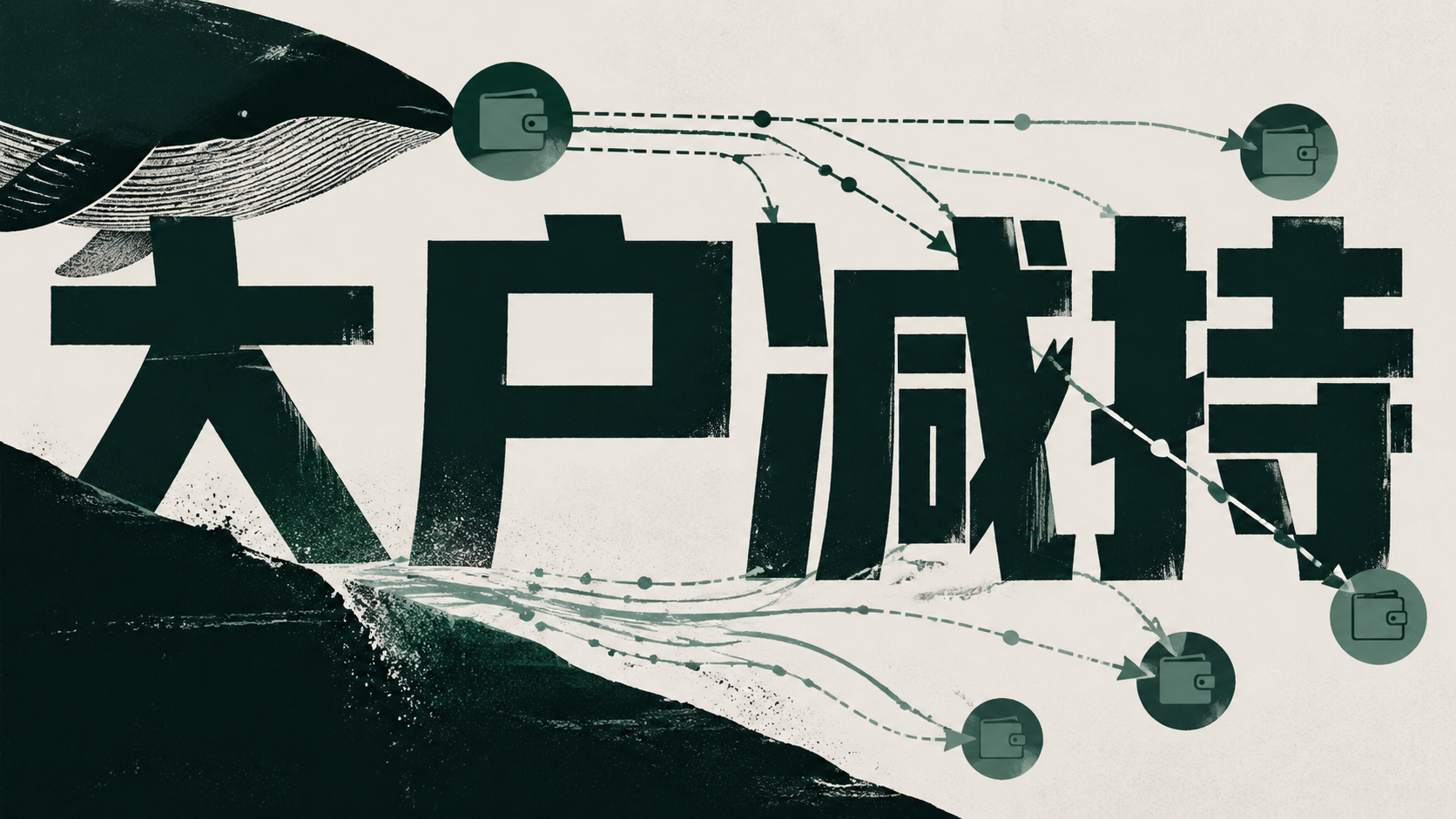
At the end of April, the on-chain world rarely sees a project token's direction intertwining with a superpower's fiscal red line, becoming a source of anxiety at the same time. Around April 30, 2026, an address associated with Pantera Capital suddenly transferred about 83.9 million ONDO to a familiar receiving address, valued at approximately $22.11 million at the time. There was a single source even precise to 18:53 UTC, but this specific time point is still awaiting cross-validation of on-chain data. On-chain analyst Yu Jin (@EmberCN) captured this massive transfer immediately, and several media outlets quickly followed up, marking it as a signal of "potential selling pressure": leading institutions, the usual "project multisig → transit → exchange" path, and tens of millions in chips, all keywords combined were enough to ignite emotions.
Almost within the same time frame, another seemingly unrelated but heavier number was pushed to the headlines — Jinse Finance cited Cointelegraph reports that U.S. debt had exceeded 100% of GDP for the first time since World War II. In the inertia logic of global asset pricing, this is viewed as a warning of macro risk: fiscal sustainability is called into question, future policy paths are less clear, and risk appetite fluctuates. When the on-chain imagination of "Pantera may crash the market" overlaps with the macro narrative of "high U.S. debt possibly impacting risk assets," the market seems forced to choose between two dimensions simultaneously — is this the bell tolling before a new wave of selling, or just a snapshot of institutions quietly adjusting their positions in a high-uncertainty environment?
83.9 Million ONDO at Work: What Happened On-Chain
The protagonist under scrutiny this time is a significant single transfer: about 83.9 million ONDO, moved out from the address associated with Pantera Capital, valued at approximately $22.11 million at the time. It did not involve complex multi-hop dispersals, nor was it a typical small probing transaction; this fund almost concentrated flow into one receiving address in a "one-fell-swoop" manner, with a clear and straightforward on-chain path — directly from "Pantera marked funds" to that familiar account label. A single source indicated it occurred on the evening of April 30 (UTC), this time point still pending cross-validation, but regardless of precision to the minute, this transfer itself constitutes a "big move" that can affect emotions.
If we extend our perspective to the past year, this receiving address is not unfamiliar. About a year ago, it received approximately 34.28 million ONDO from the Ondo project's multisig address, then valued at around $42.52 million; and during a period following that, this address repeatedly split its ONDO into several amounts and gradually transferred them to centralized exchanges like Coinbase, following a relatively fixed trajectory — "project multisig → transit address → exchange." In other words, it functions more as a "transit station" or "distribution center" responsible for handling inflows and outflows related to exchanges, rather than a mysteriously created wallet for clandestine operations.
When this year's transfer of 83.9 million ONDO was again directed to the same address, the narrative thread connected: the funds related to Pantera were not disappearing into an unknown space, but advancing along the existing operational channel. However, this time, the single size far exceeded previous ones, triggering a stronger magnification effect. On-chain analyst Yu Jin (@EmberCN) and several media outlets interpreted it as a potential source of selling pressure, based on the previous model of "transit followed by staged listing," but so far, Pantera has not provided an official statement — this "transit station" continues to perform its habitual role, and the final fate of this batch of chips, whether to be sold, quoted, or held, remains one of the many possibilities laid out on the chart.
Selling Pressure Alert or Routine Adjustment? Pantera's Actions Ignite Emotions
Once the transfer of 83.9 million ONDO was captured by on-chain monitoring accounts, the narrative was prematurely sealed. Yu Jin (@EmberCN) was the first to hint that "there may be selling pressure," and several Chinese and English crypto media directly adopted the phrase "potential selling pressure" in their follow-up reports. The headlines grew more aggressive, and the transfer itself, from a cold chain record, was packaged as a high-risk signal of "whales moving bricks, ready to crash the market," quickly filling ONDO holders' social media timelines with anxiety and speculation.
However, if we step back from on-chain facts, the only confirmed fact is the “transfer out” step: funds left the Pantera associated address and entered that receiving address which has previously played the role of a "transit station." There is no evidence showing that this batch of chips has been "fully" or "immediately" sold, and there is no authoritative data proving they have been fully directed to any trading platform, let alone completed a sell-off. At the regulatory and information disclosure level, Pantera has not provided an official explanation for the motivation behind this action, whether "to crash the market" or "for quoting, holding, or other purposes," all remains at the speculative level.
This gap is exactly the usual script of emotional events: only a "seating change" occurred on-chain, but the market automatically supplements it to mean "the audience has exited." Historically, large institutional transfers have been repeatedly magnified into "selling pressure alerts," but what truly determines whether selling pressure materializes is often the subsequent steps — whether these chips continuously and substantially flow into exchange addresses, whether they form public sell orders that the market can take on. In this Pantera incident, the market has preemptively framed the narrative with "potential selling pressure," while whether on-chain events will produce "real sell-offs" still awaits answers from time and subsequent flows.
U.S. Debt Breaks 100%, Setting a Record: Macro Shadows Loom Over Risk Assets
While the market was repeatedly digesting the implications of Pantera's on-chain adjustments, another macro-level number was raised high. Jinse Finance cited Cointelegraph reports stating that U.S. government debt has, for the first time since WWII, exceeded 100% of domestic product. Further tracing the original report, this indicator likely refers to the "federal public-held debt" as a percentage of GDP, but regardless of how the statistical caliber is fine-tuned, "breaking 100" itself has become a symbolic point in public discourse — a repeatedly mentioned "warning line" has been formally crossed, prompting a new round of debates around fiscal sustainability and future policy paths.
When debt/GDP is written into triple digits, the market's most direct question is: how long can this set of accounts be sustained, and by what means? Higher interest expenses imply that the U.S. either maintains relatively high-interest rates for a longer period or relies on continuously increasing leverage, or at some future stage, dilutes the actual value of debt through policy means. Behind every possible route lies different bets on interest rate directions and dollar liquidity — is it tighter money for a longer time, or a rhythm switch from tight to loose? Historical experience shows that during periods of rising U.S. debt, risk assets often undergo collective games of "how to price risk": valuation models are recalibrated, and funds oscillate between stocks, bonds, and various alternative assets.
In this macro narrative, crypto assets are once again placed back in that familiar drawer — "high-volatility risk assets." When high debt overlaps with high uncertainty, some funds tend to first compress these positions to avoid additional net value noise when interest rates and liquidity fluctuate violently; others attempt to interpret crypto assets as "hedge chips" against traditional credit systems, but within the mainstream pricing framework, it is still classified as a risk basket that needs to be discounted and requires liquidity discounts. For Ondo, which operates business relating to on-chain and real-world assets (including U.S. Treasury bonds), this round of macro focus feels more personal: the news of U.S. debt "breaking 100" coincides almost synchronously with the on-chain event of Pantera's large ONDO transfer, with emotions naturally piecing together a picture of "under the macro shadow, institutions start to adjust." Whether this picture holds true in terms of capital flows is another layer that needs to be unpacked with time and data.
From ONDO to U.S. Treasury Bonds: Micro On-Chain Fluctuations Overlap with Macro Anxiety
If one does not zoom out the camera, viewers often only focus on the transfer of approximately 83.9 million ONDO, speculating on what Pantera is thinking; however, once the timeline and news flow are aligned, it becomes apparent that this on-chain fluctuation coincides with the "U.S. debt/GDP first surpassing 100%" being reported intensively. Pantera is not only Ondo's lead investor but also a typical cross-cycle institutional participant in the crypto market. Their substantial transfer, combined with a macro data symbolizing fiscal sustainability risks, naturally stitches together a picture — as the shadow of high debt rises, old institutions first push the token most closely tied to the U.S. Treasury narrative toward the "transit station" to prepare for a potential repricing.
This stitching is not without logical foundation. Ondo itself builds its business around on-chain and real-world assets (including U.S. Treasury bonds), and its token has been integrated into the narrative of interest rates, debt, and yield curves since its inception. In the context where U.S. debt/GDP "breaking 100" is viewed as a risk signal, any tokenized agreement linked with RWA, or pegged to treasury yields will naturally be more susceptible to scrutiny than other assets; when an institution like Pantera, which has long delved into cyclical rotations, opts to execute a significant transfer at this moment, the market instinctively interprets it as a proactive response to macro uncertainty — even though, from the factual perspective, we still cannot ascertain whether this is a sale, quoting, or custody arrangement.
Past experiences tell us that during phases of macro uncertainty and institutional changes, institutions often initiate "in-book + on-chain" asset rebalancing earlier than retail investors: assessing the exposure of real-world assets held while simultaneously adjusting tokens, equity, and other risk positions. High debt signifies a more unpredictable future policy path, where interest rates, liquidity, and regulatory expectations may fluctuate repeatedly, forcing participants like Pantera to manage their portfolios more frequently, treating RWA protocol tokens as part of an overall asset allocation rather than isolated speculative targets. The recent continuity of Pantera's "project multisig → transit address → exchange" model, completing a large transfer amid the amplification of high debt narratives, could be seen as a reflection of this rebalancing logic — but what specific strategy it points towards still requires subsequent flows and time to validate.
For ordinary investors, the more crucial question is not whether "Pantera sold or not," but rather to learn how to differentiate: which are excessive associations of short-term emotions under macro noise, and which truly represent signals of long-term structural changes. The U.S. debt/GDP surpassing 100% and the policy discussions it triggers is a macro topic that spans multiple years, while the panic raised by an on-chain transfer often amplifies within days or even hours. In the absence of an official explanation, with various possible motives for the transfer, equating "overlapping time windows" simply to "causal linkage" can easily lead to emotional misjudgments. A more pragmatic approach is to continuously monitor whether this batch of about 83.9 million ONDO flows further into exchange addresses on a large scale while keeping an eye on subsequent developments in U.S. debt data and policy statements, maintaining a distinction between micro flows and macro structures, rather than jumping to premature conclusions about the entire high-debt era based on a single on-chain fluctuation.
Fear or Shifting Gears: The Next Scene of ONDO and Macro Games
The hard facts laid out on the table are indeed few: around April 30, 2026, an address associated with Pantera transferred about 83.9 million ONDO to an existing receiving address consistent with the "project multisig → transit → exchange" behavior pattern, valued at approximately $22.11 million at the time; this receiving address received about 34.28 million ONDO from the Ondo multisig a year ago and subsequently transferred batches to exchanges like Coinbase. On-chain analysts and media view this transfer as a potential selling pressure signal, merging it with the macro news of "U.S. debt/GDP first exceeding 100%," leading to a naturally pessimistic emotional tendency. Meanwhile, Pantera has not provided official clarification on whether this transfer would be continuously sent to exchanges, whether it has already been or will inevitably be sold, and there is no evidence from the outside for conclusions; details regarding the specific UTC time, whether it was for Coinbase Prime, are still pending cross-verification from single sources.
In this incomplete informational gray area, what investors can do is more about "acting based on observations" rather than fabricating stories for Pantera. In the coming days to weeks, it is worth closely monitoring three lines: first, the on-chain path — whether these 83.9 million ONDO continuously and substantially flow into marked exchange addresses or rather more towards other institutions, multisigs, or new transit addresses; secondly, at the exchange level — whether the net inflow and inventory changes of ONDO on major platforms coincide with increased trading volumes and price pressures, thus transforming "potential selling pressure" into "realized sell-off"; thirdly, the macro environment — how subsequent data on U.S. debt/GDP and related fiscal and monetary policy statements change overall risk tolerance, subsequently affecting the narrative around assets such as U.S. Treasury bonds linked to ONDO. What truly needs vigilance is not a single large on-chain transfer, but the complete chain of "transfer → concentration to exchanges → sustained volume," before this chain closes, managing positions and leverage at your own pace is closer to the actions of professional investors than racing ahead amid macro noise and emotional resonance.
Join our community to discuss together and become stronger!
Official Telegram community: https://t.me/aicoincn
AiCoin Chinese Twitter: https://x.com/AiCoinzh
OKX welfare group: https://aicoin.com/link/chat?cid=l61eM4owQ
Binance welfare group: https://aicoin.com/link/chat?cid=ynr7d1P6Z
免责声明:本文章仅代表作者个人观点,不代表本平台的立场和观点。本文章仅供信息分享,不构成对任何人的任何投资建议。用户与作者之间的任何争议,与本平台无关。如网页中刊载的文章或图片涉及侵权,请提供相关的权利证明和身份证明发送邮件到support@aicoin.com,本平台相关工作人员将会进行核查。