This morning, Powell stepped onto the podium of the Eclers Building's press conference for the last time. As he had done at every FOMC press conference over the past eight years, he approached the stage, adjusted the microphone, and began his remarks.
This was Powell's last public speech as chair of the Federal Reserve. The agenda was the usual review of the FOMC's interest rate decisions and answering reporters' questions. With only two weeks left until he officially resigned, everyone knew this would be a press conference unlike any other, but Powell still surprised everyone with some unexpected twists.
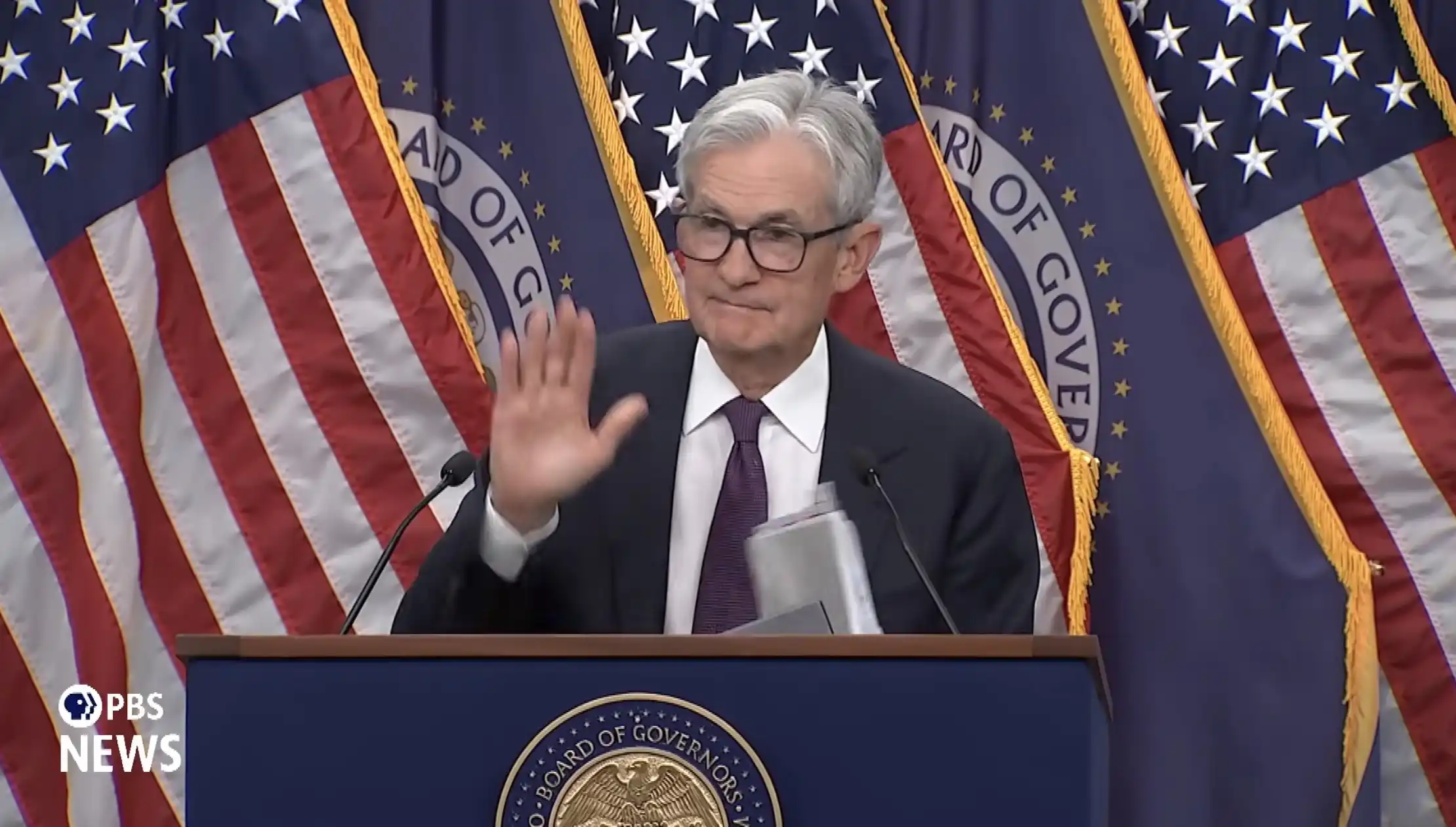
The interest rate decision remained unchanged in the 3.5%-3.75% range, which was not surprising, but there were four dissenting votes within the committee, marking the most divided meeting since 1992. At the same time, he formally responded to previous market speculation that he would stay on at the Federal Reserve.
The last person to choose to remain a governor after resigning as chair was Marriner Eccles in 1948, the name behind the Federal Reserve Building. There was a 78-year gap from him to Powell.
Why did Powell choose to stay? The story of these eight years always began with "Good afternoon." This was the opening line he had said countless times at the press conference podium, and it became the most widespread and familiar memory on social media. But to understand the weight of his decision today, we need to rewind back to eight years ago.
The "Ineligible" Chair
"I will do everything I can to achieve the two missions Congress has given us: price stability and maximum employment." – Jerome Powell, November 2, 2017 · White House Rose Garden Federal Reserve Chair nomination ceremony
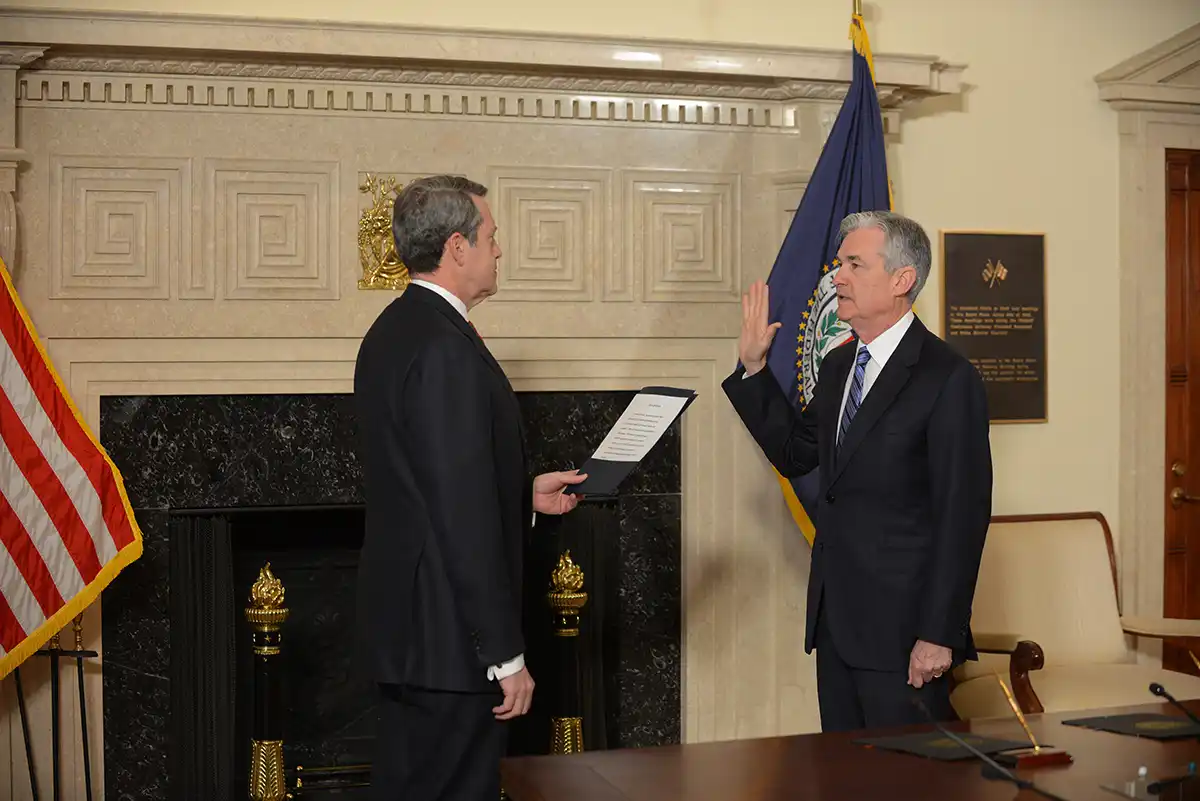
On the morning of February 5, 2018, Jerome Powell raised his right hand and took an oath in a conference room on the second floor of the Eclers Building. The ceremony was brief, lasting less than three minutes, without the presence of the president, conducted by Federal Reserve Governor Randall, a colleague junior to him. Two journalists captured photos of the scene: deep blue suit, steady eyes, and no one spoke.
That day, he was 65 years old, officially becoming the 16th chair of the Federal Reserve, with an annual salary slightly above $200,000. If measured by the standards of the four predecessors in this position, he seemed unqualified.
Greenspan earned a Ph.D. in economics from New York University and had been in the private economic consulting industry for thirty years before his appointment; before Reagan entered the White House, he was recognized as a "market translator" in both Washington and New York. Bernanke was a former director of the economics department at Princeton, whose 1980s paper on the Great Depression later came to be regarded as the theoretical foundation for central bank policy in the early 21st century. Yellen obtained her Ph.D. from Yale and spent most of her life as a scholar in the Berkeley economics department, being the first woman to chair the Federal Reserve.
Powell did not have an economics background; he studied political science at Princeton before going to Georgetown for a law degree. Strictly speaking, he was a lawyer. Powell served in the Treasury Department during the elder Bush’s administration, rising to deputy secretary, then spent nearly a decade as a partner at The Carlyle Group. In 2012, Obama nominated him along with a Democratic economist to the Federal Reserve Board as a political balance. He sat on the board for five years without attracting much attention.
If we look further back to find an example of a "non-economist" sitting in the chair, we would have to go back to 1978.
In March 1978, President Jimmy Carter appointed a man named G. William Miller to the Eclers Building. Miller was previously the CEO of Textron, a defense contractor, and the Carter administration chose him partly because of his good relationship with labor, believing he could "manage inflation without being too harsh."
However, Miller sat in that chair for only 17 months, during which CPI rose from 6% to 12%, and the dollar faced the most severe crisis in the foreign exchange market since World War II. In August 1979, Carter ousted him to become Treasury Secretary, allowing Paul Volcker to take over the Federal Reserve. What followed became a part of all central bank textbooks: Volcker pushed interest rates to 20%, a double-dip recession, inflation was crushed, and the U.S. economy entered the 1980s.
For nearly forty years after Miller, no non-economist held that chair again—until Powell.
During his five years as a governor, Powell was almost invisible. From swearing in on May 2012 to taking over as chair in February 2018, he voted in alignment with the majority in every FOMC session without a single dissent. His daily work revolved around issues of financial regulation and payment systems, far removed from the limelight. Colleagues later recalled that the most distinctive part of his time was not papers or speeches, but the phone calls he made. He wanted to bypass academic papers and official data to hear directly from people on the market, calling bankers, bond traders, and corporate CFOs. A governor making dozens of such calls each week out of pocket was something colleagues from academic backgrounds would not typically do.
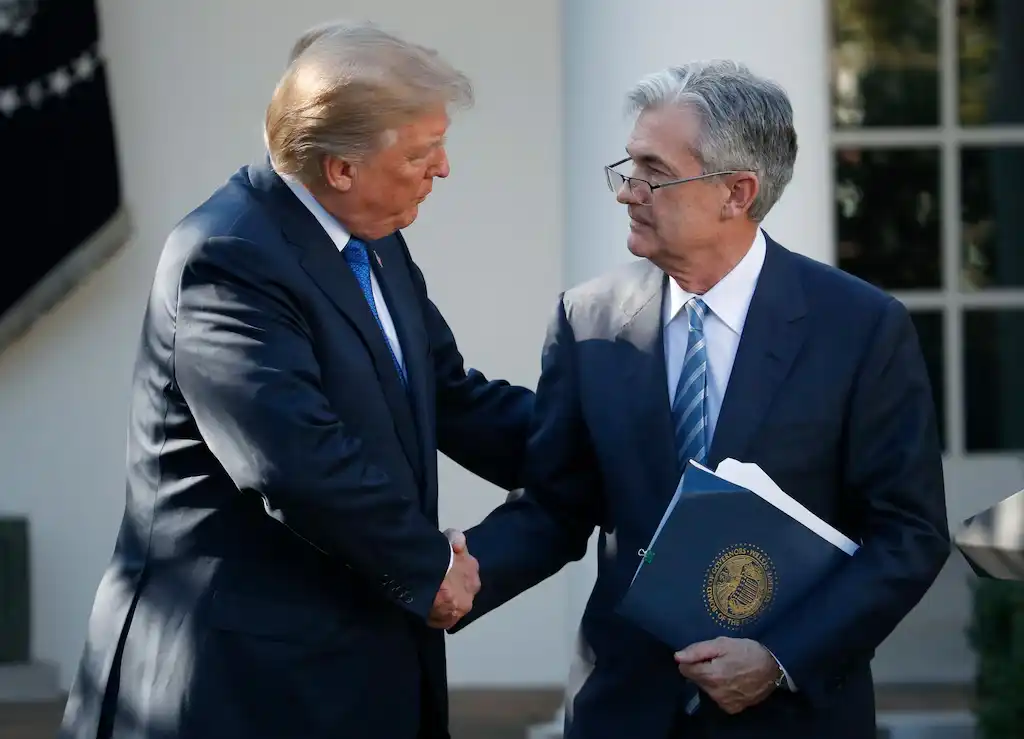
On November 2, 2017, President Trump announced Powell's nomination to succeed Yellen as chair of the Federal Reserve in the White House Rose Garden. Trump delivered a strong statement, while Powell spoke in a restrained manner, focusing on the phrasing "committed to achieving the dual mandate of maximum employment and price stability."
That evening, major Wall Street traders sent out memorandums to their clients sharing essentially the same assessment: a continuation of the centrists, and there was no need for the market to panic. Some slightly different voices emerged in academia; several economists interviewed by The New York Times were concerned that a lawyer might not be able to lead the FOMC at critical moments, but these worries were soon drowned out by the overwhelmingly positive financial news.
Less than a year into his tenure, Powell made a structural change. He transformed the Federal Reserve's press conferences after FOMC meetings from four times a year to one after every meeting, using the most everyday language to speak, almost avoiding academic jargon. The "constructive ambiguity" that Greenspan took pride in was no longer the Federal Reserve's communication style starting that year. However, before this new style could become a habit, March 2020 came around.
Every Choice is Unprecedented
"We will stick with it until the job is done." – Jerome Powell, August 26, 2022 · Jackson Hole Global Central Bank Conference
March 15, 2020, was a Sunday. Later that afternoon, Powell held an emergency FOMC meeting, planned for three days later but moved up. The announcement made after the meeting was to cut the federal funds rate by 100 basis points to 0-0.25%, initiate a $700 billion asset purchase plan, and open dollar swap lines with the five major central banks. This was the most aggressive action in the history of the Federal Reserve.
At that moment, the COVID-19 virus was sweeping across the United States, ICU beds were about to run out, the U.S. stock market had triggered circuit breakers twice in the previous week, and the bond market was witnessing a liquidity dry-up that sent chills down the spine of all traders. What should have been the deepest market in the world experienced several trading days with no one willing to take quotes on U.S. Treasuries.
In the following three weeks, Powell rolled out a new tool almost every few days. On March 17, the Commercial Paper Funding Facility; on March 19, the Money Market Mutual Fund Liquidity Facility; on March 23, he announced unlimited QE, TALF restart, and the Main Street Lending Program coming into shape; on April 9, he expanded the corporate bond purchase program to $2.3 trillion. These tools broke the boundaries the Federal Reserve had operated under for years.
Buying corporate bonds was something Bernanke explicitly rejected in 2008, and lending directly to small and medium-sized enterprises bypassing banks was not even attempted during the 2008 financial crisis. In the autumn of 2008, when Lehman collapsed, it took Bernanke nearly three months to launch the first round of QE, while Powell only took 20 days to move from the emergency rate cut on March 3 to unlimited QE.
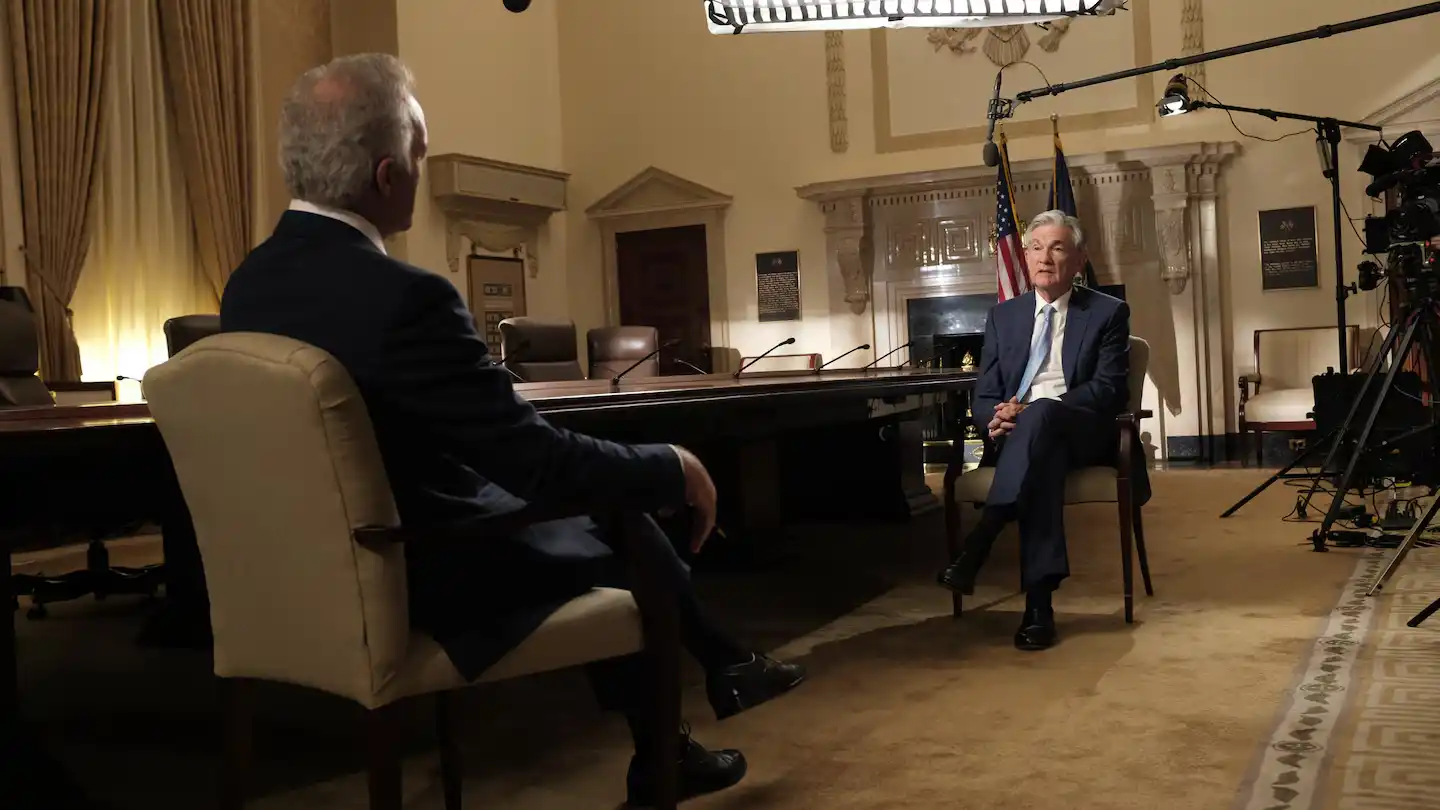
On May 17, Powell appeared on CBS's 60 Minutes and said the line later widely quoted: "Our ammunition will not run out." He was not shouting slogans but making a concrete commitment to the market. In the following months, the voices questioning that he "didn't sound like a Federal Reserve chair" quieted down for the first time.
But the biggest mistake he made began with that quiet.
In spring 2021, the year-on-year CPI figures started to rise. 4.2% in April, 5.0% in May, 5.4% in June. Powell and his team of economists assessed it as "transitory." They believed these disturbances were caused by the pandemic disrupting supply chains and that they would self-correct within a few quarters. This judgment was not made with indifference; they truly believed it. Powell repeatedly stated in internal meetings that he was unwilling to crush a still recovering labor market over a wave of cyclical disturbances. Among the millions who lost their jobs during the pandemic, a considerable portion were low-income individuals, and they were being rehired.
Thus, throughout 2021, the Federal Reserve maintained a zero interest rate and continued to purchase $120 billion in assets each month. At every press conference, Powell explained in everyday language why interest rate hikes should wait.
Inflation did not wait. 5.4% in September, 6.2% in October, 6.8% in November. In academia, on Wall Street, and among Republican senators, the questions returned in new forms: could a lawyer understand what economists were saying? He was leading the country into an inflation crisis. Former Treasury Secretary Larry Summers wrote in The Washington Post that he had never seen fiscal and monetary policy so detached from reality.
On the morning of November 30, Powell testified before the Senate Banking Committee. When asked about the inflation situation, he said, "I think it might be a good time to retire that term (transitory inflation) and try to explain ourselves more clearly."
This was not a forced admission of error. No reporters sought follow-up questions, and no lawmakers demanded he abandon "transitory." It was his own choice to voice it.
After admitting the error, Powell acted swiftly.
In March 2022, he raised interest rates by 25 basis points, in May by 50 basis points, and in June by 75 basis points. This was the largest single increase since Greenspan's tightening cycle in 1994. Another 75 basis points in July. Initially, the market interpreted this pace as "catching up," believing the Federal Reserve would soon return to a moderate path. On August 26, the global central bank president's closed-door meeting in Jackson Hole was set to commence, and the market expected Powell to soothe sentiment and leave a window for "policy pivot."
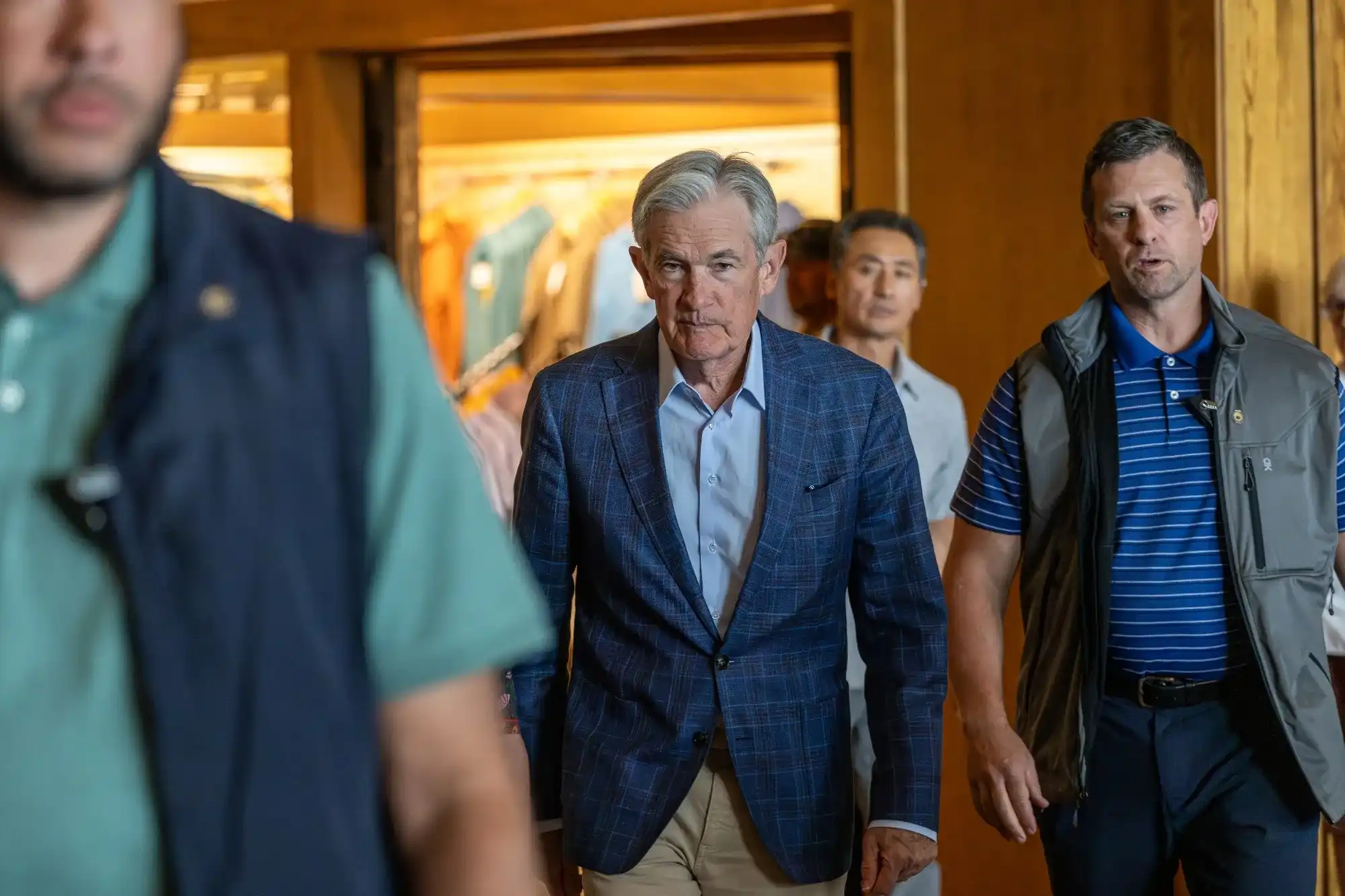
At 10 AM, Powell stepped onto the podium to begin his speech. By convention, the chair’s speech at such occasions usually lasts half an hour. But that morning, Powell did not glance at the teleprompter in the audience, and his speech lasted only 8 minutes. He did not discuss academic frameworks or complex transmission mechanisms and gave no dovish hints; he conveyed three main points: price stability is the responsibility of the Federal Reserve, interest rate hikes will bring pain, and we will see it through to the end.
The last sentence of the speech was, "We will stick with it until the job is done." Those who understood immediately recognized this as borrowing language from an old chair. "Keeping at it," was the title of Paul Volcker's memoir published in 2018. Volcker's anti-inflation campaign in 1979 pushed interest rates to 20% and led to a double-dip recession; he later summarized that period with those three words. Powell mentioned Volcker three times in the 8-minute speech; he did not equate himself with Volcker, but he chose to end with Volcker's words.
On the day of the speech, the S&P 500 fell 3.4%, and the Nasdaq dropped 3.9%. This was the last disappointment of the market towards a "continuation of the centrists' commitments."
He knew that speaking those words would lead to a decline, yet he said them anyway. This was the first time in four years since stepping into the Federal Reserve chair's office that he made it clear to everyone that he did not intend to be defined by his past.
After Jackson Hole, Powell did not pause in raising interest rates. 75 basis points in September, 75 basis points in November, 50 basis points in December. In March 2023, Silicon Valley Bank (SVB) collapsed within 48 hours, marking the second-largest bank failure in U.S. history. Powell did something that exceeded market expectations: he both established the Bank Term Funding Program (BTFP) to rescue banks while continuing to raise rates by 25 basis points.
This "dual approach" was difficult to understand within the traditional central banking framework, as rescuing liquidity and tightening policies are supposed to point in opposite directions. However, Powell was not one to act by the textbook. He viewed "system stability" and "inflation targeting" as two separate issues: using one set of tools to rescue banks and another set to curb inflation. This was a lawyer-like toolkit thinking, addressing each problem with the appropriate tools, ensuring that the logic of one did not squeeze out that of the other.
By the time of the last rate hike in July 2023, the federal funds rate had reached a 5.25%-5.50% range, its highest level in 22 years. The cumulative rate of increases during this cycle was 525 basis points.
Inflation finally began to decline. By June 2024, the CPI year-on-year returned to 3.0%, and by the end of the year reached 2.9%. The unemployment rate remained around historical lows throughout the entire rate hike cycle, without experiencing the severe increases typical of recession periods. This was the first time since the 1980s that the Federal Reserve managed to reduce high inflation without allowing the economy to fall into widespread recession.
Economists later debated whether he was "lucky," arguing that the unique impacts of the pandemic made his tools more effective than theoretically expected, and the drop in energy prices also aided him. This debate will persist.
In his final press conference, Powell summarized the past eight years by saying, "We have effectively experienced four supply shocks: the pandemic, the Russia-Ukraine conflict, tariffs, and now tensions surrounding Iran and surging oil prices. Each supply shock had the potential to raise inflation and unemployment rates, making it difficult for central banks to know how to respond." It was this macroeconomic environment, which had not been seen in decades, along with every unprecedented action that the Federal Reserve was forced to take, that made this morning's committee the most divided since 1992.
Yet in those 8 minutes on the morning of August 26, he made real judgments, took real risks, and chose not to let his 2021 mistakes define him—a totally genuine choice.
The Night Watchman Inside the Door
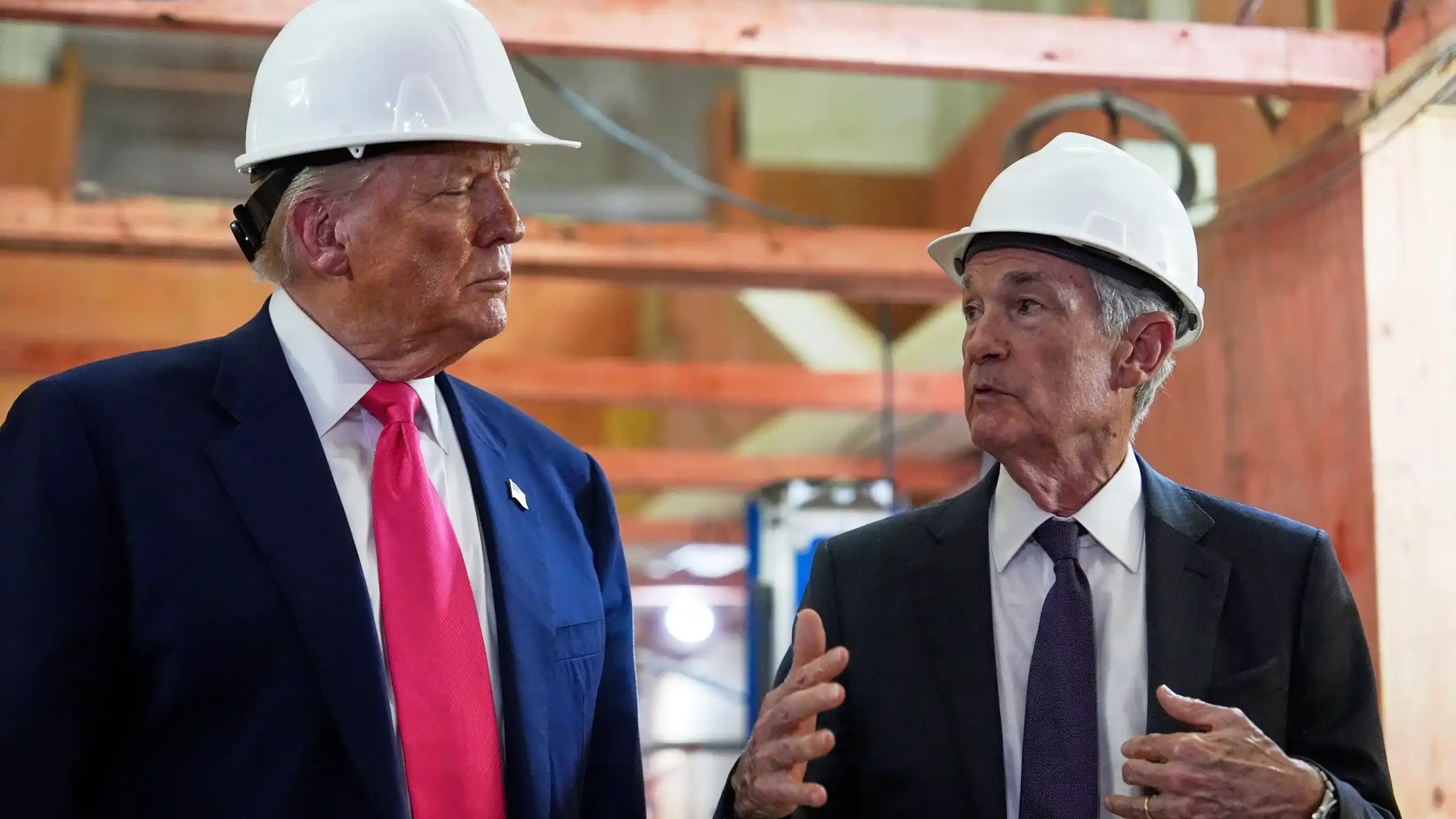
"I will not resign." – Jerome Powell, November 7, 2024 · FOMC press conference, responding to "Can the president fire the Federal Reserve chair?"
On January 11, 2026, Powell recorded a video in a conference room in the Eclers Building. The background featured the Federal Reserve's emblem. He looked into the camera and said, "This criminal charge threatens the Federal Reserve's right to set interest rates based on the best judgment for the public, rather than the president's preference."
The video was released that evening by the Federal Reserve's official account. Financial media around the world almost simultaneously refreshed their headlines. This was the first time in the 113-year history of the Federal Reserve that it openly confronted the U.S. executive branch in such a manner.
The triggering point of the event was a few days prior. The U.S. Department of Justice issued a grand jury subpoena to Powell under the pretext of the renovation project at the Federal Reserve headquarters, initiating a criminal investigation against him. The rationale given by the DOJ was budget overruns and irregular procurement procedures.
But everyone knew what was going on. Over the past twelve months, President Trump repeatedly asked Powell to cut rates to align with his tariff policies. Powell maintained his pace, stating, "We do not have those political considerations." This criminal investigation was the reaction of a president who felt he had exhausted conventional means of exerting pressure. Powell didn’t use the term "retaliation" in the video. But he expressed something almost everyone could understand in plain language.
To understand why this moment occurred, we must go back eight years, starting from Powell's first conflict.
In December 2018, Powell's Federal Reserve conducted its fourth rate hike of that year, pushing the federal funds rate to a 2.25%-2.50% range. The market had long grown weary of continued tightening, and the S&P 500 slipped into a bear market the week before Christmas. Trump broke the decades-long tradition of U.S. presidents not publicly criticizing Federal Reserve chairs, beginning to publicly humiliate Powell on Twitter. The words he used were ones that no previous occupant of the White House would ever have used.
In the following year, the Federal Reserve implemented three "preventive rate cuts," each of 25 basis points, totaling 75 basis points. Was this an act of surrender? There remains no conclusion. Powell's team at the time explained it as a response to the global economic slowdown caused by U.S.-China trade tensions and weakening manufacturing PMIs. However, the opposition insists that without Trump's pressure, these three rate cuts would not have occurred.
Trump's second term began in January 2025. This time, his pressure on Powell was not through Twitter but through a complete set of executive machinery.
In April 2025, Trump introduced a new round of tariffs. The market widely expected this would raise inflation and dampen employment, putting the Federal Reserve into a stagflation dilemma of "raising rates harms employment, cutting rates adds to inflation." Trump repeatedly urged Powell to cut rates, hoping to counter the negative effects of tariffs with loose monetary policy.
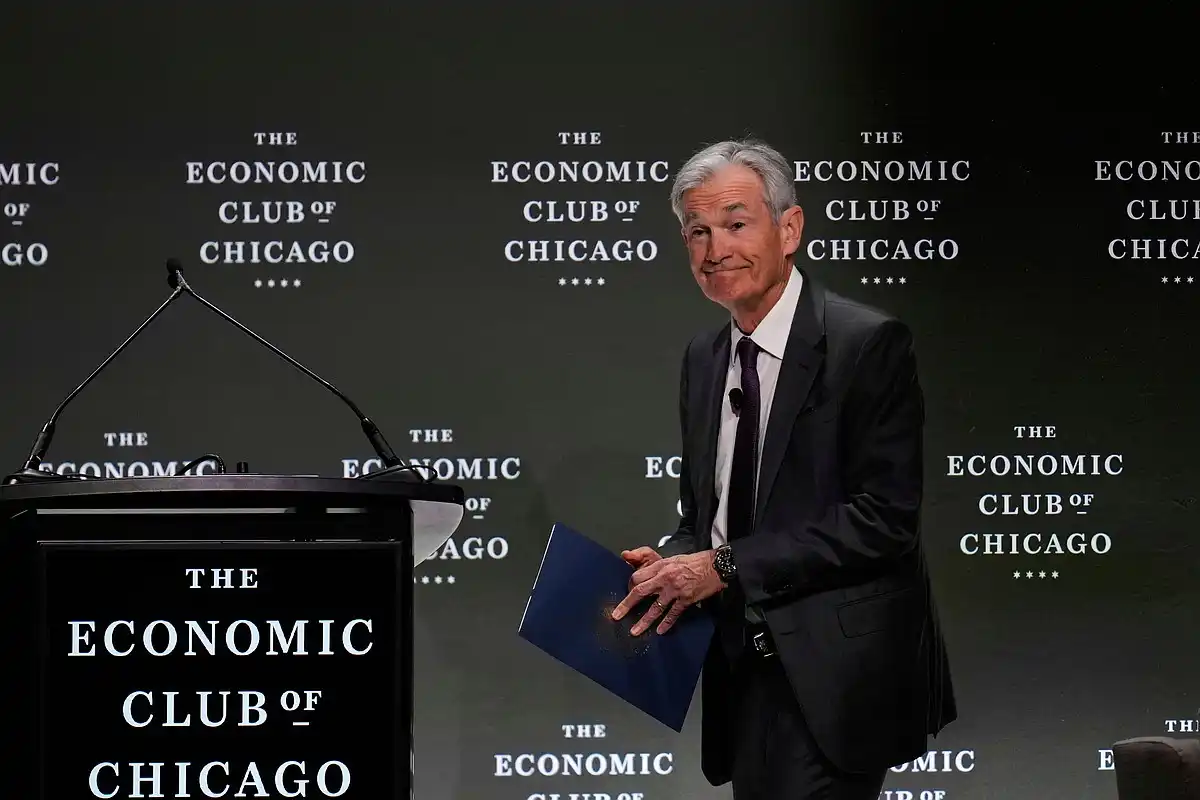
In a speech at the Chicago Economic Club on April 16, Powell responded. He did not directly refuse to cut rates; he used typical Powell vernacular: "We are in a position right now to wait for the situation to become clearer before considering any adjustments to our policy stance." Midway through the speech, he used a famous line from a well-known Chicago movie to ease the tense atmosphere: "As the great Chicagoan Ferris Bueller (the protagonist of the film Ferris Bueller's Day Off) once said, 'Life moves pretty fast.'" The audience laughed, but the financial markets didn't. Powell's message was clear: the Federal Reserve would not rush to cut rates due to tariffs.
In the following months, Trump repeatedly threatened to fire Powell. This had already been addressed during the FOMC press conference on November 7, 2024. A reporter asked Powell, "If the president asks you to resign, will you resign?" He replied: "No." Another reporter pressed, "Does the president have the authority to fire you?" He answered: "The law does not allow that." Both answers were short and delivered without hesitation.
Historically, the last time a chair faced such strong political pressure was in the 1970s. The chair at that time was Arthur Burns, a Columbia University economics Ph.D. and a veteran of the central bank school. This was usually the most standard resume for a Federal Reserve chair, but during his tenure, he was pressured by President Nixon through private phone calls, memos, and White House senior staff to ease monetary policy before the 1971 and 1972 presidential elections. The publicly released Nixon tapes later revealed that the president bluntly told Burns he needed the economy to be "a bit hot" in an election year. Burns did not refuse. The result was a decade of stagflation in the U.S. until Volcker took over in 1979.
Burns was an economics Ph.D.; Powell is a lawyer. But in response to presidential pressure, Powell did what Burns failed to do.
The DOJ investigation ultimately did not proceed. In March 2026, a federal judge quashed the subpoena, stating, "The sole purpose of the investigation is harassment and pressure," and the DOJ quietly abandoned the investigation thereafter. In the same month, Powell was awarded the "Paul Volcker Public Integrity Award" in a small auditorium in Washington. The award ceremony was quiet and brief, lacking cameras; the auditorium had Volcker's family, along with several former Federal Reserve governors and economists. This award is given to those "who have maintained public office integrity under immense political pressure," and the closing line of the award speech stated, "Independence and integrity are inseparable."
The award Powell received was named after Volcker. Unlike Volcker, who faced pressure from both the Carter and Reagan administrations during his term but never encountered public humiliation, threats of firing, or this level of confrontation, Powell faced identity attacks stemming from the highest political authority in the United States.
Since Volcker's tenure began in 1979, the Federal Reserve has established boundaries independent of the White House, and those boundaries were not breached during Powell's eight years.
During this morning's press conference, Powell formally addressed a question that had been repeatedly speculated by the market over the past few weeks. He would not actually leave the Federal Reserve on May 15. He would resign from the chair position but remain as a governor, duration to be determined. The reason he provided was straightforward: "What has happened in the past three months has left me no choice but to stay until I see these issues resolved." That was three months after the DOJ subpoena was delivered.
He used his final power as chair to do something: he did not let his departure become a vacant seat for the executive branch. He declared he would not act as a "shadow chair." What he wanted was not the influence over monetary policy but to ensure that the position of the night watchman remained occupied.
On May 15, he would still move out of the chair's office, leaving it for Kevin Warsh. But Powell’s desk would not move out of the Eclers Building; it would just change floors and rooms.
"Good Afternoon"
At this morning's press conference, someone directly asked Powell how history would evaluate his eight-year tenure as chair and his legacy, to which he simply replied, "Let others judge."
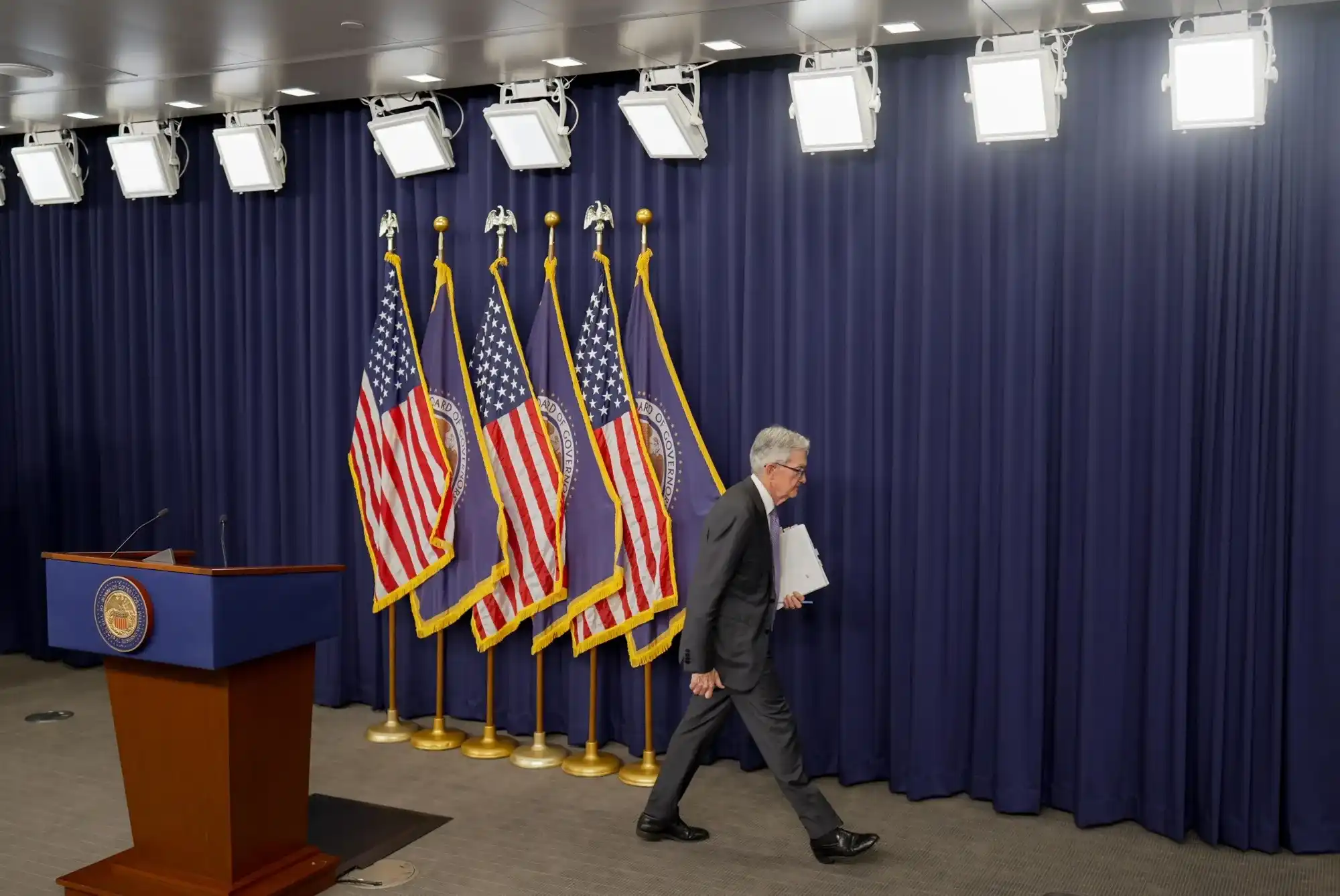
Eight years ago, when Powell first sat in this office, no one thought he would make it to today. Over those eight years, he navigated an unanticipated pandemic, what was thought to be a temporary inflation, and a period of political pressure that nearly caused the collapse of the Federal Reserve's independence. Yet May 15 is not an ending but rather a halftime break. After Powell steps down, all the forces that cornered him are still present, leaving three questions for the market.
The first question is how long the monetary policy framework he left can remain effective. In August 2020, Powell announced at Jackson Hole that the Federal Reserve would adopt a "flexible average inflation targeting," allowing inflation to run moderately above 2% for some time. This framework was reasonable in a low-inflation environment, but the high inflation of 2021 made it seem slow to respond. The FOMC has begun internal reviews. The next chair will need to decide whether to modify, retain, or discard it.
The second question is about central bank independence. Over the past eight years, Powell withstood almost all forms of pressure from the White House. He maintained the boundary of central bank independence from the White House by using three short phrases: "No," "The law does not allow that," and "This is not our job." But that boundary now stands at a new watermark. It has not been breached, but it is no longer a taken-for-granted fact. The next chair will enter their office with no assumption that the White House will refrain from intervening.
The third question is the most challenging to answer. What kind of political climate will the next chair face? Trump’s second term has two more years. No matter who becomes the next chair, they will not have the relatively calm start that Powell did. The moment they sit in the office, what awaits them is not gentle policy discussions but a multitude of exploratory measures crystallized from the eight years spanning from 2018 to 2026. These measures will return in the future.
Throughout Powell's eight years in office, a dynamic meme circulated widely on social media, often resurfacing after each interest rate meeting. The GIF's background featured the Eclers Building's press conference hall where Powell approached the podium, adjusted the microphone, and uttered two words: "Good afternoon," after which various asset markets plummeted instantly.
This meme first appeared in December 2018, when netizens used it to ridicule how every time Powell spoke, the stock market would drop, dubbing the phenomenon "Powell's Plunge."
But after eight years, the annotation for this meme has changed.
The lawyer once deemed "ineligible" stood firm during market crashes, acknowledged mistakes during inflation, and quickly corrected course, while upholding boundaries against all forms of pressure from the White House. Every time he stepped onto the podium and spoke those two words, he knew the market would drop and that the president would insult him on Twitter. Yet he came out each time.
That opening line, once treated as a joke, ultimately became a simple yet powerful commitment of an era. He never learned how to reduce the market's declines, but he made sure to appear on time each time.
免责声明:本文章仅代表作者个人观点,不代表本平台的立场和观点。本文章仅供信息分享,不构成对任何人的任何投资建议。用户与作者之间的任何争议,与本平台无关。如网页中刊载的文章或图片涉及侵权,请提供相关的权利证明和身份证明发送邮件到support@aicoin.com,本平台相关工作人员将会进行核查。


