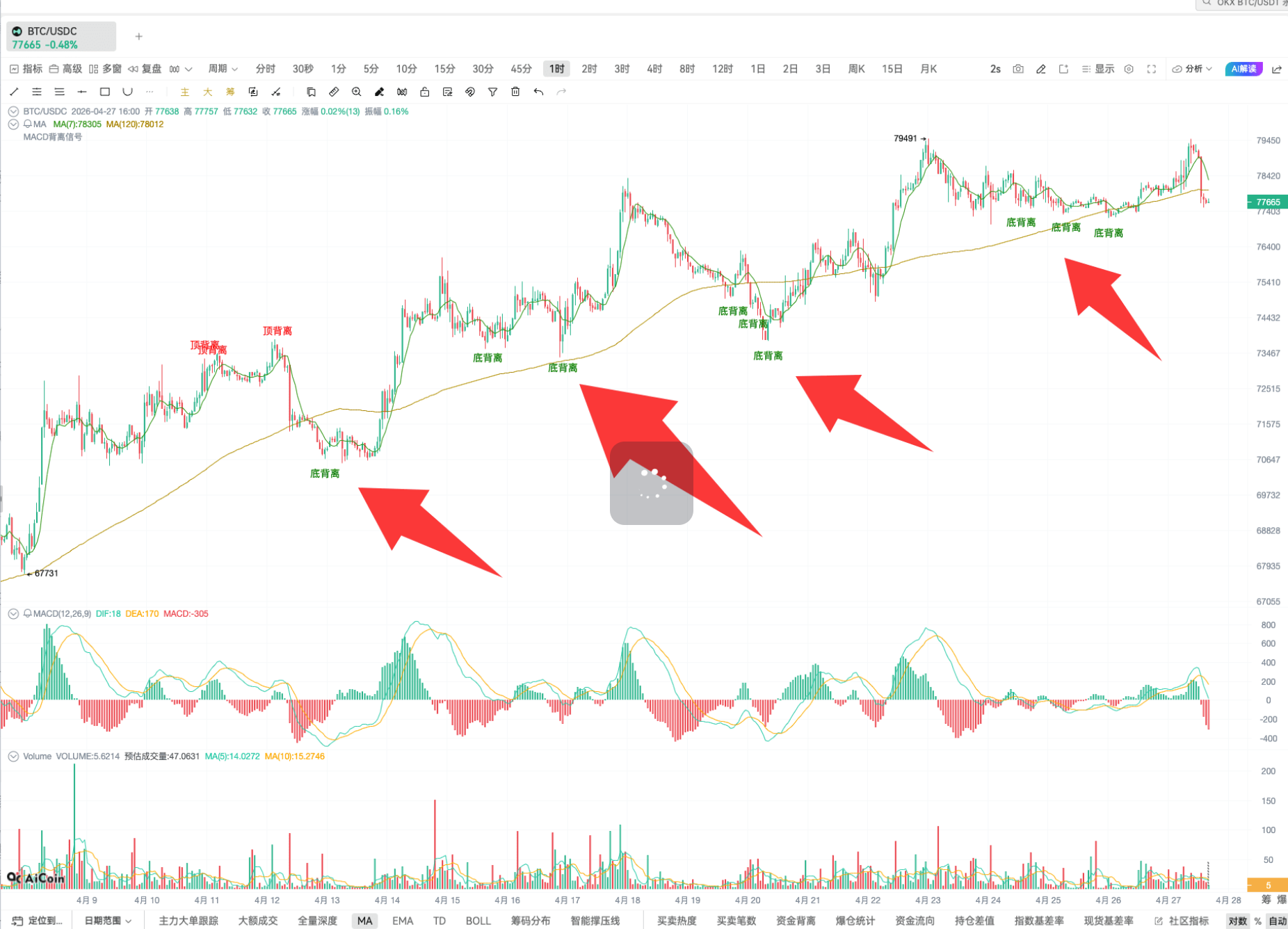
On April 27, 2026, the Bitcoin ecosystem received a substantial amount of new funding simultaneously from both the industrial and financial sides: on one side, mining infrastructure company Luxor Technology announced a deepened partnership with mining hardware manufacturer MicroBT, with Luxor committing to invest about $100 million to procure WhatsMiner mining hardware from MicroBT; on the other side, digital asset investment products continued to attract net inflows from institutions, with relevant assets under management rebounding to a nearly three-month high.
On the mining side, this round of collaboration is not just a simple procurement order. MicroBT, through its investment management firm Inflection Technology Ltd., signed strategic investment terms with Luxor, planning to make an equity investment in Luxor (the amount and valuation were not disclosed), binding mining machine supply and capital together. Placed against the backdrop of capital intensification and accelerated vertical integration in Bitcoin mining infrastructure in recent years, alliances formed by mining manufacturers and mining farm/pool service providers through procurement + equity stakes are becoming an increasingly common configuration path.
On the financial side, CoinShares' latest weekly report shows that last week, digital asset investment products recorded a net inflow of approximately $1.2 billion, marking the fourth consecutive week of net inflows. Influenced by continued inflows combined with price increases, the total assets under management (AUM) of these products rose to about $155 billion, reaching a new high since February 1, 2026. Among them, Bitcoin-related investment products saw a net inflow of approximately $933 million last week, accumulating about $4 billion year-to-date; Ethereum-related products had a net inflow of about $192 million last week, maintaining a weekly inflow of over $190 million for the third consecutive week, indicating a rising independent demand for allocation. Digital asset investment products (such as ETFs, ETPs, etc.) have become the main channel for institutions to enter markets for Bitcoin, Ethereum, and others, and these figures intuitively reflect the pace and preference structure of institutional capital increases.
It is noteworthy that despite the overall bullish funding environment, investment products that short Bitcoin still recorded a net inflow of about $16.5 million last week. Compared to bullish funds, this scale is not remarkable, but it is in the opposite direction, indicating that even as industrial capital and financial capital are simultaneously increasing their stakes in the Bitcoin ecosystem, there remains a divergence within the market regarding short-term price paths, with some capital choosing to hedge risks or bet on corrections via inverse products rather than fully endorsing a unilateral bullish narrative.
$100 Million Mega-Order: Mining Manufacturers Tightly Bound with Mining Enterprises
As funds continue to flow into the Bitcoin ecosystem through various investment products, the industrial side is also placing heavier bets. In the latest collaboration disclosed around April 27, 2026, Bitcoin mining infrastructure company Luxor Technology committed to procuring approximately $100 million worth of WhatsMiner hardware from mining manufacturer MicroBT. Such a pre-purchase of this magnitude indicates that Luxor is not merely engaging in short-cycle hash rate speculation, but is locking in hash rate expansion paths and cost structures for the future years, directly binding future Bitcoin network block rewards with current capital expenditures.
Behind this order, there is also a reverse capital chain: MicroBT is not just shipping hardware, but is signing strategic investment terms with Luxor through its investment management firm Inflection Technology Ltd., planning to make an equity investment in Luxor (specific amount and valuation were not disclosed). On one side, Luxor locks in upstream capacity with a hardware purchase of about $100 million; on the other side, MicroBT binds downstream infrastructure service providers through capital, forming a typical "industrial chain reciprocity" — the seller locks in long-term customer demand through equity, while the buyer reduces supply uncertainty and bargaining costs through a large pre-purchase and equity relationship.
Within the overall evolution of Bitcoin mining in recent years, this transaction aligns with two significant trends: first, capital intensification, as hash rate expansion increasingly relies on large upfront investments, with major mining enterprises or infrastructure companies locking in future cycles of mining machine supply through large orders like that of Luxor–MicroBT; second, accelerated vertical integration, where mining manufacturers and mining farms, pools, and infrastructure service providers reconfigure their originally loose upstream and downstream relationships into a community of highly coupled risks and rewards through strategic cooperation and bilateral equity investments. At a time when financial capital is continuously building positions in Bitcoin through products like ETFs, Luxor and MicroBT further translate this financial logic into real hash rate capacity with an approximately $100 million hardware order compounded by equity cooperation, thereby raising the capital threshold and concentration level of mining infrastructure.
$1.2 Billion Net Inflow in a Week: AUM Reaches New High of $155 Billion
CoinShares' latest weekly report shows that digital asset investment products recorded around $1.2 billion in net inflows last week, achieving net inflows for the fourth consecutive week. The flow of funds transitioned from previous caution and divergence to sustained unilateral inflows over four weeks, indicating that off-market investors' risk appetite and allocation willingness have upgraded from "tentative replenishment" to a sustained increase in allocation.
Driven by this wave of net inflows, the total AUM of related investment products covering various assets such as Bitcoin and Ethereum has risen to about $155 billion, the highest level since February 1, 2026. This position reflects not only the paper expansion brought about by the stabilization and rebound of underlying prices but also reflects real incremental funds created by sustained subscriptions over the past few weeks, pushing the AUM back to a phase high.
From a channel perspective, CoinShares' statistics primarily focus on structured products like ETFs and ETPs. The recent influx of about $1.2 billion was mainly routed through these tools. For institutions, completing subscriptions and position adjustments via ETFs and ETPs has become the core pathway for entering the markets for Bitcoin, Ethereum, and other assets, and the rhythm of these fund inflows is also emerging as a key indicator for assessing the strength of institutional allocations.
Bitcoin Leads, Ethereum Follows Closely: Allocation Preferences Emerge
Structurally analyzing the net inflow of $1.2 billion, Bitcoin remains the core recipient of funds. According to CoinShares data, Bitcoin-related investment products recorded a net inflow of approximately $933 million last week, accounting for the vast majority of overall inflows; accumulating about $4 billion year-to-date (single source) indicates that this is not just a one-week impulse but a continuous incremental curve extending from the beginning of the year, with Bitcoin continuing to be the central axis in institutional digital asset portfolios.
In parallel, Ethereum's funding curve reflects another characteristic. Ethereum-related investment products had a net inflow of about $192 million last week and have maintained a weekly inflow of over $190 million for three consecutive weeks (single source). This pattern of consistent inflows at closely matching weekly levels reflects more stable accumulation rather than short-term trading, with significant heat in market demand for independent allocation to Ethereum, moving beyond being just an “ancillary asset.”
Mapping Bitcoin and Ethereum on the same fund distribution chart makes it clearer how institutions are combining their portfolios. Bitcoin products account for a far higher proportion of total inflows than other assets, playing the role of a “core asset for risk aversion,” used to absorb most funds and provide liquidity and a volatility cushion for the overall portfolio; Ethereum, through continuous and considerable net inflows, is increasingly viewed as a “public chain growth asset,” used to bear growth and elasticity in the portfolio, allowing for a balance between stability and offense in overall allocation.
This dual structure of “Bitcoin as the foundation, Ethereum as the uplift” also leaves room for subsequent fund rebalancing: with a core risk aversion asset providing a buffer, institutions can more flexibly adjust positions on public chain growth assets to adapt to changes in market sentiment and valuation expectations. The simultaneous rise of fund data indicates that this allocation framework is being validated with real capital by more and more institutions.
$16.5 Million Short Position Underneath Bullish Frenzy
In the same week that funds flowed "unilaterally" into bullish products, CoinShares' weekly report shows that short Bitcoin investment products recorded a net inflow of about $16.5 million. In contrast, the inflow of bullish Bitcoin products that week was approximately $933 million, with the short scale being less than 2% of the bullish side, yet the direction is completely opposite. Within an overall net inflow of around $1.2 billion and a bullish sentiment framework, this counterflow itself indicates that the market has not formed a fully unified bullish consensus.
From a product perspective, these short Bitcoin tools mainly exist as inverse ETFs or structured products, which are naturally suitable for two types of capital: one is tactical hedging — institutions with significant exposure to Bitcoin holdings buy a small amount of inverse products to hedge against withdrawal risks from severe short-term volatility; the other is actively betting on short-term corrections, directly utilizing inverse products to amplify sensitivity to downward trends. The net inflow of $16.5 million likely combines both motives: both a "insurance policy" and a "short bet."
It should be seen in the context of a larger asset base: with four consecutive weeks of net inflows pushing AUM of related digital asset investment products to about $155 billion, the near $1 billion absorbed by bullish products within a week alongside a simultaneous expansion of short products means that directional positions in the market (whether bullish or bearish) are making “additions” on a high asset base. Historical experience shows that when both price and funds are at high levels and the scale of inverse products starts to rise, unexpected macro or regulatory disturbances can often amplify short-term volatility, causing originally modest corrections to evolve into steeper price declines due to passive rebalancing of inverse products and concentrated triggering of stop-losses alongside redemptions/subscriptions on both sides.
Therefore, the $16.5 million short net inflow in itself is not sufficient to reverse the current bullish scenario, but it is a clear signal: in the context of industrial capital and financial capital simultaneously increasing their bets, some institutions have begun to reserve firewalls for "if the market does not go as scripted," which objectively raises the volatility and short-term correction risks for the near future.
The Next Steps After the Resonance of Industrial Capital and Institutional Funds
From the developments as of April 27, 2026, Luxor has committed to invest about $100 million to procure WhatsMiner mining machines from MicroBT, and simultaneously received strategic investment support from MicroBT through Inflection Technology, forming a typical heavy asset expansion and equity binding on the industrial side; concurrently, digital asset investment products have seen net inflows for four consecutive weeks, with approximately $1.2 billion in the latest week, raising the AUM of related products to about $155 billion, with Bitcoin products accumulating about $4 billion year-to-date and Ethereum products having exceeded $190 million in inflows every week for three consecutive weeks. Industrial capital and financial capital are simultaneously amplifying positions in the same time window, constituting a "dual line amplification" in the Bitcoin ecosystem.
In the medium to long term, this resonance will change market structures along several main lines. First, the capital intensification and vertical integration in the mining sector will further strengthen the head effect: combinations like Luxor–MicroBT of "large orders + strategic investments" will lead large participants to form deeper bindings on hash rate acquisition, mining machine costs, and service resources, enhancing the amplifying effect of a single enterprise’s capital decisions on overall network hash rate and security, with the overall concentration of network hash rate likely to slowly rise. Second, the "elasticity" of mining enterprise profits will be amplified: following large-scale upfront investments, leading mining companies will become more sensitive to marginal changes in electricity prices, equipment efficiency, and coin prices, expanding profits faster in price uptrends while making profits and cash flow easier to squeeze in downturns. Third, institutions' continued accumulation through products like ETFs and ETPs will impact price and liquidity in the form of "slow variables," meaning that as long as the net inflow rhythm of the past four weeks continues, the mid-price point and depth of Bitcoin and Ethereum could be gradually pushed higher, while also deepening interaction with regulatory bodies, increasing the weight of future policy changes on capital flows.
However, short Bitcoin products still recorded a net inflow of about $16.5 million last week, indicating that even during the "dual line amplification" resonance phase, there remain internal divergences within institutions regarding future trajectories, with some capital choosing systematic hedging. For ordinary participants, the current inflows and capacity expansions cannot be simply extrapolated as a unilateral market; rather, this round of industrial expansion and capital allocation needs to be viewed as a set of dynamic variables, continuously calibrating risk-return judgments with data.
Key data to closely monitor in the coming period include:
● Industrial side: The execution rhythm of the Luxor–MicroBT cooperation, including the delivery and deployment progress of the $100 million mining machine procurement, and the actual pull on Luxor’s business expansion and hash rate scale after MicroBT's investment through Inflection Technology is realized.
● Funding side: Changes in net inflows/net outflows of digital asset investment products in CoinShares' subsequent weekly reports, especially whether the structural flow between Bitcoin and Ethereum continues the current pattern and whether AUM continues to rise or experiences a phase downturn.
● Sentiment and hedging: The scale and capital flow of short Bitcoin products, if net inflows continue to expand, indicate rising hedging demand and divergence that could exacerbate short-term volatility; if the scale shrinks, it may imply partial short covering and a phase recovery in risk appetite.
With the dual push of industrial capital increasing production and institutional funds continuing allocation, the Bitcoin ecosystem is entering a new medium to long-term pattern determined by “hash rate concentration - mining enterprise profit elasticity - institutional holding ratios.” Whether reasonable risk returns can be obtained in this round of resonance does not depend on a single favorable factor, but on the true trajectory of the key data curves mentioned above in the coming months.
Join our community, let's discuss and grow stronger together!
Official Telegram Community: https://t.me/aicoincn
AiCoin Chinese Twitter: https://x.com/AiCoinzh
OKX Benefit Group: https://aicoin.com/link/chat?cid=l61eM4owQ
Binance Benefit Group: https://aicoin.com/link/chat?cid=ynr7d1P6Z
免责声明:本文章仅代表作者个人观点,不代表本平台的立场和观点。本文章仅供信息分享,不构成对任何人的任何投资建议。用户与作者之间的任何争议,与本平台无关。如网页中刊载的文章或图片涉及侵权,请提供相关的权利证明和身份证明发送邮件到support@aicoin.com,本平台相关工作人员将会进行核查。