Whales on Hyperliquild are continuously bullish, believing that Bitcoin will break out of its consolidation range.
Written by: Maher, Foresight News
On April 27, BTC steadily rose, peaking at $79,485, approaching the $80,000 mark. ETH rose over 3% in 24 hours, nearing $2,400. Coinglass data shows that in the past 24 hours, the total liquidation across the network was $216 million, with short positions accounting for $181 million. The largest single liquidation occurred on Binance - ETHUSDT, valued at $11,985,200. The fear index is currently reported at 48, and market sentiment remains neutral.
Dow Jones futures hover around 49,280 points, while Nasdaq 100 futures are around 27,500 points; the US dollar index (DXY) is reported at 98.51, down about 0.25%, and the 10-year US Treasury yield remains stable at 4.31%.
Trump Calls for "Direct Phone Call," Stalemate in Hormuz Unresolved
US-Iran ceasefire negotiations have entered a critical tug-of-war phase. On April 25, Trump abruptly canceled the planned trip of envoy Steve Witkoff and Jared Kushner to Pakistan, citing "no substantive change in Iran's position." Iranian Foreign Minister Abbas Araghchi had previously arrived in Islamabad but left over the weekend and is now heading to Russia to meet with Putin, seeking new diplomatic footholds.
Trump then publicly stated: "If Iranian leaders want to talk, they can call us directly; we have secure lines."
Meanwhile, the US Navy's blockade of Iranian ports continues, while the Iranian Revolutionary Guard maintains "strategic deterrence" in the Strait of Hormuz. Al Jazeera's live updates show that daily oil transport in the strait has decreased by about 40% compared to pre-war levels, and Brent crude prices remain in the $101-$105 per barrel range, with high volatility pushing global inflation expectations higher.
Iranian parliamentary spokesperson emphasized, "We will not return to the negotiating table under the shadow of a blockade." Although Pakistan continues to mediate, neither side has released a new timeline for discussions in the short term.
Geopolitical risk premiums have not fully dissipated, but expectations of a peace talks window have alleviated extreme risk-averse sentiment.
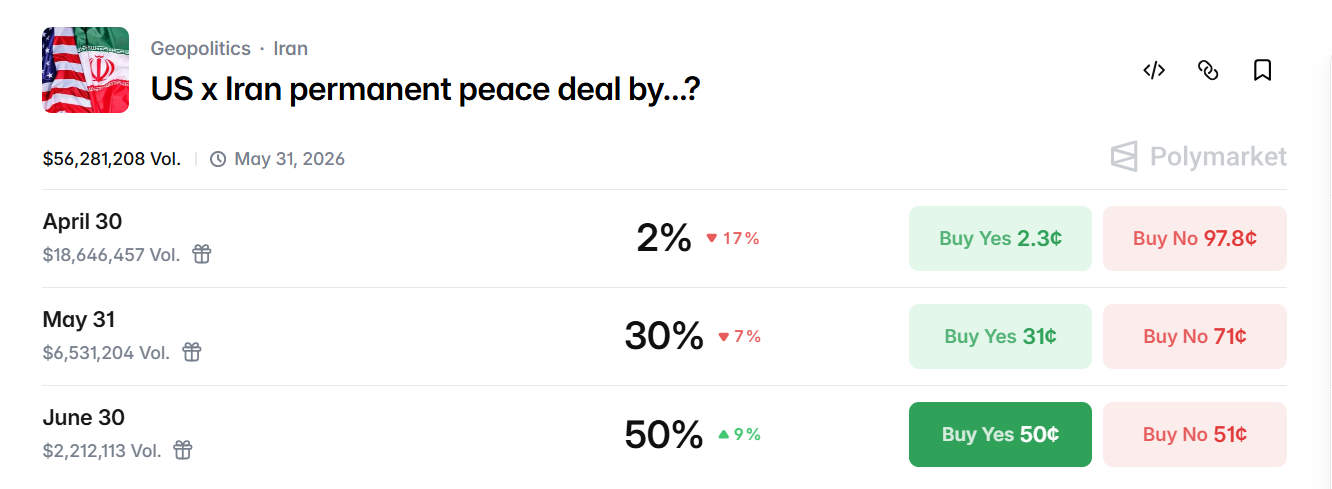
According to the latest data from Polymarket, the market now bets that the probability of the US and Iran reaching a permanent peace agreement by June 30 has risen to 50%.
Justice Department Ends Powell Investigation, Warsh's Appointment Still Faces Obstacles
Meanwhile, the dynamics surrounding the selection of the Federal Reserve Chair have become another "Sword of Damocles" hanging over the cryptocurrency market. Current Chair Jerome Powell's term will officially end on May 15, 2026, while his term as a Fed governor extends to January 2028. As early as January 30, Trump officially nominated Kevin Warsh (former Fed governor, Hoover Institution fellow) to succeed Powell, with the formal nomination process completing in March. On April 21, the Senate Banking Committee held a nomination hearing for Warsh.
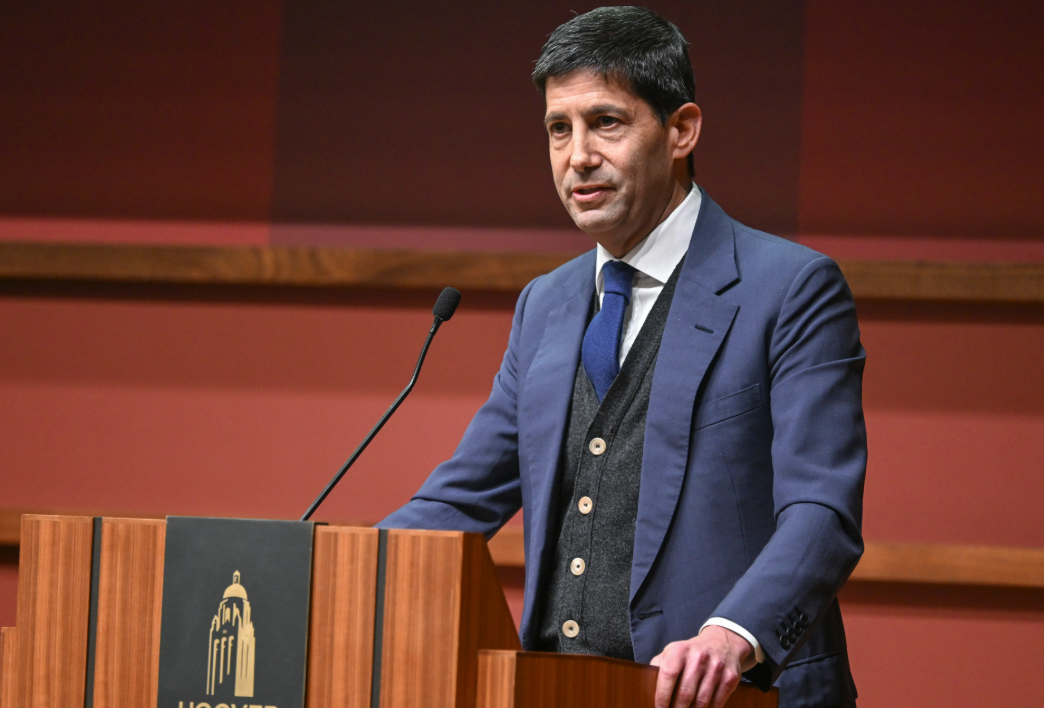
During the hearing, Warsh emphasized maintaining the Fed's independence while expressing a willingness to cooperate with the government in non-monetary policy areas, but he did not provide a clear commitment to a quick rate cut. This presents a subtle tension with Trump's consistent advocacy for low interest rates.
Currently, Warsh's confirmation process faces obstacles. Some Republican senators have stalled the hearing due to the Justice Department's investigation regarding Powell's "office renovation." Powell himself publicly stated in March that he would continue to serve as Chair until his successor is confirmed by the Senate.
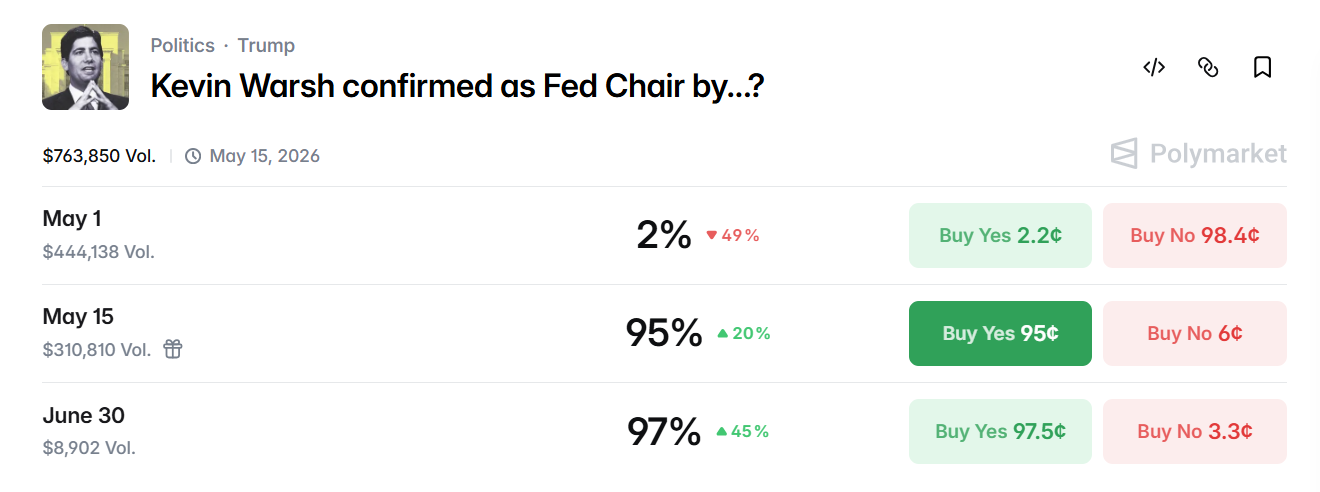
Currently, the latest data on Polymarket shows that the market generally believes the probability of him being announced as Fed Chair on May 15 has risen to 95%, only a step away.
If Warsh eventually takes office, his attitude toward cryptocurrencies is highly anticipated: Warsh has publicly acknowledged some attributes of Bitcoin as a "national security-level" asset and supports more flexible balance sheet management. However, in the short term, inflation pressures driven by oil prices may force the new Chair to remain cautious and delay the previously planned rate cut path.
In summary, the US-Iran conflict and the transition of the Federal Reserve Chair create a "dual macro test." Geopolitical risks create short-term volatility and risk premiums, while uncertainty in monetary policy determines the mid-term liquidity environment. The experience of the cryptocurrency market over the past two years shows that Bitcoin often performs better than traditional risk assets under high inflation + geopolitical crises, provided that the Fed does not tighten further. If the stalemate in the Strait of Hormuz eases before May, or if Warsh's confirmation sends clear signals of easing.
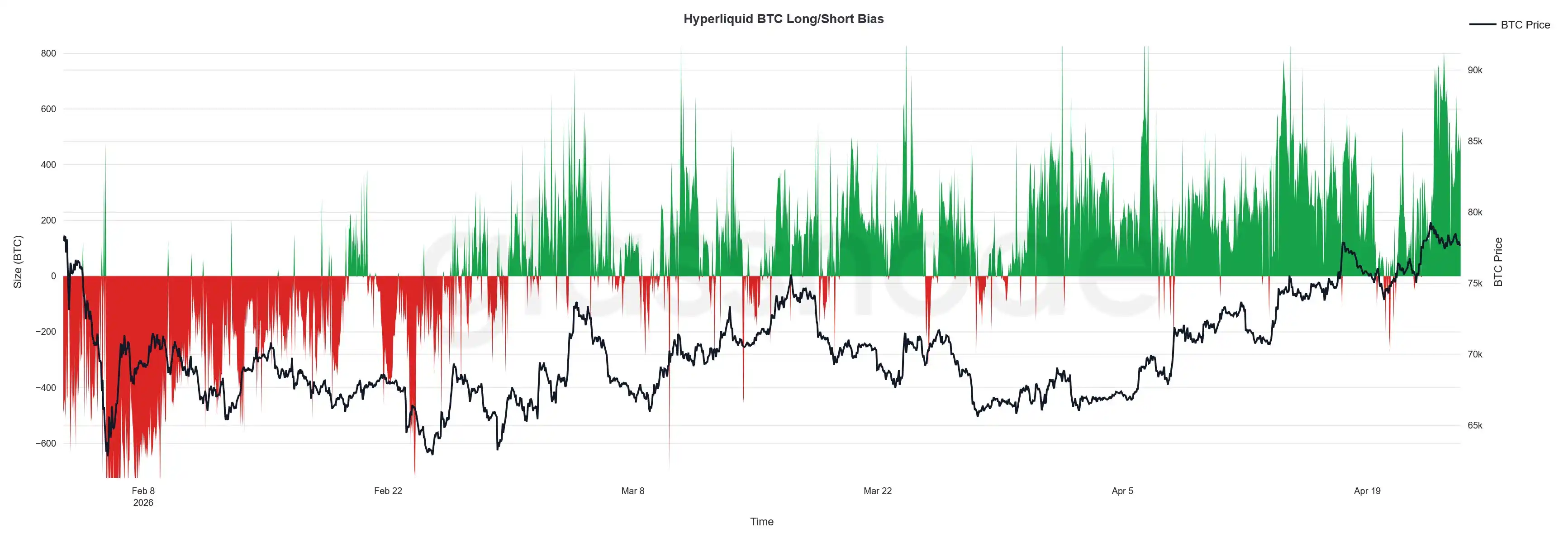
Recently, glassnode stated that whales on Hyperliquild are continuing to go long, believing that Bitcoin will break out of its consolidation range. Over the past two months, their confidence and long positions have steadily increased, showing strong bullish sentiment among large perpetual contract traders.
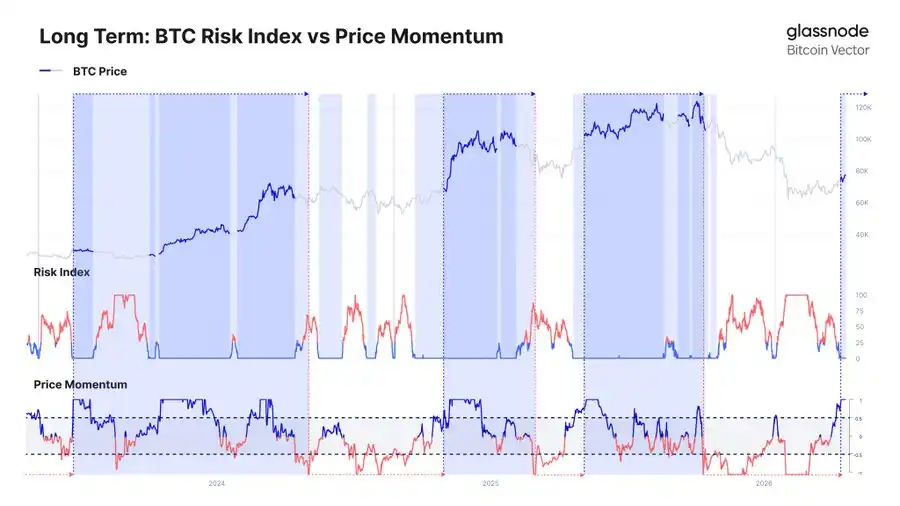
Additionally, its Vector quantitative model has triggered a clear upward signal, bullish on Bitcoin.
免责声明:本文章仅代表作者个人观点,不代表本平台的立场和观点。本文章仅供信息分享,不构成对任何人的任何投资建议。用户与作者之间的任何争议,与本平台无关。如网页中刊载的文章或图片涉及侵权,请提供相关的权利证明和身份证明发送邮件到support@aicoin.com,本平台相关工作人员将会进行核查。


