
Author: Knight Frank
Compiled by: Felix, PANews
Global private real estate consultancy Knight Frank recently released the "2026 Wealth Report", highlighting the rapid expansion of global private wealth and the dynamic changes in its geographical distribution. PANews has summarized the core content of the report.
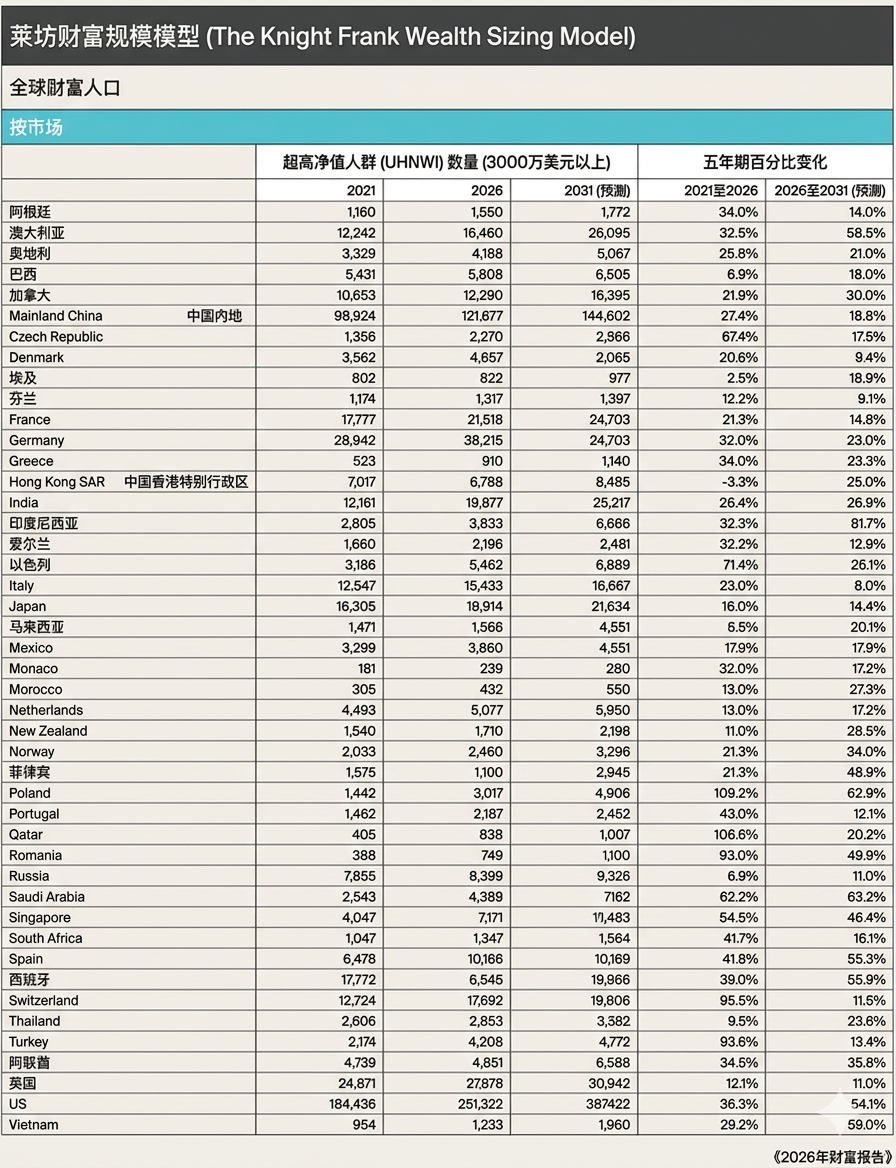
The report shows that between 2021 and 2026, the number of ultra-high-net-worth individuals (wealth exceeding 30 million USD) globally increased from 551,435 to 713,626, adding 162,191 ultra-high-net-worth individuals over five years, or an average of 89 individuals reaching the 30 million USD mark daily.
The United States led this wealth growth. During this period, 41% of all newly minted ultra-high-net-worth individuals came from the United States. The share of ultra-high-net-worth individuals in the U.S. rose steadily from 33% in 2021 to 35% in 2026. By 2031, the U.S. may account for 41% of the total number of ultra-high-net-worth individuals globally.
China remains the world's second-largest wealth creation center, although its relative position is declining. China's share of global ultra-high-net-worth individuals fell from 18% in 2021 to 17% in 2026, and is expected to further decrease to 15% by 2031. In fact, nearly all countries are losing their global market share to accommodate the ongoing growth of wealth in the U.S.
India, however, is an exception. Between 2021 and 2026, the number of ultra-high-net-worth individuals exceeding 30 million USD surged by 63%, increasing from just over 12,000 to nearly 20,000. India's share of global ultra-high-net-worth individuals is only 2.8%, up from just over 2% five years ago. By 2031, the number of ultra-high-net-worth individuals in India is expected to grow from the current 19,877 to 25,217.
Australia occupies a disproportionate position in the global wealth landscape. It is expected that over the next five years, the number of ultra-high-net-worth individuals in Australia will grow by nearly 60%, reaching 26,095, almost one-thousandth of the total population. Australia boasts a large pool of billionaires, with an anticipated growth of 77% from 2026 to 2031.
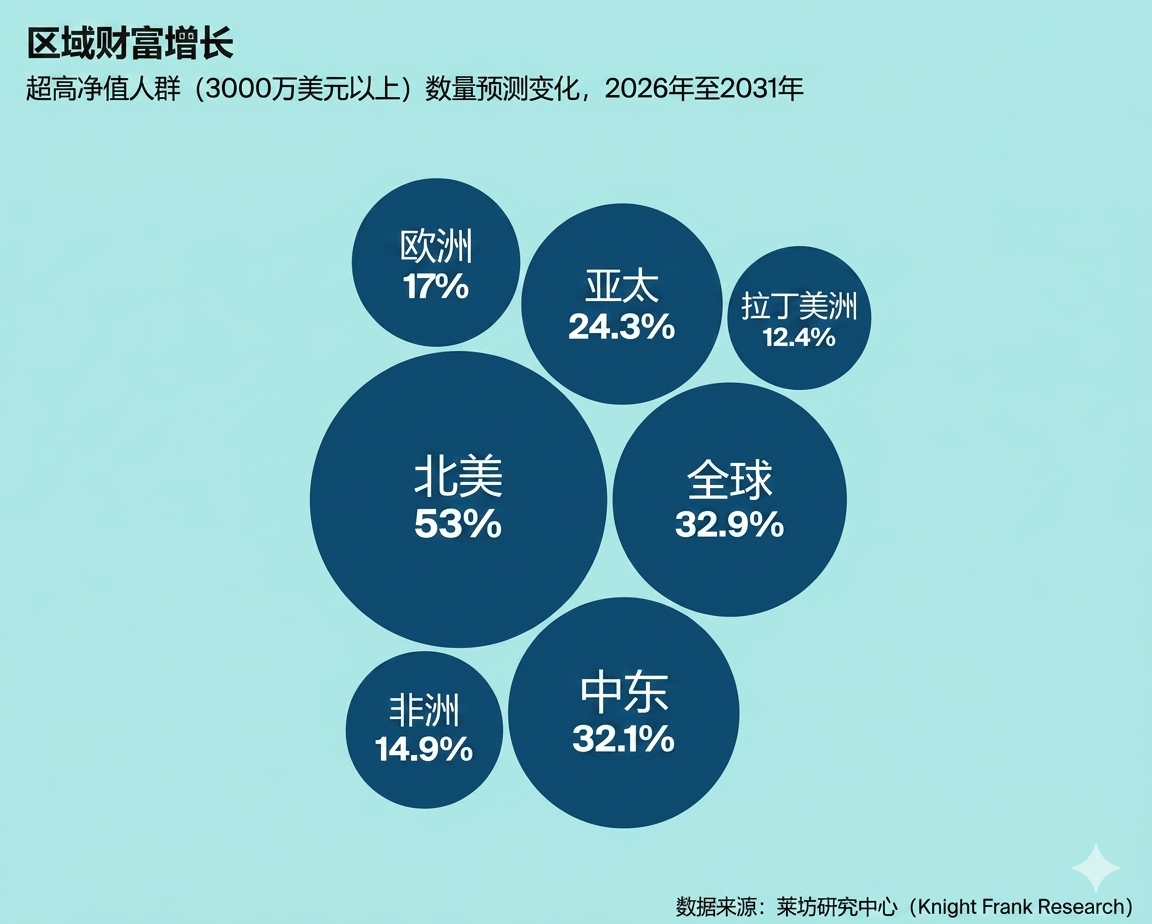
Regionally, the global wealth landscape is primarily dominated by three major regions.
North America leads, accounting for 37% of global ultra-high-net-worth individuals in 2026. The Asia-Pacific region holds nearly 31% of ultra-high-net-worth individuals in 2026. Europe follows closely with 183,953 super-rich individuals, accounting for about a quarter of the global total. Besides these regions, the Middle East has performed excellently. Over the past five years, the Middle East's share among global billionaires increased from 2.4% to 3.1%.
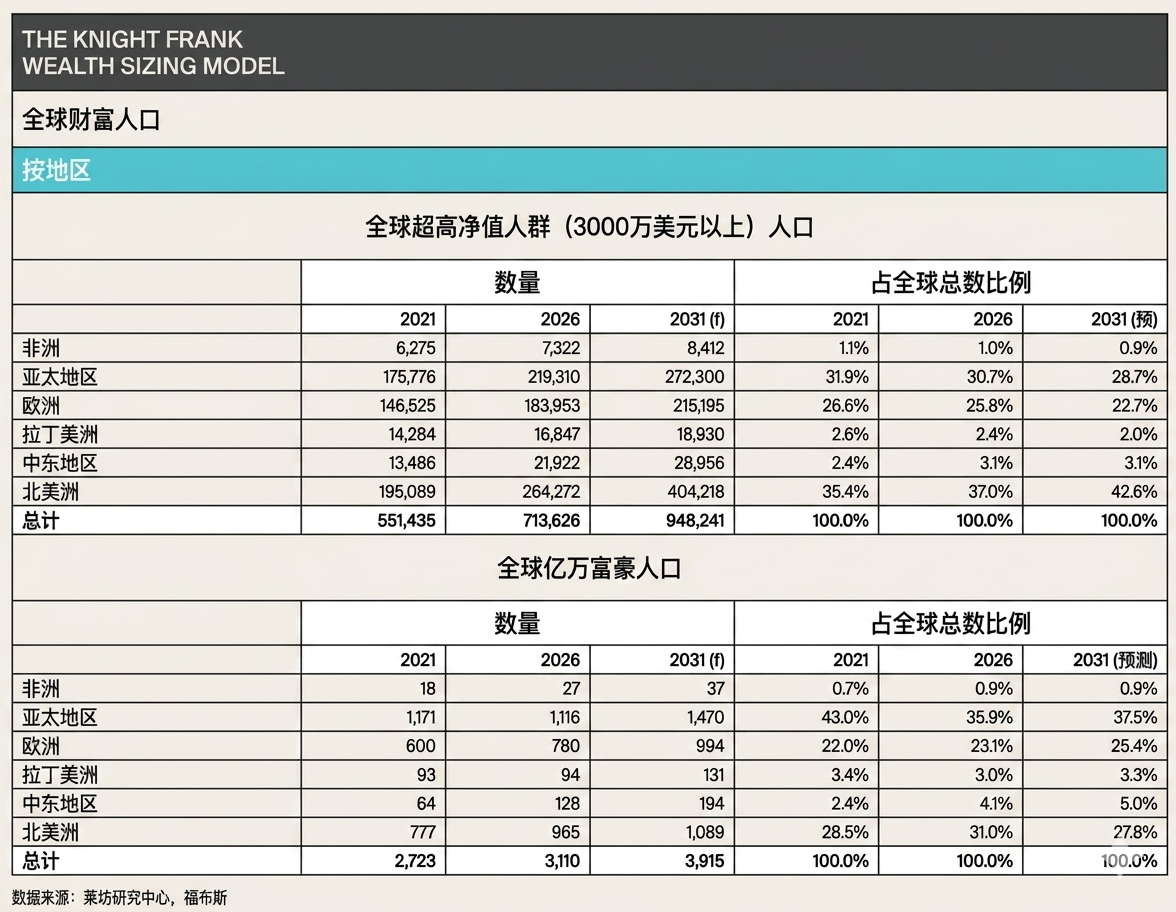
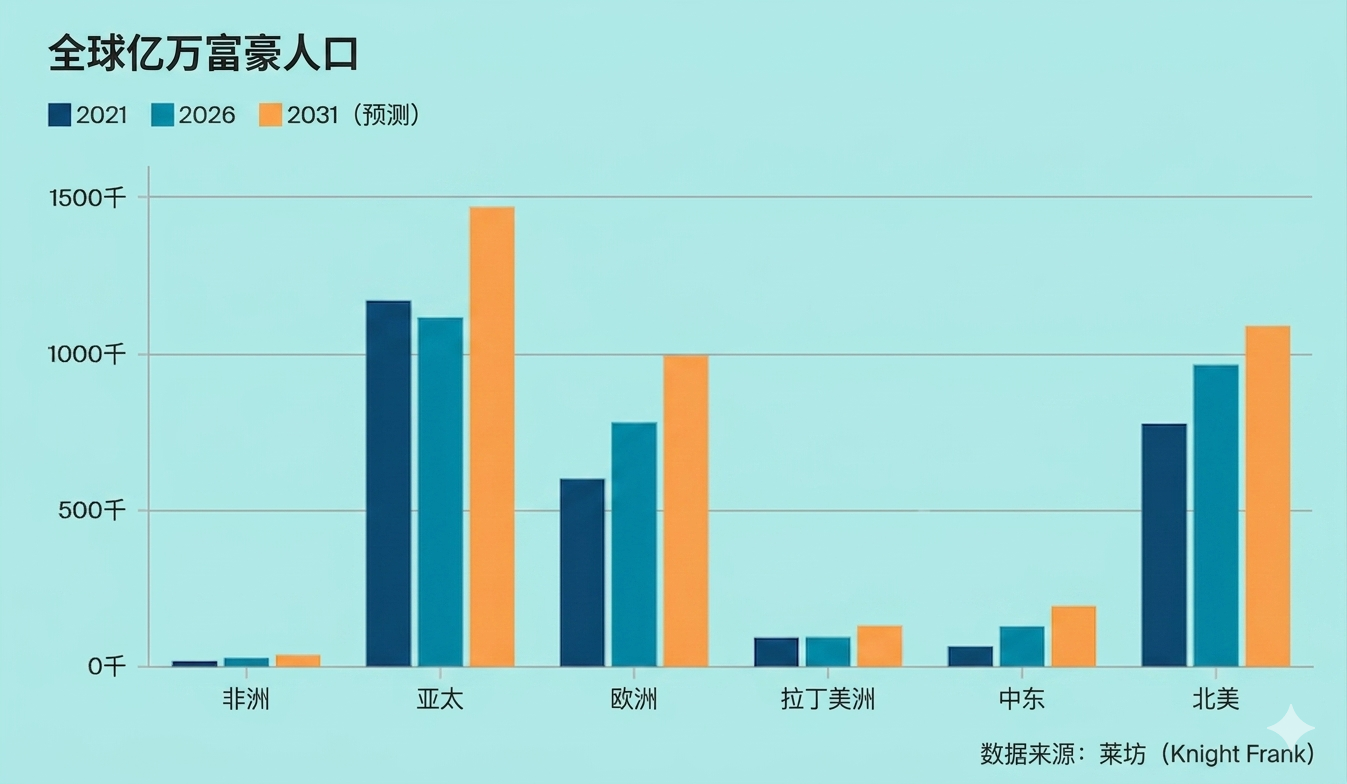
Furthermore, the geographical distribution of the global 3,110 billionaires is more dispersed than among the broader ultra-high-net-worth individuals. The Asia-Pacific region has the largest number of billionaires, totaling 1,116, followed by North America with 965. The Middle East accounts for just over 4% of the global total of billionaires, significantly higher than its proportion among ultra-high-net-worth individuals.
Looking ahead, the growth of billionaires is expected to show a high degree of regional diversity. In percentage terms, Saudi Arabia is projected to lead with a 183% increase in the number of billionaires, followed by Poland (123%), Sweden (81%), and Australia (77%). This underscores the increasingly globalized nature of billionaire growth in the future.
In the next five years, the growth of ultra-high-net-worth individuals globally will not be led by traditional economic powerhouses but rather by some rapidly maturing economies. Indonesia ranks first, with its number of ultra-high-net-worth individuals exceeding 30 million USD expected to surge by 82% by 2031. Close behind are Saudi Arabia and Poland, both with growth rates exceeding 60%. Vietnam's nearly 60% increase highlights the rapid rise of emerging wealth centers in Southeast Asia.
Europe is also performing strongly, with Sweden, Romania, and Greece all showing significant growth. Although wealth is still concentrated in a few global economic powerhouses, its regional distribution is continually expanding.
Related reading: California plans to "harvest" 5% from billionaires? Some are moving overnight
免责声明:本文章仅代表作者个人观点,不代表本平台的立场和观点。本文章仅供信息分享,不构成对任何人的任何投资建议。用户与作者之间的任何争议,与本平台无关。如网页中刊载的文章或图片涉及侵权,请提供相关的权利证明和身份证明发送邮件到support@aicoin.com,本平台相关工作人员将会进行核查。


