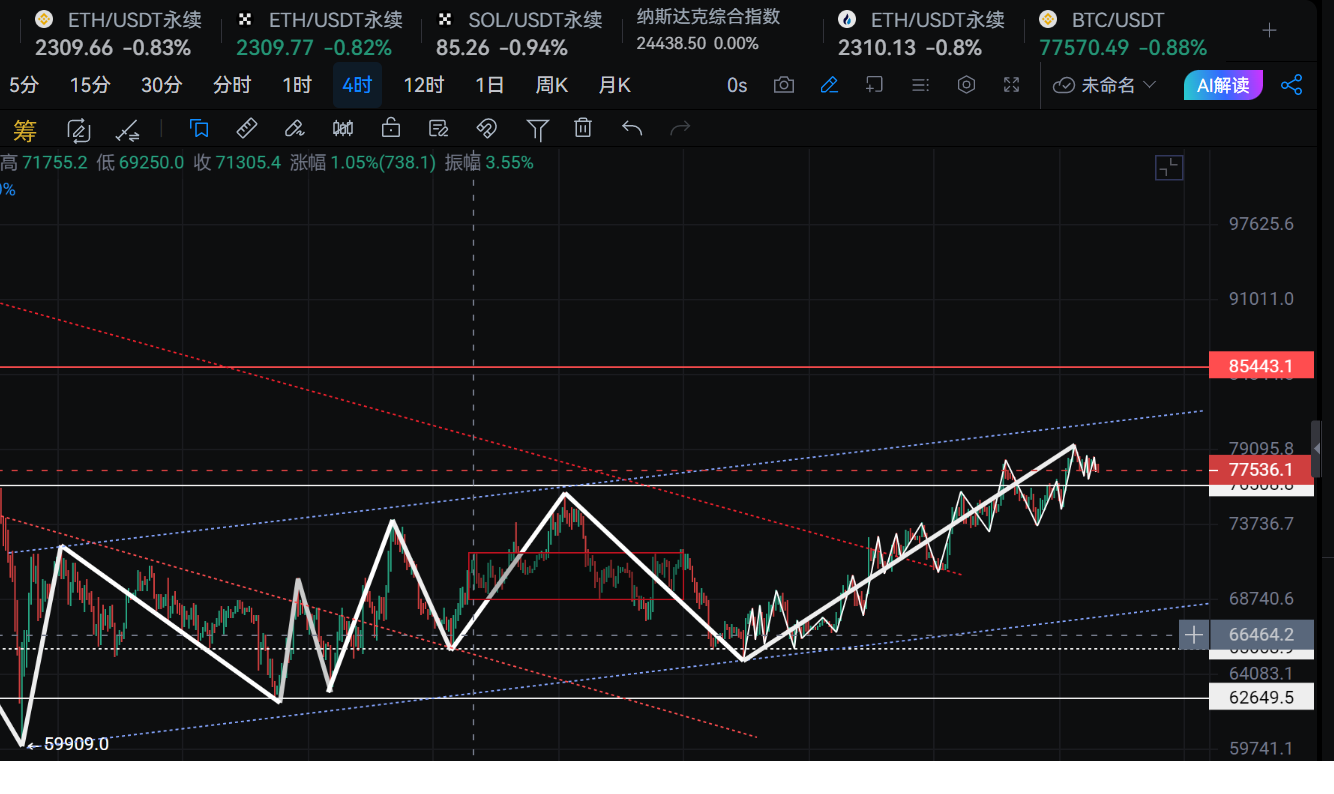
As of April 24, 2026, publicly available information indicates that the Japanese listed company Metaplanet, defined in research briefs as a "Bitcoin treasury company" in Japan, announced the issuance of 8 billion yen in ordinary bonds with a 0% coupon rate. The public statement has directly pointed the fundraising purpose toward "further purchasing Bitcoin." This means that what the market sees is not just a single financing or purchasing message, but rather a continuation of the company's action to amplify its Bitcoin treasury exposure using low-cost debt tools.
For the bullish narrative, zero-interest financing to accumulate Bitcoin reinforces the management's commitment to the reserve asset strategy; however, from a balance sheet perspective, zero-interest does not mean no risk. A 0% coupon rate only means no periodic interest payments during the term, and the principal still needs to be repaid at maturity. Thus, as the debt-driven exposure continues to expand, future cash flow, refinancing capacity, and debt repayment arrangements are also pushed back into the center of market discussions.
8 Billion Yen Zero-Interest Debt Directly Aimed at Bitcoin
Therefore, the most noteworthy aspect of this announcement is not merely the action of "issuing another bond," but rather that the use of proceeds has been directly pointed toward further increasing Bitcoin holdings. As of April 24, 2026, public information indicates that Metaplanet announced the issuance of 8 billion yen in zero-interest ordinary bonds, and the only core financing information that can currently be confirmed consists of three items: the scale is 8 billion yen, the coupon rate is 0%, and the funds will be used for further purchasing Bitcoin. For a Japanese listed company classified by the market as a "Bitcoin treasury company," this means that the financing action is explicitly bound to asset allocation direction, and the funds will not remain at a general operational level but will continue to flow toward its core reserve asset strategy.
From the perspective of information processing priority, it is not appropriate to focus the discussion on unverified bond details at this stage. The reason is simple: the specific issuance date, the corresponding original Japanese disclosure document, and whether the TDnet link is entirely consistent with this event remain to be confirmed. Before these key documents have been individually verified, extending discussions around the term, subscription structure, and execution rhythm can easily turn "speculation" into "fact." In contrast, the already articulated public statement is clear enough: Metaplanet is continuing past practices of financing to expand its Bitcoin exposure, and this time it is still using low coupon cost tools to provide ammunition for future purchases.
For this reason, the market's immediate interpretation will focus on two directions: on one hand, zero-interest financing continues to buy Bitcoin, which reinforces the confidence expression of the company's management in this reserve asset strategy; on the other hand, since the source of funds is debt, the pressure for principal repayment and subsequent refinancing cannot disappear. However, regarding the current information itself, the hardest conclusion remains one sentence — this 8 billion yen zero-interest debt is not focused on "debt," but on "buying coins".
Zero-Interest is Not Costless, Repayment Pressure Lies Ahead
Looking at "0% interest" in isolation, the intuitive appeal of this 8 billion yen ordinary bond is strong: the company does not need to bear periodic interest payments in the current term, and the cash flow pressure on the financing side is significantly lighter than it would be with interest-bearing debt. For a listed company categorized by research briefs as a Bitcoin treasury company, this means that it can convert the raised funds more directly into Bitcoin exposure with a lower current financial burden, which is also why the market sees this operation as "continuing to accumulate at low cost."
However, zero-interest does not mean no cost. The basic definition provided by the research brief is very clear: not required to pay interest does not mean the debt disappears, and the principal still needs to be repaid at maturity. In other words, such tools merely postpone the pressure from "ongoing interest payments" to "one-off repayment of principal at maturity." If in the future the company’s own cash flow is insufficient, or if the external financing environment is unfavorable at that time, the refinancing capacity will become the real test. In other words, while in the short term the financing cost may lighten, in the long run, the debt repayment points become more concentrated, risk has not been eliminated, but merely deferred.
More crucially, the currently confirmed terms in the public discourse actually include only two items: scale of 8 billion yen, interest rate 0%. Beyond that, key conditions such as maturity, subscription target, and details of the interest payment method have not been disclosed. In the absence of this information, the market can now at most discuss directional impacts — for instance, it does indeed reduce the current interest burden and will pressure future cash flows and refinancing more — but cannot rigorously quantitatively assess the repayment pressure or deduce a more detailed leverage structure. It is especially important to note that at this stage, one cannot arbitrarily invoke conversion rights, collateral arrangements, or other undisclosed clauses, or it will deviate from the factual boundaries of this disclosure.
Swapping Bonds for Bitcoin Further Amplifies Volatility
If this operation is viewed from the balance sheet perspective, the logic is quite straightforward: the public statement has already indicated that the 8 billion yen ordinary bond, with a 0% interest rate, will be used for further purchasing Bitcoin. This means the company is not using operational cash to naturally accumulate positions, but is continuing the earlier path of financing to increase Bitcoin holdings, using new liabilities to exchange for a higher Bitcoin price exposure.
The core impact of this structure is not in the current interest cost — zero-interest bonds indeed alleviate short-term interest expenses — but rather that the company's asset side’s binding with a single high volatility asset will continue to rise. If subsequent fundraising is realized and converted into actual purchases, when the price of Bitcoin rises, the asset side's book expansion will reflect faster; the market will also find it easier to continue to provide explanations along the lines of a "Bitcoin treasury company." However, conversely, once the price retracts, the debt side's principal repayment requirement will not contract accordingly, and volatility will more directly transmit to future cash flow arrangements and refinancing pressures.
This is also why such financing actions for buying coins are often viewed as both "strengthening asset allocation confidence" and "amplifying debt-driven exposure." The former bets that the price increase of Bitcoin can cover and amplify asset-side returns, while the latter worries that when asset price volatility is significant enough, liabilities as rigid constraints will significantly increase the company's sensitivity to price retractions.
However, discussions at this stage can only stay on the directional risks and cannot be written as precise leverage calculations. The reason is simple: there remain at least three core questions that have not been answered: first, when will the bonds mature; second, when will the funds raised correspond to the Bitcoin purchases; and third, how large is the company's existing total Bitcoin holding. Especially since zero-interest debt does not mean no risk, it merely exempts periodic interest payments, and the principal still needs to be repaid at maturity, thus the risk will ultimately return to future cash flows and refinancing capacity. It is precisely because of this that the core conflict of this incident will continue to be defined as: steadfast confidence coexisting with leverage risk.
In terms of information completeness, the hard information that the market can currently confirm remains very limited: the scale is 8 billion yen, the interest rate is 0%, and the purpose is to further purchase Bitcoin. Beyond that, key variables such as maturity, subscription target, the actual increase amount, specific timing plan, and the current total holdings remain undisclosed; even the bond issuance date and the corresponding original Japanese disclosure document link are still pending verification. Before these gaps are filled, it is challenging for outsiders to make precise calculations regarding leverage levels, execution rhythms, and subsequent balance sheet pressures.
Therefore, the short-term discussion should not focus on forecasting profits, and it should not slide into unverified speculation over trading paths. Instead, a more valuable follow-up sequence is clear: first, verify the original announcement along with the Japanese disclosure link, then examine the complete bond terms, and finally confirm whether the fundraising has truly been converted into actual Bitcoin purchasing. For Metaplanet, what truly decides whether the market "buys in" is not the conceptual confidence expression, but whether subsequent disclosures can complete the terms and execution details.
Next Steps: Dating Terms and Buy-in Rhythm
The substantial weight of this news lies not just in the "issuing another bond," but in its reiteration of a clearer signal to the market: as a Japanese listed company that has been positioned by research briefs as a Bitcoin treasury company, Metaplanet is binding capital market financing and Bitcoin reserve expansion more deeply together. Looking along the previously established route of financing to increase Bitcoin holdings, this operation demonstrates strong continuity and is therefore more easily compared to the MicroStrategy-like financing-buying model.
However, before the original disclosure has been completely verified, conclusions must also be tightened to the verified scope. Within the boundaries of currently available public information, the verifiable core statements consist of only three items: the scale is 8 billion yen, the coupon rate is 0%, and the use of proceeds is to continue purchasing Bitcoin. Beyond that, the issuance date of April 24, 2026, still needs to be verified with the company’s original announcement, and whether the TDnet disclosure document link corresponds to the same event is also pending confirmation. Any further writing about the maturity date, collateral arrangements, conversion rights, or using this to deduce the purchase amount, average purchase price, or changes in total holdings, will exceed the currently verified information scope.
Thus, the three most valuable follow-up points remain: first, the original announcement itself, especially the Japanese version and corresponding disclosure link, to first confirm the formal legal and information disclosure tone of this financing. Second, the complete bond terms; what the market genuinely needs are key conditions affecting risk pricing, like maturity, repayment structure, etc.; zero-interest only indicates that no periodic interest is paid, which does not imply that there is no future cash flow pressure on the funds. Third, the timing rhythm of the fundraising being converted into actual Bitcoin purchases — there remains a distance between "to be used for purchasing" and "has been bought," involving execution windows, market timings, and disclosure confirmations. For Metaplanet, the strategic direction is already quite clear; but for market pricing, what is truly important remains the terms implementation and purchase fulfillment.
Join our community to discuss together and become stronger!
Official Telegram community: https://t.me/aicoincn
AiCoin Chinese Twitter: https://x.com/AiCoinzh
OKX benefits group: https://aicoin.com/link/chat?cid=l61eM4owQ
Binance benefits group: https://aicoin.com/link/chat?cid=ynr7d1P6Z
免责声明:本文章仅代表作者个人观点,不代表本平台的立场和观点。本文章仅供信息分享,不构成对任何人的任何投资建议。用户与作者之间的任何争议,与本平台无关。如网页中刊载的文章或图片涉及侵权,请提供相关的权利证明和身份证明发送邮件到support@aicoin.com,本平台相关工作人员将会进行核查。