Original |Odaily Planet Daily (@OdailyChina)
Author|Golem (@web3_golem)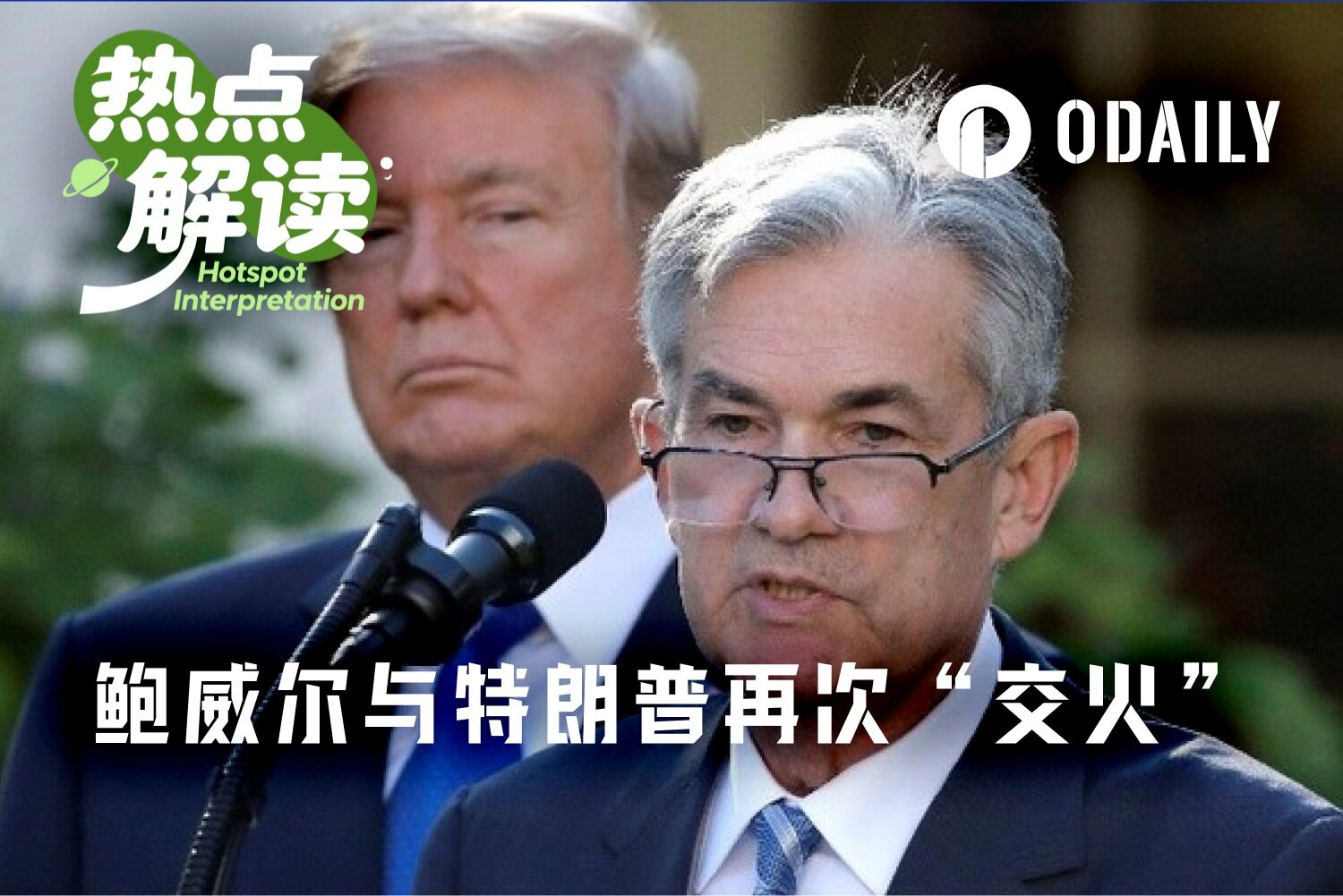
Trump really has a bit of the flavor of "internal troubles and external dangers" now: battling endlessly with Iran on the outside, and the palace struggle with Federal Reserve Chairman Powell on the inside is increasingly heating up.
The two have long looked askance at each other. Powell has repeatedly not followed Trump's wishes on interest rate cuts, and Trump has frequently indicated he wants to fire Powell. Originally, if he could just hold on a little longer, this problem could soon disappear on its own: Powell's term as Federal Reserve Chairman will expire on May 15, 2026. Although he can stay on as a board member until 2028, as long as Trump's loyalist Kevin Warsh takes over, the new chairman will have the say, and the obedient era of interest rate cuts seems just around the corner.
However, the unexpected has happened. Odaily Seer Prophet Channel monitoring shows that the probability of Powell stepping down as Federal Reserve Chairman after his term expires on Polymarket has fallen to 2%, and Powell is likely to continue as acting chairman after May 15.
As early as March 19, Powell indicated that if his successor was not confirmed before his term ends (May 15), he would continue to serve as Federal Reserve Chairman, while further stating that as long as the Justice Department's investigation into him remains unresolved (Odaily Note: This investigation involves whether Powell lied to Congress regarding the $2.5 billion renovation of the Federal Reserve building), he would not leave the Federal Reserve Board.
Therefore, whether Trump can shake off Powell depends on whether the Senate confirms Kevin Warsh's appointment. Although the prediction market has already given a price, the real answer will only be revealed on April 21 (next Tuesday).
Key Date: Will Warsh's Federal Reserve Nomination Be Confirmed by the Senate on April 21
Kevin Warsh is Trump's nominee for the next Federal Reserve chairman, but whether he can take office as scheduled still requires review by the U.S. Senate, which has the authority to veto Warsh's nomination as Federal Reserve Chairman. On April 21, Warsh will first attend a Senate Banking Committee hearing, and market concerns are that Warsh may not even pass the committee's confirmation.
The key figure obstructing Warsh's appointment is Republican Thom Tillis from North Carolina, a member of the Banking Committee. His reasoning is that the Justice Department has not yet completed its investigation into Powell, and he has publicly stated that he will block Warsh's nomination from being submitted to the Senate for a full vote before the Justice Department ends its investigation. Thom Tillis holds significant influence, as although the Republicans hold a 13 to 11 majority on the Senate Banking Committee, as long as Thom Tillis votes against it, Warsh's nomination could become stalled.
The Justice Department's investigation into Powell dates back to July 2025, when Trump visited the renovation site of the Federal Reserve building and publicly questioned the unreasonable budget. Therefore, in January 2026, the Justice Department officially launched an investigation into Powell regarding the renovation costs of the Federal Reserve building. This investigation was originally a political strategy by Trump, aimed at tarnishing Powell's public image and increasing pressure on the Federal Reserve.
Perhaps Trump did not expect to be caught in a backlash. However, Trump also does not intend to terminate the investigation into Powell just to clear obstacles for Warsh's appointment. In an interview with Fox Business Channel on April 15, he stated that although Thom Tillis's opposition would delay the confirmation of Warsh's appointment, he does not plan to end the investigation, directly stating, "Don’t you think we need to find out what happened there?"
Let us take a step back: even without the obstruction from this investigation, Warsh may still find it difficult to obtain the 51 Senate votes needed for confirmation. Given the current geopolitical and economic situation, Warsh will likely face questions about the independence of the Federal Reserve and interest rate policy during the hearing. If war causes bottlenecks in energy and commodities to persist, the Federal Reserve's focus should be on whether to raise interest rates rather than lower them.
This forces Warsh to clarify his position: either always support Trump, which would lower the probability of his confirmation, or defend the current cautious stance of the Federal Reserve, which would anger the president.
Regardless of how Warsh decides, the time window left for him is not much: the hearing is scheduled for April 21, which means that before Powell's term ends, the Senate has only 24 days left to confirm Warsh's nomination and vote; and of those 24 days, the Senate plans to meet for only 13 days.
Trump and Powell's Stalemate
Therefore, based on the analysis above, as long as Warsh is obstructed at the hearing on April 21, there is a high probability that Powell will continue to serve as acting chairman of the Federal Reserve after his term expires on May 15, continuing to oppose Trump.
There have been precedents where the current chairman continues as an "acting chairman" leading the Federal Reserve due to the successor not being confirmed. For example, during President Clinton's administration, then-Federal Reserve Chairman Alan Greenspan continued to lead the Federal Reserve for more than three months as acting chairman after his term expired because the confirmation process for his successor was not completed; Powell similarly served as acting chairman for about three months in 2022 while waiting for Senate confirmation of his second term.
This mechanism also has a legal basis in the United States. The law that regulates the Federal Reserve, the Federal Reserve Act, stipulates that board members can continue to serve until their successors are appointed.
Faced with this situation, Trump is also unwilling to sit idly by. In an interview with Fox Business Channel on April 15, he stated that if Powell does not leave on time, he will fire him, and he will also not give up on the investigation against him.
However, this may also just be a verbal threat. Because Trump has not revealed what strategy he will adopt to fire Powell, some conservatives believe that Trump has the right to appoint one of his own nominated Federal Reserve governors—such as Milani, Bowman, or Waller—to serve as acting chairman before Warsh is confirmed, rather than letting Powell take the position, based on a memo drafted during the Carter administration that indicates if the president's nominee is not confirmed in a timely manner, the president may designate an acting chairman.
But the Federal Reserve's attitude towards this memo is still unknown. Moreover, the memo cannot ultimately serve as a legal basis, so Trump's appointment of anyone other than Powell as acting chairman has little legal grounds.
If Trump were to follow normal procedures to fire Powell, the chance of success would also be slim. U.S. law states that Trump does not need Congressional confirmation to fire Powell, but he cannot dismiss him outright without reason; it requires "for cause," meaning there must be legal grounds, and it cannot simply be due to policy differences. Whether the grounds for dismissal are legitimate must ultimately be decided by the court.
Under the current circumstances, the only legitimate reason Trump has to fire Powell is if Powell lied or committed corruption regarding the $2.5 billion renovation of the Federal Reserve building. However, according to a March 25 report by The Washington Post, a senior deputy from the Justice Department, Jenny Piro, admitted in a closed-door hearing this month that the Justice Department had not gathered evidence of wrongdoing in its criminal investigation of Federal Reserve Chairman Powell regarding the renovation costs.
This means there has been no substantial progress in the investigation against Powell. Therefore, if Trump really fires Powell, the latter will certainly appeal against the dismissal, and in the absence of sufficient evidence, the court ruling will likely side with Powell.
However, for investors in the capital market, if the timing of Warsh's appointment is delayed and Powell retains control of the Federal Reserve for a few more months, it is also not good news. Because compared to the continually cautious Powell, the market clearly prefers Warsh, who might release more signals of rate cuts after taking office, and Warsh's own shown inclination towards crypto also makes it easier to bring new possibilities to the crypto market.
免责声明:本文章仅代表作者个人观点,不代表本平台的立场和观点。本文章仅供信息分享,不构成对任何人的任何投资建议。用户与作者之间的任何争议,与本平台无关。如网页中刊载的文章或图片涉及侵权,请提供相关的权利证明和身份证明发送邮件到support@aicoin.com,本平台相关工作人员将会进行核查。


