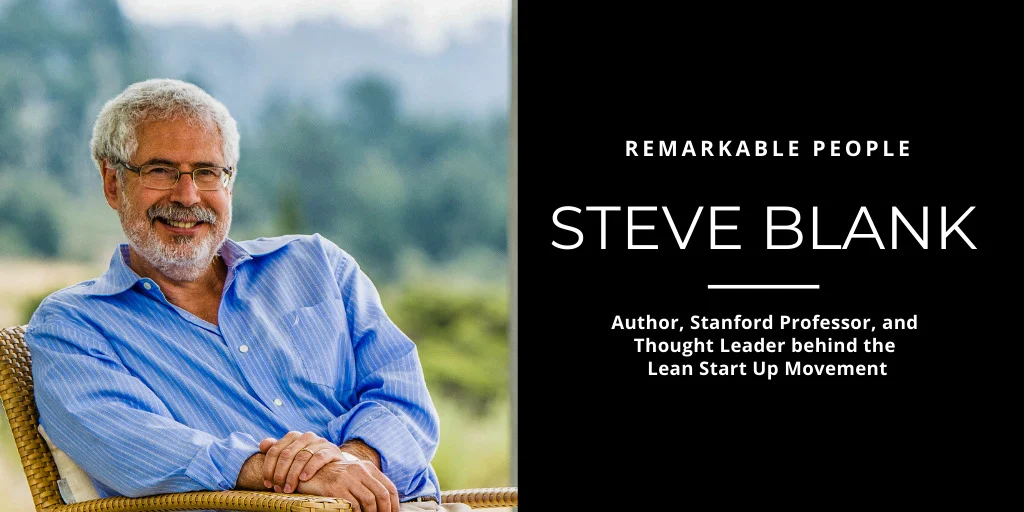
Author: Steve Blank
Compiled by: Deep Tide TechFlow
Deep Tide Introduction: The author of this article, Steve Blank, is very famous in the Silicon Valley startup community, known as the "father of lean startup". He wrote "The Four Steps to the Epiphany" and is the proponent of the Customer Development methodology.
Eric Ries's "The Lean Startup" was developed based on his theories. He has taught entrepreneurship courses at Stanford, Berkeley, and Columbia University, and the US National Science Foundation's I-Corps program is also based on his methodology.
Recently, Steve Blank had coffee with a founder he invested in and found that after six years of hard work, this founder was completely unaware that the outside world had changed.
As a result, he wrote this article with a very direct core message:
If your company has been established for more than two years, your business plan is very likely outdated. AI is reshaping development speed, team size, pricing models, and competitive barriers, and founders still running on a 2024 script are unlikely to make it to the next round of funding.
For readers who are starting a business or paying attention to the tech and investment circle, first-hand observations from across the ocean are worth reading.
The following is the full translation.
If your company has been established for more than two years, it is very likely that many of the initial assumptions are no longer valid.
You need to stop what you are doing, whether it’s coding, product development, hiring, or fundraising, and first take a look at what is happening around you. Otherwise, the company will die.
Anxiety Triggered by a Cup of Coffee
I just had a cup of coffee with Chris. Chris is a founder I invested in six years ago, and since then he has been working hard on:
1) A complex autonomous systems problem,
2) In an existing market,
3) Using a unique business model.
Chris is now ready to launch his first round of large-scale funding. I looked at his investor deck and found one issue: during the years he was focused on his work, the outside world has turned upside down.
The autonomous systems software barrier he spent five years building is becoming less distinctive. Ukrainian autonomous drones and ground vehicles have spawned dozens, if not hundreds, of companies that have larger teams and more funding, doing the same thing.
Chris has been fighting for customer adoption in his niche market (which indeed should be disrupted, but the old players are still holding on), meanwhile, the demand for autonomous technology in a neighboring market has exploded, which is defense.
In the past five years, VC investment in defense startups has skyrocketed from zero to $20 billion annually. His product is perfectly suited for logistics support in contested environments and medical evacuation. But he is oblivious to these opportunities in the defense market.
Chris's team has indeed done impressive system integration (deeply integrating with an existing flight platform, which makes his solution different from most competitors), there is still business, but it is no longer the business he originally envisioned.
After talking with Chris, I realized: The business plans of most startups that have been established for more than two years are outdated, and their tech stack and team configurations are very likely obsolete.
If you haven’t looked up recently, here’s what you’ve missed.
What Has Changed
VC money is pouring heavily into AI. By 2025, AI projects will take two-thirds of total VC investments. This means that if what you're doing isn't AI-related, you're competing for a smaller pool of funding. Non-AI startups must answer one question: why can't a well-funded AI-native competitor directly take your market?
For software founders, AI has completely rewritten the old formula for cost, speed, and manpower. Tools like Claude Code or OpenAI Codex can do Vibe Coding, an MVP (Minimum Viable Product) can be completed in days or even hours instead of months. This also means that an MVP can no longer prove your team’s capability.
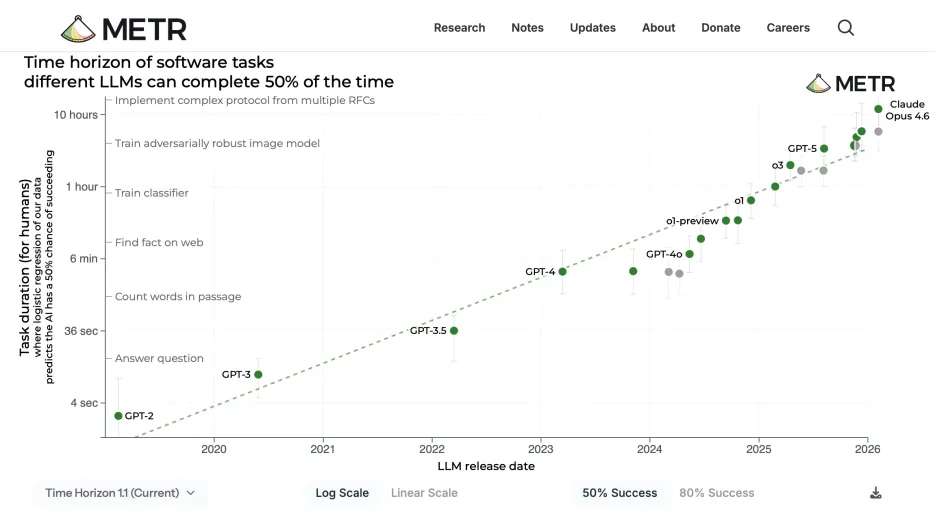
These tools are changing the composition of development teams: there are fewer engineers, and the types of engineers have changed, with the emergence of "business process engineers" and "deep tech engineers".
What used to require a whole development team can now be handled by a few people, sometimes even just one person. Data used to be a differentiating advantage and a moat, but now foundational models (ChatGPT, Gemini, Claude) are commodifying openly available data sources.

Caption: Model T vs Ferrari
The concept of agile development itself needs to be rethought.
The previous bottleneck was: can we afford to build and launch this product? The current bottleneck is: do we know what to test? Can we reach users quickly enough to learn? Agile is no longer a serial process. AI Agents can run multiple tasks in parallel at the same or even lower cost. You can now test multiple versions of the same business simultaneously, or even test different business directions at the same time. You can run five pricing models, ten marketing messages, and twenty UX processes simultaneously. Moreover, the "user interface" may no longer be a screen; the goal of testing may shift to: finding the prompts that enable the AI Agent to deliver expected results.

Caption: Transition from UI to AI Agent
The bottleneck is no longer engineering capability but has shifted up to judgment, insight into customer expected outcomes, and distribution capability.
AI Agents Will Rewrite All Software Categories
AI Agents will change every software category, including the one you are working on.
Today's software applications operate this way: they present information to the user and then wait for the user to act through dashboards, alerts, workflow tools, and reports. But customers buy software to get work done, not to look at more screens. Making work truly complete is something that AI Agents (orchestration through tools like OpenClaw) will achieve autonomously.
What does this mean?
If your product currently tells users "what to do next", AI Agents will eventually do that step for the users. If a competitor's product automatically completes tasks while yours is still waiting for users to click a mouse, you will no longer be competitive.
The next generation of applications will not just display information on screens; they will act like employees: resolving tickets, scheduling meetings, filtering sales leads, and automatically restocking. When products shift from "software as interface" to "software as outcome," pricing will also shift from per seat to per outcome: for every resolved ticket, every scheduled meeting, every closed lead.
(The pursuit of Product/Market Fit will transform into the pursuit of AI Agent/Customer Outcome Fit. The Minimum Viable Product (MVP) will become the Minimum Deliverable Outcome (MPO). I will elaborate on this topic in the next article.)
Hardware Can't Escape Either
For hardware founders, the changes are equally drastic. Hardware is still constrained by physical laws, capital, supply chains, and manufacturing cycles; you can’t bypass the cutting of metals, making prototypes, or tape-outs for chips. But AI can help you faster eliminate bad ideas. You can now simulate more design variations before manufacturing physical prototypes, create digital twins, and stress-test various assumptions earlier and cheaper. The result is an accelerated speed of learning and discovery (sometimes faster failure), and in startups, faster failure is an advantage, not a drawback.
Once AI is embedded as part of the system, the product itself changes. Adding an AI backend to cameras can transform cameras into monitoring systems, vibration sensors, or machine fault prediction systems. Robots become factory workers. The moat is no longer just the hardware itself but also what the hardware can perceive and what decisions and actions AI can make based on that data.
The Sunk Cost Trap
Companies founded before 2025 typically have tech stacks optimized for building expensive and customized software development worlds. Agile development and DevSecOps have made us lean, but they operate in a serial way, and team sizes are structured accordingly. Companies that have spent years building "proprietary code and feature moats" are discovering that AI is commodifying most of their tech stack. This puts startups in fundraising into an embarrassing situation: their business models may be partially or fully outdated.
When you are focused on product development and looking for Product/Market Fit, these changes may not be visible.
Tech stack, product features, user interface, employee count—these sunk costs can become reasons for your unwillingness to pivot: how can we throw away years of work? Our VC invested in this direction. Customers still want a UI. The team believes in this roadmap. Our customers are not ready.
(Chris is a typical case. He created something truly impressive that likely still has competitive potential, but the business model around it needs to change.)
Some sunk costs are actually assets: deep domain knowledge, customer relationships, proprietary data, hard-earned regulatory approvals, and physical-level integrations. These are worth keeping. Chris's flight platform integration belongs to this category.
True liabilities of sunk costs are: large engineering teams built for slow software cycles, pricing models based on per seat, and product roadmaps constructed around features rather than outcomes. These are what is referred to as "dead moose on the table" (Dead Moose on the table), the issues are apparent but nobody wants to address it.
The founders who survive are those who can look at what they’ve built and then ask: if I were to start today with today’s tools in today’s market, what would I do?
When you already have funding for a specific direction, this question feels uncomfortable. But this discomfort is nothing compared to an investor telling you they don’t plan to invest in the next round, and then you close down with an outdated plan.
Summary
- You cannot run a 2024 (or earlier) script on a 2026 track. Funding, technology, and business models have all changed. Agile development is transforming into parallel development.
- The pursuit of Product/Market Fit will transform into the pursuit of AI Agent/Customer Outcome Fit. MVP will become MPO (Minimum Deliverable Outcome).
- The sunk cost mentality can lead to your downfall.
- Defensible moats may still exist in: proprietary data, deep understanding of customer outcomes, regulatory lock-in, or becoming a formal Program of Record.
- If you can still sleep soundly, it means you haven't grasped what’s happening.
- The founders who survive will step out of the office, see the situation clearly, pivot, and correct course.
免责声明:本文章仅代表作者个人观点,不代表本平台的立场和观点。本文章仅供信息分享,不构成对任何人的任何投资建议。用户与作者之间的任何争议,与本平台无关。如网页中刊载的文章或图片涉及侵权,请提供相关的权利证明和身份证明发送邮件到support@aicoin.com,本平台相关工作人员将会进行核查。


