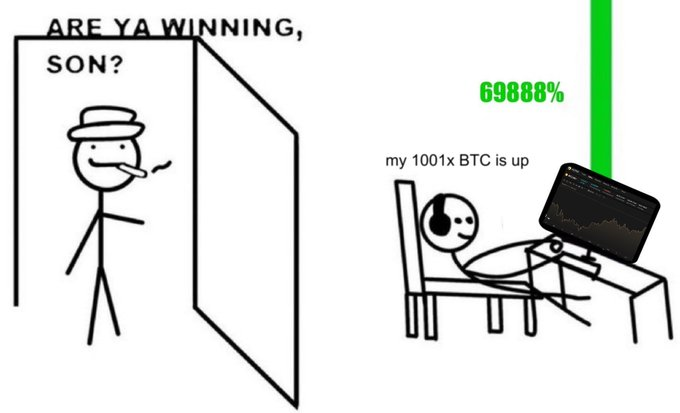
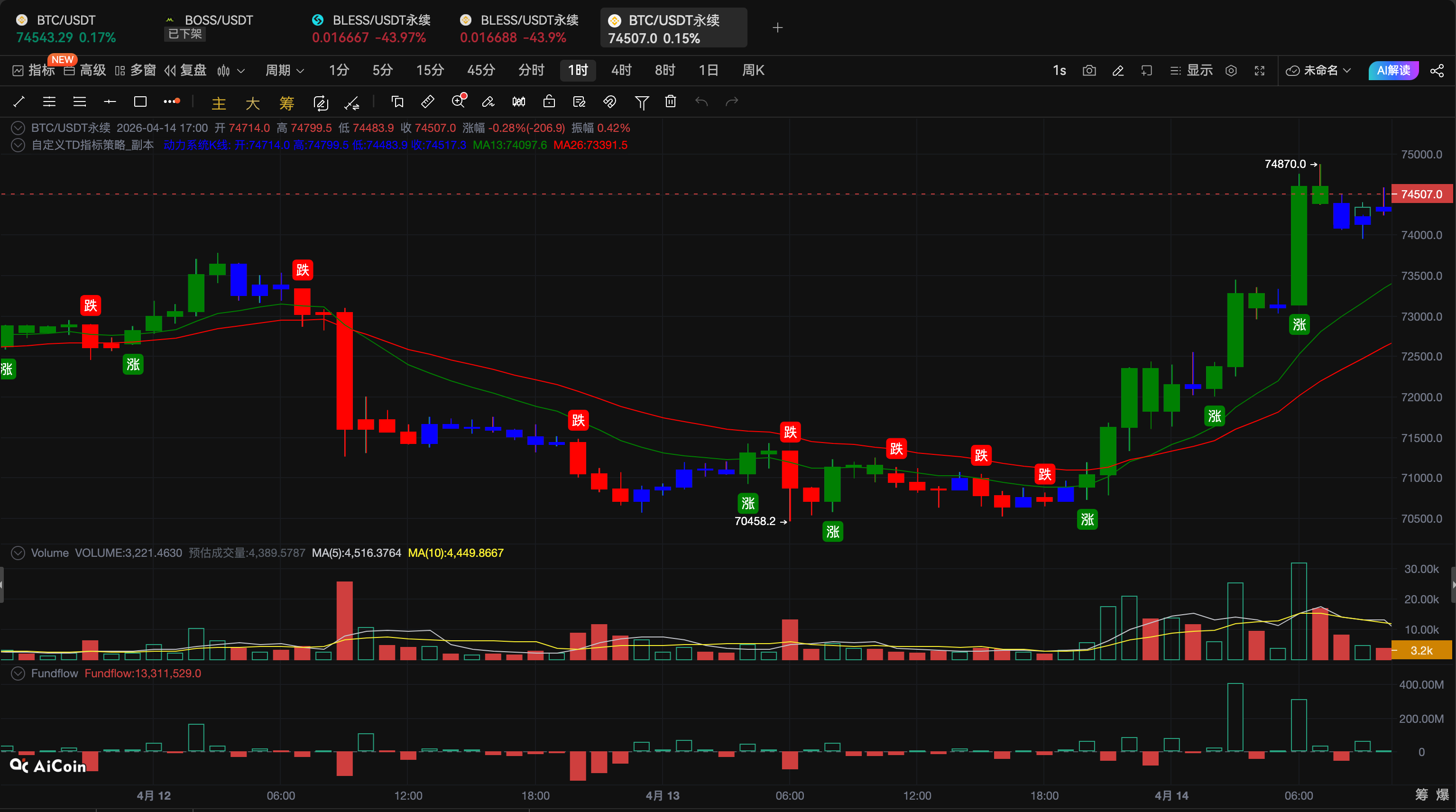
On April 14, 2026, East Eight Time, Nikita Bier, the product head of platform X, wrote this on his account: “Crypto has had a rough year. Maybe we should launch something to fix it.” This translates to: “The cryptocurrency market has had a tough year; perhaps we should introduce something to remedy it.” This short remark was quickly referenced by Chinese media like Jinse Finance and rapidly spread across social platforms and communities, sparking associations about “X’s entry into crypto.” For practitioners who have undergone a year of price fluctuations, liquidity contraction, and frequent contract liquidations, this slightly humorous statement sharply contrasts with the stark reality of coldness, pressure, and anxiety. As a result, a new mystery has been cast into the market: if a leading social platform that controls global traffic truly intends to “fix” crypto, how many existing game rules would this reaching hand rewrite?
A Vague Statement: Is X Really Going to Save the Market?
In terms of the communication path, this post was first screenshotted and shared within the English-speaking crypto community by industry practitioners and observers, and then captured by the Chinese community, amplified by media like Jinse Finance with headlines such as “X’s product head hints at launching crypto solutions,” quickly entering the Chinese public discourse. Research briefs indicate that multiple media outlets quoted this original statement and explicitly labeled Nikita Bier as the product head of platform X, which further intensified the market’s interpretation of it as “representing the platform's stance.”
However, it must be emphasized that the only public information available is this vague statement: there are no accompanying official announcements, no functional designs, no product timelines, nor any clues about team or resource investments. Even the term “launch something” has no specific reference at all. In this context, fantasizing about specific proposals like “X Wallet,” “X Payment,” or “X Issuing Coins” essentially falls under the category of typical market self-imagination rather than fact-based analysis.
The most common interpretations in the market roughly include: first, directly equating this statement with “X is about to launch a native crypto product,” even starting discussions on specific forms, which is obviously an excessive association; second, viewing it as a signal of management warming up to crypto, primarily a matter of emotional countdown rather than actionable steps; third, interpreting it as a rhetoric to “extend the life” of the crypto narrative, perhaps without truly investing resources. In any case, in the absence of subsequent substantial information, none of these interpretations can substantiate the conclusion that “X has made a decision to implement crypto business.” Currently, the only confirmed boundary is: this is an idea or joke thrown out by a product head in a public setting, not a formal business proposal.
Crypto's “Difficult Year”: Who Abandoned It, and Who Reaped the Benefits?
To understand why this statement would amplify industry sentiment, we need to return to the reality of the past year: mainstream cryptocurrencies have repeatedly oscillated between high and medium levels, with daily fluctuations of several percentage points or even double digits not uncommon, yet they have consistently struggled to emerge from sustained trends. In terms of liquidity, whether it's the frequency of large on-chain transfers or the trading volume and depth data from major exchanges, they reflect characteristics of “total contraction, structural squeezing,” with funds increasingly preferring to cluster around a few leading assets and platforms, becoming increasingly indifferent to long-tail projects and mid-cap tokens.
On the contract side, amid several rounds of significant volatility, leveraged funds have been repeatedly washed out, and margin calls and liquidations became common topics within communities. For many retail investors chasing trends and the promoters of trendy projects, this year has been a grind of “high volatility, low win rates”: while they can sense risk, it’s hard to catch trends, and even a slight greed can lead to ruthless losses in the market.
In contrast, the increasingly prominent Matthew effect within the industry shows a stark divide. As stated in research briefs, a derivatives platform with a team of only 11 people, Hyperliquid, achieved profits of up to $900 million in 2025. A team of fewer than twenty operated in a market with extremely concentrated liquidity and highly financialized trading behaviors, reaping enormous profits, while the vast majority of small and medium-sized projects struggled to survive against the cold winds during the same period. This scenario, where a tiny number of teams make extreme profits while the majority of players feel abandoned, lays bare the polarization within the industry.
For retail investors and small teams, they experience difficulties in fundraising, dull trading, narrative fatigue, and community attrition; while for leading infrastructures and derivatives platforms, they feel the surge in high-frequency trading, skyrocketing fees, and explosive profits. In this mixed backdrop, when someone casually states on a massively trafficked social platform, “Maybe we should launch something to fix it,” it acts like a needle pricking at a collective pain point: it activates not only curiosity about new products but also a long-suppressed subconscious expectation for a new story and traffic entrance to “rescue the market.”
When a Social Giant Meets the Crypto Narrative: Entry is More Important than Technology
The intersection between social platforms and the crypto world is not new. Whether early attempts by some platforms to provide digital asset rewards or tokenize membership rights, or the subsequent explorations surrounding identity and creator economies, all reflect one fact: social traffic entrance has a natural amplifying effect on asset distribution and price discovery. The same token, if born in a cold-start community, may merely serve as points within a small circle; if born on a platform with hundreds of millions of users, as long as there is a basic tradable channel, it may magnify speculative volumes tenfold or even a hundredfold in a very short time.
If one day, X truly takes action in the crypto space, what is most likely to change is not the underlying technological architecture, but rather the radius of user reach, the path of content distribution, and the rhythm of speculative sentiment. Once a financially-themed feature is embedded within high-frequency interaction scenarios like information flows, topic lists, and private messages, users’ recognition, participation, and dissemination of it will be vastly different from the cold-start modes of traditional exchanges or on-chain protocols. Narratives, emotions, and capital amplify within the information flow, making crypto assets more like a “content” that is quickly priced and repriced in the flood of traffic.
This resonates subtly with examples like Hyperliquid, where “small teams achieve high profitability”: essentially, they leverage extreme efficiency from minimal manpower to unlock highly financialized and leveraged business models. The commonality of such businesses lies in their extreme sensitivity to front-end customer acquisition, user conversion, and trading frequency, while social platforms hold the most cost-effective and efficient traffic distribution mechanisms. From this perspective, the “light manpower, high leverage” crypto business naturally couples with “heavy traffic, light assets” social platforms.
However, it must be reiterated, that currently all specific imaginations regarding X and crypto remain at the “narrative space” level: there is no product white paper, no regulatory compliance framework, nor any chosen technological routes. The market's excessive magnification of narratives and traffic is, in itself, the undercurrent of the crypto industry — any ambiguous statement from a giant is quickly packaged into a tradeable story, and this time is no exception.
AI Frenzy and Advertising Intensity: Why X Needs a Crypto Narrative
To understand why X would throw out a crypto-related exclamation at this point, it needs to be viewed within a larger technology and business context. Over the past few years, competition between Meta and Google in digital advertising has pushed “traffic platforms focused on ad-based monetization” to a growth ceiling: the traffic dividend has peaked, user engagement has been continuously divided by short videos, instant communication, and games, marginal advertising returns have declined, and privacy and compliance costs have risen, forcing platforms to search for a second curve beyond advertising.
At the same time, the valuation disputes surrounding OpenAI reflect another main line: AI is absorbing global technology capital and narrative attention. Whether it’s the landing of large models or the construction of computing power infrastructure, market resources are massively skewed towards AI, and in this round of narrative frenzy, the “tech story C position” that crypto once occupied has clearly shifted backward. Many practitioners feel marginalized: capital roadshows require explanations of “what is your relation to AI,” media coverage has been crowded out by AI topics, and even users’ expectations of “technological imagination” have shifted from on-chain applications to intelligent agents.
In the highly crowded landscape of AI and advertising, if X hopes to secure a place in the future technology map, it needs new monetization models and discourse levers. Crypto sits at a subtle intersection: high volatility means high attention, high narrative potential means it's easy to package as a narrative asset, while it also naturally relates to finance, social interaction, and content distribution. This makes “doing something in crypto,” even if it’s merely throwing out an idea, easily interpreted by the market as X opening a new battlefield outside of AI narratives.
Thus, a larger gaming framework emerges: AI, crypto, and advertising are vying for the same pool of funds and attention. For capital managers, budgets are allocated among these directions; for users, limited time switches between refreshing information flows, participating in speculation, and experiencing AI applications; for platforms, a balance must be found among the three. In this context, if the product head of X casually mentions “Maybe we should launch something to fix it,” it will naturally be interpreted within this game — even if for X internally, this might just be an emotional “market observation.”
The Market Understands Who: The Discrepancy Between Personal Account Statements and Platform Strategy
Delineating clear hierarchical differences between Nikita Bier's personal statements and X platform’s formal external strategy is a prerequisite for comprehending the fermentation of public opinion this time. Public information indicates that he is indeed the product head at X, which means he has a degree of voice regarding product direction, but it does not equate to any statement made from a personal account automatically rising to a company-level pledge or route. Especially on a platform like X that heavily relies on personal IP and personalized expression, the management’s individual emotions and perceptions often have considerable room for “casual expression.”
Research briefs also particularly note that it remains unconfirmed whether Nikita Bier has advisorships, holdings, or other financial ties with certain public chains or other projects, with relevant rumors marked as “to be verified information.” On the facts’ level, we can only see: he expressed sympathy for the crypto industry's situation in a public setting and casually threw out, “maybe we should do something.” Before further disclosures are made, any interpretations that bind him to specific projects or interests are unverified extensions of reasoning.
In the latter part of the transmission chain, market KOLs and media play the role of amplifiers: some, while rephrasing, use headlines like “X is doing crypto” or “X is considering launching crypto solutions” to elevate personal statements directly to the platform level; others, in secondary disseminations, intentionally or unintentionally omit key qualifiers like “Maybe,” transforming originally uncertain and humorous expressions into narratives closer to “in planning.” For ordinary participants who are not sensitive to information sources, what they read is “X has already taken action,” rather than “a certain person in charge has said this.”
This information asymmetry and role misreading almost cyclically play out in the crypto market: a comment from some project employee on social platforms gets magnified into a major partnership; a personal study by an analyst from a certain institution gets interpreted as a formal intent to vote by the foundation; a seemingly positive meeting photo gets packaged as “top institutions are supporting it.” In a market structure characterized by high leverage and high volatility, this dislocated interpretation from “individual” to “institution,” from “emotion” to “decision,” is often sufficient to trigger a brief but intense price fluctuation.
From a Joke to a New Narrative: What Kind of “Fix” Does Crypto Need?
Returning to this event itself, what we can confirm is: currently, there is only one vague statement, yet it is viewed as a potential “rescue signal” under the cold winter sentiment. What it reflects is more the industry's anxiety and desire for new traffic entrances and strong new narratives, rather than the reality that X is ready to present mature solutions. The crypto world has repeatedly proven that the more pressured the fundamentals are, and the more liquidity is tightened, the more easily the market tends to hold excessive expectations for the mere words of giants.
From a cooler perspective, what truly can “fix” the crypto industry is probably not a new application or entrance itself but a few more fundamental pillars: the gradual clarity of regulatory frameworks, the return and diffusion of quality liquidity, and application scenarios that continue to grow around real demand. The intervention of social platforms can indeed amplify user scale and trading activity over a certain period, but if the underlying structure remains the same — “zero-sum game, story first” — then the so-called “fix” is more akin to a reshuffle rather than a complete cure.
Looking ahead, X has roughly three paths: first, choosing to wait and see — this statement remains at the level of emotional venting, with no follow-up actions, and the market sentiment naturally declines after several rounds of speculation; second, symbolically testing the waters — for example, introducing some limited crypto-related features or collaborations, doing more on branding and narrative with limited substantive changes to the industry structure; third, deep involvement — investing real money in compliance, technology, and business, seeking a long-term arrangement that merges crypto finance and social, which could have profound impacts on the overall industry landscape, regulatory dialogue, and even user behavior paths.
Regardless of which path is chosen, as investors or participants, it is essential to continuously examine the reliability of information sources, the business motivations behind statements, and the potential time gap that may exist between statements and realization, while embracing narrative imagination. A statement like “Maybe we should launch something to fix it” can be an opening line for a new cycle or merely a small interlude in a long winter; the true factors deciding the industry's fate are still those structural factors that are slower, more tedious, yet more decisive than a joke.
Join our community to discuss together and become stronger!
Official Telegram group: https://t.me/aicoincn
AiCoin Chinese Twitter: https://x.com/AiCoinzh
OKX Benefits Group: https://aicoin.com/link/chat?cid=l61eM4owQ
Binance Benefits Group: https://aicoin.com/link/chat?cid=ynr7d1P6Z
免责声明:本文章仅代表作者个人观点,不代表本平台的立场和观点。本文章仅供信息分享,不构成对任何人的任何投资建议。用户与作者之间的任何争议,与本平台无关。如网页中刊载的文章或图片涉及侵权,请提供相关的权利证明和身份证明发送邮件到support@aicoin.com,本平台相关工作人员将会进行核查。