On April 22, the expiration date of the US-Iran ceasefire agreement indicated by a single source became a common timeline for regional situations and great power games. Whether the current ceasefire can be extended again for 45 days is no longer just a technical renewal, but a political arithmetic of repeated tug-of-war over agenda setting, negotiation locations, and the security perceptions of all parties. Just as the pressure of the expiration time approaches, Pakistan frequently appears in diplomatic conversations as a "backstage" player, attempting to build a thin connection for extending the deadline between the US, Iran, and even more related parties. The dispute over the location and agenda has not yet been clarified; in this uncertainty, whether the ceasefire will be renewed at the last moment has become a suspense that all participants dare not easily bet on.
Ceasefire Countdown: The Time Pressure and Misjudgment Risks of April 22
Regarding this ceasefire arrangement, the current clearest time anchor comes from a single source——the ceasefire agreement is set to expire on April 22. Due to the lack of multiple official channels for simultaneous confirmation, the external reliance on this date itself amplifies the risk of information asymmetry: if there is a discrepancy between the expiration expectation and the actual text, the rhythm of actions and discourse arrangements may misalign. Nevertheless, "April 22" has already been treated as a fact in public opinion and diplomatic agendas, bringing real countdown pressure to the negotiating parties.
In the preparations for the next round of negotiations, the conflict between the US and Iran is not just an abstract stance conflict but a very concrete dispute over location and agenda. One side hopes to lock in a favorable public opinion and security environment through location selection, while the other attempts to prioritize its concerns in the agenda arrangement. The location embodies symbolism and a sense of security, while the agenda represents rhythm and priority; the overlap of both further politicizes the already urgent time window. Before the ceasefire deadline approaches, the information available to outsiders remains fragmented, lacking publicly available, synchronized texts or joint statements, increasing the likelihood of observers and secondary participants misjudging the situation.
As the "expiration date" shifts from the abstract to the concrete, the risks of misjudgment accumulate: one side may view the other's delay as a refusal to negotiate, while the other may interpret a slow response as a use of negotiation leverage. In this high-pressure countdown, even a minor deviation in statements could be amplified into a "shift in position," which is an invisible cost that mediators like Pakistan must continuously hedge against.
Islamabad Becomes the Focus: Why Iran Bets on This City
In the location game, Iran prefers Islamabad, which involves both geographical considerations and political security assessments. Geographically, Islamabad is in a regional hub position, making travel relatively convenient for Iran while avoiding the psychological and security pressures that come with being in a complete "opponent's home ground." For a country that has long faced sanctions and security threats, the physical distance of the negotiation location reflects the extension of control and expectation management capabilities.
The trust Iran has in Pakistan's mediating role is not built from thin air, but rather established on the basis of long-term interactions and security cooperation. As a significant country in the Islamic world, Pakistan is neither a traditional proactive party on many issues nor merely an observer; it has maintained a role as a "communicable entity" during multiple regional tensions. This intermediary role, positioned between ally and adversary, allows Iran to regard Pakistan as a relatively trustworthy "buffer interface" when dealing with countries with stronger opposing characteristics, thus gaining additional comfort zones in information exchange, security arrangements, and public opinion management.
However, the term “Islamabad talks” currently circulating in external discussions still belongs to a pending verification phase. There are no publicly available, authoritative documents that have fixed this term as official naming or established fact, hence caution is needed when using it; it can only be seen as a summary of preferences and ideas regarding the negotiation location, rather than a confirmation of a finalized meeting mechanism. This ambiguity in naming also reflects that all parties are still in a tug-of-war over location and framework; any overly "solidified" statements could prematurely lock the negotiating parties into a corner in public opinion.
Communication Lines Fully Engaged: How Pakistan Acts as Messenger and Translator
At the critical juncture of whether the ceasefire will be extended by 45 days, diplomatic sources from Pakistan have established consensus through multiple calls and contacts, which has almost become an invisible lifeline. These calls and contacts include frequent communication with the direct parties involved, as well as reassuring and explaining to important relevant parties, aiming to create a minimal political and security consensus for extension. Broadly speaking, this is not a one-time "intermediary mediation," but a continuous, cross-time zone, multi-channel intensive coordination that may last days or even weeks.
In terms of specific operations, Pakistan plays a composite role of "messenger" and "translator." On the one hand, it helps all parties minimize delays and distortions in information transmission, conveying the other party's positions, concerns, and bottom lines in a relatively acceptable way; on the other hand, in so-called "technical level contacts," it also takes on the task of breaking down highly politicized statements into executable steps—transforming confrontational political language into technical issues that can be incorporated into the negotiation agenda. For long-time distrustful opponents like the US and Iran, even minor adjustments in wording may require such intermediaries to painstakingly deliberate word by word.
All these mediation efforts ultimately revolve around a single goal: securing an additional 45 days of ceasefire window. These 45 days are not an endpoint but a buffer of time reserved for subsequent larger-scale negotiations on more topics. Pakistan attempts to persuade all parties to accept this reality: even if core differences cannot be bridged in the short term, extending the window itself can prevent the situation from sliding back into uncontrollable chaos without any constraints. In other words, it is selling a segment of time, and the value of this time depends on whether all parties can believe—an additional 45 days will not place their security and leverage in a worse position.
The Dispute Over Location: The Real Leverage for the Next Round of Game
On the surface, the differences between the US and Iran focus on "where to talk," but the real focal point of the game is who defines what to talk about and in what order to talk about it. If negotiations take place in a location closer to one side's traditional allies or security circles, that side often gains more hidden advantages in agenda arrangement, public opinion guidance, and even on-site security control; conversely, if the location is near areas preferred by Iran, it will be more assertive both psychologically and politically, with more space to insist on its priority issues. Therefore, the dispute over location is essentially a struggle for agenda control: once the location is determined, the rhythm of subsequent meetings, the order of the agenda, and the structure of expert participation will become established.
In this context, the location and framework proposals put forward by Pakistan have the opportunity to create some compromises in agenda design: for example, by breaking down sensitive topics for each party into multiple stages to reduce the political pressure of a single meeting; or by providing technical or procedural agenda items to create narrative space where “everyone has not made concessions, and all are advancing.” For mediators, the key to whether they can truly exert influence lies in designing a meeting structure that appears "no one has lost" without touching the bottom lines of all parties.
However, it should be emphasized that the current content regarding specific agenda items and sensitive topics lacks verifiable details in public information. Whether regarding what specific topics to discuss, how to gradually advance them, or which security and technical issues will be prioritized, there is a lack of reliable text support. Under these circumstances, the more specific the external speculation on the agenda content, the more likely it will be disconnected from actual preparations, or even mislead market and public expectations; thus, restraint must be exercised in the detailed extrapolations.
The Crypto Market Watches the Show: Geopolitical Easing Hard to Change the Difficult Narrative of the Year
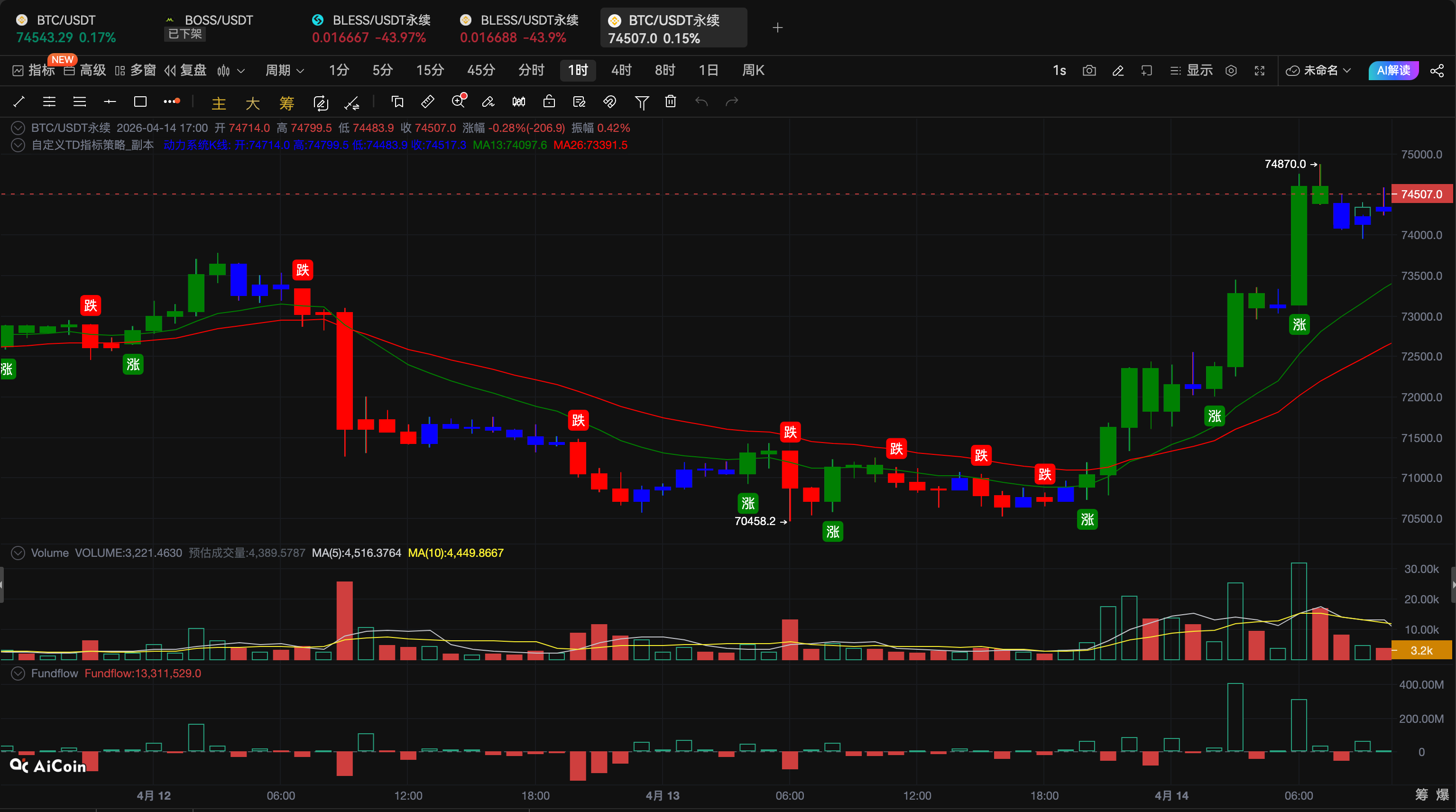
As geopolitics enters the tug-of-war over "whether the ceasefire will be extended," the crypto market often habitually plays the role of a "spectator" as a risk asset. A comment from Nikita Bier—"cryptocurrency has had a challenging year"—provides a concise note on such sentiment: whether due to tightening macro liquidity, increasing regulatory uncertainties, or rising attractiveness of traditional assets, all are squeezing the upward space for crypto assets, resulting in an exceptionally heavy market this year.
From historical experience, geopolitical tensions and easing have a typical "double-edged sword" effect on the pricing of risk assets. When tensions escalate, some funds shift short-term from high volatility assets to traditional safe-haven assets; however, in certain scenarios, there may also be a short-term flow into crypto assets as an alternative hedge due to concerns over fiat currency systems or regional risks. Conversely, when signs of easing emerge, the traditional notion of "risk appetite" often rises, with significant support for the stock market, commodities, etc.; crypto assets are more likely to be passively lifted in the context of overall risk appetite improvement rather than being direct beneficiaries.
Within such a framework, even if the US-Iran ceasefire is successfully extended by 45 days, it would be difficult to rely solely on this event to alter the overall "crypto is tough" macro narrative for the year. A more realistic expectation is that if the ceasefire is extended, market concerns over the escalation of extreme conflicts in the Middle East may temporarily ease, and the "geopolitical premium" in the overall pricing of risk assets may slightly retreat, thus reducing the additional drag on crypto assets. In other words, extending the ceasefire is more of a mild hedge against negative sentiment rather than a large-scale boon that can reverse the trend.
If a 45-Day Window Opens: How Much Change Can Pakistan Leverage
In summary, Pakistan's role in pushing for the extension of the ceasefire is both crucial and limited. Its critical role lies in the fact that it holds one of the most densely packed information channels, allowing it to maintain uninterrupted communication between the US and Iran, as well as between broader regional participants, thereby providing technical and political feasibility for the 45-day extension. Its limitation lies in the fact that the actual decisions on whether the ceasefire can be renewed still depend on the US and Iran's assessments of security, prestige, and domestic political pressures; no third-party mediation can replace this core game.
If the 45-day window is ultimately opened, the negotiation rhythm and the regional situation are likely to enter a state of "seeking adjustment in delays": on one hand, both sides will use this time to test each other's bottom lines and assess the tolerance levels of external pressures and internal public opinions; on the other hand, other actors in the region will also adjust their security deployments and diplomatic layouts, meaning that while the situation appears relatively calm on the surface, internal power balances and psychological expectations will continuously undergo subtle changes. For mediators, the real test is not to prolong time, but to avoid wasting this time on posturing and verbal conflict after the extension.
Future observation focus will concentrate on two dimensions: first, whether a compromise solution on the location emerges, such as finding an acceptable middle path between preferred options like Islamabad and other candidate locations; second, whether the acceptance of Pakistan's "relative neutrality" can be maintained or even enhanced; once this neutral image is seriously questioned, its mediation space will simultaneously shrink. Under the interplay of multiple variables such as time, location, agenda, and trust, if these 45 days can be secured, they will serve as both a buffer and the starting point for a more complex game in the next round.
Join our community to discuss and grow stronger together!
Official Telegram community: https://t.me/aicoincn
AiCoin Chinese Twitter: https://x.com/AiCoinzh
OKX benefit group: https://aicoin.com/link/chat?cid=l61eM4owQ
Binance benefit group: https://aicoin.com/link/chat?cid=ynr7d1P6Z
免责声明:本文章仅代表作者个人观点,不代表本平台的立场和观点。本文章仅供信息分享,不构成对任何人的任何投资建议。用户与作者之间的任何争议,与本平台无关。如网页中刊载的文章或图片涉及侵权,请提供相关的权利证明和身份证明发送邮件到support@aicoin.com,本平台相关工作人员将会进行核查。