Author: Curie, Deep Tide TechFlow
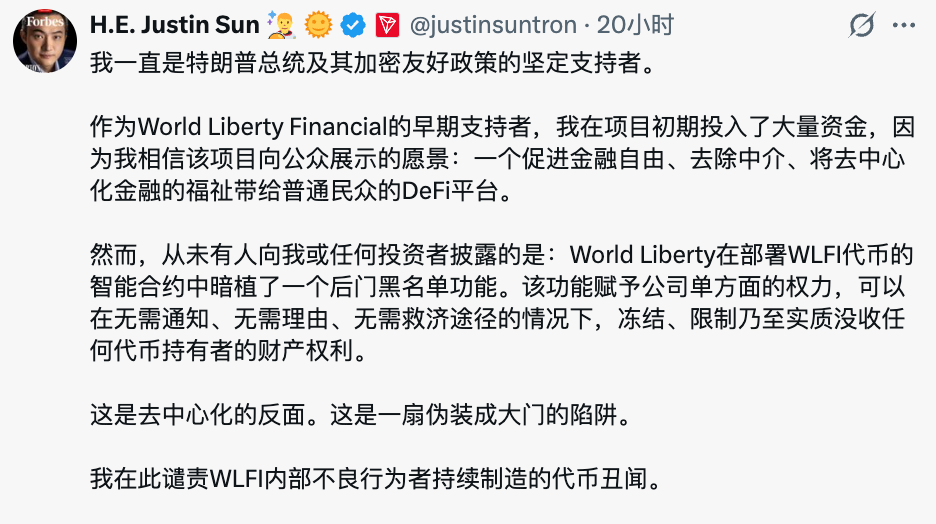
Yesterday, the founder of TRON, Justin Sun, posted a lengthy article on X, accusing the Trump family's DeFi project World Liberty Financial of hiding a freezing backdoor in its token contract, treating investors as "personal ATMs."
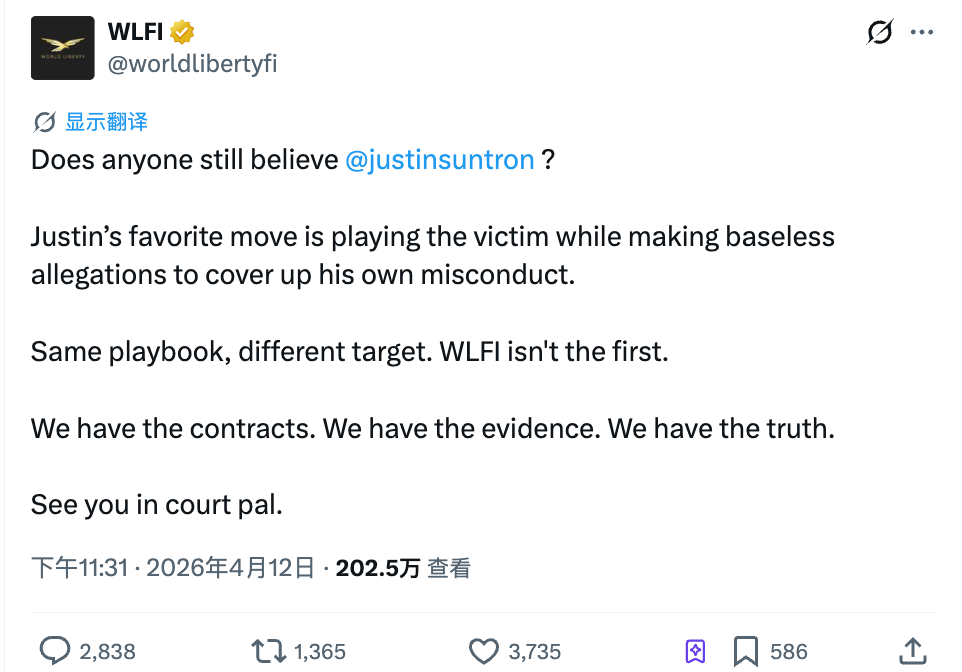
WLFI responded a few hours later with three words: See you in court.
Justin is the largest external investor in WLFI, having invested $75 million over time. In September of last year, his wallet was blacklisted by the project team when the token just began trading, with over $100 million worth of tokens frozen to this day.
Last week, WLFI borrowed $75 million using 5 billion of its own tokens as collateral. Ordinary users found it momentarily impossible to withdraw their deposits, with some saying this operation closely resembled FTX.
WLFI also claimed Justin had issues, and there is no conclusion yet in their dispute. However, WLFI's token has fallen over 76% from its peak last year.
The scale and intensity of this battle are not small, but the widely shared view in the community is that, the reason Justin Sun dares to confront hard is that he took a trip to space last August.
On August 3rd last year, he took a Blue Origin rocket flight to complete a suborbital journey, paying $28 million for that seat after waiting four years. The spacecraft crossed the Kármán line, experiencing weightlessness for a few minutes before landing.
The entire journey lasted 10 minutes and 14 seconds.
After landing, he addressed the camera, saying, "From space, the Earth looks small; that is our home. We must do everything we can to protect it."
On social media, some people seriously said that going to space changes a person's thinking and perspective, which is why he dares to challenge projects with backgrounds head-on. People who have been to space see things differently.
Can space really change a person?
Overview Effect
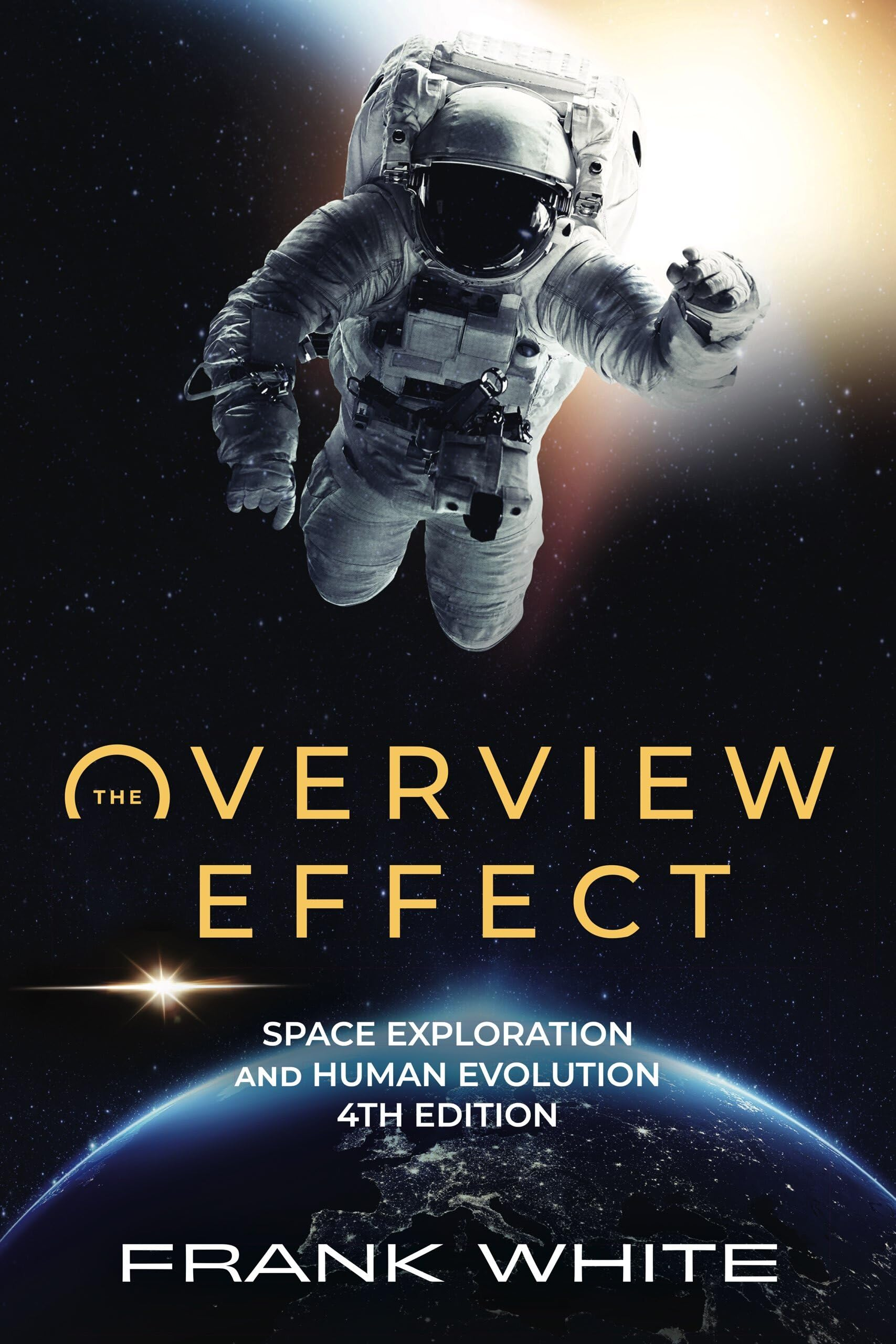
In 1987, a researcher named Frank White interviewed dozens of astronauts and named this phenomenon the Overview Effect.
This means that when you look back at Earth from space and see that thin atmosphere appearing as a layer of varnish and the continents without borders, some things in your mind will change permanently.
A 2018 survey of 39 astronauts found that their perception of Earth changed significantly, and this change was highly correlated with whether they engaged in environmental protection after returning.
There is a NASA astronaut who has been to space named Mike Foreman, who once famously said, "If you are not an environmentalist before going to space, you will at least become half of one after."
However, there is a seldom mentioned distinction here. Those reporting such profound cognitive changes are usually professional astronauts who lived on the International Space Station for months or even half a year. They float to the viewing windows daily to watch Earth, witnessing hundreds of sunrises and sunsets with enough time for those feelings to sink in.
Paid travelers who sit through 10 minutes of suborbital flight may have a completely different experience.
The most genuine emotional reaction among commercial space tourists came from William Shatner, the actor who played Captain Kirk in "Star Trek." In 2021, at age 90, he took a trip with Blue Origin. He cried upon landing. Later, he wrote in his book that it took him several hours to understand why he cried.
He said, "I was mourning for Earth."
But he was only up there for 10 minutes. After returning to the ground, he appeared on a few talk shows and then returned to his normal life.
The Overview Effect may not be fake. In those few minutes of weightlessness, seeing that blue marble suspended in darkness, you might truly feel something that you usually wouldn’t.
But the momentary emotional impact and permanent cognitive rewriting do not necessarily equate. You will be moved, you will post a sincere message, and you might even feel that everything seems small during the first few days after your return.
Then you will return to your life, continuing to be the person you always were.
Space cannot move a balance sheet
Returning to Justin Sun's battle.
The community says he has let go, his perspective has changed, and that those who have been to space are different. This claim suits romantic retweets to boost traffic but likely does not touch the core interests.
He invested tens of millions of dollars into WLFI, his wallet has been frozen for over six months, and the frozen tokens have continued to plummet, experiencing the feeling of being cut like investors often do. If your money is down the drain, would you want to defend your rights?
In his statement, Justin cautiously left Trump out and only mentioned "the bad elements within the WLFI team," indicating that he is very aware of the caliber of the opponent he is dealing with.
Rather than seeing him as an idealist recklessly influenced by space, it is more accurate to say that in this matter, he is a large scale investor wanting to defend his rights.
But some might argue that he doesn’t need the money.
Hu Run estimated his fortune to be 10 billion yuan this year, facing a family with a presidential label, silence seems the safer option. Why would a recognized savvy person choose a path that looks less wise?
When he initially invested in WLFI, he bought not just tokens but a ticket to be part of the Trump crypto ecosystem. However, this ticket has another version from WLFI's perspective.
Last September, shortly after the token was launched on the exchange, reports indicated that Justin's wallet transferred about $9 million worth of tokens to HTX, which just happened to be the exchange where he served as an advisor, which at the same time was offering a 20% annual yield on deposits for WLFI.
From the community's perspective, this combo looks like shouting "not selling" while seeking ways to exit. WLFI's response yesterday aimed at this, calling him "the best at playing the victim."
Justin Sun stated that it was just a recharge test, and blockchain data shows his transfer occurred after the token price drop, not before. But this hasn't eliminated the controversy.
No matter the truth, after things reached this point with his wallet frozen, the value of this relationship has effectively reached zero.
This calculation does not need to rely on space to produce an "Overview Effect" to be understood.
The project party can claim freezing is a security measure, treating him alongside phishing wallets. You are the largest investor, but now on the blacklist, you are standing next to fraudsters.
So I believe that silence cannot retrieve the ticket anymore.
Publicly calling for community sympathy, applying pressure through public opinion on the other side, and seizing the narrative high ground for potential legal battles thereafter. Every step looks calculated. A savvy person wouldn’t become reckless just because of 10 minutes of weightlessness.
When the cost-effectiveness of silence falls below zero, changing tactics seems entirely reasonable.
Changing a person's behavior doesn't necessarily require going to space; it just needs them to see that calculation.
免责声明:本文章仅代表作者个人观点,不代表本平台的立场和观点。本文章仅供信息分享,不构成对任何人的任何投资建议。用户与作者之间的任何争议,与本平台无关。如网页中刊载的文章或图片涉及侵权,请提供相关的权利证明和身份证明发送邮件到support@aicoin.com,本平台相关工作人员将会进行核查。


