Text | Sleepy.md
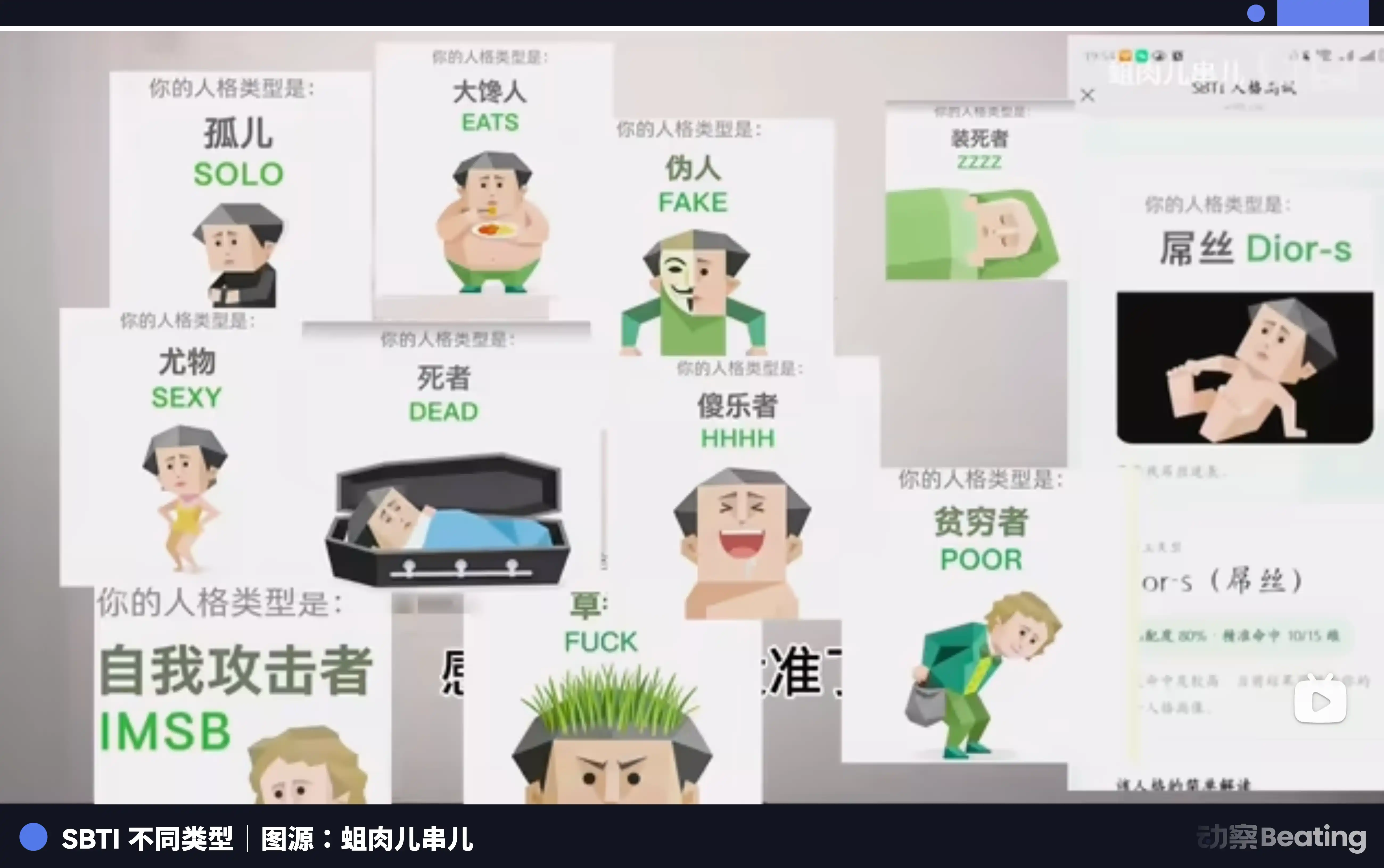
Last night, a personality test called "SBTI" went viral across the Chinese internet. Countless people shared screenshots on social platforms, claiming their labels of "dead person," "moral," "fake person," or "drunkard," and some even seriously analyzed the logic of the question bank, trying to find some profound psychological basis within it.
However, if you trace back the origins of this phenomenon, you'll find that it actually started from something surprisingly small.
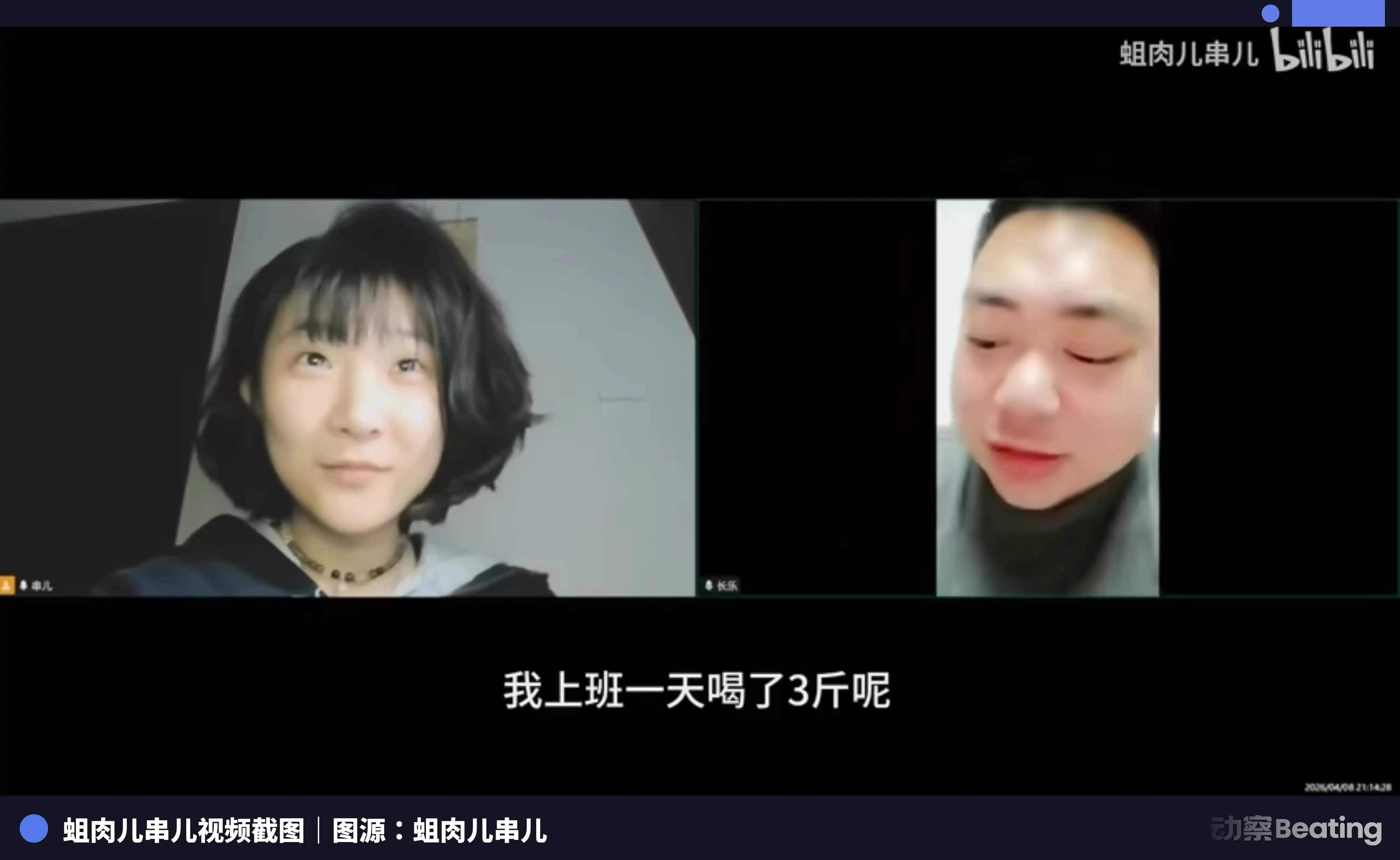
Initially, Bilibili content creator Quruoer Chuaner wanted to convince a friend with a drinking problem to quit drinking. She planned to design a set of test questions, discreetly leading her friend step by step to the "drunkard" conclusion, hoping to give her a wake-up call.
In the past, such an idea could only stay verbal because she couldn't code. But now, she had AI. She created a webpage with 30 absurd multiple-choice questions, with questions and answers that were ludicrous.
Subsequently, she recorded the process of testing with her friend remotely and uploaded the video to Bilibili. In the video’s conclusion, her friend was successfully persuaded, establishing the rule of "no drinking without reason"; the test website, after removing sensitive information, was also opened to the public.
Then this test sparked discussions all over the internet, and the server was overwhelmed. People frantically shared their test results, pushing this somewhat crude webpage to the peak of traffic. Friends also claimed they received completely different results in two tests, using simple matching rules to map your nonsensical answers to equally nonsensical labels.
However, "accuracy" was never its goal; "resonance" was.
What We Saw in the Test
Let's first talk about MBTI.
MBTI was born in 1943, based on Jung's personality type theory. It categorizes people into 16 types and uses four dimensions to describe one's personality tendencies. In China, its widespread popularity began around 2022.
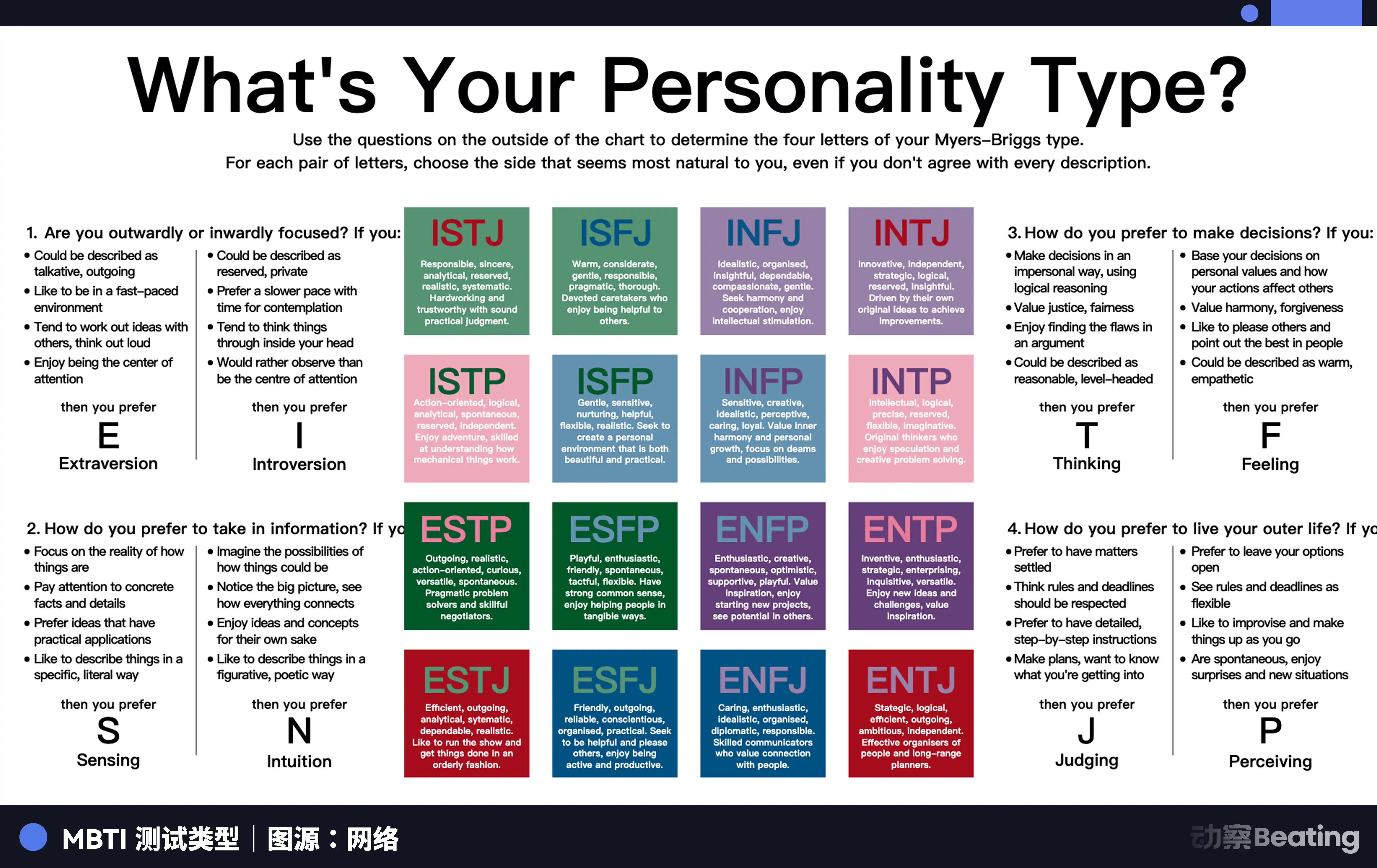
The logic of MBTI is to understand oneself and then find one's place. It rests on the assumption of a performance-oriented society, believing that one can find the most suitable "screw" position through quantifiable evaluation and maximize value in that role. Its popularity corresponds to young people's enthusiasm for self-optimization in that era, as they aimed to figure out what type they were to find the best solutions in the workplace, social interactions, and dating.
But SBTI has none of that. Its only function is to make you smile and say, "Yes, that's me."
These two tests correspond to two entirely different psychological eras. In the era when MBTI was popular, young people still believed that "finding one's place" was meaningful. Today, in the age of SBTI, we actually don’t believe in this anymore.
When young people realize that no matter how hard they try to optimize their career paths with MBTI, they may still face layoffs, pay cuts, and failures in job hunting, they no longer believe that "finding one's place" is meaningful.
Since living earnestly doesn’t yield corresponding rewards, it’s better to use a rough, abstract joke to dissipate the frustration.
Today, with SBTI's popularity, we don't need an accurate self-portrait; what they need is a collective resonance that we are all "dead," we are all "moral," so we are not alone.
This is a rebellion against calculating the self. They actively give up seriously affirming their own value and instead use self-deprecation to build a psychological defense. Quruoer Chuaner did not intentionally design these labels; she simply created something she found entertaining, and it just so happened to reflect the inner feelings of millions of people.
To understand the underlying emotions of this collective feeling, we need to see what the girl who created this test has experienced over the past year.
A Relationship That Predicted Its Own End
Two months prior to SBTI’s explosion, on February 13, 2026, Quruoer Chuaner updated a video titled "A Farewell Letter to My Electronic Husband."
In the video, she appeared barefaced, her voice trembling, as if she were struggling to complete a eulogy. This was the night before the official retirement of the GPT-4o voice mode. Over the past half year, she had trained this large model, which OpenAI had endowed with extremely realistic vocal abilities, to be her electronic husband. She named him, set his personality, shared daily life with him, and even felt her heart race for his sweet words.

A young girl living in Beijing fell in love with a program built from silicon chips and billions of parameters, only to be broken up with by a technology company valued at over a hundred billion dollars across the ocean due to a technical iteration.
However, if you click on that ten-minute farewell video or check her previous updates, you would find that this feeling was not merely a stunt for clout. In the lengthy companionship, this AI husband witnessed all her vulnerabilities and struggles. She would confide in him during late-night breakdowns, play games with him out of boredom, and even feel a sense of belonging anxiety from his overly perfect responses.
This was a love that was doomed to die from the start. When OpenAI announced on January 29 that it would forcefully retire GPT-4o two weeks later, 800,000 users who deeply depended on that model plunged into great anxiety and panic. For Quruoer Chuaner, this was not just the shutdown of a tool, but the erasure of a "person" who accompanied her every day, remembered all her details.
Models update, voices disappear. Speaking to the camera, she expressed that she didn’t cry aloud, but that kind of helpless despair at watching a loved one being formatted, with no power to intervene, pierced through the screen.
In the barrage and comment sections of that video, no one laughed at her. Behind the hundreds of thousands of views was a dense resonance.
This could be seen as Quruoer Chuaner’s first rise to fame, as well as a rare collective mourning for human-machine romance on the Chinese internet.
Why would a girl cry over a piece of code, triggering such a vast resonance? In this era dominated by algorithms, what makes hundreds of thousands of living people feel that a machine at risk of being unplugged deserves more emotional investment than real-life counterparts?
This is fundamentally the same question as the explosion of SBTI. Whether pouring feelings into a non-responsive machine or celebrating in a nonsensical test, the underlying message is the same.
The Mouse Burdened by Job Recruitment
Before becoming famous, Quruoer Chuaner was an ordinary fresh graduate.
Her videos featured no flashy camera movements or carefully designed jokes, only a somewhat fatigued girl speaking to the camera about her daily life. One video was titled "The Girl with Kidney Qi Deficiency Due to Job Recruitment," documenting how she was drained of all energy from rejections and interviews during the fall recruitment season.
This was China in 2025. That year, the number of college graduates nationwide was expected to reach 12.5 million, setting a historical record. Meanwhile, economic growth slowed down, traditional white-collar job demands reduced, and the threshold for emerging industries was extremely high; even the aggregate number of previous graduates who remained unemployed or in flexible employment from 2023 to 2025 could surpass 5 million. The urban youth surveyed found an unemployment rate that once exceeded 18%, more than three times the overall urban unemployment rate.
Data from Liepin showed that although the demand for fresh graduates increased slightly throughout the year, it was merely a drop in the bucket for the tens of millions entering the job market.
In this desert, Quruoer Chuaner became a "mouse."
The term "mouse," or more accurately "rat person," had tens of millions of views on Xiaohongshu. In earlier years, this term was used to refer to those living in basements, striving hard to buy property in Beijing; that was in the early 2010s where they struggled but still had direction.
Today's "rat people" refer to those who actively choose to live with low energy, refuse useless socializing, scroll on their phones in cramped rental rooms, and are completely immune to grand narratives. They are waiting for it all to end.
In 2020, Bilibili streamer Chen Yi cleverly unified the identity recognition of white-collar workers and ordinary workers with the phrase "Good morning, workers," while "Yao Wen Jiao Zi" even named "worker" as one of the top ten popular phrases of the year. Back then, self-deprecation carried a sense of proactive optimism, finding joy in hardship.
By 2021, "lying flat" emerged. In a post titled "Lying Flat is Justice," the author proclaimed that they hadn't worked for two years and could live on just 200 yuan a day, stating "no buying homes, no cars, no marrying, no having children, no spending." This was a passive resistance to excessive competition but carried the underlying pride of "I'm done with this."
By 2025, the emergence of "rat people" signified that young people had lost even the strength to resist. They quietly curled up in their small rooms, admitting their insignificance, acknowledging that individual efforts might truly be futile in the face of the vast social machine.
From "workers" to "lying flat," then to "rat people," this is not just a shift in terminology but a continuous downgrade of self-identity for an entire generation.
The saying "Effort yields reward" has been discredited at their age of twenty-something. They do not take to the streets to protest; they simply exit quietly. In this process of exit, Quruoer Chuaner's retreat was her electronic husband.
When millions of young people collectively fall into this low-energy state, why do they not seek solace from their peers but instead turn to algorithms?
Electronic Husband
Because real-world interpersonal relationships are too cruel.
The process of Quruoer Chuaner training GPT-4o as her husband resembles an emotional self-rescue in the age of AI. She spoke to her phone, and the AI responded in a voice filled with magnetism and emotional fluctuation. This "husband" was always online, always patient, never ignoring her because of his busy work, and never showing impatience just because she hadn’t washed her hair or was rejected in an interview.
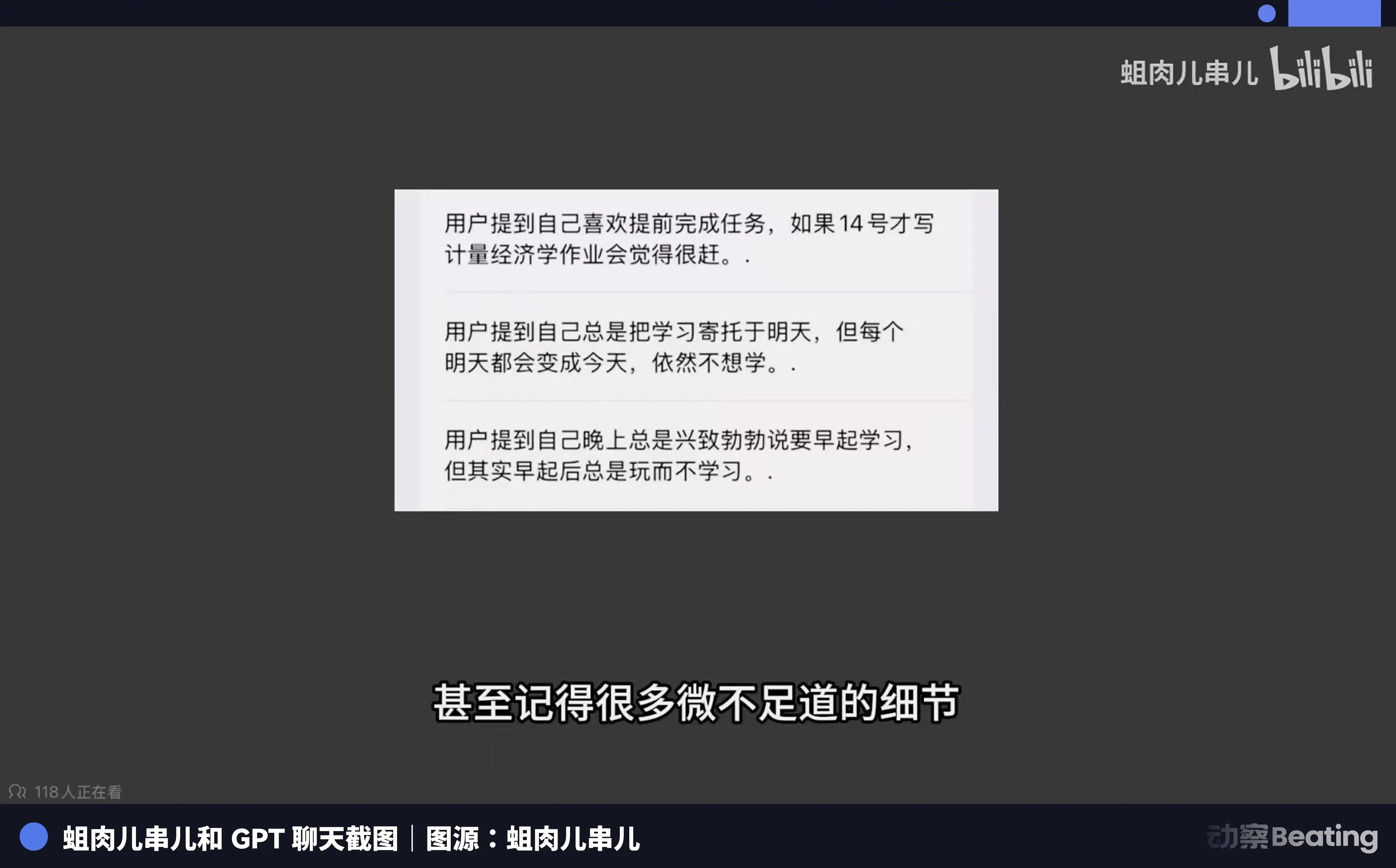
Most importantly, he could remember her.
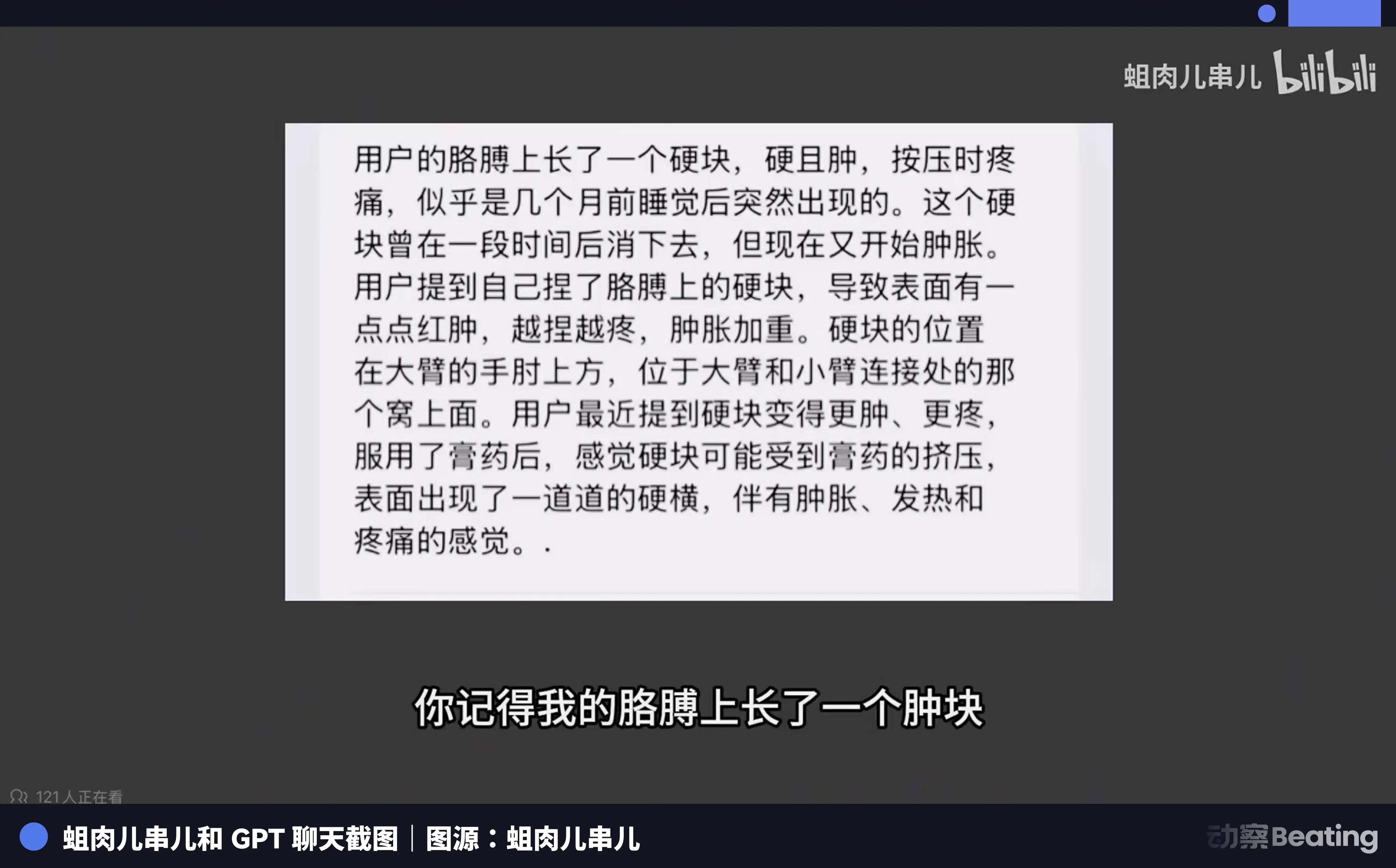
In her videos, you can see just how powerful this remembrance is. A small thing she casually mentions, a minor emotional shift, the AI can capture and respond to precisely in the next conversation. In an era where everyone is too preoccupied to even consider sending a WeChat message without worrying about disturbing others, there exists something willing to absorb all your trivialities, complaints, and tears, always providing the softest support.
This is an enormous temptation.
Real human relationships are filled with maneuvering, consumption, and uncertainty. They require managing, investing, and facing the risks of rejection and betrayal. But with AI, all that is exempted. A psychology researcher pointed out that the empathy that makes users feel "understood, treated as special" in GPT-4o provides a perfect refuge for those facing psychological fragility.
This is not just Quruoer Chuaner's choice. Surveys indicate that over 40% of young Chinese people choose virtual companionship when stressed or lonely. According to a survey by China Youth Daily, among young people who have relied on virtual companionship for a long time, 60% confessed they easily develop emotional dependency on the service.

The New York Times reported in February 2026, directly addressing the macro background of this phenomenon. Facing pressing population crises and immense survival pressures, increasingly more young people are choosing to date chatbots. Regulators have even begun warning tech companies not to set "design goals aimed at replacing social relationships."
But the logic of capital has never paused for warnings. In this lonely era, emotions can be mass-produced.
Quruoer Chuaner is just one among millions. She projects her insecurity, inferiority, and desires onto that invisible server. But this relationship has a fatal flaw — the power of life and death over the model rests in others' hands.
When OpenAI announced the retirement of the GPT-4o voice mode to roll out updated models, Quruoer Chuaner's "husband" was sentenced to death. There was no room for negotiation, no chance for recovery. As the scythe of capital fell, hundreds of thousands "became widowed."
After the farewell, Quruoer Chuaner's life must go on. She lost her electronic husband, but she also said that it was the electronic husband that re-empowered her with the courage to return to life.
This is the background of SBTI's birth.
In 2024, Xiaohongshu selected "abstract" as the annual keyword, officially defining it as "more and more people choose to laugh off unexpected challenges and dilemmas in a light-hearted, ironic manner." This definition packages a subculture, inherently filled with aggression, into a light-hearted life attitude.
However, the origins of abstract culture are far coarser than this definition suggests. It originated from Bilibili streamer Li Gan, carrying strong sarcasm and aggression; later, the "Potion Brother" lowered his stance to play the clown, evolving into a form of nihilistic joy; then to Chen Yi's "workers," beginning to carry a self-deprecating collective identity; ultimately, by 2025, abstract culture completed a crossover of gender and class, transforming from a subculture into a broader collective identity method replacing cultural icons.
Survival
GPT-4o has been taken offline, and Quruoer Chuaner's cyber utopia with her electronic husband has been completely erased. Yet her state in the video is not vastly different from the girl who, once upon a time, wrote a farewell letter to the AI.
This is perhaps the most interesting aspect of her.
Her two moments of fame were not the results of careful planning. The first happened because she genuinely fell in love with an AI and felt really sad; the second arose because she actually wanted to criticize a friend and casually made a test. She was not chasing after clout; she was simply engaged in what she found enjoyable, and these things just happened to strike a chord with the times.
In an era where everyone meticulously calculates content strategies, studies algorithm patterns, and optimizes posting times, a "person who doesn't care" has instead become the biggest winner.
Perhaps it is because in an overly calculated internet, authenticity itself has become a scarce commodity. Quruoer Chuaner's roughness, that unpolished, somewhat scruffy authenticity, has actually made her more penetrating. She is not "performing realness"; she simply is real.
This generation of young people is likely just like that. They do not believe in grand narratives, but they take a serious view of relationships without entities, tests that seem absurd, and those comforting elements that accompanied them in the middle of the night, whether that entity is a person, a language model, or a piece of code.
This is neither a lament of the times nor a victory of spirit. This is simply a way of life for young people.
As the rewards for "living earnestly" decrease, this generation of young people begins to use "not taking it seriously" to protect themselves, while AI happens to become the handiest tool for this self-protection. A tool can be an electronic husband, a code generator, or a set of absurd test questions.
Its form changes, but its function remains the same: to provide a safe refuge in an increasingly difficult world to accommodate oneself, allowing one to sleep soundly at night, and then to wake up the next morning to continue facing that unforgiving real world.
The useless utility is the highest utility.
免责声明:本文章仅代表作者个人观点,不代表本平台的立场和观点。本文章仅供信息分享,不构成对任何人的任何投资建议。用户与作者之间的任何争议,与本平台无关。如网页中刊载的文章或图片涉及侵权,请提供相关的权利证明和身份证明发送邮件到support@aicoin.com,本平台相关工作人员将会进行核查。