Original Title: How Trump Took the U.S. to War With Iran
Original Author: Jonathan Swan, Maggie Haberman, The New York Times
Translator: Peggy, BlockBeats
Editor's Note: In the past few weeks, the situation in the Middle East has rapidly escalated, with repeated ceasefires and frictions within a short period. Against this backdrop, this article provides a more specific angle: how the United States was drawn into this war.
From a highly classified briefing in the Situation Room to the final order on Air Force One, this decision was not made in a single instance but gradually solidified through continuous adjustments. On one hand, Israel constructed a narrative framework of almost "inevitable victory," framing the war as a low-risk, short-term opportunity; on the other hand, the U.S. intelligence system quickly deconstructed this narrative, pointing out that "regime change" was divorced from reality, but it did not deny the military strike itself.
Opposing opinions always existed, but never formed a real blockage. Vance emphasized costs and uncertainties, Cain noted constraints on resources and supplies, and Wiles focused on oil prices and election risks—these different dimensions of risk were repeatedly raised but never changed the decision direction. All information was heard, but no information truly constituted a constraint.
In a series of Situation Room meetings at the White House, President Trump repeatedly weighed his personal intuition, the deep concerns of the Vice President, and the gloomy intelligence assessments. Ultimately, this war gradually became the only option through a series of judgments that were never vetoed.
Below is the original text:
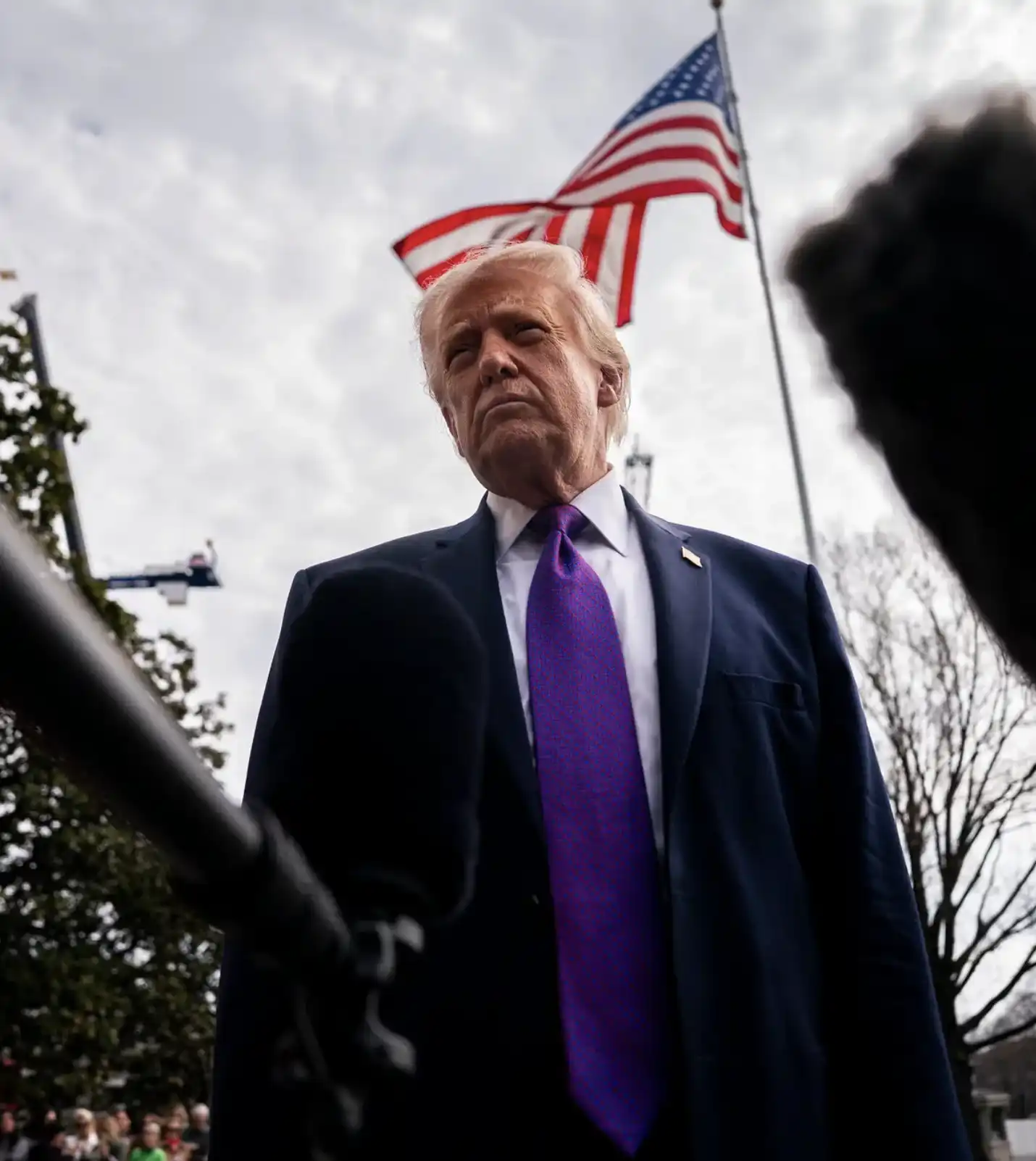
Trump's decision to approve the U.S. joining Israel in striking Iran was partly influenced by a briefing from Israeli Prime Minister Benjamin Netanyahu in February. This briefing sparked a series of discussions within the White House lasting several days and even weeks. Image source: Al Drago / The New York Times
Before 11 AM on February 11, a black SUV brought Israeli Prime Minister Benjamin Netanyahu to the White House. For the past several months, he had been advocating for U.S. agreement to launch a large-scale attack on Iran. On this day, he made almost no public appearances, avoided the media, and was quickly brought into the White House, welcoming one of the most critical moments of his political career.
U.S. and Israeli officials first had a brief meeting in the Cabinet Room adjacent to the Oval Office. Then, Netanyahu was taken underground to the true core location—the White House Situation Room. He would deliver a highly confidential briefing on the Iranian situation to Trump and his team. The Situation Room is rarely used to host foreign leaders.
When Trump took his seat, he did not sit in the customary main position but instead took a side seat directly facing the large screen on the wall. Netanyahu sat across from him, at a table separating him from the President.
On the screen were live feeds from David Barnea, head of the Israeli foreign intelligence agency Mossad, and several high-ranking military officials. Their images were arranged behind Netanyahu, creating a visual effect of a wartime commander supported by his team.
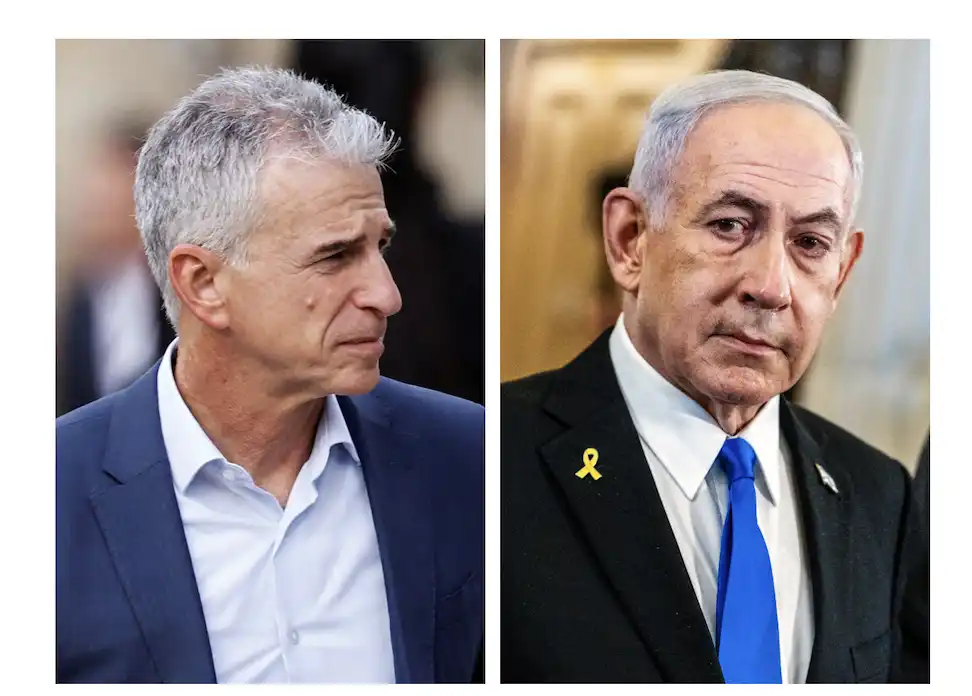
David Barnea, head of Israel's foreign intelligence service Mossad, participated in the high-risk meeting held at the White House Situation Room alongside Netanyahu and several Israeli military officials via video link. Image Source: Amir Cohen / Reuters; Eric Lee / The New York Times
White House Chief of Staff Suzy Wiles sat at the far end of the table; Secretary of State and National Security Advisor Marco Rubio took his usual position; Defense Secretary Peter Hegseth and Chairman of the Joint Chiefs of Staff Dan Cain sat together, with CIA Director John Ratcliffe at the side. The President's son-in-law Jared Kushner, as well as special envoy Steve Vitkov, responsible for negotiations with Iran, were also present.
This meeting was deliberately kept at a very small scale to avoid any risk of leaks. Many senior Cabinet members were unaware of it, and Vice President Vance was unable to attend—he was in Azerbaijan, and last-minute notification prevented him from returning in time.
In the following hour, Netanyahu's briefing became a crucial turning point, steering the U.S. and Israel towards a significant military conflict in one of the world's most sensitive areas. More importantly, this briefing sparked intensive discussions within the White House that lasted several days and even weeks. Trump repeatedly weighed options and risks in these closed-door meetings, ultimately approving participation in the operation against Iran.
This article is based on interviews conducted for the forthcoming book "Regime Change: Inside Donald Trump's Imperial Presidency." It reconstructs the internal power struggles in this decision-making process through numerous anonymous sources: how the President's intuition dominated judgment, how the core team differed, and how the White House operated within a highly centralized decision-making mechanism.
The report also indicates that for several months, Trump's hawkish stance was highly aligned with Netanyahu, a consistency that even exceeded the expectations of some core advisers. The close interaction between the two spanned both administrations; despite periods of friction, they remained the focal point of controversy in American politics. Ultimately, even more cautious members of the "war cabinet"—except for Vance, who had consistently opposed full-scale war—succumbed to the President's judgment, particularly his strong confidence that the war would end quickly and yield decisive results. The White House declined to comment.
During the Situation Room meeting on February 11, Netanyahu delivered an aggressive presentation: the Iranian regime had entered a vulnerable stage, and there was an opportunity for the U.S. and Israel to jointly end the Islamic Republic.
The Israeli side even prepared a video for Trump, showcasing potential successors who could take over the country after the regime's downfall. This included Reza Pahlavi, the exiled son of Iran's last king—a long-active opposition figure in Washington, trying to position himself as a secular alternative in a "post-theocratic" era.
The judgments provided by Netanyahu's team resembled a "narrative of inevitable victory": the Iranian missile system could be destroyed within weeks; the regime would be weakened to the point where it could not block the Strait of Hormuz; and its ability to retaliate against the U.S. and allies was limited.
Further, Mossad intelligence claimed that domestic protests in Iran would erupt again. With the intelligence agency promoting unrest, intensive bombing would create conditions for the opposition to overthrow the regime. Meanwhile, Kurdish forces could open a ground front from northern Iraq, further tearing apart Iran's military strength, accelerating its collapse.
The entire briefing's tone was calm and confident, but the core message was very clear—this was a "low-risk, high-reward" window of war.
It indeed moved the most critical person in the room.
"Sounds good," Trump responded. For Netanyahu, this was almost equivalent to a tacit approval.
Not only he but also the attendees generally felt that the President had basically made up his mind. Advisers noticed that Trump was very impressed by the Israeli intelligence system's capabilities—this was highly consistent with their interactions before the 12-day confrontation with Iran in June.
Earlier that day in the Cabinet Meeting, Netanyahu had already laid the groundwork for this briefing's core logic: the Iranian Supreme Leader Ali Khamenei represented a "survival threat" that had to be addressed.
When asked about risks, he did not deny uncertainties but repeatedly emphasized one judgment: the cost of inaction would be higher. If delays continued, Iran would accelerate missile production and construct a more challenging "immunity layer" for its nuclear program, making actions even more costly.
Everyone present was aware of one reality: the speed and cost of Iran's expansion of missile and drone inventories were far below the U.S. capabilities to build defensive systems. This meant that time was not on the U.S. side.
It was this briefing, along with Trump's positive response, that shifted the issue from "whether it is feasible" to "how to verify." That night, the U.S. intelligence system urgently initiated assessments to analyze the feasibility of the entire Israeli plan.
U.S. Intelligence: "Absurd"
The U.S. intelligence assessment results were reported the next day (February 12) in another meeting restricted to U.S. officials in the Situation Room. Before Trump's arrival, two senior intelligence officers had briefed the core circle of the President.
These intelligence officers were extremely familiar with U.S. military capabilities and Iran's political-military system. They broke down Netanyahu's proposal into four parts: First, a "dec
免责声明:本文章仅代表作者个人观点,不代表本平台的立场和观点。本文章仅供信息分享,不构成对任何人的任何投资建议。用户与作者之间的任何争议,与本平台无关。如网页中刊载的文章或图片涉及侵权,请提供相关的权利证明和身份证明发送邮件到support@aicoin.com,本平台相关工作人员将会进行核查。


