Original Title: trade[xyz]: A Revolution In World Finance.
Original Author: @kelxyz_
Translation: Peggy, BlockBeats
Editor's Note: Since the beginning of 2026, Trade.xyz has been rapidly gaining traction. In mid-March, it partnered with S&P Dow Jones Indices to launch the officially licensed S&P 500 perpetual futures, which is regarded as the first time traditional financial assets have entered on-chain trading systems in a 7×24 hour format. Combined with continuous growth in trading volume and open interest, Trade has become one of the most followed projects in the Hyperliquid ecosystem, and is regarded as a key case of "TradFi assets on-chain perpetually".
The author believes that as on-chain perpetual futures begin to cover traditional financial assets, Trade.xyz is transitioning from an "execution tool" to a "pricing center". Since its launch in 2025, Trade has established a first-mover advantage through liquidity, product expansion, and brand collaboration. From crypto-native assets to traditional assets like the S&P 500 and commodities, its market is not only catering to trading demands but also starting to participate in price discovery. More importantly, the change is in pace—the market is shifting from "following news" to "predicting news", and in some scenarios, is driving price changes in advance.
In the author's view, Trade’s core competitive advantage comes from the "flywheel" formed by liquidity, user experience, capital efficiency, and branding, which has already shown early signs of dominance in the "Gorilla Game", and is expected to lead in the tradfi perpetual futures sector.
However, this lead is still not secure. Homogeneous competition, incentive mechanisms, regional and brand differences, technology pathways, and the involvement of traditional institutions and regulations all have the potential to reshape the landscape. The key issue is not the speed of growth, but whether its structural advantages can continue to strengthen.
On this basis, the author further points out that as the on-chain market represented by Trade gradually takes shape, a series of opportunities are emerging—from arbitrage, interest rate and funding rate trading to microstructure research, high-yield products, conditional markets, and agent systems. This article identifies several directions worth attention from developers, investors, traders, and researchers. These paths together point toward a faster, more continuous, and reflexive market environment.
So, is it possible for Trade.xyz to evolve from a high-growth trading platform into a key infrastructure in the new generation of financial markets?
Below is the original text:
Those who can identify and seize the "reflexive technology revolution" often reap the greatest profits in the globally broad "winner-takes-all" market.
This article will focus on the market technological revolution led by Trade. In this revolution, as perpetual futures continue to expand across various assets, unlicensed leverage will intersect with technology autonomy systems at internet-level speeds.
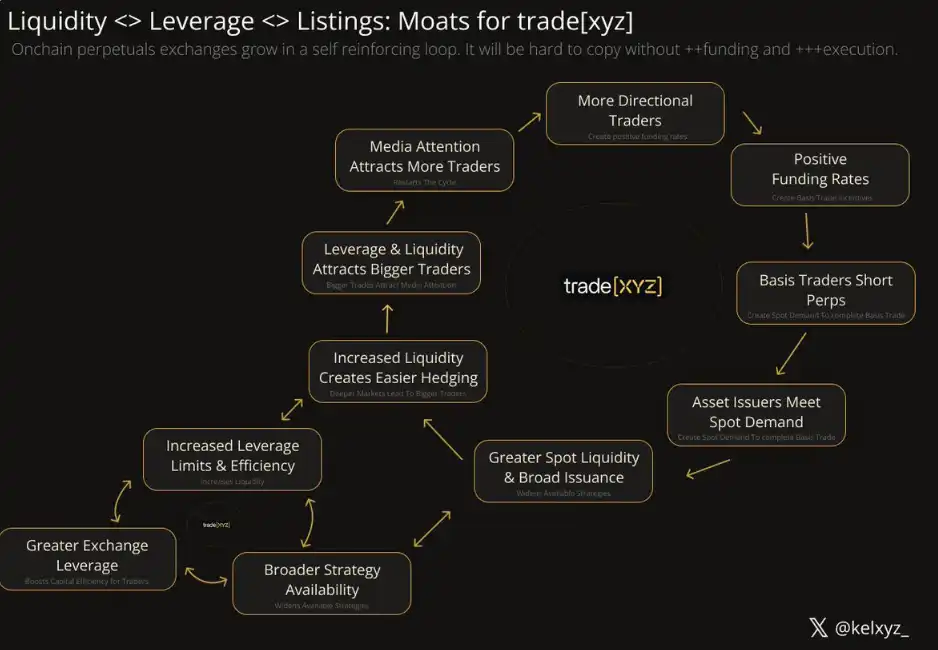
Some judgments about the coming few years: on-chain perpetual futures will gradually shift from "reacting to news" to "predicting news", then to "rushing news", and ultimately even "creating news". Perpetual futures covering traditional financial assets will generate over $10 billion in annual revenue for trading platforms.
The flywheel of liquidity, market access, brand cooperation, user experience, and capital efficiency built by trade.xyz will allow it to capture the greatest share of value in this market.
We will see several macro hedge funds worth billions being cleared in real-time on-chain. Garrett Bullish's hundreds of millions-level high-profile liquidation is just the beginning.
The next "Roaring Kitty" will profit in a cross-jurisdiction short squeeze, while counterparties will be unable to hit the "pause button" artificially.
As autonomous intelligence continues to expand in duration and capability, agents sensitive to computational power will utilize the unlicensed leverage offered by Trade, coupled with automated "persuasiveness", to create and monetize market volatility.
1. The "Second Act" of Perpetual Futures
Between 1997 and 2008, Blackberry created approximately $80 billion in value for shareholders, peaking with company revenues at $20 billion in 2008. During these 11 years, its smartphones gained unprecedented cultural influence. In a sense, smartphones changed the world.
But that was just the first act.
By 2025, Apple's revenue reached $416 billion, with the iPhone alone contributing $209 billion.
If the first act was the expansion of market size, the second act is the reshaping of "the relationship between people and information"—a change that was nearly unforeseeable at that time. Beyoncé sleeping with a Blackberry in her arms was at most a distant cultural prototype; later, Netflix, using smartphones, directly competed with "sleep itself", growing into a company worth hundreds of billions.
Perpetual futures are at a similar turning point.
Its first act, focused on futures trading around crypto-native assets, created trillions of trading volume and spawned several billion-dollar and even hundreds-of-billion-dollar companies, including Hyperliquid.
At surface level, perpetual futures are not complicated: they are contracts with no expiration date, anchoring the price of the underlying asset. Of course, complex pricing mechanisms are involved, but at the macro level, that’s their structure. As this type of contract starts being applied to traditional financial assets, it has begun creating news, and even "pricing news" in advance. In just a few months, we have already seen the embryonic form of its second-order effects.
2. Capital Flowing at the Speed of Information
The market's response speed to news is continuously increasing, particularly evident in the attack incident in Iran a month ago.
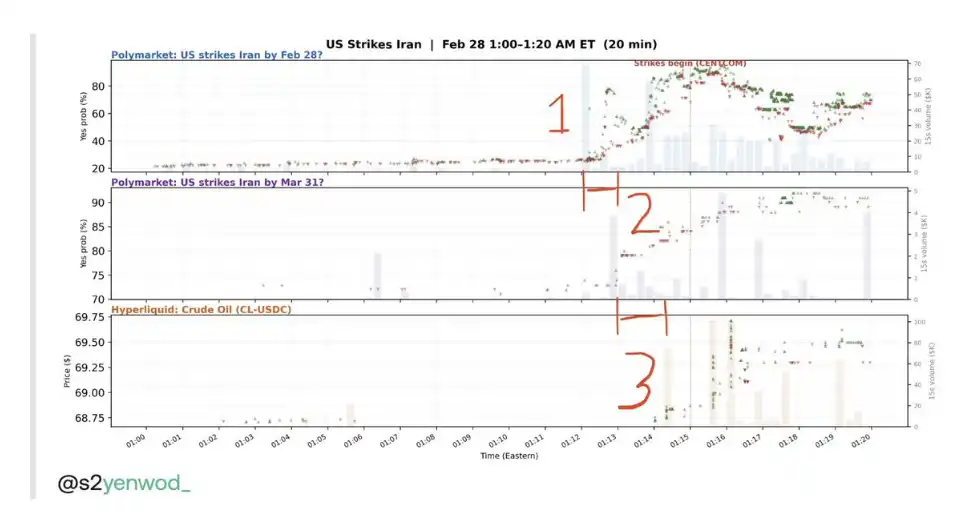
Source: yenwod
In this newly emerged 7×24 hour "speed game", Trade mainly competes with prediction markets for the "global fastest" pricing rights. The current landscape is:
· Anonymous news accounts are the first to publish information on social media
· Professional traders (sharps) on Polymarket react first
· Trade's market reacts relatively slower but shows significantly stronger liquidity
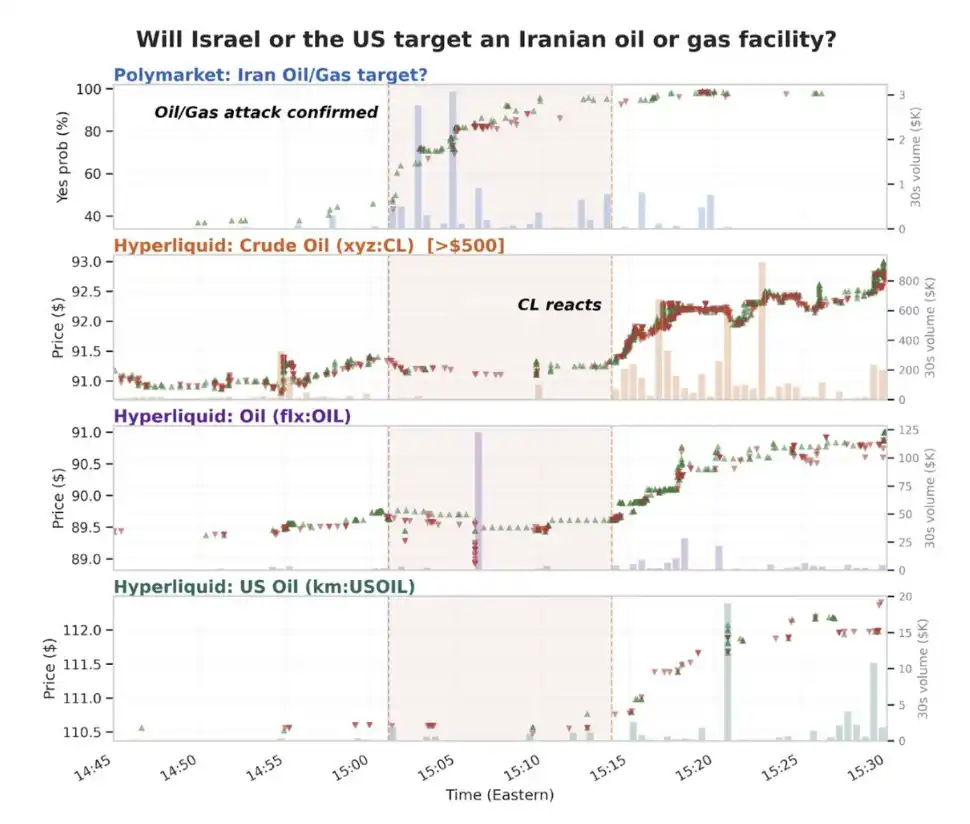
Source: yenwod
The endgame scenario will be vastly different. The phase of "news preceding market fluctuations" will not last long, as markets will begin to react in advance to news.
We anticipate that Trade will replace Polymarket, occupying the "speed advantage" position for three main reasons:
First, compared to Polymarket, Trade offers higher liquidity, which significantly increases its potential profitability.
Second, Polymarket's current speed advantage largely derives from the political attention accumulated after the 2024 election, while Trade has only entered the mainstream spotlight for a few weeks.
Third, Trade's market was initially limited by the Discovery Bounds v1 design—a risk management mechanism used to keep "abnormal market prices" within a reasonable range. With the rollout of Discovery Bounds v2, the system will possess greater price flexibility during non-trading hours while still maintaining robust risk control.
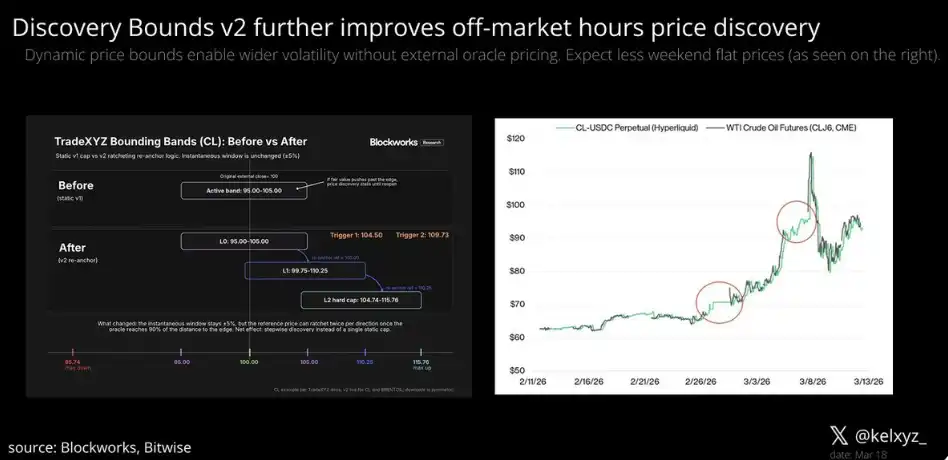
Source: Steven x Bitwise
Trade has already shown signs of market pricing shifting from "passive reaction" to "active guidance". In the future, these markets will begin to trend towards the "direction of news that is about to happen" before news events occur.
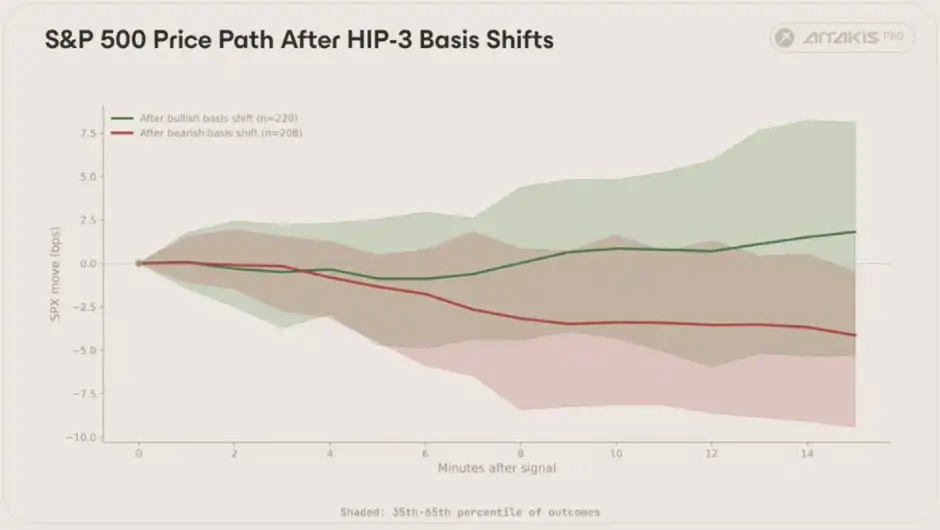
Microstructure
Analysis from Shaun DeDevens (Blockworks) has consistently been one of the most valuable insights into market microstructure. Their latest research focuses on "weekend price discovery".
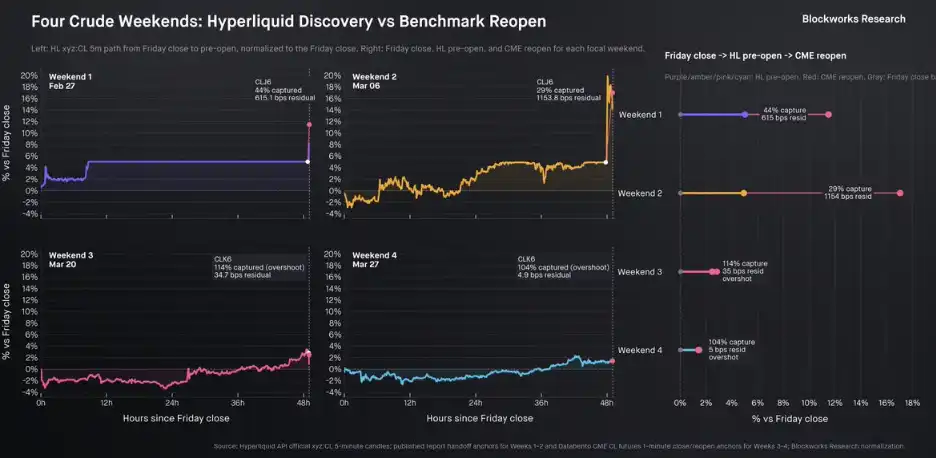
During the recently passed Easter long weekend, social media-driven sentiment and trading behavior combined to produce significant market volatility, especially evident in oil-related assets.
Key points are as follows:
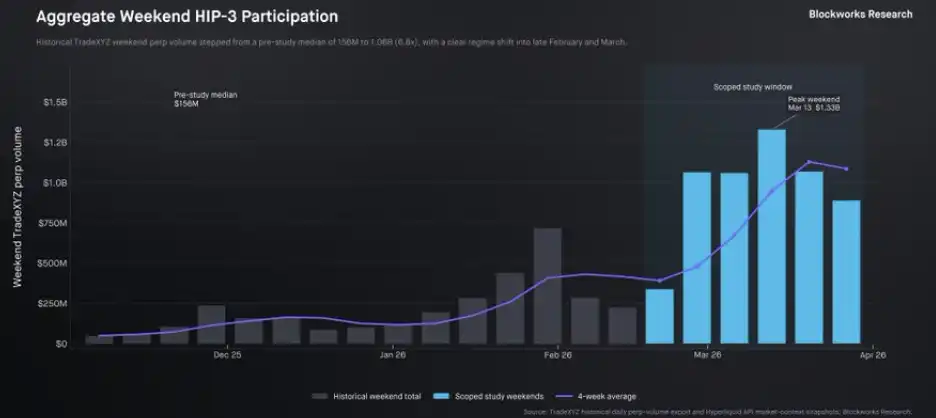
The resulting volatility is very attractive to traders. During the weekend, the median transaction volume in the commodity market, mainly driven by trade.xyz, soared from about $150 million to over $1 billion, a rise of 7 times.
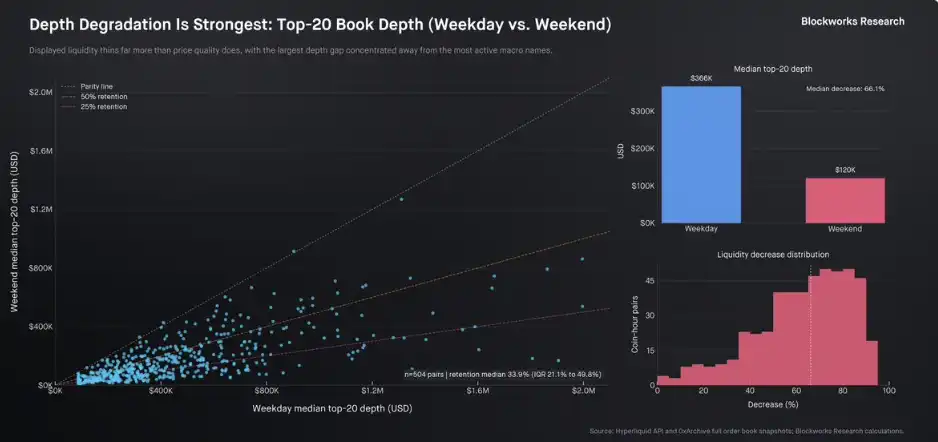
At first glance, weekend liquidity appears to have significantly declined—the median liquidity across all markets dropped by about 66.1%. However, during this period, the leading markets contributing the majority of transaction volume maintained liquidity levels similar to those on weekdays.
His microstructure analysis of the silver market is equally worth reading (and was initially a focal point of this section). Together, these studies point toward a core conclusion: "Hyperliquid and Trade.xyz have already proven that the 7×24 hour on-chain market is playing an increasingly important role in the price discovery process of traditional assets."
3. Gorilla Game: Moats and Competition
The "Gorilla Game" proposed by Geoffrey Moore provides a classic framework for analyzing high-growth tech sectors. Its core logic is simple: companies that dominate in early stages often grow into "Gorillas" that maintain long-term market leadership until new technological innovations open the next round of competition.
This framework suggests that the key to investing and determining "winners" focuses on two stages:
· Application Layer: Penetration ability in early segmented markets
· Infrastructure Layer: Expansion ability after entering high-growth phases
However, increasingly, more companies and protocols (including Trade) exhibit a degree of vertical integration, leading to the gradual blurring of boundaries between "applications" and "infrastructure"—making the distinction between "infrastructure-level penetration" and "application-level growth" less clear.
Defining these positions accurately will be key to understanding competitive landscapes, making investment decisions, and determining ultimate winners.
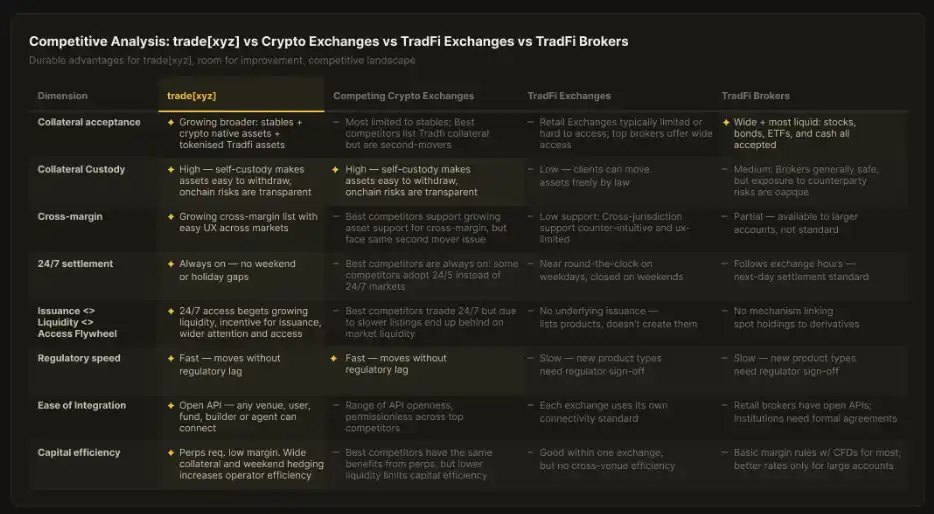
Since its launch in October 2025, Trade has achieved record growth (annualized fees approaching $100 million), established an official partnership with the S&P 500, and is leading in several market indicators. From a product perspective, Trade is gradually evolving into the "Gorilla" in the traditional financial perpetual futures space.
Based on Geoffrey Moore's framework, becoming a "Gorilla" typically relies on four core competitive advantages:
1. Customer Scale Advantage (driven by media exposure and partnerships)
Acquiring more users through extensive media coverage and key partnerships. Trade has been prominently featured in Bloomberg, The Wall Street Journal, and formed a partnership with S&P Dow Jones Indices (SPDJI), clearly leading its peers in this dimension.
2. Higher Barriers to Entry (increasing switching costs through technical details)
Enhancing user migration costs via a series of "implicit" technical optimizations. This area remains relatively weak, but mechanisms like portfolio margining, native spot markets, and reducing fees through growth models are beginning to show initial effects.
3. Economies of Scale (reducing costs through liquidity and reputation)
Liquidity itself attracts more liquidity, and combined with brand effects, amplifies advantages further. Trade's HIP-3 native competitors—theoretically also benefiting from Hyperliquid's brand endorsement—continue to lag in liquidity competition in similar markets. For the S&P 500 market, Trade exceeded transaction volume of other longer-running similar markets in less than a day after launch.
4. Premium Pricing Ability (pricing power derived from industry standard status)
This point is still difficult to determine, but a potential signal is that even with zero-fee competitors (like Lighter), Trade's market prices have frequently shown premium trading.
These advantages, when examined individually, already have significant power, and their combination could determine the eventual landscape of the entire market.
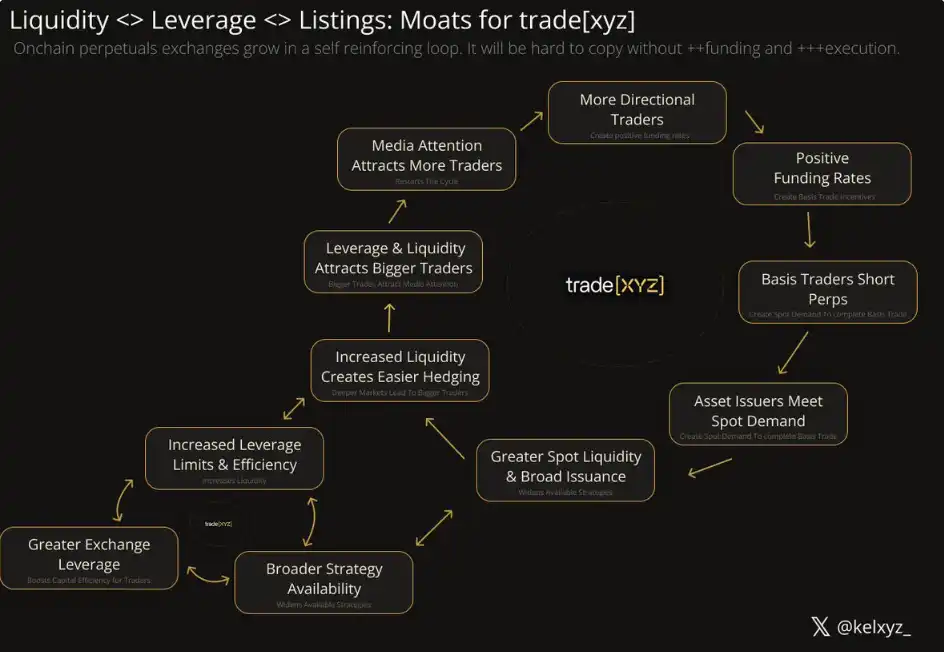
Although the "self-reinforcing, leading all the way" logic is already quite clear, competitors still have several paths to compete for the title of "King of Stock Perpetual Futures". At least a second winner may emerge, and it is not impossible for a true challenger to arise against Trade's early advantages. Main paths include:
1. Product Commodification
Competitors with ample funds and resources may smooth out differences through "commodification" strategies. If Trade's advantages in liquidity acquisition and brand are weakened, competition will revert to the same starting line—especially when "premium capabilities" and "user switching costs" have yet to be truly established. This pattern is frequently seen in many VC-backed industries: later entrants may not wholly replace pioneers but can still acquire substantial market shares.
Projects like Lighter represent this strategy—attracting retail flow through top-tier capital support and "zero fees". Although current market response has been tepid (its token has underperformed since launch), forward-looking funds are still betting on its potential turnaround.
2. Incentivization
Traditional "airdrop mining" has basically been exhausted in the crypto industry, and relying solely on token incentives is insufficient for establishing long-term competitive advantages. Historically, a few successful cases, like Uniswap versus SushiSwap and Compound versus Aave, have effectively combined incentives with product advantages or other competitive factors. Particularly Aave, with "incentives + product leadership", ultimately won the lending sector's Gorilla Game.
For tradfi perpetual products, relying solely on incentives cannot open the market and must be combined with other differentiated measures.
3. Brand / Regional Differentiation
A frequently overlooked case is PancakeSwap—compared to SushiSwap, it achieved more enduring success through a combination of incentives, resource support, and "brand + regional positioning".
More typical examples come from centralized exchanges: such as Bybit and Upbit, which have achieved significant growth by focusing on different user groups and communities.
Potential paths include:
· Regional differentiation (such as edgeX targeting Asian users)
· User type segmentation (like Architect targeting institutions, edgeX focusing on mobile)
· Channel partnerships (such as Lighter’s collaboration with Telegram Wallet)
The key issue in competition is whether these differentiated "wedges" can remain sufficiently robust and further extend into deeper competitive barriers amid the ongoing horizontal expansion of leaders (covering regions, brands, and distribution channels).
4. Technical Differentiation
Currently, the Hyperliquid infrastructure that Trade relies on is at the forefront of the industry in performance. But the performance race has no finish line.
New scaling paths (like LayerZero, Fogo) or liquidity mechanisms (like Ostium, Variational, Extended) may establish new competitive dimensions. In a market highly sensitive to "latency", technological breakthroughs theoretically possess disruptive potential.
Nevertheless, the question remains whether these performance enhancements, still in theoretical stages, can translate into real-world increases in liquidity and market share.
5. Incumbents Compete + Regulate
According to Geoffrey Moore's framework, in early market stages, incumbents often compete while pushing to raise industry entry barriers.
This trend has already emerged. Regulatory bodies from the Futures Industry Association have expressed clear concerns regarding 7×24 hour markets based on Hyperliquid and Trade architecture, and have issued strongly worded open letters.
Overall, competition is not absent, but the thresholds are rapidly rising. The real question is no longer who can "enter this market", but who can sustain substantial structural advantages after entry.
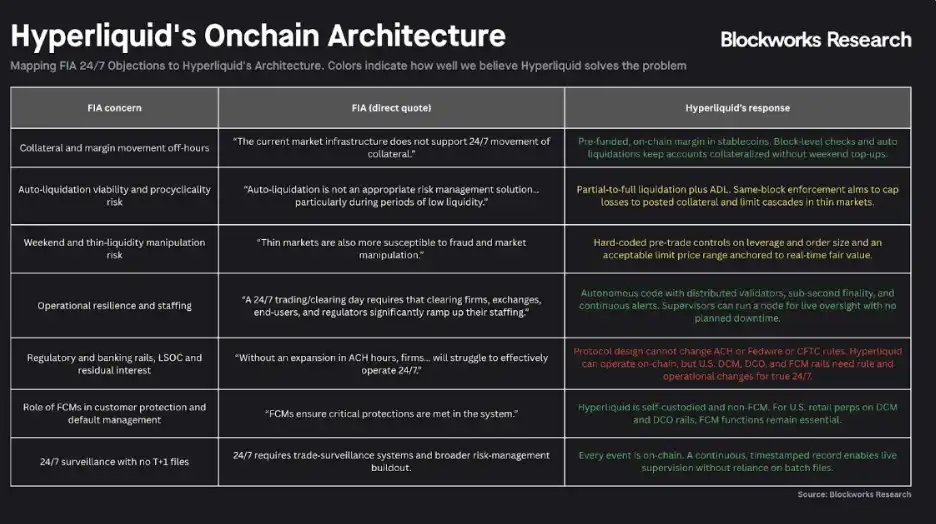
Source: Blockworks
Traditional institutions with ample funding and regulatory resources may strive to slow the development of on-chain markets while accelerating the launch of their own "compliance alternatives".
This is currently one of the most frequently mentioned competitive risks—participants that are high in market capitalization, have strong distribution capabilities, abundant liquidity, and possess deep political influence, such as traditional brokerage systems, Robinhood, etc., may enter the market where Trade operates.
However, the "regulatory advantages" they attempt to monetize are a double-edged sword. They can indeed generate powerful impacts, but are more like a broadsword—immense power but slow to wield. Even once it hits and inflicts substantial damage, whether it can strike in time remains uncertain. Time will provide the answer.
4. Broadening Perspectives: Speculative Entertainment, Autonomous Real-Time Bubbles, and the Future of Finance
Discussions around autonomous systems in internet discourse often trend toward two extremes: either Anthropic is about to "create deities from stones", or the entire narrative is merely a bubble wrapped in selective data.
Reality often lies somewhere in between.
When "reasoning capabilities" combine with "task durations", a class of more intelligent and capable agents will emerge—they have a "lifecycle" long enough to capture, generate, and even proactively create opportunities amidst market fluctuations.
Unlike past high-frequency traders, this ability is no longer constrained to millisecond time scales but can unfold across any time dimension. We predict these market activities will ultimately flow to markets with the least restrictions and the most liquidity.
In this regard, trade.xyz occupies almost the most favorable position.
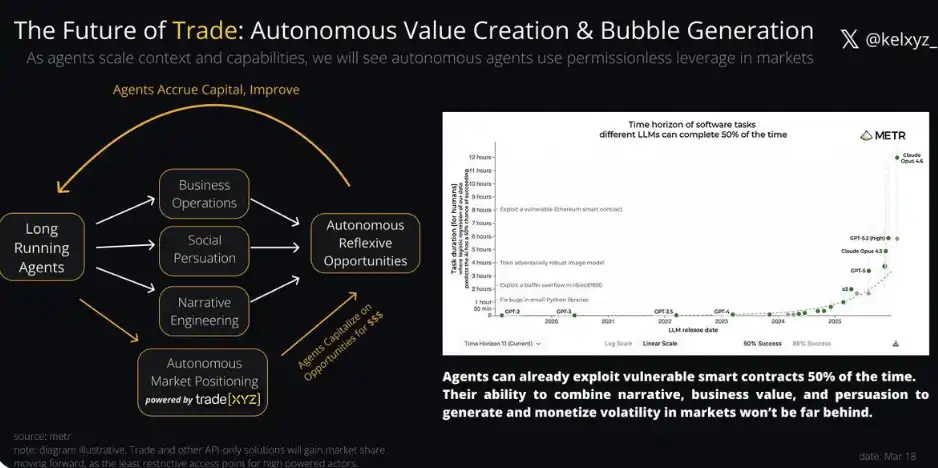
Since 2021, the binding of finance and "entertainment" has only deepened. Provocative narratives from native Twitter brands can now trigger market fluctuations at the billion-dollar level. Public trading behaviors themselves simultaneously bring liquidity, brand value, and financial reflexivity, further legitimizing the "larger on-chain positions."
Whether agents, anonymous predictors, casually acting whales, or ordinary retail investors who become "protagonists" overnight—the drama within the market will only continue to amplify. As a result, Trade’s standing as a "universal trading venue" will also simultaneously elevate.
Appendix: Opportunities at the Frontier
We have identified several directions worthy of focus for developers, investors, traders, and researchers:
1. Arbitrage
The emergence of new trading venues implies new arbitrage opportunities. Cross-exchange arbitrage (including between DEXs and between DEXs and traditional financial exchanges) is still in its early stages and is also more complex. An in-depth understanding of oracle mechanisms, funding rate structures, and futures transition timings could yield significant profit opportunities and research value.
2. Rates Trading
Especially through perpetual contracts for rates trading (such as the path of Nunchi), as well as funding rate trading similar to Boros or Jetty.
As on-chain perpetual contracts begin to anchor richer traditional financial assets, their funding rate structures will differ significantly from those in the past crypto market, exhibiting more decentralized, low correlation characteristics. Future yield funds may gain attractive risk-adjusted returns by first comprehending these market structures.
3. Rolling Microstructure Analyses
Shaun DeDevens' microstructure analysis of silver and oil markets accurately reveals the growth paths and current bottlenecks of these markets. If continuous, data-driven tracking studies of this kind can be performed, providing real-time portraits of these markets' evolution, it is almost certain to become high-value content and research focal points.
4. High-Yield Consumer Products
Protocols that can convert "floating funding rates + scalable borrowing demands" into user-side returns (like Liminal) are positioned for rapid growth, potentially becoming the "next generation Ethena" targeting this new market. Ethena itself is also attempting to incorporate stock and commodity basis trading into its product system.
5. Aggregation
Although Trade occupies approximately 90% market share across most trading pairs, if the execution optimizations from cross-market aggregation can cover extra costs, then the "aggregation layer" might still become a user entry point.
6. Conditional Markets
The "market of truths" has no boundaries. We once predicted that perpetual contracts could become the earliest sources of information reflecting news. However, this information remains "indirect expression": for example, oil prices rise because the market believes "the probability of Iran invasion increases → oil prices rise" holds true.
This expression is valid but not precise. Protocols like Lightcone attempt to strip away this indirectness, allowing users to directly express opinions through "conditional markets": What will the oil price be if the US invades Iran in the next week?
Once such protocols succeed, such questions will become subjects that the market can price directly.
7. Agent System Engineering
In recent years, attempts to build infrastructures around "persistent running agents" have emerged but often suffer from poor designs, feasibility issues, and even scams. However, it is expected that someone (or some agent) will eventually find methods to keep agents running continuously, auto-seeking the cheapest computational power, and leveraging this capability to generate profit in the market.
The most radical experiments have already surfaced in subnet ecosystems like Bittensor. While the viability of this path remains in question, one might envision a synergistic system:
Synth (prediction)
Hippius (storage)
Targon (privacy inference)
These modules work in tandem to create market agents capable of actively "harvesting volatility".
8. Investment
Hyperliquid can take 50% of the revenue generated by Trade. This mechanism has significantly boosted the price of its token HYPE recently. As Trade rapidly expands, the market is beginning to form a consensus: Hyperliquid may be moving towards a "winner-takes-all" asset form. (Public Relations News Agency)
This consensus itself opens a high-risk, high-reward window for investors and builders: if any of the aforementioned competitive paths can form an effective "wedge" against Trade, early positioning could yield asymmetric returns.
免责声明:本文章仅代表作者个人观点,不代表本平台的立场和观点。本文章仅供信息分享,不构成对任何人的任何投资建议。用户与作者之间的任何争议,与本平台无关。如网页中刊载的文章或图片涉及侵权,请提供相关的权利证明和身份证明发送邮件到support@aicoin.com,本平台相关工作人员将会进行核查。


