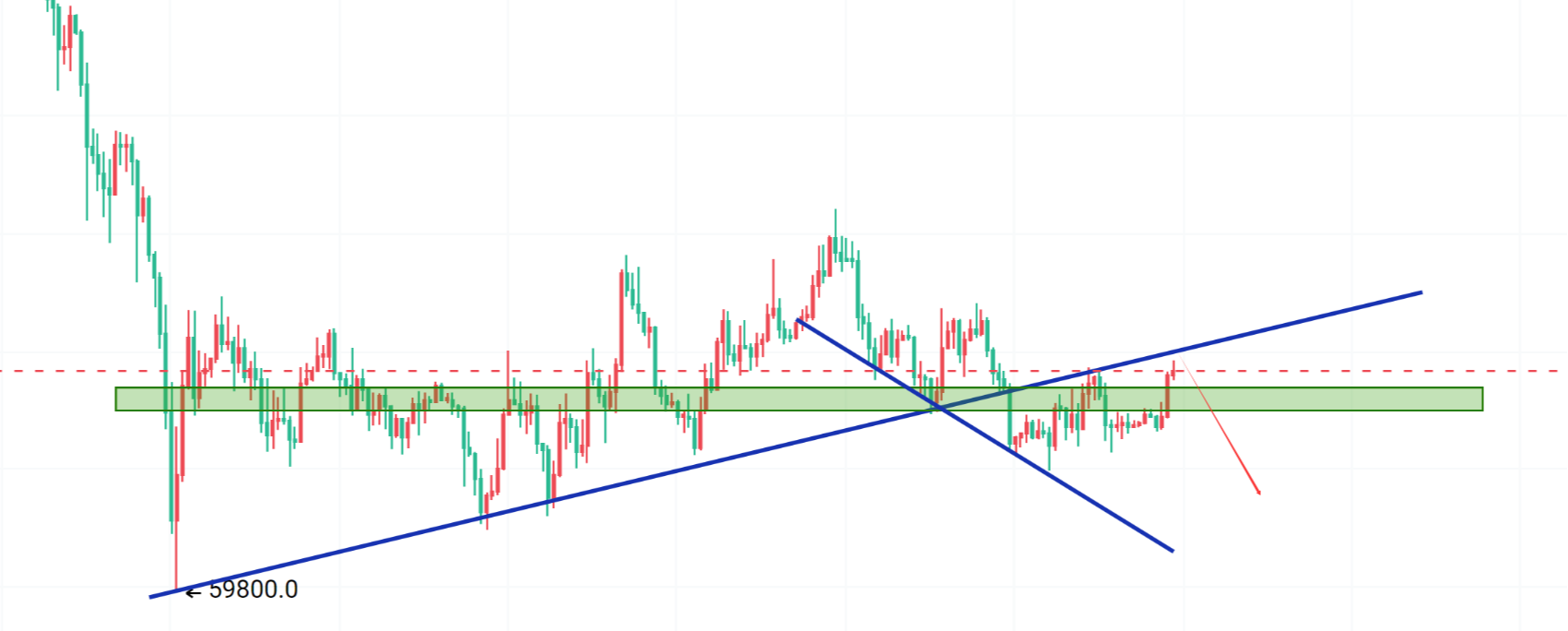
As of April 6, 2026, Beijing time, this large sell-off led by @thomasg_eth has been confirmed by multiple on-chain data sources: a concentrated sale of approximately 11,409 ETH and 13,150 AAVE, totaling a nominal scale of about 24.68 million U.S. dollars. According to the valuation ranges provided by Lookonchain and various media, the ETH portion is approximately 23.47 million U.S. dollars and the AAVE portion is approximately 1.21 million U.S. dollars. The current primary concern among market participants is whether such a significant point sell pressure will disturb the price stability and order book liquidity of ETH and AAVE in the short term, and whether it indicates a change in risk appetite among big holders for the future. The following text will explore the structural impacts behind this whale trade along several main lines: “restoring the transaction timeline—historical behavioral style—potential motivation framework—quantitative impact on the market”, rather than remaining in the emotional “panic interpretation.”
Time and Scale of the On-chain Warning Sell-off 2 Hours Ahead
From the timeline restoration perspective, according to Research Brief and Lookonchain data, this round of sell-off occurred approximately 2 hours before the on-chain monitoring account posted, meaning that by the time the market was broadly aware of the event, the actual sell pressure on-chain had already been completed or was nearing its end. This rhythm of "capital moves first, information arrives later" significantly affects the short-term price path: early trades directly impact the order book, while subsequently spread news mainly influences sentiment and following behaviors.
In terms of different currencies, the confirmed sell-off scale includes: approximately 11,409 ETH, valued at around 23.47 million U.S. dollars according to media at the time; and approximately 13,150 AAVE, with a nominal value of about 1.21 million U.S. dollars. The combined sell-off volume of approximately 24.68 million U.S. dollars is sufficient to exert pressure on the depth and short-term volatility of the related trading pairs within a single time window. It is important to emphasize that the current public information comes from Lookonchain and multiple tech media's on-chain aggregated data, which can only accurately reflect the total trading volume and approximate value, but cannot reconstruct the split structure, slippage, or matching details of each transaction without loss.
In terms of data boundaries, this analysis is strictly based on publicly available on-chain records and authoritative monitoring accounts, discussing only the verifiable total scale and chronological sequence, not inferring the exact split method, specific entry cost, or unrealized gains or losses of this address, nor extrapolating micro-depths of a single exchange. From the direction of influence, under limited depth, dumping tens of millions of dollars' worth of ETH and AAVE in a short time is likely to form a downward shock wave on the spot market, amplifying spreads and short-term volatility, but the specific "point level" it affects exceeds the resolution of disclosed data.
Classic Whale or Fast In and Out Trader
Regarding the identity of this trading entity, it is currently referred to in the market as a "whale address" or "trader address," associated with @thomasg_eth, but the complete on-chain address is still in a pending verification status and has not received 100% confirmation from official or on-chain analysis agencies. Discussions around this address rely on long-term tracking data from monitoring accounts like Lookonchain, and community sentiment labeling, where investors need to clearly distinguish when citing: part of it is the on-chain verifiable objective trading records, while another part is based on these records to make behavioral labels and persona inferences.
From the publicly available historical trajectory, its preferences can be roughly outlined: on one hand, its operational assets are concentrated in ETH and blue-chip tokens in the DeFi track, such as the AAVE involved this time; on the other hand, the volume of single transactions often reaches millions or even tens of millions of dollars, showcasing characteristics typical of "whales/professional traders." Whether it’s large purchases in the early stage or concentrated sell-offs later, the frequency and scale far exceed those of ordinary retail investors, representing a capital level sufficient to leverage local liquidity at a single point.
Comparing past holding periods and operational rhythms, it can be observed that such addresses exhibit both several weeks to months of medium-term holdings, as well as records of multiple reductions or adjustments within shorter cycles. Integrating these behavioral characteristics, the market often positions them as "accounts with fluctuating trading tendencies", situated between long-term passive allocation and high-frequency market making. However, this judgment is based on reasonable inference from historical data, rather than the entity's stated trading assertions, and cannot be misread as an official characterization of their "long or short style."
Therefore, in interpreting this $24.68 million sell-off, it is essential to intentionally distinguish: the objective facts that have occurred including the time of sale, scale, and currency structure; while the motivation behind whether they are "realizing profits," "cutting losses," or "iterating strategy" pertains to the inference of behavioral patterns. Readers should avoid viewing subjective reasoning as "facts" that have been directly proven by on-chain data.
Three Main Motivation Frameworks: Leverage, Hedging, or Reallocation
Regarding this concentrated sell-off, the relatively mainstream explanations in the market can generally be categorized into three: first, a bearish or cautious sentiment towards future prices, reducing overall exposure by reducing ETH and AAVE holdings; second, the existence of liquidity needs, for instance, cashing out to meet on-chain or off-chain financial arrangements, repaying debts, etc.; third, a structural reallocation from ETH and AAVE to other assets, which may include transitioning to other public chain assets, DeFi protocol tokens, or lower volatility asset combinations. Currently, there is no direct statement from this address in the public information, so all motivation analyses can only be framed within general trader behavioral patterns, combined with the prevailing market environment for interval assessments rather than providing definitive answers.
From a macro and industry context, the market overall was still in a high volatility phase at the beginning of April, with expectations of macro interest rates, regulatory news, and shifts in the crypto sector intertwining, leading to multiple instances of severe tugging on mainstream asset prices within a short time. In such an environment, big holders, considering to "reduce volatility exposure," may choose to reduce holdings of some high Beta assets (such as DeFi blue chips), which is statistically reasonable and common. If a significant market retracement occurs on the day, or sentiment shifts from optimism to caution, then the claims of "bearish or defensive reduction" would correspondingly gain weight, but it is still difficult to provide a single motivational characterization based solely on a single action.
From common practices in DeFi, one must also consider the possibilities related to leverage and borrowing. A large amount of ETH and AAVE being concentratedly sold may relate to previous collateral or leveraged positions on lending protocols—such as repaying loans early, reducing health risk, or migrating part of a position from a high-risk portfolio to more stable assets. However, in the absence of specific position and protocol invocation data, this article does not construct any details about "how much a certain address has collateralized on a certain protocol, or what the liquidation price is," but merely stays at the level of general capital management logic.
Overall, whether it is "bearish reduction," "liquidity needs," or "reallocation for rebalancing," they can all find bases within the current market context and common trader behavior. However, these explanations are all based on statistical experience and macro background probability inferences, rather than the subjective intentions disclosed publicly by this address. Understanding it as a "zone of possibilities" is more in line with risk control principles than taking any single claim as "insider information."
How Deep Can a Single Point Sell Pressure Impact ETH and AAVE's Pressure Boundaries?
To assess the real impact of approximately 24.68 million U.S. dollars in concentrated sell pressure, it must be compared within the overall volume of the markets for ETH and AAVE. Taking ETH as an example, its daily trading volume on mainstream exchanges (such as Binance, OKX, etc.) is typically in the tens of billions to hundreds of billions of U.S. dollars, with the depth of involving trading pairs fluctuating between millions to over a hundred million U.S. dollars. From this perspective, a 23.47 million U.S. dollars ETH sell-off is not an extreme proportion of the overall daily trading, but if executed within a short time frame and concentrated in a few liquidity pools, it is still sufficient to cause notable disturbances to local depth.
For AAVE, as a well-established DeFi blue chip, its overall liquidity and trading scale are significantly lower than that of ETH. An isolated point sell pressure of about 1.21 million U.S. dollars relative to mainstream spot pairs of AAVE is much higher in proportion, making it easier to accelerate the pace of orders' execution and amplify slippage, as well as create a "vacuum" effect on the order book. Thus, under the same nominal amount, AAVE's price curve is often more susceptible to being momentarily "amplified" by the movements of large holders, whereas ETH reflects more as a marginal amplification of the overall volatility range.
In terms of the linkage between spot and derivatives, large spot sell-offs can amplify short-term volatility and liquidation risks through several pathways: a drop in spot prices will first affect the contract marking price and estimated liquidation price, which may trigger automatic reductions or liquidations of some highly leveraged long positions; the subsequent forced sell-offs will further exacerbate the selling pressure on the market, forming a negative feedback chain between "spot—contracts." However, the specific magnitude and rhythm of this process depend on the overall leverage levels and the structure of outstanding contracts at the time, which cannot be entirely controlled by a single large holder.
Therefore, this sell-off should be viewed from two dimensions: from an "absolute amount" perspective, 24.68 million U.S. dollars is large enough at any point in time to be defined as a "large transaction," especially sensitive to trading pairs with thinner liquidity; from a "relative market volume" perspective, the impact of a single whale's actions on the medium to long-term trends of high market cap assets like ETH is limited, manifesting more in short-term price disturbances and emotional shocks. Simultaneously, this article, in referencing concepts like trading volume, liquidity, and depth, only makes interval and relative scale estimates, without providing precise statistics for specific exchanges or specific minute-level timeframes to avoid misinterpreting empirical estimates as "official data."
The Media Amplification Effect: How Emotion Can Be Elevated
The widespread attention garnered by this event in a short time is closely linked to the combined dissemination model of "on-chain monitoring account + media forwarding". Lookonchain first disclosed this whale sell-off on social platforms, and then various crypto media outlets, including Odaily Planet Daily, BlockBeats, and Deep Tide TechFlow, quickly followed up with reports, retelling and amplifying the event across their respective channels. This pathway, "from on-chain to media to social networks," allows trading behaviors that were originally visible only in block explorers and specialized monitoring tools to be rapidly packaged into market events with narrative tension.
At the retail level, the combination of "on-chain monitoring + media forwarding" has a particularly significant influence on short-term trading sentiment. On one hand, data screenshots and trading amounts are often presented visually, easily triggering an instinctive reaction of "whale offloading = negative news" at the first moment; on the other hand, media headlines and secondary interpretations inevitably bring emotional color, reinforcing binary narratives such as "panic" or "bottom-fishing," prompting some short-term funds to make following or hedging moves, thus amplifying price fluctuations.
For other large holders and institutions, once the whale's movements are exposed, it will also give rise to a series of hedging or speculative behaviors. Some funds may choose to reduce positions or hedge in the direction of the trend to prevent single-point sell pressure from evolving into a trending pullback; others may attempt to buy on the dip or bet against emotional deviations through derivatives, based on an understanding of liquidity structure during panic episodes. In these subsequent reactions, the key variable is not the initial sell-off of 24.68 million U.S. dollars itself, but rather how this behavior is interpreted and disseminated.
The speed of information diffusion itself has become an important variable for the market. Current investors facing such large on-chain transactions need to consciously distinguish three layers: underlying facts (what happened on-chain, how big it was), analytical interpretations (how various parties interpret its motivations and impacts), and emotional amplification (how the market amplifies panic or greed on social platforms). Only by maintaining clear boundaries among these three can one avoid being swept up in emotions amidst the information flood, leading to decisions far from their own risk control framework.
Can a Whale's Decision Rewrite the Trends of ETH and AAVE?
Overall, the approximately 24.68 million U.S. dollars sell-off led by @thomasg_eth presents characteristics of "capital running ahead, information lagging behind" in its temporal dimension: the transaction occurred about 2 hours before the on-chain monitoring warning and was widely disseminated only afterward; in terms of scale and currency structure, it is primarily composed of approximately 11,409 ETH (about 23.47 million U.S. dollars) and 13,150 AAVE (about 1.21 million U.S. dollars), constituting limited but perceivable short-term pressure on ETH, a super high market cap asset, while causing a more significant local impact on AAVE, a relatively less liquid DeFi blue chip. In terms of short-term liquidity, such a volume in a concentrated time window may indeed intensify fluctuations and slippage in the order book's thin ranges.
From a longer-term perspective, the behavior of a single large holder is more likely to leave traces on the short-term price and market sentiment, while it is difficult for such a isolated action to rewrite the medium to long-term trends of ETH and AAVE. The long-term trajectory of mainstream assets will still be determined jointly by the macro liquidity environment, industry cycles, and the competitive dynamics among various capital. Considering a single whale sell-off as a "trend reversal anchor point" is itself an emotional over-interpretation.
For ordinary investors, the risk warning mainly lies in the fact that, on one hand, they can regard the movements of whale addresses as a signal source for observing market structure and liquidity changes, but on the other hand, they must avoid equating such individual behaviors directly with "insider news" or "definitive directional indicators." Any aggressive follow-on trading based on a single address's actions should be viewed within the framework of their own position management and risk tolerance.
Dimensions worth tracking closely include whether this entity will show continuous reductions or rebuilding actions in the following days or weeks; whether other large holder addresses will exhibit synchronized or resonant directional actions on ETH and AAVE; and whether near critical price ranges, shows structural changes in buying pressure and capital flow for both. These continuous on-chain and order book signals are far more helpful for constructing quantitative judgments for the future market than a single instance of a large sell-off.
Join our community, let's discuss and become stronger together!
Official Telegram community: https://t.me/aicoincn
AiCoin Chinese Twitter: https://x.com/AiCoinzh
OKX Welfare Group: https://aicoin.com/link/chat?cid=l61eM4owQ
Binance Welfare Group: https://aicoin.com/link/chat?cid=ynr7d1P6Z
免责声明:本文章仅代表作者个人观点,不代表本平台的立场和观点。本文章仅供信息分享,不构成对任何人的任何投资建议。用户与作者之间的任何争议,与本平台无关。如网页中刊载的文章或图片涉及侵权,请提供相关的权利证明和身份证明发送邮件到support@aicoin.com,本平台相关工作人员将会进行核查。