- Bitcoin difficulty rose 3.87% at block 943488 as hashrate fell 60.45 EH/s; a 15.73% cut is projected.
- Miners face $30.67 PH/s hashprice and 0.56% fees, pushing firms toward AI over BTC mining.
- Bitcoin network nears April 19, 2026, adjustment as slower 11:51 blocks signal easing difficulty ahead.
The Bitcoin network has logged a total of seven adjustments this year, comprising three increases and four decreases. The most recent reduction, two weeks ago, was sizable, arriving after consecutive gains of 14.73% and 0.45% across the prior two epochs.
Following the latest adjustment, the difficulty rating is now 3.87% higher, making blocks that much harder to discover, and it further stands at 138.97 trillion times more difficult than Bitcoin’s launch.
As of 4 p.m. Eastern time, 181 of the 2,016 blocks in the current epoch have been mined, placing the network roughly 9% of the way toward the next adjustment expected on April 19, 2026. While it remains early and conditions can shift considerably between now and then, current estimates point to a projected 14.27% reduction.
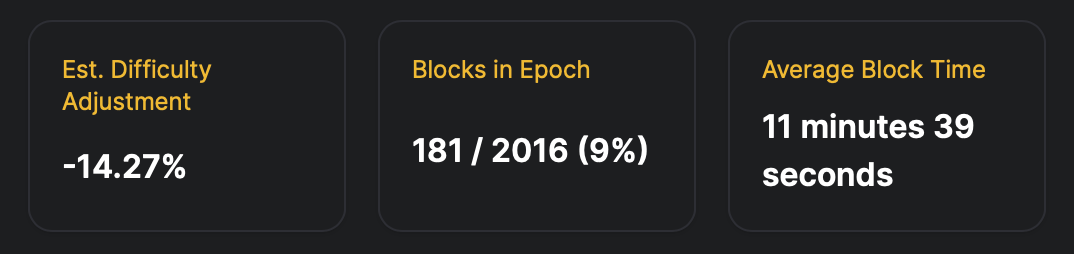
Image source: hashrateindex.com on April 4, 2026.
This outlook stems from a noticeable slowdown in block intervals over the past day, with data from hashrateindex.com indicating an average block time of 11 minutes 39 seconds, well above the expected 10-minute cadence.
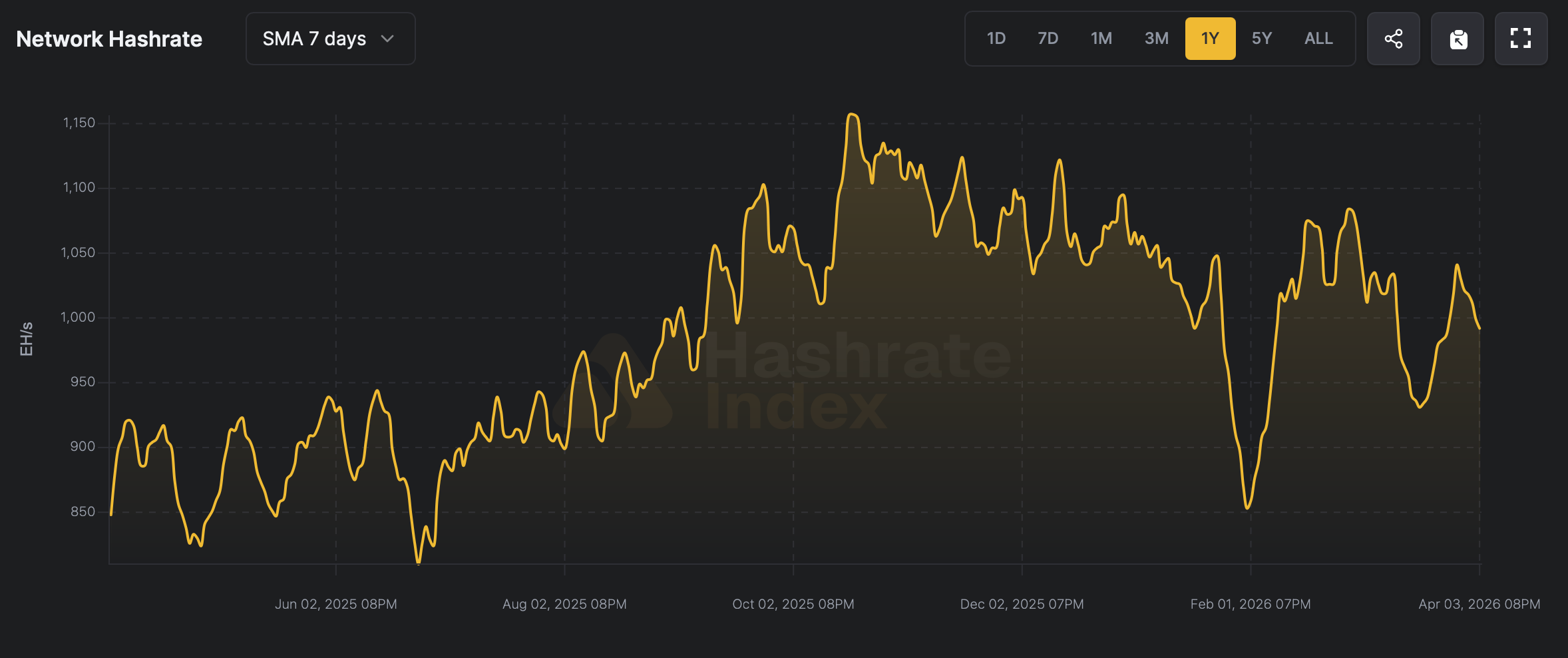
Bitcoin’s total hashrate on Saturday, April 4, 2026, via hashrateindex.com.
What’s behind the shift? A decline in hashrate. Bitcoin.com News reported on March 28 that the Bitcoin network’s total computational power had exceeded 1,000 exahash per second (EH/s), or 1 zettahash per second (ZH/s). On that day, hashpower reached 1,022 EH/s, whereas it now sits 60.45 EH/s lower at 961.55 EH/s.
Compressed revenues are likely a key factor behind the downturn, alongside mining operations opting to allocate resources toward artificial intelligence (AI) infrastructure rather than mining BTC in pursuit of stronger returns. An infrastructure provider deploying its megawatts toward AI rather than mining bitcoin can realize significantly higher returns, a dynamic that has persuaded many of today’s operators to redirect their focus.
A daily hashprice of $30.67 per petahash per second (PH/s) ranks among the lowest revenue levels bitcoin miners have faced since the network’s early years, when bitcoin carried a far smaller valuation. With 106,335 blocks remaining until the next halving, conditions are poised to tighten further.
Adding pressure, miners cannot rely on fees, which account for just 0.56% of the block reward. In effect, the system appears to be approaching a breaking point. Yet Bitcoin’s difficulty adjustment is engineered for precisely this scenario. If miners exit and hashrate declines, difficulty adjusts downward, drawing participants back with more accessible conditions.
免责声明:本文章仅代表作者个人观点,不代表本平台的立场和观点。本文章仅供信息分享,不构成对任何人的任何投资建议。用户与作者之间的任何争议,与本平台无关。如网页中刊载的文章或图片涉及侵权,请提供相关的权利证明和身份证明发送邮件到support@aicoin.com,本平台相关工作人员将会进行核查。


