The most surprising aspect of the American economy over the past two years is not how strong the growth has been, but rather that it has not collapsed. High inflation did not crush it, high interest rates did not push it into recession, and policy noise did not suddenly extinguish consumption. However, by April 2026, the question is no longer whether the U.S. will enter a recession tomorrow, but rather that the forces which have supported the economy in the past are now transforming into new vulnerabilities one by one.
The current American economy resembles standing on thin ice that has already cracked. It has not collapsed yet, but its stability increasingly relies on several conditions not failing at the same time: oil prices cannot spiral out of control, private credit cannot lead to a stampede, AI investments cannot suddenly combust, high-income households cannot pull back, and the U.S. Treasury market also cannot apply more pressure on the finances. Looking at any one of these conditions alone may not be enough to immediately push the economy down; but once they start to interact with each other, the margin for error will quickly diminish.
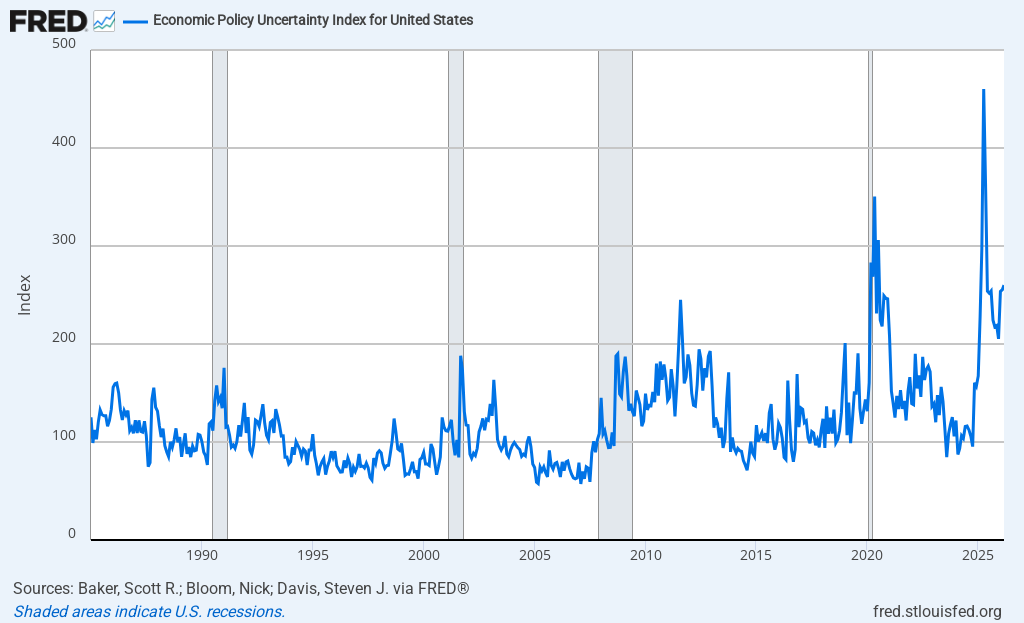
Fig 1: The U.S. Economic Policy Uncertainty Index has significantly risen
From the perspective of market sentiment, policy and geopolitical risks have clearly heightened uncertainty. The U.S. Economic Policy Uncertainty Index has rapidly increased during this round of shocks, indicating that businesses and markets now face not just the slowdown in growth itself, but also that the basis for pricing is becoming more chaotic. For the economy, the hardest thing to bear is never just bad news, but not knowing how long the bad news will last.
1. The first focus of the market is still oil
The most dangerous aspect of this round of conflict in the Middle East is not just the news itself but whether it will pull the U.S. back into the "high oil prices + high inflation + high interest rates" combination. If the Strait of Hormuz is blocked for an extended period, the impact will not be just on the price of a barrel of oil but on transportation, manufacturing, consumption expectations, and the Federal Reserve's policy path. According to some market estimates, even if the Strait reopens before mid-April, the scale of the U.S. economy a year later may still be about 0.4% smaller than initially expected; in an extreme scenario, oil prices could even surge to $200 per barrel.

Fig 2: Map showing the location of the Strait of Hormuz
However, the market is not making a one-sided bet on the worst outcome. In the prediction market, the probability of a ceasefire or de-escalation is rising in the later time windows, which at least indicates that "long-term blockade" is not the only scenario. For the U.S. economy, what truly matters is not whether the situation immediately returns to calm, but whether the tail risks have begun to shrink. As long as the most extreme supply shocks are not affirmed, oil prices will seem more like a heavy blow rather than a chronic condition altering the baseline.
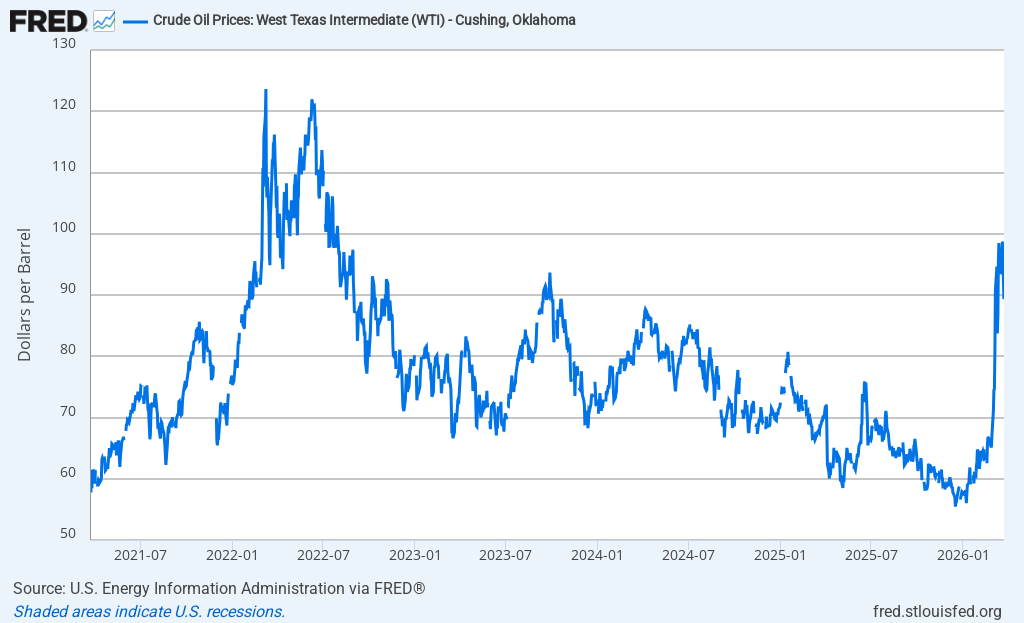
Fig 3: WTI crude oil prices rose rapidly after the escalation of conflict
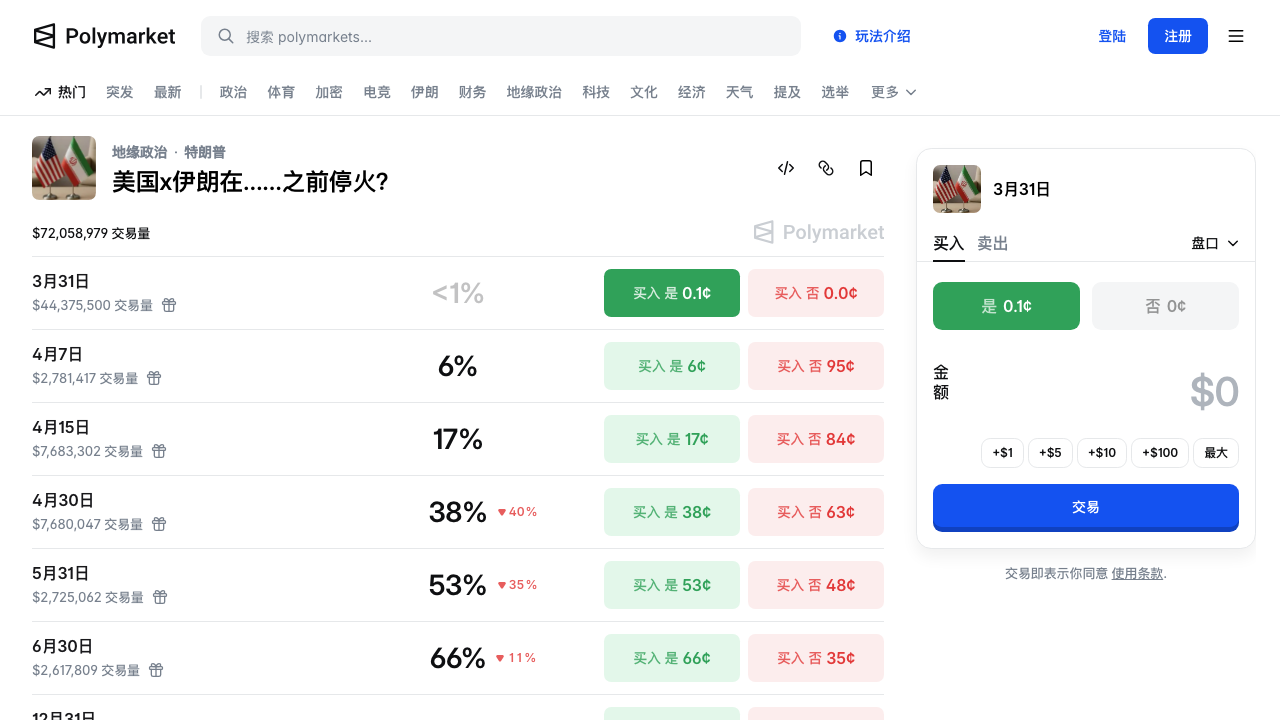
Fig 4: The prediction market pricing of ceasefire time indicates that the worst-case scenario is not the only expectation
2. The real challenge is that the U.S. internally is not that solid either
Over the past year, the two most stable aspects of the American economy are: first, large tech companies are still investing aggressively, and second, high-income households continue to spend money. However, these two seemingly solid supports are also starting to show conditions. According to the text's classification, the scale of U.S. private credit is approaching $1.3 trillion and globally exceeding $2 trillion. In a high-interest-rate environment, this type of financing is concentrated in companies with weaker qualifications, which find financing more difficult. Once oil prices rise, growth slows, and redemptions increase, this sector will be the first to be squeezed.
AI is another line that cannot be ignored. Several tech giants plan to invest over $200 billion in capital expenditures on data centers and chips over the next few years. The issue is that AI investments do not operate in a vacuum; they depend on electricity, transportation, and equipment, and they rely on the global funding chain. The situation in the Middle East driving up energy and shipping costs will inherently increase the operational costs of this industry; if external funding begins to shrink as well, AI, which is the strongest growth narrative, may become the part that disappoints the market most easily.
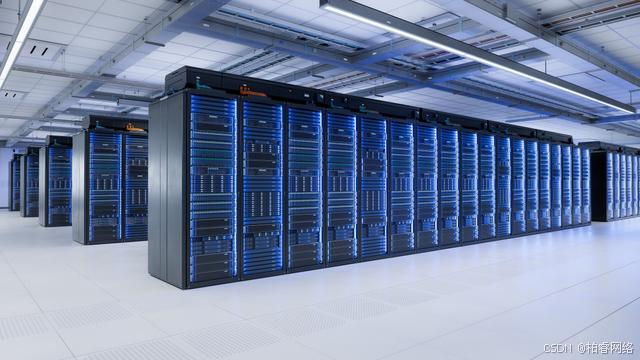
Fig 5: AI investment cannot do without heavy asset infrastructure like data centers
3. Consumers are still holding up, but not all consumers are
Why can American consumption still hold up to now? The answer is not complicated: not everyone is doing well, but high-income groups are still spending money. Low-income and middle-income households have actually started to struggle long ago, and the credit card overdue rate has already risen, surpassing pre-pandemic levels. What truly supports retail and service consumption is the portion of households that benefited the most from rising asset prices and whose employment and income are more stable.

Fig 6: Behind the resilience of consumption, credit card pressure is also accumulating
This type of support appears stable but is actually very dependent on wealth effects. Once oil prices push inflation expectations higher again, rates do not drop, and the stock market fluctuates more significantly, high-income households' willingness to consume will also rapidly cool. By that time, American consumption will not merely weaken at the margins but may shift from "a few are getting worse" to "overall all are beginning to pull back."
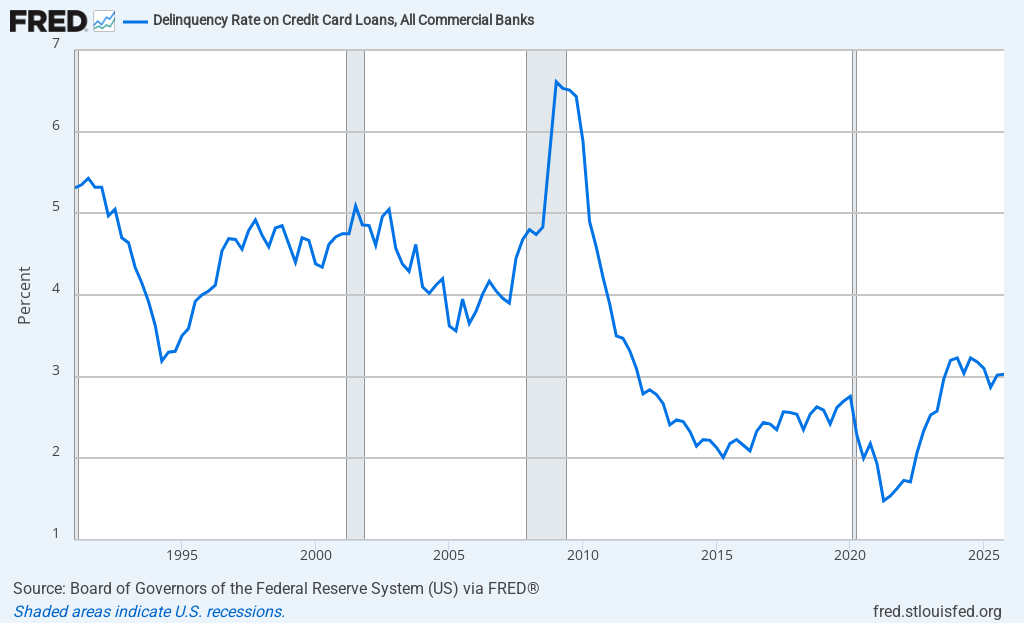
Fig 7: The rate of overdue credit card loans is rising
4. The Federal Reserve can hardly provide support as easily as in the past
If the economy is truly slowed down by geopolitical risks, the most natural market reaction would be to look at whether the Federal Reserve will lower interest rates more quickly. The problem is that the predictive market does not provide an optimistic outlook. For the entirety of 2026, the pricing for 0 rate cuts is about 32%, for 1 cut is about 28%, and for 2 cuts is about 19%, meaning that the market's pricing for "at most only one cut" has reached 60%. This does not represent a policy environment where looseness will open up quickly.
This implies that once oil prices push inflation higher again, the Federal Reserve may not be able to act immediately to support growth. Finances are also not as easy as imagined. The yield on 10-year U.S. Treasury bonds has returned to around 4.3%, with interest payments increasing as a proportion of fiscal income. The U.S. government can certainly buffer the impact, but interest is also becoming more expensive.
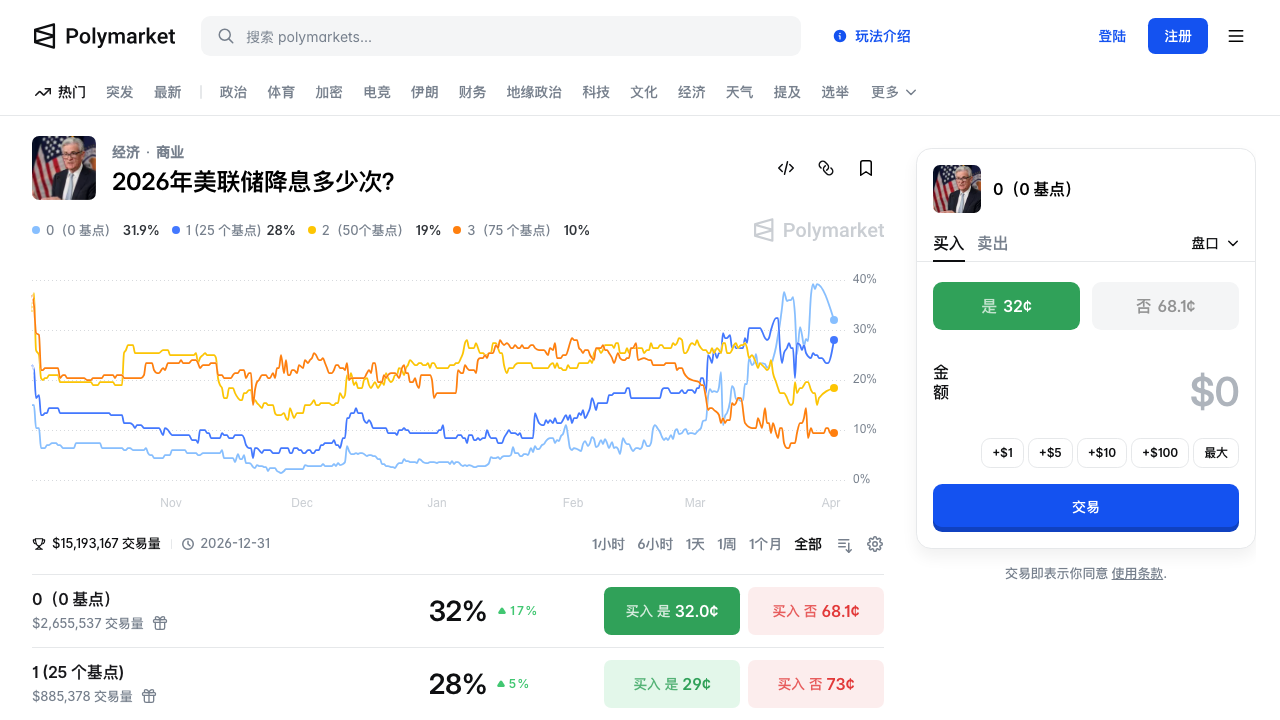
Fig 8: The predictive market is still pricing "limited rate cuts" rather than a quick shift
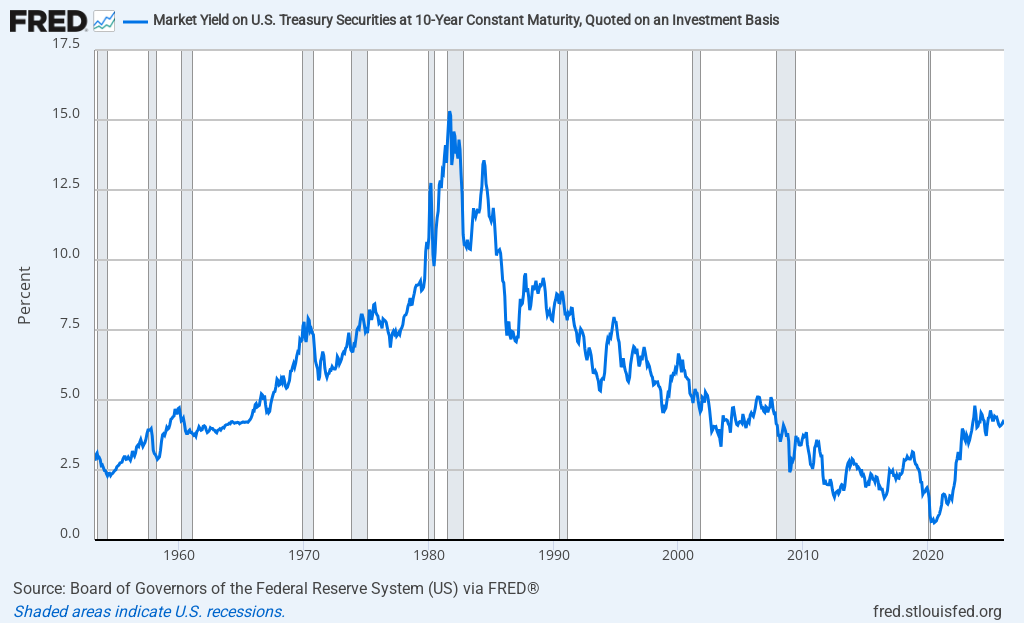
Fig 9: The yield on 10-year U.S. Treasury bonds remains high
Trading Supplement
As market volatility intensifies, data analysis is important, and efficient trading tools are equally essential. Register with OKX now, using the exclusive invitation channel, to enjoy a permanent 20% fee rebate (applicable to both spot and contract, automatically settled). Long-term trading saves costs, helping you better seize opportunities in BTC ETFs and commodity trades.
Click to register and enjoy the benefits:
https://jump.do/zh-Hans/xlink?checkProxy=true&proxyId=2
5. The real danger is not which item will explode, but that they start to transmit risks to each other
By looking at these variables together, one can understand why the American economy now seems more like "standing on the edge" rather than simply "still strong" or "about to recession." If oil prices only briefly spike, the economic impact may just be a slowdown; but if it drags on longer, it will raise inflation, limit rate cuts, compress consumption, and impact investment. Private credit is inherently the most fragile layer, and once the financing chain tightens, corporate spending will first shrink. If AI capital expenditures weaken, the most important growth narrative for the market will cool as well. Lastly, as U.S. Treasury yields increase, they will further tighten fiscal and financial conditions. Over the past few years, the strongest point of the American economy has been that every time it seemed on the brink, it ultimately pulled through. However, continuously pulling through does not equate to the risk disappearing; often, it simply means that the buffer is becoming thinner. By April 2026, what the American economy may truly face is not "can it still grow," but rather "how much room for error is left."
6. Three signals worth monitoring
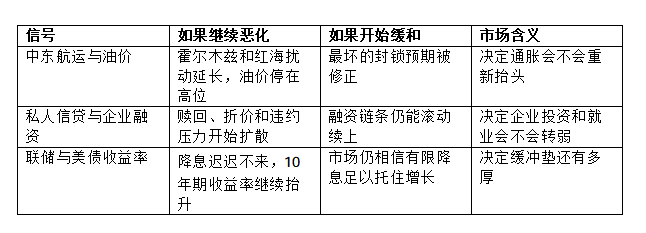
In summary, the American economy is not about to collapse, but the conditions supporting its continued standing are harsher than they were a few months ago. The more it reaches this stage, the less likely the market is to be knocked down by a single variable; it will instead be pushed by several existing cracks at once.
7. If you want to continue tracking the pricing of such events
If you want to continue observing how such macro events are quickly priced by the market, you can go directly to the prediction market page on the AiCoin official website. Whether it's geopolitical conflicts, interest rate expectations, or themes related to Bitcoin and commodities, the prediction market can provide a very intuitive supplementary perspective.
AiCoin prediction market page:
https://www.aicoin.com/zh-Hans/polymarket?lang=cn
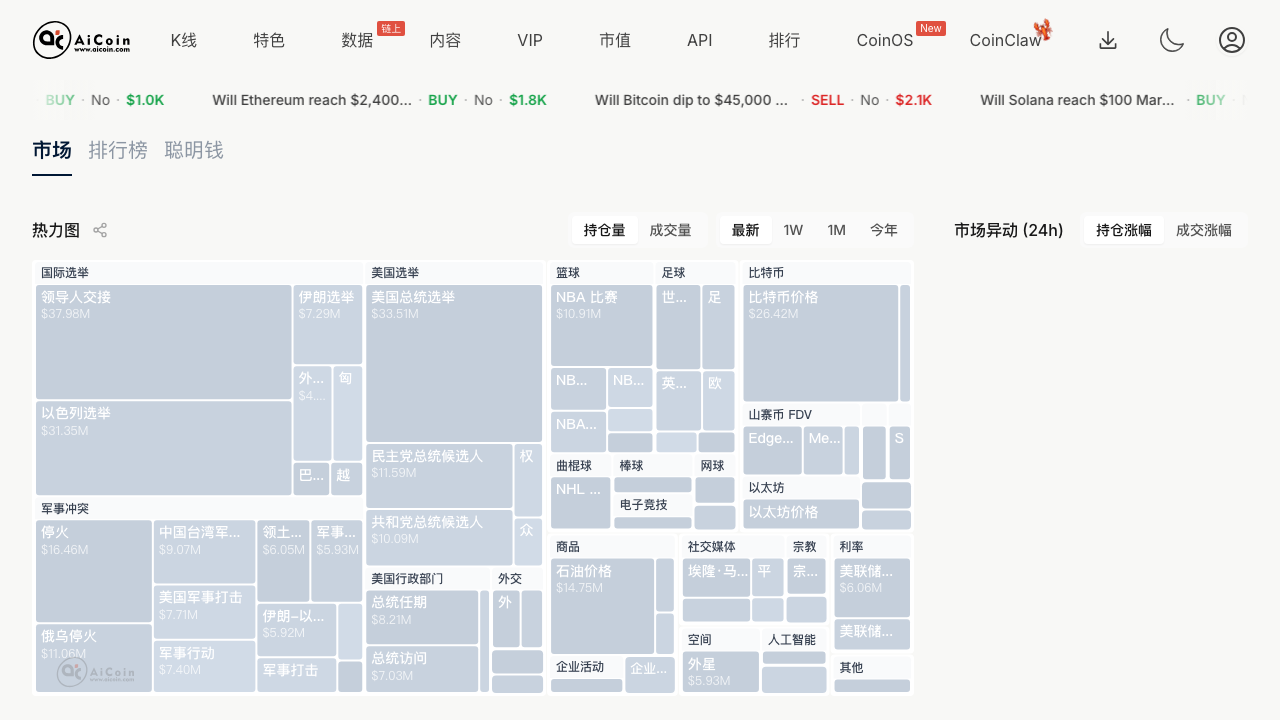
Fig 10: AiCoin official website prediction market page
免责声明:本文章仅代表作者个人观点,不代表本平台的立场和观点。本文章仅供信息分享,不构成对任何人的任何投资建议。用户与作者之间的任何争议,与本平台无关。如网页中刊载的文章或图片涉及侵权,请提供相关的权利证明和身份证明发送邮件到support@aicoin.com,本平台相关工作人员将会进行核查。