On April 2, 2026, geopolitical events and on-chain security simultaneously tore open two rifts in the cryptocurrency market: news of missiles launched over the Middle East and an alarm about over $200 million in assets stolen from the Drift Protocol nearly hit the headlines at the same time, bringing the risks of warfare and technological attacks into the spotlight. The news of Iran launching missiles at Israel was quickly captured by the global financial markets through reports from Al Jazeera and Jinshi Data, while the confirmation of the over $200 million theft in DeFi ignited a different kind of panic in the on-chain world. Funds began to test the waters between risk aversion and risk-seeking, turning the core question into whether, in an environment where geopolitical risks and black swan events converge, crypto assets would be seen as high-beta speculative chips or a backup settlement layer during the tearing of the traditional system.
How market sentiment shifted between screens at the moment the missile was launched
On April 2, East Eight Time, the news that Iran launched missiles at Israel first appeared in a live broadcast on Al Jazeera, and was then relayed by Jinshi Data to a wider trading circle. Due to a lack of more detailed official disclosures, the market could only price sentiment based on the coarse fact of “missiles launched” and limited live footage, and any new footage could be magnified by algorithmic and human high-frequency trading systems within minutes. Unlike the predictability of macroeconomic data, such geopolitical conflict news often hits trading terminals in the form of “emergency pushes,” directly impacting position management and margin calls during trading.
From experience, in the early stages of similar sudden conflicts, the performance of traditional assets tends to follow a relative template: funds typically flow into traditional safe-haven assets like the dollar and government bonds in the short term, while crude oil and gold strengthen under the logic of “supply disruption” and “risk premium,” and equity markets come under pressure due to compressed profit expectations and risk appetite. After the escalation of the Middle East situation on April 2, the immediate response of the crypto market also showed characteristics of increased volume and heightened volatility — the speed of order execution and slippage for mainstream coins instantly magnified, and some highly leveraged contracts triggered dense liquidations in a short time, with sentiment indicators jumping from the “greed zone” to neutral or even panic regions in just a few hours.
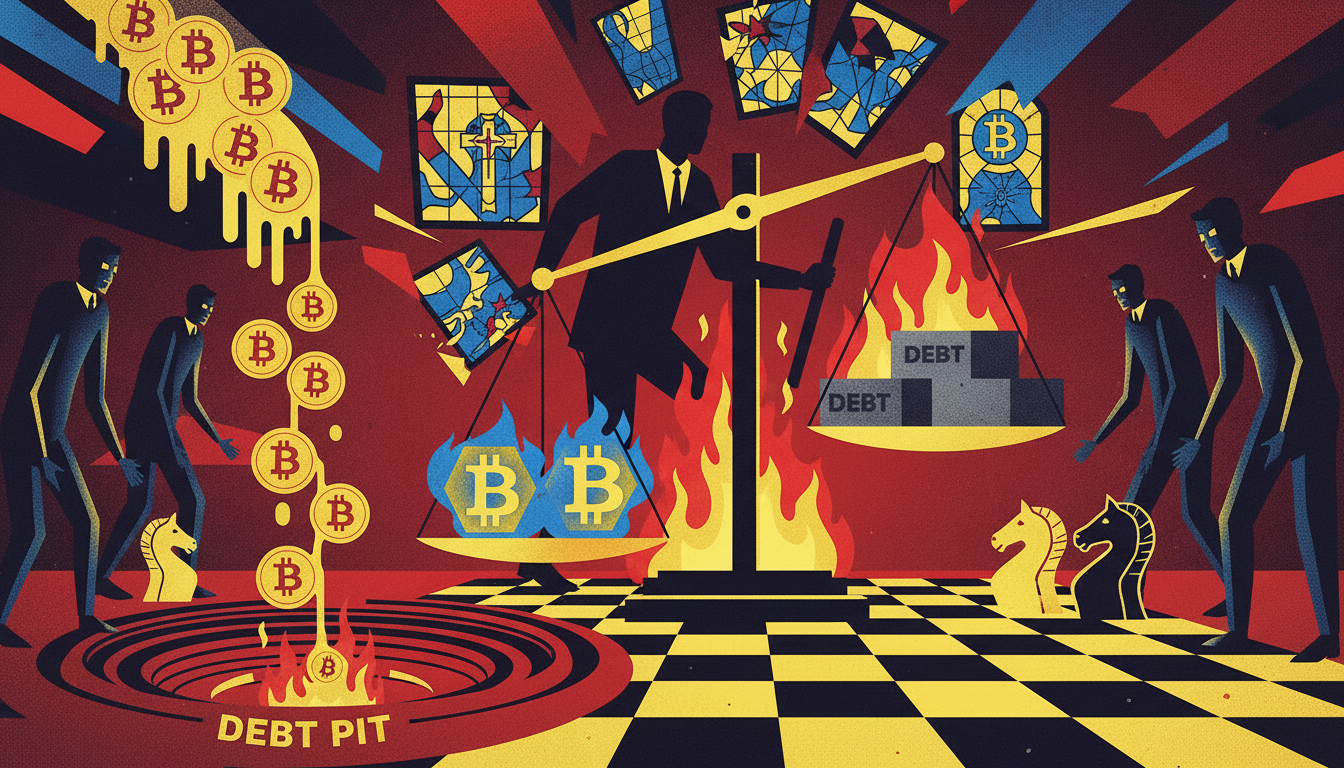
The real divergence lies in whether, under the narrative of geopolitical conflict, funds view crypto assets as part of a “high-risk asset basket” or as a “backup settlement layer during wartime.” On one hand, in institutional risk control models, crypto is still classified as a highly volatile risk asset, reduced alongside high-beta tech stocks and commodity futures; on the other hand, in scenarios where some capital is restricted and cross-border settlements are hindered, crypto assets are often used as a technological channel to evade capital controls and facilitate cross-border payments. This torn understanding of roles led to behaviors where under the same missile news, some wallets were reducing positions and exiting while others were buying back during the dip, resulting in a complex structure where short-term selling pressures coexist with mid-to-long-term passive accumulation.
The mispriced dynamic between Iran and Wall Street, reproducing three historical paths
Looking back on multiple rounds of conflicts in the Middle East or large-scale security events in history, there have been at least three typical phases between Bitcoin and mainstream financial assets: following declines, resisting declines, and bottoming ahead of time. In some early conflicts, Bitcoin was more like an “amplified version” of high-risk assets, falling in tandem with global stock market pullbacks and even dropping more steeply, reflecting liquidity squeezes taking precedence over safe-haven narratives; in other phases, especially when risks in fiat currency systems and capital controls are amplified, Bitcoin has shown some resilience to declines, being viewed alongside gold as part of “off-system assets”; and in rare cases, Bitcoin has bottomed and rebounded ahead of traditional stocks and bonds stabilizing, reflecting anticipatory pricing based on liquidity and monetary easing expectations.
After the release of the Middle East frontline news, the crypto market’s response to fear and greed showed a dislocation from the rhythms of traditional stocks, bonds, and forex markets. In traditional markets, strategies to short volatility were passively liquidated in the face of sudden geopolitical risks, with the dollar and some safe-haven assets gaining short-term purchases while risk assets generally weakened; conversely, in the crypto market, on-chain data and trading behavior showed that: on one hand, excessive leverage was intensely squeezed out when the trigger appeared, as the liquidation and wreck data for perpetual contracts spiked in a short timeframe, indicating that “panic” was quickly released through high-leverage channels; on the other hand, there wasn't the same intensity of selling pressure from spot and medium-to-long-term holding accounts, with some wallets even accumulating over dips, reflecting a “greedy” preemptive layout towards future monetary environments and crypto penetration rates.
The differentiation of roles between institutions and retail investors in this narrative became even more pronounced. For institutional funds bound by compliance frameworks and investment committees, geopolitical conflicts typically trigger adjustments to risk limits and position ceilings, compressing exposure to crypto at the model level — even if individual teams are optimistic about long-term logic, they must first execute “mechanical reductions” in positions. In contrast, retail investors and smaller funds are driven by price volatility and social media sentiments, following panic sell-offs or FOMO-driven buying, becoming the “passive amplifiers” of volatility. The true buyers of dips are often those with long-term allocation plans who are not constrained by strict quarterly reports and benchmarks, while those forced to liquidate are often speculators using high leverage and lacking discipline in margin management. In the gap of mispricing between Iran and Wall Street, the information disparity and cost of capital determine who collects chips in the conflict narrative and who is compelled to relinquish their chips at a panic bottom.
Over $200 million evaporated overnight; Drift's multi-signature migration hit a composite mine
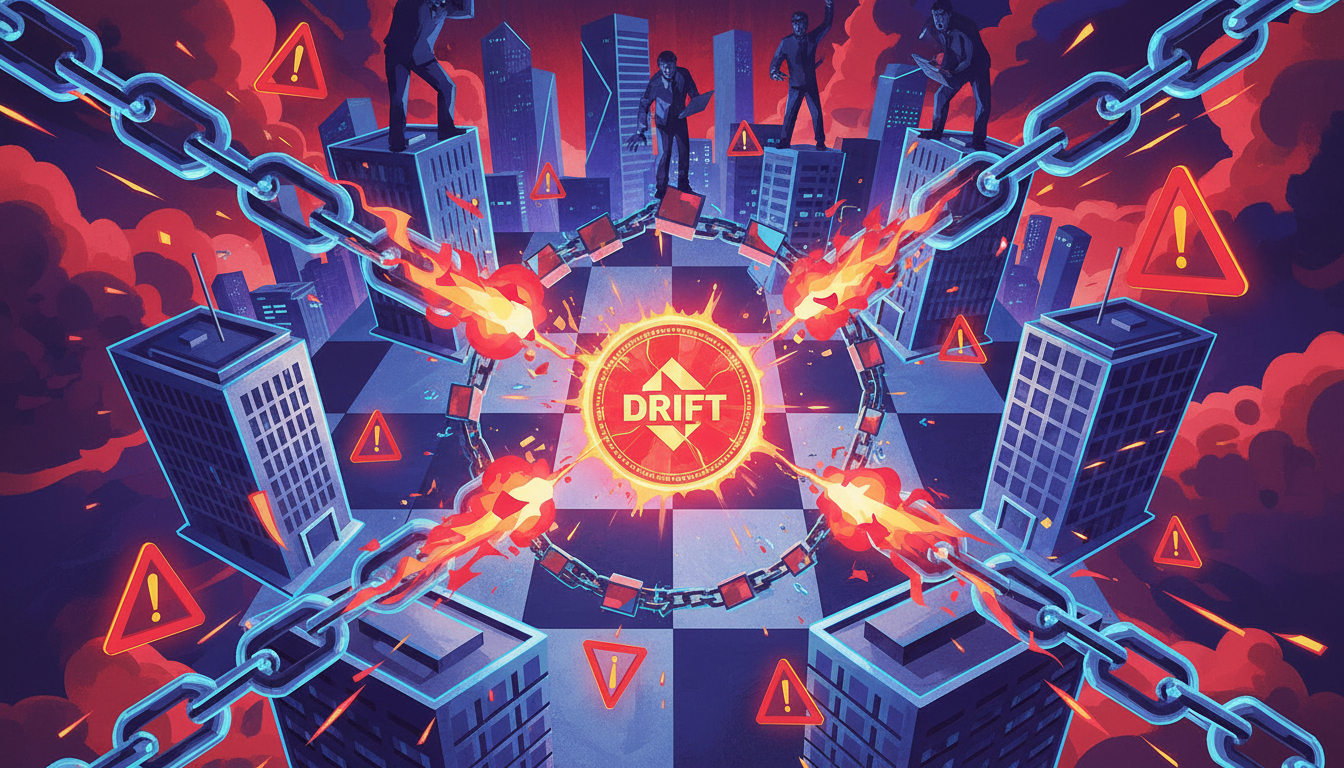
Almost simultaneously with the missile news, a significant security incident at Drift Protocol on the Solana ecosystem was revealed, with security institutions like Slow Mist confirming that the loss exceeded $200 million, equivalent to a medium-sized round of financing wiped out in a few hours. The trigger for the incident was not a complicated contract vulnerability, but a seemingly “routine operational” multi-signature migration operation: during the migration from the old multi-signature to the new one, the team adopted a 2/5 threshold, while the concentration of permissions for new signers was too high, and no corresponding timelock was put in place, combining multiple risk factors that should typically be dispersed into a single migration.
According to Slow Mist and public community reviews, the attacker exploited a “regulatory loophole” created by multiple overlapping factors. On one hand, the 2/5 threshold superficially created the illusion of “decentralization” — it appeared that multiple signatures were needed to execute key operations; on the other hand, when the real controllers behind these five signatures had a highly overlapping relationship with vested interests, forming a small alliance could suffice to complete massive transfers of assets without any time delay. The absence of a timelock meant that there was no time afforded for the community or external monitoring to react, and once the signature threshold was met, funds exited within a single block, leaving everyone only able to track the “accomplished facts” through on-chain explorers post-event.
After the incident, Slow Mist founder Yuxian pointed out that the attacker transferred assets by forging CVT tokens in conjunction with oracle manipulation: by constructing a token that appeared “overpriced” from the oracle’s perspective, and then relying on the contract's trust in oracle prices, the real assets within the protocol were redeemed at inflated prices, effectively “emptying out” the pool. The terrifying aspect of this kind of attack is that it does not necessarily require breaking through the traditional lines of contract security but instead exploits weak points in governance structures and the trust chain of oracles to achieve a “legitimate hollowing out” of the fund pool.
When the loss amount was confirmed at the level of $200 million, the narrative of multi-signature “decentralized security” was forcibly confronted with the enormous gap between this and actual governance concentration. In theory, multi-signature is intended to avoid single points of failure by dispersing risk control and governance responsibilities to multiple independent entities; however, in practice, if the signers are highly homogenous and the migration process lacks public auditing and time-delay protection, multi-signature can morph into “multi-point single control” — seemingly having five keys, but in reality, as long as two or three people reach an internal consensus, all the safes can be opened without anyone knowing during the night. The Drift incident stands as a costly lesson bought at the price of financing: when multi-signature becomes a fig leaf for governance concentration and vested interests, it stands far from the original intent of a security tool.
From 2/5 multi-signature to industry red lines, how should the baseline of multi-signature design be redrawn
Using the Drift incident as a sample, similar hidden dangers can easily be found in the broader DeFi landscape. The weakness in multi-signature migration processes often stems from an inertia of treating operational maintenance as an internal affair: when the team completes the transfer of old and new multi-signature rights, there is a lack of a public timetable, third-party audits, and community witnessing, and they might not even clarify the migration window on-chain or through social channels in advance. In such a context, a migration can either be a normal upgrade or a conscious “window operation,” with external participants only able to guess afterward through block height which it was. Furthermore, the general absence of timelock allows any high-permission operations to be completed in short order, compressing the risks that should have been spread across a timeline into an irreversible moment.
The 2/5 multi-signature structure, which is ostensibly decentralized but easily controlled by alliances, especially amplifies systemic risks. The threshold number itself does not guarantee security; the key lies in whether these five signers are genuinely independent and whether there are multiple binding relationships involved, such as equity, employment, and debt. If the power behind the signers is concentrated in a few core teams, then 2/5 merely wraps “single signature” in the guise of “multi-signature”; any internal collusion or external coercion could breach the “security threshold” within a very short timeframe. As asset scales expand from millions to hundreds of millions of dollars, this structural vulnerability becomes proportionally amplified — once a leading protocol encounters issues, the confidence spillover effect swiftly impacts similarly designed protocols, triggering a chain reaction across the entire DeFi sector.
In this context, the baseline requirements for multi-signature and governance design begin to become clearer. First, mandatory timelocks should become a stringent standard for managing large sums of funds and key parameters: any operations that could affect asset security should be locked within an observable time window, allowing security teams, communities, and on-chain monitoring tools to identify and respond. Secondly, signer composition disclosure needs to upgrade from “voluntary information” to “industry standards,” requiring not only public addresses but also disclosing their connections to the project team and whether there are risks of collective control. Finally, in high-risk areas such as multi-signature migrations, the community should possess stronger procedural constraints — upgrading the migration from an “internal process” to a “public event” through advance announcements, multi-round signature votes, or third-party custody audits, using procedural redundancy to gain safety redundancy. In an era where missiles and hackers can rewrite price curves within minutes, the “slowness” of governance design becomes the key defensive line against the “quickness” of technical attacks.
Circle and the protocol parties blaming each other; who should control the emergency stop button?
The Drift event exposed not only the structural vulnerabilities of on-chain governance but also pushed the tension between on-chain assets and centralized clearing mechanisms back into the foreground. On-chain tracker ZachXBT publicly accused Circle of being slow to respond during the USDC cross-chain transfer phase, asserting that it failed to take immediate freezing measures when suspicious funds attempted cross-chain movements. This accusation questions the boundaries of Circle's risk control: in the highly complex realities of cross-chain bridges and multi-chain ecosystems, any overly aggressive freezing actions could mistakenly harm normal users and compliant institutions; however, if the release threshold is set too high, it makes it difficult to timely intercept truly attacking funds, allowing them to launder and spread across multiple chains.
In contrast, Unitas Protocol quickly issued a statement declaring that it had no exposure on Drift, and user funds are secure. Such immediate “cutting statements” serve, on one hand, to clarify the facts of risk isolation, avoiding unintended harm from market sentiment; on the other hand, it reflects the project party's self-rescue logic in crisis narratives — first using boundary declarations to “stem the bleeding” of their own assets and brand before the technical details of the incident are fully clarified. Under the dual narratives of missiles and hackers, the market has become highly sensitive to the term “security,” and any gray areas may be interpreted as potential risks, with clear statements of risk exposure being the starting point for rebuilding trust.
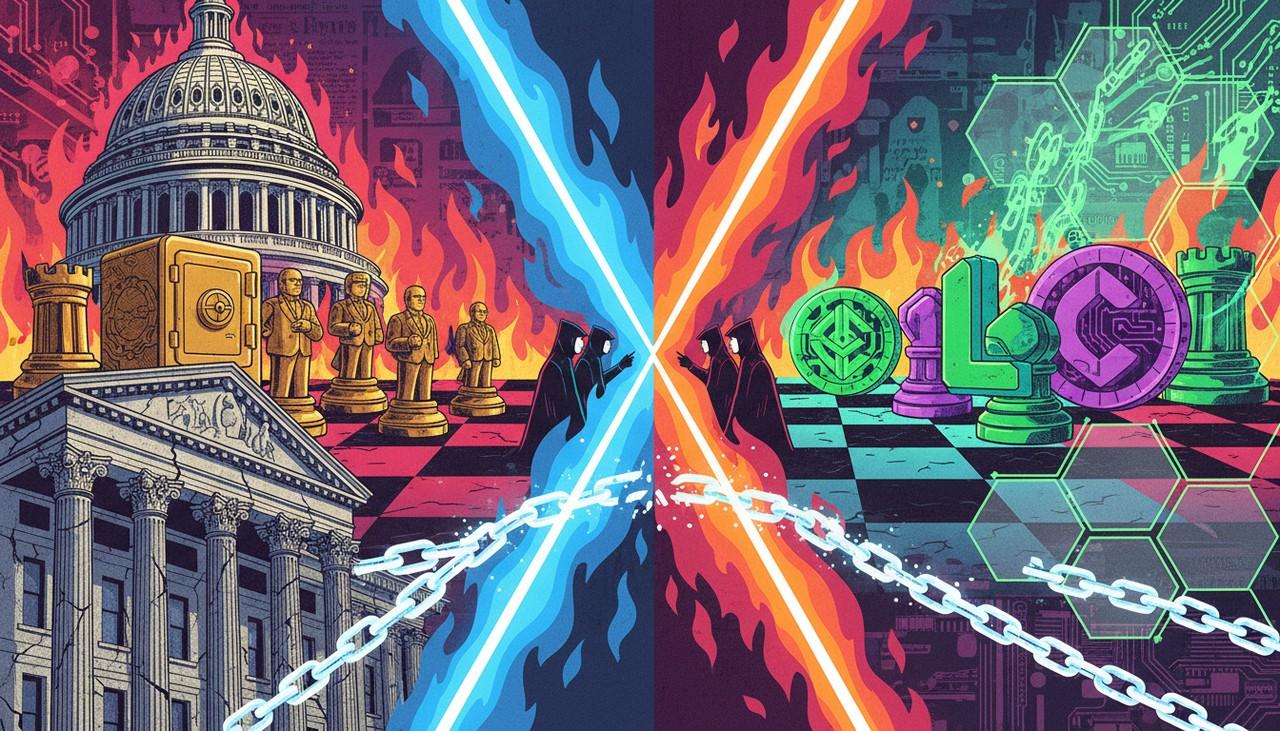
Ultimately, the core of the dispute is: in a system that claims to be “decentralized self-custody,” who should hold the emergency stop button? The advantages of centralized clearing capabilities lie in their responsiveness and execution — entities like Circle can enact precise freezes on specific addresses and cross-chain paths within compliance frameworks, keeping the external loss from single-point attacks to a minimum; but this also means that asset holders must accept a degree of “freeze-ability,” and in extreme cases, their asset usage rights can be paused by external compliance entities. Conversely, completely decentralized self-custody emphasizes “non-intervention” and “code as law,” rejecting any centralized emergency access in design, but thus finding itself nearly incapable of intervening in composite attacks like Drift, merely able to pursue after the fact.
For users, this is no longer a purely technical choice but a choice about governance models and risk preferences: whether to cede some control to identifiable centralized institutions in exchange for a “final barrier” under extreme circumstances, or to insist on complete self-custody, which offers absolute freedom while also bearing the costs of all irreversible errors and black swans. The Drift incident and the surrounding debates about Circle are just the latest projection of this deep-seated tension.
When missiles meet hackers, can security lessons be learned before the next crisis hits?
On April 2, the concurrent occurrences of the Middle Eastern conflict and the Drift theft forced crypto assets to endure price tests on two fronts: the impact of the geopolitical narrative brought by missile launches, and the technical black swan pieced together by multi-signature migration vulnerabilities and oracle manipulations. The market was compelled to reassess within a short period whether crypto assets could provide hedges during upheavals in traditional systems, while also confronting the reality: as long as the security protocols and governance mechanisms of the protocol itself are insufficient, no narrative can withstand a $200 million-level practical test.
In the short term, dramatic emotional fluctuations are almost inevitable — geopolitical news and security incidents rotating through headlines constantly remind us that this market is still in a phase of high sensitivity and high feedback. However, looking at longer cycles, what truly determines the life or death of projects and assets is not any single headline about missile launches or the dramatic details of a hacker attack, but whether the industry can accomplish system upgrades of security protocols, governance transparency, and compliance interfaces after each incident: whether multi-signature designs can transcend the threshold of “formal security” to become truly verifiable and accountable substantive security; whether oracles and clearing mechanisms can introduce sufficient firewalls without sacrificing decentralization principles; and whether centralized clearing and decentralized self-custody can build a more robust asset safety net through clear boundaries and predictable rules.
One day in the future, a new geopolitical crisis might erupt somewhere beyond the Middle East, and a new chain or a leading protocol may again become a target for hackers. The real issue is not whether “it will happen again,” but whether the industry has completed the security lessons that should be addressed before the next occurrence: whether timelock, signer disclosures, and migration constraints have become consensus bottom lines; whether users have been provided with clearer asset custody and clearing options; and whether sufficient buffer zones have been reserved institutionally for those unpredictable missiles and hackers. Only when these questions receive substantive answers can “missiles and hackers attacking simultaneously” transform from an every-time systemic trust crisis into merely a moment of amplified volatility.
Join our community to discuss and become stronger together!
Official Telegram community: https://t.me/aicoincn
AiCoin Chinese Twitter: https://x.com/AiCoinzh
OKX Welfare Group: https://aicoin.com/link/chat?cid=l61eM4owQ
Binance Welfare Group: https://aicoin.com/link/chat?cid=ynr7d1P6Z
免责声明:本文章仅代表作者个人观点,不代表本平台的立场和观点。本文章仅供信息分享,不构成对任何人的任何投资建议。用户与作者之间的任何争议,与本平台无关。如网页中刊载的文章或图片涉及侵权,请提供相关的权利证明和身份证明发送邮件到support@aicoin.com,本平台相关工作人员将会进行核查。