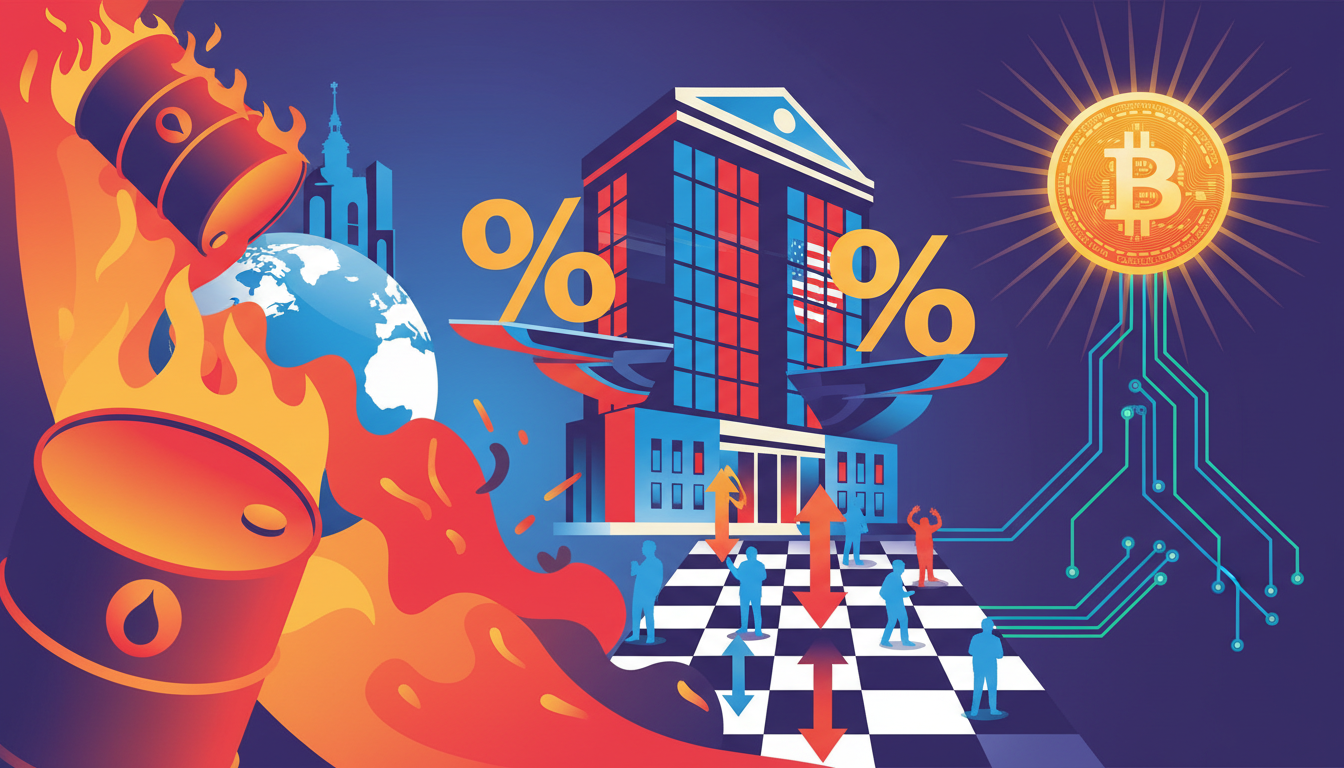
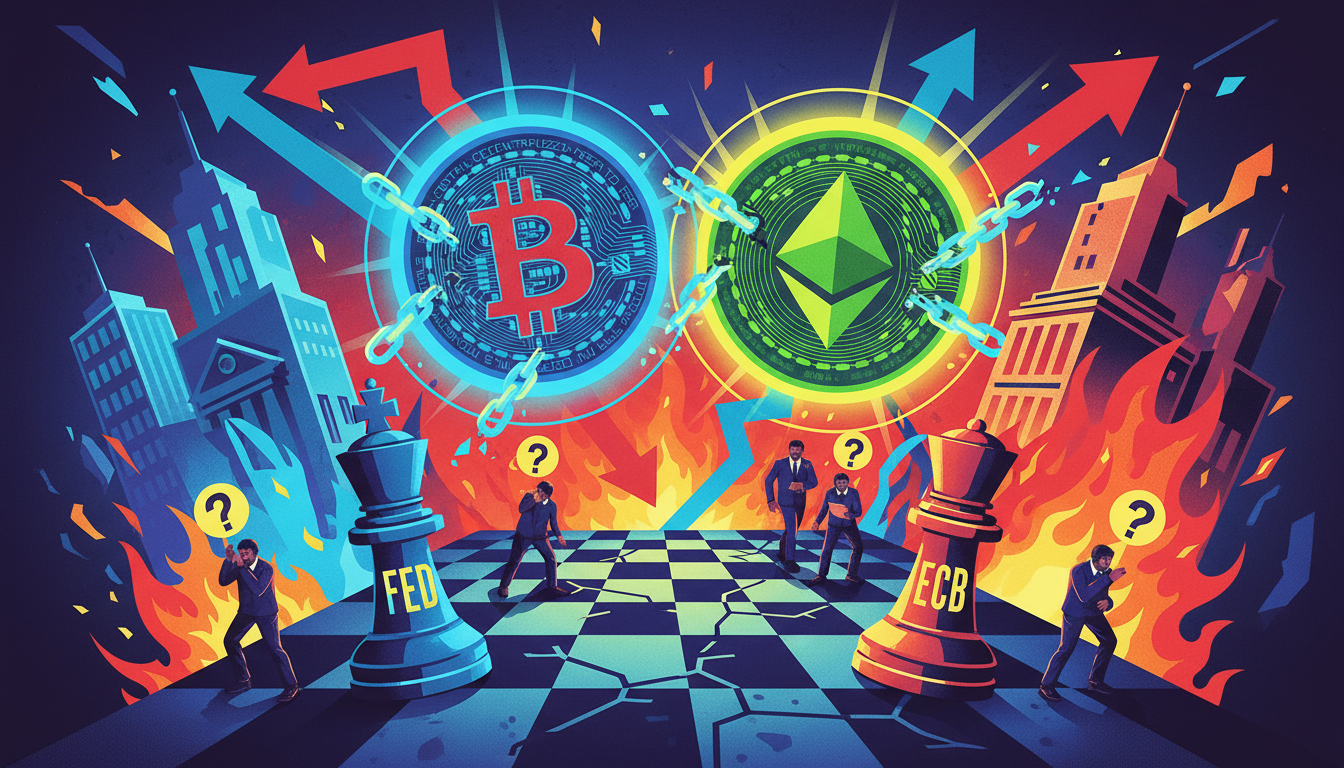
At 8:00 AM UTC+8 on April 1, 2026, multiple media outlets reported a large-scale explosion in the Iranian capital Tehran, with some Chinese financial and cryptocurrency media citing Jin10 Data claiming its scale was "unprecedented." However, this statement currently relies almost entirely on a single information source and a small amount of social media retelling, lacking further authoritative and multilingual cross-verification. The already tense geopolitical security situation in the Middle East, under such a loud noise and ambiguous narrative, was quickly pieced together by the market into a greater scale of conflict and an imagined risk premium increase, rather than a confirmed reality shock. In this context of intense uncertainty and incomplete information, cryptocurrency assets, especially tokens related to energy and oil and gas, may undergo multiple shocks at the trading and pricing levels: on one hand, there is the repricing of risk aversion sentiment and geopolitical premiums, while on the other hand, there is the short-term emotional gaming driven by narratives and amplified information noise.
How the Unprecedented Explosion Rumors Fermented
From the current public information, the timeline of the Tehran explosion on April 1 is relatively clear: the incident occurred on April 1, 2026, with the location specified as the Iranian capital Tehran, but there has been no authoritative official announcement detailing the specific location, causes, casualties, or responsible parties of the explosion. Existing reports mostly rely on scattered fragments from local Iranian media and eyewitness accounts circulating on social platforms, which means we can only discuss within a framework where the boundaries of facts are very limited.
The high-intensity phrasing "unprecedented" was first thrown out by Jin10, and was quickly echoed by various Chinese cryptocurrency and financial media such as Deep Tide TechFlow, Golden Finance, Odaily Planet Daily, BlockBeats, forming a communication chain from traditional financial information providers to crypto vertical media. The phrasing itself does not come from multiple independent sources of statistics or official assessments, but as it is directly cited in headlines and news flashes, it amplifies the sense of urgency and impact of the event within the Chinese information circle.
On social platforms, accounts including @0xzx, @Grok_Fact also retold the so-called "Iranian media and eyewitnesses" describing the explosion as "unprecedented." However, most of this content lacks links to original materials or official release pages, often being stitched together from second-hand or even third-hand information. In such situations, investors need to clearly differentiate: one type is "facts confirmed by multiple channels," such as the time, city, and confirmation of an explosion; the other type is "information still in the rumor and subjective description stage," such as whether the scale is unprecedented and whether it is related to specific military or political objectives. Only by first delineating the boundaries of credibility can subsequent discussions on market prices and asset allocation avoid slipping into emotional extrapolation.
The Imagination of the Middle East Powder Keg Being Ignited Again
The situation in the Middle East has been under high pressure in recent years, and any security event from Iran, Israel, or the surrounding Gulf waterways will be instinctively incorporated by the market into the existing narrative framework of "regional risk escalation." The Tehran explosion, as a sudden event lacking in details but generating high noise, has been quickly associated by many traders and commentators with prior friction, attack rumors, and even broader regional confrontations, implicitly regarded as another signal that "the Middle East powder keg has been ignited again."
In the traditional financial market's experiential pathways, geopolitical conflicts often manifest through two main lines: one is the rise in risk premiums, including the discounted valuation of equity assets and widening credit spreads; the other is an increase in demand for safe-haven assets, such as the dollar, U.S. Treasury bonds, and gold, all of which often see excess buying during phases of concentrated conflict news. This model does not imply that every conflict will lead to a long-term trend reversal, but the disturbances to liquidity and pricing anchors in the short term have been repeatedly validated.
The current key variable surrounding the Tehran explosion is whether it actually affects Iran's energy infrastructure, oil and gas production, and transportation channels. Up until now, publicly available channels have not provided conclusive evidence pointing to damage to oil fields, refineries, major oil pipelines, or port facilities, and the assessment of "impacting energy liquidity and raising regional risk premiums" remains at the level of unverified research hypotheses rather than being direct reality shock parameters that can be incorporated into models. Nevertheless, once investors perceive such risks as potentially long-lasting, they are bound to reassess the political premiums of Middle Eastern energy countries and the security costs of maritime routes, thus adjusting the overall pricing framework for related stocks, bonds, and commodities.
How Capital Moves Between Safe Haven Assets and Oil and Gas...
Looking back at past rounds of geopolitical conflict events, the linkage characteristics between mainstream cryptocurrencies such as Bitcoin and traditional safe-haven assets are not stable, but present several observable phase patterns: in the first few hours to one or two days after news breaks, the market often fluctuates passively under the shadows of macro liquidity and risk sentiment, sometimes moving in tandem with gold, sometimes being sold off along with U.S. stocks; while in the mid to short term after sentiment digestion, whether Bitcoin is viewed as a "digital safe-haven asset" depends more on the broader interest rate environment and regulatory expectations rather than the specific conflict itself.
When traditional energy powerhouses like Iran are drawn into uncertain narratives, a common next step for the market is to link it to international oil prices, attempting to express its macro judgments through crude oil futures, energy stocks, and cryptocurrency tokens related to oil and gas. On-chain, some capital may bet on "the rise of energy risk premium" by holding or trading tokens linked to oil and gas indexes and energy-themed public blockchain assets; off-chain, more traders are going long on oil prices and shorting high-beta risk assets in derivatives and over-the-counter structured products to hedge against potential shocks. These actions do not require actual supply disruptions to have occurred; as long as the market believes "the scenario may happen," prices will adjust in advance through expectations.
In moments of lacking confirmed information, traders' behavioral patterns often become more emotional: one type is typical short-term hedging, quickly reducing high-leverage long positions and increasing allocations to safe-haven assets after news breaks, to guard against "just in case"; another type is purely emotional trading, relying on headlines and social media popularity for quick in-and-out transactions, completely ignoring the gradual emergence of event details. This pattern can easily amplify price amplitudes through leverage and high-frequency trading mechanisms, creating high volatility ranges within hours or even minutes. For ordinary investors, acting rashly under the influence of single-source geopolitical news can easily encounter huge slippage and emotional misjudgment costs at extreme points, forced to act as liquidity providers in the professional capital gaming.
Amplifying Information Noise: Cryptocurrency Media and...
The dissemination path of the Tehran explosion incident within the Chinese community is highly representative: Jin10 first published a news flash using the term "unprecedented," and then Deep Tide TechFlow, Golden Finance, Odaily Planet Daily, BlockBeats and other crypto vertical media quickly reposted, rewrote headlines or adjusted images, without adding new factual information, resulting in the message's "presence" being exponentially amplified within the cryptocurrency information flow. For traders accustomed to obtaining information through news flash applications and community screenshots, repeated exposure itself can be misinterpreted as "multi-source verification."
On platforms like X, influential accounts and news robot accounts often play both "amplifiers" and "noise amplifiers" at times of crisis. On one hand, they can indeed gather local scattered eyewitness videos, photos, and report links promptly when official channels have not fully reacted; on the other hand, this recasting and reprocessing may introduce subjective preferences in translation, editing, and narrative framing, causing originally vague information to be solidified into seemingly certain "facts" during cross-language dissemination.
For cryptocurrency investors who primarily rely on Chinese information sources, there is often a significant time lag and risk of translation misreading between local official news, mainstream English media reports, and Chinese information. A paragraph that originally uses terms like "reportedly," "alleged," and "unconfirmed" in English may, in Chinese news flashes, be reduced to more definitive verbs like "happen" and "confirm," driving emotions within the cryptocurrency market towards extremes in a short period. In such geopolitical emergencies, a more prudent approach is to proactively build a multi-source cross-verified information flow: at least simultaneously verify views from local official or semi-official media, mainstream international news agencies, independent journalists, and professional geopolitical analysis agencies, and consciously delay major decisions until verified information is sufficient, decoupling the timing of position adjustments from the speed of news flow.
Iran's Energy Narrative and Cryptocurrency Mining Power...
To understand why this event could quickly link with the oil and gas and cryptocurrency world, it is essential to return to Iran's position on the global energy map. Iran holds some of the world's leading proven oil and natural gas reserves and is an important part of the energy supply and regional energy transit routes in the Middle East, with its geopolitical position directly associated with the safety of key channels such as the Strait of Hormuz. Once the outside world perceives a deterioration in Iran's internal security situation, the market can easily think of a whole chain reaction involving crude oil supply, tanker insurance costs, and the expansion of regional military presence, providing fertile ground for the narrative.
In the long-term narrative of some investors in the cryptocurrency world, Iran’s rich and relatively low-cost energy is viewed as a potential advantage in mining power costs, comparable to countries or regions that utilize cheap hydropower and natural gas to develop mining industries. Within this narrative framework, some imagine that if Iran further opens up or tacitly permits local mining in the future, it could play a more significant role in the global distribution of computing power under controlled energy prices, even hedging some of the sanction pressures. Although this inference has not been fully confirmed in reality, it has appeared repeatedly in some research reports and market discussions.
If regional risk premiums rise overall due to geopolitical events, the impacts may indirectly transmit to mining economic models through multiple aspects: on one hand, the rise in energy prices itself compresses profit spaces for miners in regions relying on fossil fuels; on the other hand, regulatory and compliance pressures may be strengthened, leading to additional compliance costs and geopolitical risk discounts for the computing power layouts in certain sensitive areas. However, based on the currently available public information regarding the Tehran explosion, it remains entirely unknown whether it involves any energy infrastructure, oil and gas production capacity, or power systems, and these connections regarding mining costs and computing power migration are more likely a pricing expectation that investors are trading on in advance, rather than quantifiable reality shocks to be included in current financial reports.
Searching for Clarity Between Uncertainty and Magnifiers...
In summary, the Tehran explosion event on April 1, 2026, under conditions of severely incomplete information, primarily influences cryptocurrency and oil and gas related assets through emotional and imaginative pathways rather than manifesting as “fundamental changes” affecting production, transportation, or macro policies. The high-intensity adjectives represented by "unprecedented," under continuous reiteration from a single source and social platforms, become important amplifiers in heightening market tension, but they cannot replace the calm tracking of factual details themselves.
When facing similar geopolitical conflict rumors spread by single sources, placing position management and risk control above any narrative trading may be a more sustainable choice for the long term. Rather than trying to capture every title-driven wave through ultra-short-term speculation, it is better to first ask yourself: under the worst-case scenario gradually confirmed, whether the current level of leverage and liquidity arrangements are sufficient to withstand continuous shocks; and in the event that the incident is eventually discredited or downgraded, whether emotional trading will lead to missing out on genuinely significant trend opportunities.
Looking ahead, once new information arises regarding the causes of the explosion, damage to energy facilities, and official statements from Iran and neighboring countries, the market may quickly switch pricing among several key scenes: if confirmed as a limited-scale incident and not affecting energy and security architectures, the previously elevated risk premiums driven by sentiment may swiftly retreat; if it gradually evolves into a sustained confrontation involving multiple actors, demand for oil prices and safe-haven assets may further rise, and significant differentiation may also appear within the cryptocurrency market between safe-haven assets and high-beta sectors. Regardless of which path it takes, adhering to fact and probability thinking, consciously distinguishing "good stories" from "verifiable risk factors" in a high-noise environment is key to navigating geopolitical fluctuations and maintaining clarity in the intertwined gaming of cryptocurrency and oil and gas.
Join our community, let's discuss and become stronger together!
Official Telegram group: https://t.me/aicoincn
AiCoin Chinese Twitter: https://x.com/AiCoinzh
OKX benefit group: https://aicoin.com/link/chat?cid=l61eM4owQ
Binance benefit group: https://aicoin.com/link/chat?cid=ynr7d1P6Z
免责声明:本文章仅代表作者个人观点,不代表本平台的立场和观点。本文章仅供信息分享,不构成对任何人的任何投资建议。用户与作者之间的任何争议,与本平台无关。如网页中刊载的文章或图片涉及侵权,请提供相关的权利证明和身份证明发送邮件到support@aicoin.com,本平台相关工作人员将会进行核查。