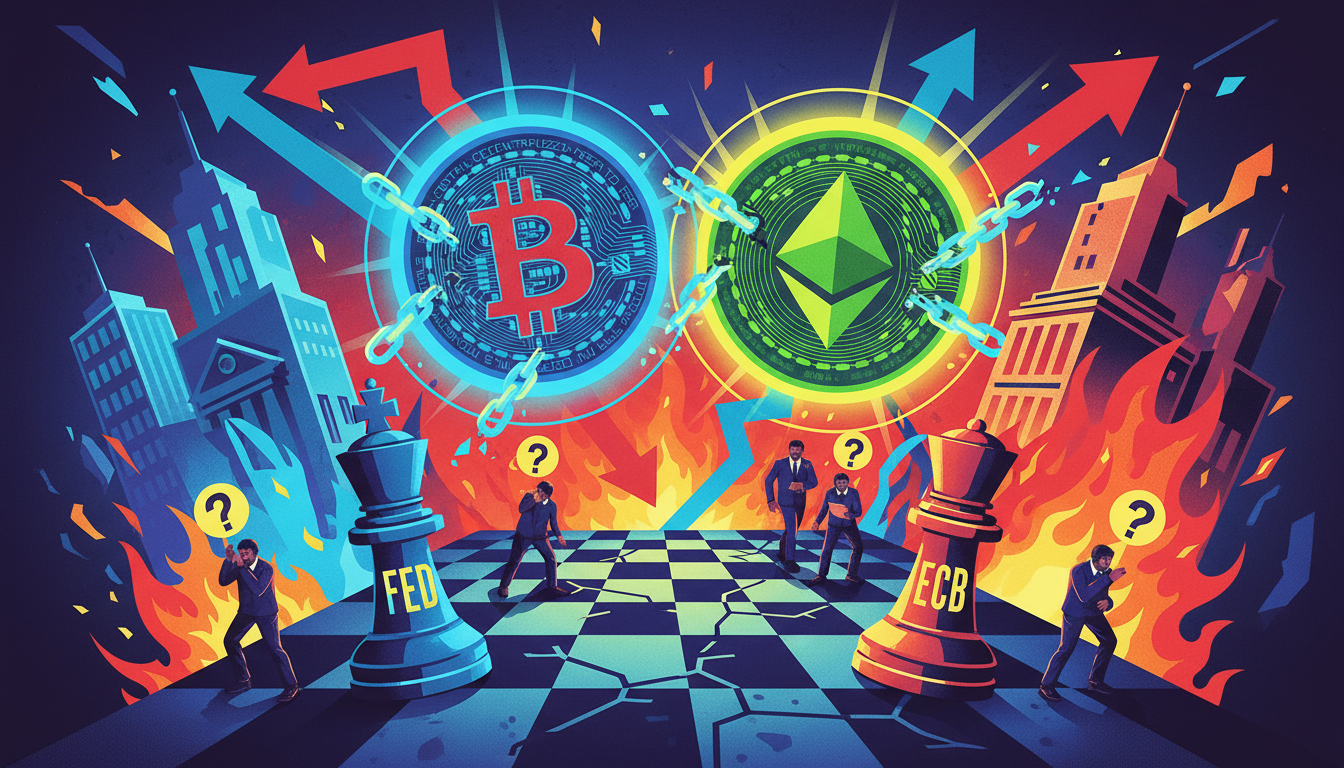
On April 1, 2026, Eastern Time Zone, Ethereum co-founder Vitalik Buterin gave the entire crypto community another lesson using his address. On-chain data show that he unified sold a batch of Meme tokens previously gifted by the project team, exchanging them for about 14.5 ETH, which was approximately 30,000 US dollars at that time. Almost simultaneously, Vitalik transferred 70,000 USDC and 44 ETH to a Railgun related address, totaling about 92,000 US dollars, making the total of both operations approximately 122,000 US dollars. From "meme token airdrops" to privacy tools, this series of actions quickly sparked discussions in the community: how long can celebrity airdrop marketing continue, and does a public figure's use of privacy protocols imply "hiding something," which became the focus of many people's inquiries.
Clearing Gifted Tokens: The Attitude Behind 14.5 ETH
In the Ethereum ecosystem, airdropping Meme tokens to top addresses like Vitalik's has long been a standard move for project teams to attract attention. This practice creates an illusion of "celebrity holding coins" on-chain without the need for the person's consent, and many retail investors easily associate the address with project value and endorsement simply because Vitalik's name is there. Essentially, this is a classic template that utilizes on-chain transparency and the celebrity effect to create FOMO on a narrative level.
This time, tools like Onchain Lens detected that Vitalik concentrated the handling of Meme tokens donated by others from his address, directly viewing them as useless assets to be cleared, converting them into approximately 14.5 ETH, worth about 30,000 US dollars. There were no position adjustments, no partial reductions, just a one-time package clearance, erasing the "presence" accumulated by the project's multiple airdrops. This is an extremely clear display of attitude for projects accustomed to weaving stories around his address.
More crucially, this handling method itself is a public signal: Vitalik will not endorse these tokens and will not cooperate with any airdrop marketing. A celebrity's address does not mean celebrity endorsement and is certainly not a free advertising space available at any time. When this operation is amplified on-chain, some community voices began to describe these gifted tokens as "electronic waste," believing that Vitalik is treating them as garbage—however, this expression currently remains a pending opinion and is yet to be supported by a direct statement from him, and can only be viewed as community interpretation.
70,000 USDC and 44 ETH Enter Railgun Privacy Pool
Beyond clearing the gifted Meme tokens and converting them to ETH, what draws more attention is the subsequent privacy transfer action. On-chain data show that Vitalik transferred 70,000 USDC and 44 ETH to a Railgun related address, totaling about 92,000 US dollars. Along with the 14.5 ETH obtained from the sale of Meme tokens mentioned earlier, this set of financial operations totals approximately 122,000 US dollars. These figures have been cross-verified by several Chinese crypto media outlets and on-chain monitoring tools, becoming the foundational facts for the narrative of this incident.
Railgun is a set of privacy trading protocols deployed on Ethereum and other networks, which can obscure the user's asset transfer and interaction behavior from the public chain view using technologies like zero-knowledge proofs, making it difficult for the outside world to directly trace the source of funds. In the Ethereum ecosystem, these tools are both a means for ordinary users to prevent their addresses from being profiled and one of the infrastructures for high-net-worth individuals, project teams, and researchers to protect funding flow information. It does not create new asset types but adds a layer of privacy protection on top of existing asset transfers.
For public figures, choosing to use privacy tools is logically reasonable: once a wallet is identified as an "official address," every single transaction—from daily spending to donations to personal investments—can be over-interpreted, possibly coerced by public opinion. But precisely because of this, when a high-profile figure such as Vitalik transfers USDC and ETH into Railgun, it will immediately trigger associations with "is he trying to hide something." Here, it needs to be emphasized that the current on-chain data only tells us the amount and destination, and whether the funds are used for research funding, charitable donations, or personal financial planning is completely lacking verifiable information; any further speculation regarding use falls into the realm of conjecture and must be actively avoided.
From an analytical perspective, this resembles a typical "technical use case" rather than a "value judgment case": Vitalik is demonstrating how to use a privacy protocol for personal asset management within a completely legal and compliant framework, rather than endorsing any specific behavior. Over-amplifying ordinary privacy needs into a conspiracy narrative would only distort the tool's own positioning.
Celebrities as Signboards or Garbage Bins: The Backlash of Marketing Logic
In recent years, the practice of airdropping tokens to celebrity addresses and then hinting at "XX big shot holds this coin" in social media and KOL rhetoric has almost become a template process for grassroots projects in their initial stages. The logic is very simple: first, utilize transparent addresses to find celebrity wallets, execute the airdrop, and then guide retail investors to associate by means such as screenshots or on-chain links—"since there’s something in his address, it means he approves or even participates." Many small investors do not delve into whether the token was bought or passively received; this information asymmetry is the area exploited by marketing.
However, when key figures like Vitalik continuously respond to such airdrops with "liquidations" on-chain, the narrative begins to reverse. The action of liquidating gifted Meme tokens again amplifies the misleading and damaging effects of celebrity airdrop marketing on retail investors:
● For retail investors, if they still regard "a celebrity address holding" as a buying signal, they are likely just picking up the emotional narrative of the project team. Once celebrities maintain a long-term habit of "sell upon receipt," what truly gets utilized is only the imagination and FOMO of ordinary participants.
● For project teams, continuously flooding tokens to Vitalik via dump-like airdrops does not come at zero cost. In addition to the immediate price impact from the direct sale of the tokens, there’s a longer-term brand risk—once community opinion gradually forms a consensus that "what gets sold by Vitalik is junk," such airdrops can turn into a negative asset label.
As these on-chain actions are repeatedly amplified, some community voices have already emerged, calling for project teams to stop sending tokens to Vitalik's address, citing the reason that "he will only sell and transfer them through privacy protocols." This view still lies in the stage of pending public sentiment and has yet to gain widespread consensus, but it is enough to indicate that the period of treating celebrities as free signboards is gradually being diluted by reality.
The Tug-of-War Between Privacy Rights and Transparency: When Public Figures Turn to Railgun
The crypto world has long been centered around the narrative of "on-chain transparency": all transactions are public and verifiable, and anyone can verify the ledger without needing to trust intermediaries. This narrative is extremely effective in ensuring system credibility but naturally creates long-term tension with "personal financial privacy rights." For ordinary users, not only wealth is subject to profiling but also lifestyle habits, social relationships, and career paths; for public figures, this tension is magnified to the level of public opinion.
When Vitalik uses privacy protocols like Railgun, this structural contradiction immediately materializes: on one hand, as a representative figure of Ethereum, he is expected to maintain high transparency on-chain; on the other hand, as an individual, he equally possesses the basic right not to wish all cash flows to be scrutinized in real-time by the public. For some observers, "why use a privacy protocol" will simply be equated with "are you trying to hide something," thus amplifying a natural sense of suspicion.
In the context of increasing compliance pressure, this binary opposition itself deserves re-examination. Regulatory attention on the source and direction of funds does not imply that all privacy tools inherently come with a "criminal preference." From a technical design perspective, protocols like Railgun provide a choice: allowing users to decide which transactions they want to keep public and which they wish to be visible only within a smaller circle, rather than simply branding this choice as a "black box," which both ignores technological neutrality and the legitimacy of privacy rights in the real world.
It is also important to emphasize that regarding the recent transfer of funds by Vitalik, there is currently no evidence indicating that this approximately 92,000 US dollars worth of assets are for research donations, charitable funding, or purely personal asset management. In the absence of supplementary off-chain information, any attempts to label it with specific intended use are irresponsible speculation. What is truly worth discussing is the event of public figures using privacy protocols itself, how it reshapes boundaries between "transparency" and "privacy," rather than rushing to morally judge specific cash flows.
The Next Step After the Dog Token Bubble and Privacy Game
From the unified clearing of gifted Meme tokens to the inflow of tens of thousands of USDC and dozens of ETH into the privacy pool, the first direct signal sent by this incident to the industry is a realistic blow to Meme airdrop marketing. Once regarded as a "cost-effective and highly profitable" celebrity airdrop model, it is losing its magic as celebrities continue to liquidate and community awareness upgrades. The fantasy of treating celebrity addresses as “free endorsements” is being rapidly punctured in successive on-chain cleanouts.
The second signal comes from the role shift of privacy protocols themselves. Core figures like Vitalik incorporating Railgun into their daily financial management tools means that privacy protocols are gradually evolving from marginalized "sensitive tools" to one of the daily infrastructures for mainstream participants. In the future, whether developers, institutions, or retail investors, using privacy protocols could become as normalized as using decentralized exchanges and not be magnified into moral judgment targets each time.
For project teams, a more pragmatic choice is to reduce the obsession with celebrity addresses and invest budgets and energy into product iteration, protocol security, community building, and real needs. Hoping for accidental interactions with some prominent address is far less effective than refining a product that proves its value even without someone's endorsement. For ordinary investors, there is also a need to draw away from surface-level information like "whose address has this token" and return to judging based on mechanism design, liquidity quality, long-term narrative, and fundamentals. Celebrity on-chain operations can serve as observation samples but should not become the primary reason for buying and selling.
As the noise of the dog token bubble gradually fades, the game between privacy and transparency will continue for a long time. What truly deserves our attention is not which tokens Vitalik sold or how much he transferred to which protocol, but whether we are still wasting our attention in the shadow of celebrities while neglecting the openness, autonomy, and individual rights boundaries that the crypto world should pursue.
Join our community, let's discuss together and grow stronger!
Official Telegram community: https://t.me/aicoincn
AiCoin Chinese Twitter: https://x.com/AiCoinzh
OKX welfare group: https://aicoin.com/link/chat?cid=l61eM4owQ
Binance welfare group: https://aicoin.com/link/chat?cid=ynr7d1P6Z
免责声明:本文章仅代表作者个人观点,不代表本平台的立场和观点。本文章仅供信息分享,不构成对任何人的任何投资建议。用户与作者之间的任何争议,与本平台无关。如网页中刊载的文章或图片涉及侵权,请提供相关的权利证明和身份证明发送邮件到support@aicoin.com,本平台相关工作人员将会进行核查。