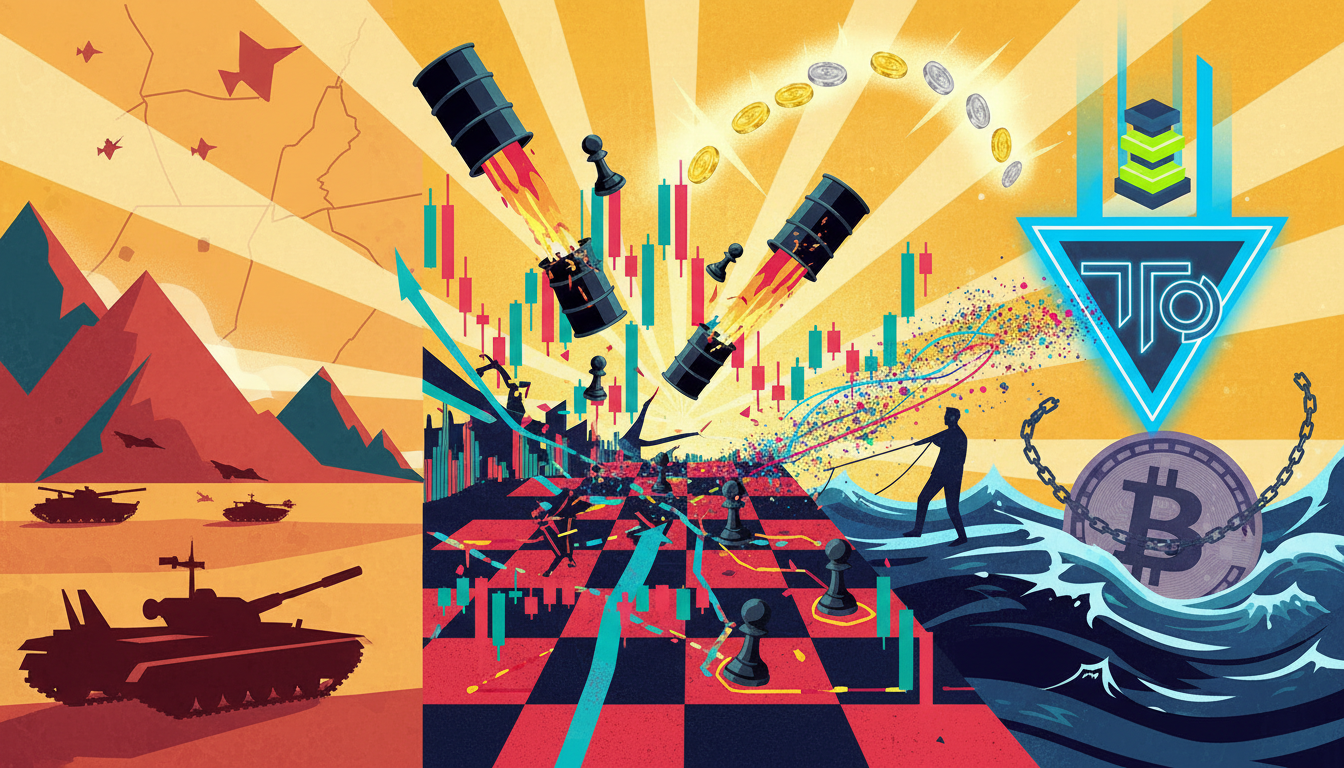
On March 23, 2026, in the East 8 Time Zone, Brent crude oil surged past the $104/barrel mark during the trading session, with a daily increase of approximately 1.87%. The candlestick chart on the trading terminal was rapidly straightened out, and market sentiment shifted from an inertia-driven upward trend to an almost anxious chase for further gains and loss cuts. Behind this high-speed surge lies a signal from the U.S. Commodity Futures Trading Commission (CFTC) announcing an upgrade in monitoring for abnormal trading in the crude oil futures market—prices and regulation were almost synchronously elevated within the same timeframe. On one side, the situation in the Middle East was driving up the risk premium, pushing oil prices to rise sharply; on the other side, the regulatory authorities attempted to prevent insider trading and manipulation from amplifying their effects during extreme conditions. The core contradiction surfaced: Is this CFTC action aimed at cooling down the overheated crude oil speculation, or does it amplify market tension and risk aversion in an already strained geopolitical environment?
Oil Prices Surged to $104: Resonance of Geopolitical Risk and Risk Premium
Since March, the situation in the Middle East has continued to heat up, with original expectations of a ceasefire and diplomatic mediation repeatedly thwarted, placing oil supply security back in the spotlight. Energy traders began to reprice the tail risk of "geopolitical supply disruption," with any news regarding the escalation of conflicts in oil-producing countries or blockades of transport routes being magnified into synchronized increases in volatility and risk premium. In this context, the oil market has noticeably shifted from the previous range-bound fluctuations to a phase driven mainly by emotional responses to geopolitical news.
On March 23, Brent crude oil stood at $104/barrel, with a daily increase of 1.87%. This price point carries strong symbolic significance: it signifies that the market has re-entered the “over-$100 era,” with bullish sentiment and risk-averse buying flowing in simultaneously. For some funds, crude oil is no longer just a commodity but a comprehensive vehicle for hedging against geopolitical, inflationary, and currency risks. Buying high-priced crude oil has become a wager against a bundle of macro uncertainties. In the market, active buying pushed up near-month contracts; funds leveraged through futures, options, and over-the-counter derivatives to bet on continued price increases.
At the same time, expectations for traditional energy supply were systematically tightened under geopolitical uncertainty. Even without substantial disruptions in physical flows, the market tends to pre-allocate risk in prices, causing risk premiums for contracts further out to increase, with the term structure favoring a "geopolitical premium curve." As a result, the futures market exhibited a typical amplification effect: while the spot market was still in a state of expected disturbance, futures prices had already accelerated upwards under emotion-driven and leverage amplification, compressing concerns about supply that should have been reflected slowly into a drastic price reevaluation over a short period of time.
CFTC Signals Close Monitoring: Abnormal Trading Under High-Pressure Surveillance
At the same time that prices broke through key levels, the regulatory stance also upgraded in sync. According to reports from several media outlets including Rhythmic and Golden Finance, David Miller, head of enforcement at the CFTC, publicly stated that the regulatory body is “closely monitoring relevant trades” and will remain highly vigilant against potential abnormal trading behaviors in the crude oil futures market. This statement indicates that the current focus has surpassed the realm of routine inspections and is closer to a special upgrade in monitoring for specific risk scenarios.
The essence of this action lies in the inherent characteristics of crude oil futures during periods of geopolitical tension, where insider information and sensitive news tend to be highly concentrated. Once price changes or alterations in position structures diverge significantly from public information, the regulatory instinct will prioritize locking onto "abnormal trading" as a coordinate. CFTC's “close monitoring” typically encompasses multi-dimensional surveillance, including anomalous accumulations in high-frequency trading patterns, concentrated operations by a single or few accounts at critical time points, and unusual increases in inter-account correlation and concentration. However, there is currently no publicly available material indicating that formal case filing or enforcement procedures have been initiated; this round of actions feels more like a precautionary elevation against potential risks, rather than follow-up strikes against already confirmed violations.
It is important to emphasize that, as of now, public channels have not disclosed any specific data on abnormal trading, trading account details, or formal investigations. The market can only infer indirectly from the CFTC's statements and price actions, without confirmation of whether any individual cases have triggered in-depth investigations. This "semi-transparent information" state creates uncertainty for potential violators on one hand, while also allowing imagination space for market sentiment—whether the regulation is “just watching” or “already silently investigating” has become a new suspense.
Price Turmoil and Regulatory Upgrades: Misalignment and Overlap of Causal Sequences
From a chronological perspective, it was the geopolitical risk in the Middle East that initially drove up oil prices, thus triggering regulatory alertness to abnormal trading; yet in the subjective perception of the market, regulatory “wind signals” can also amplify short-term volatility. After the price broke through $104/barrel, some short-term capital viewed the CFTC's statements as a warning signal, beginning to actively reduce positions and shorten holding periods, further amplifying intraday volatility—leveraging up during price increases and making panic-driven reductions during downturns, resulting in a cycle of “regulatory expectations amplifying volatility”.
For speculative funds and arbitrage participants, the elevation of regulatory expectations directly alters their position rhythms and risk preferences. On one hand, high-frequency strategies and quantitative funds will raise the "policy and regulatory risk weight" in their models, decreasing tolerance for extreme price disparities and anomalous fluctuations, leaning towards quick entries and exits, and reducing individual exposure risk. On the other hand, neutral strategies such as inter-period arbitrage and cross-product hedging will also consider the scenario of “regulatory actions potentially targeting specific trading behaviors,” thus avoiding overly concentrated and overly homogeneous structural designs in strategy development to minimize the chance of being mistakenly harmed.
Looking back at historical commodities bull markets, regulatory interventions often appear during accelerated price phases: both in the post-peak ballpark of extreme speculative bubbles with "post-event accountability," and in the proactive prevention of potential manipulation behaviors during overlapping geopolitical conflicts and supply concerns. The difference in this round of tempo is that, as prices just returned to the "over-$100" range, regulatory signals have already emerged synchronously, leaning more towards preemptive intervention rather than waiting for bubbles to accumulate fully before taking action. This proactive “monitoring” can help suppress malicious manipulation and insider trading, but it may also be interpreted by some market participants as a high-pressure environment, thereby amplifying concerns about potential future restrictions and triggering secondary emotional fluctuations.
Thus, the current risk lies in the potential interpretation that excessively exaggerates regulatory deterrents, equating “close monitoring” directly with “imminent heavy-handed action,” which might provoke a round of position adjustments based on panic and rumors prior to any clear signals emerging. This self-reinforcing emotional process often proves to be more lethal in the short term than the actual policy implementation.
The Crude Oil Battlefield Under the Shadow of Insider Trading
The CFTC's release of strong signals during this round of crude oil surge cycles is closely linked to its longstanding vigilance against insider trading and sensitive information leaks. Crude oil, as a highly politicized strategic commodity, is influenced not only by the supply and demand fundamentals, but is also closely tied to political events such as diplomatic negotiations, sanction decisions, and production quota talks. If certain market participants acquire undisclosed policy direction, military deployments, or diplomatic breakthroughs in advance, they may construct substantial positions in the futures market, realizing excess profits when the news is officially released; this is a typical example of what the regulatory perspective views as a “high-risk zone.”
During periods of heightened sensitivity to geopolitical events, insider news and policy expectations are especially susceptible to being used to manipulate the market: for instance, even slight disturbances regarding the safety situation of a critical shipping lane can serve as “narrative fuel” to amplify volatility. When the news chain lacks transparency, it can be packaged as “high-end information” or “insider channels,” quickly spreading in social media and trading communities, leading some funds to heavily bet on unverified geopolitical expectations. For regulatory bodies, this interplay of “information–trading–price” forms an environment most conducive to the emergence of insider trading and manipulation behaviors.
Large institutions, traditional traders, and hedge funds face a real tug-of-war in such cycles: on one side are compliance boundaries and regulatory red lines, while on the other side lies pressure to pursue excess profits. Compliance departments strengthen controls over sensitive information contacts, pre-trade “barrier” systems, and information flow pathways, while frontline traders strive to capture volatility opportunities arising from geopolitical conditions as much as possible within a compliant framework. This structural tension determines that even if the majority of institutions maintain discipline and caution, the market will still be in a naturally “high-alert regulatory” state.
For ordinary traders, in such an environment, it is especially necessary to maintain sufficient caution regarding narratives like “insider routes,” “political wind trades,” and “high-level news arbitrage.” The more dense the geopolitical events and intense the regulatory pressure, the easier it is to encounter scenarios where emotions are exaggerated by “inside” narratives—those truly holding sensitive information will hardly boast about it in public communities, and more often, these “insider cards” are merely tools to exploit information anxiety to reap profits from chasing and panic trades.
Cryptocurrency and Traditional Commodity Linkage: How Risk Premium Penetrates Market Boundaries
The breakthrough of crude oil above $104/barrel is not merely an isolated event in the energy sector; it represents the overall upward trend of commodity energy risk premiums, constituting a chain reaction to global inflation and interest rate expectations. Sustained high oil prices will transmit through production costs, transportation fees, and end prices to a broader price system, intensifying market concerns over “inflation stickiness,” and indirectly affecting central banks’ interest rate path expectations. Once the market begins to discuss “high rates lasting longer,” all assets priced based on liquidity—including cryptocurrencies—will inevitably have to face renewed pressures from valuation discounts and funding costs.
On the macro risk sentiment level, the dramatic fluctuations in oil and energy prices will transmit to the cryptocurrency market through two pathways: U.S. dollar liquidity and risk asset preference. On one hand, high oil prices provide a revenue boost to certain oil-exporting countries and energy-related economies, potentially prompting sovereign funds and institutional investments to make slight adjustments in asset allocations, affecting the liquidity dynamics between the dollar and local currencies; on the other hand, when the overall market risk preference declines due to geopolitical tensions and inflation expectations, traditional risk assets and cryptocurrencies often encounter synchronized “de-leveraging” pressures, which leads to a temporary increase in correlation—high oil prices do not necessarily suppress cryptocurrencies, but under the combination of “high oil + high rate expectations + regulatory disturbances,” cryptocurrencies can easily become one of the assets that get reduced in positioning.
On a more granular narrative level, the dramatic fluctuations in energy prices may also activate a series of themed stories related to commodities and energy on-chain. For example, for networks that rely on high-energy-consuming mining mechanisms, the linkage between oil prices and electricity costs will be repackaged as “increased computing power costs” and “pressure on miners’ profits,” while certain energy-related tokens may be presented as a new story to “hedge against energy inflation” and be short-term speculated. Historical experiences show that whenever extreme market conditions occur in traditional commodities, there is often a rapid emergence of “parallel narratives” on-chain that translate macro events into new themes, attracting speculative funds to rotate.
For cryptocurrency traders, when paying attention to oil prices and CFTC regulatory news, it is crucial to be particularly vigilant about two risks: first, that cross-market resonance may be misread or amplified, interpreting changes in the macro background as direct negatives/positives for a specific currency or sector, resulting in excessive position adjustments; second, being led astray by topics packaged under “macro–on-chain narratives,” pursuing so-called “energy concepts” or “commodity links” without fundamental support merely based on oil prices and regulatory wind signals, thereby incurring unnecessary volatility.
The Regulatory Game Continues: Next Steps for Oil Prices and the Eye of the Storm
In summary, the tension between the recent surge in oil prices and CFTC regulatory upgrades is concentrated in two dimensions: on one hand, the price reassessment above $104/barrel is primarily driven by the tightening of Middle East geopolitical conditions and the rise of risk premiums, making geopolitics the most crucial pricing anchor; on the other hand, the CFTC's signal that it is “closely monitoring relevant trades” brings forth market concerns regarding insider trading and manipulation, intertwining price fluctuations with regulatory expectations and creating dual uncertainties. The path of oil prices no longer solely depends on geopolitics and supply and demand but also requires seeking new balance points under regulatory shadows.
Going forward, key observation points should include at least two main lines: first, the evolution of geopolitical conditions, particularly whether substantial supply disruptions, conflict escalations, or signals of diplomatic easing emerge in the Middle East, which will directly affect whether oil prices remain in “high-level consolidation” or enter a new round of peaks; second, whether the CFTC announces further investigative actions or case details, including whether it moves from “close monitoring” to more definitive procedural steps. Any public disclosure regarding formal investigations or penalty cases will significantly alter market expectations concerning compliance boundaries and trading behaviors.
For traders, whether positioning in oil or traditional commodities or navigating the interplay of macro and regulatory events in the cryptocurrency market, there is a need to consciously reduce leverage and control event risk exposure at such times. In a phase where narratives, policies, and geopolitical winds intertwine, excessive leverage means fully exposing positions to random fluctuations driven by “news headlines and regulatory tones,” rather than being solely driven by quantifiable fundamentals. A more prudent approach is to shorten decision cycles, reduce position concentrations, and allocate risk budgets more towards already validated trends rather than betting on unconfirmed rumors and expectations.
Looking further ahead, in an environment where high oil prices and high-pressure regulation coexist, both traditional commodities and cryptocurrency assets face a potential pricing reassessment: energy assets like crude oil need to find equilibrium under the dual constraints of “geopolitical premiums + regulatory costs,” while cryptocurrencies need to redefine risk premiums within the framework of “tightening macro liquidity + rising regulatory expectations.” For participants who understand cross-market observations and can filter signals amidst noise, this represents not only a high-risk phase but also a nurturing period for future new pricing and narratives.
Join our community to discuss and grow stronger together!
Official Telegram community: https://t.me/aicoincn
AiCoin Chinese Twitter: https://x.com/AiCoinzh
OKX Benefit Group: https://aicoin.com/link/chat?cid=l61eM4owQ
Binance Benefit Group: https://aicoin.com/link/chat?cid=ynr7d1P6Z
免责声明:本文章仅代表作者个人观点,不代表本平台的立场和观点。本文章仅供信息分享,不构成对任何人的任何投资建议。用户与作者之间的任何争议,与本平台无关。如网页中刊载的文章或图片涉及侵权,请提供相关的权利证明和身份证明发送邮件到support@aicoin.com,本平台相关工作人员将会进行核查。