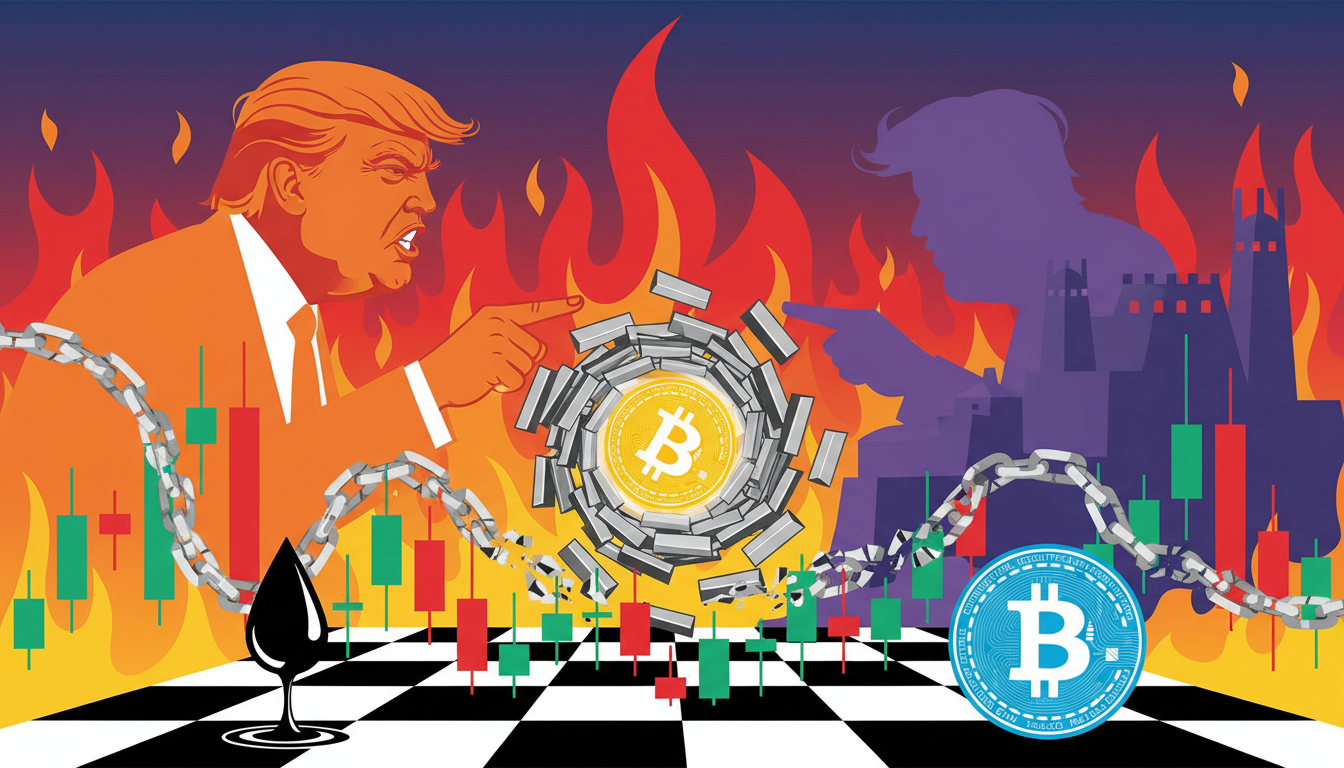
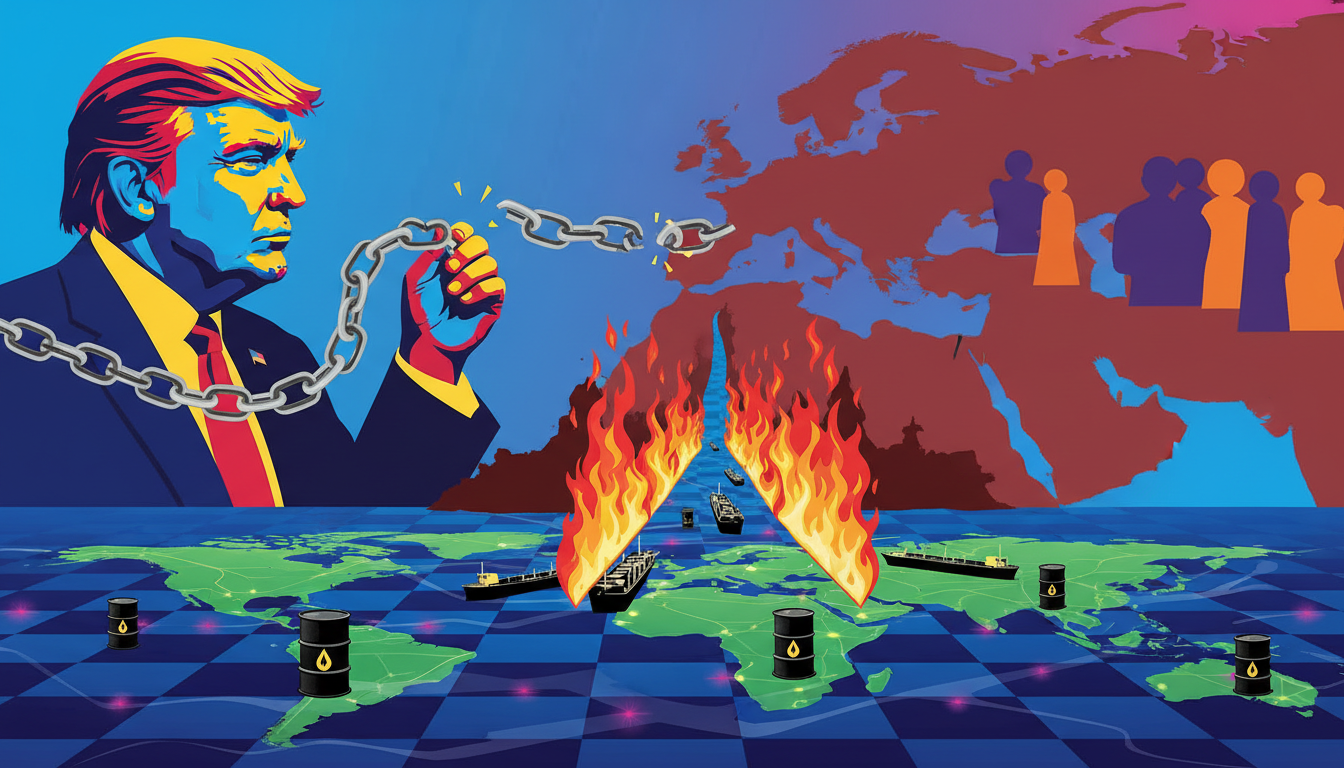
On March 31, 2026, Eastern Eight Time, the day when the Iranian Islamic Revolutionary Guard announced strikes against multiple Israeli targets in the 88th round of the "True Commitment-4" operation, U.S. President Trump made a high-profile statement in public regarding jet fuel supply in the Strait of Hormuz. He mentioned that countries like the UK, which are "unable to obtain jet fuel" due to the situation in the Strait of Hormuz, are required either to purchase from the U.S. or "go seize it themselves" in the Strait. Presenting "buying oil from the U.S. or going to grab it themselves" as a crude choice intertwines energy security, military conflict, and ally relations, exposing the current contradictions over energy security around the Strait of Hormuz within the international system, and pointing out possible directions for the next stage of geopolitical maneuvering.
From Buying Oil to "Seizing It Themselves": An Open Pressure Signal
According to several encrypted and Chinese media reports, Trump directly stated regarding the situation in the Strait of Hormuz, “Countries, like the UK, that are unable to obtain jet fuel due to the situation in the Strait of Hormuz, should buy from the U.S. or go seize it in the Strait.” This statement emphasizes the risk expectations surrounding jet fuel supply due to regional tensions, while also framing the U.S. as a ready "alternative supplier," translating the issue from "channel security" into a choice of "who to buy from."
The pointed nature of this statement is not subtle. Trump specifically named the UK, categorizing it as one of the potential affected parties "unable to obtain jet fuel," semantically placing the UK alongside other countries reliant on the Hormuz route into the “client” list. The so-called "buying from the U.S." essentially informs allies: the deterioration of the security environment has been embedded into energy pricing, and the U.S. is willing to provide supply, but under commercial and political conditions rather than traditional security alliance obligations.
Meanwhile, the phrasing "go seize it themselves" is highly provocative in the diplomatic and international legal context. It openly puts the idea of using military means to intervene in critical maritime passages and seize resources on the table, simplifying maritime security issues—often governed by international law and multilateral mechanisms—into a narrative akin to "might makes right." This language not only punctures the legitimacy rhetoric maintained by Western countries in public but also provides room for potential unilateral actions and misjudgments, amplifying concerns about the future security situation in the Hormuz Strait.
Claiming Iran is Essentially Decimated: Trump's Victory Narrative
In the same round of remarks, Trump also claimed that Iran "has been essentially decimated," and "the difficult part is over." This phrasing has been consistently referenced by multiple Chinese media outlets, such as Rhythm, Planet Daily, panews, and Golden Finance, as well as several English tweets, showing a high degree of synchronization in cross-linguistic information dissemination. The wording of "essentially decimated" and "the difficult part is over" forms a typical victory narrative framework: the enemy has been severely damaged, and what follows is merely "finishing work."
From a military and political perspective, this statement mainly targets two types of audiences. One is the domestic public and supporter group, where, in the context of prolonged regional military confrontation, the expression "the difficult part is over" helps to shape an image of controllable costs and smooth progress, diminishing concerns about long-term consumption and unforeseen consequences. The second audience is external, including Iran, where emphasizing "Iran has been essentially decimated" attempts to establish a rhetorical deterrent advantage, signaling to opponents that "the space for counterattacks is limited."
However, such understatements of the costs of war often exacerbate regional tensions and misjudgment risks. When a leader publicly claims "the difficult part is over," it can easily be interpreted by opponents as paving the way for further actions, not as a relaxation of tensions; other countries caught up in the regional security landscape may also overestimate the extent of damage incurred and underestimate the probability of future escalation. This "semantic undervaluation" of war costs tends to raise speculation and distrust in both capital markets and security decision-making spheres, intensifying the motivation for defensive preemptive actions.
Fires in the Hormuz Strait: Iranian Strikes and U.S. Public Opinion Rebound
According to research briefs, on March 31, 2026, the Iranian Islamic Revolutionary Guard released a statement claiming that in the 88th round of the "True Commitment-4" operation, it struck multiple Israeli targets. This operational confirmation from Iranian official channels marks a further fermentation of regional tensions near the Hormuz Strait, where military confrontation has transitioned from threats and military exercises to substantive strikes.
In a chronological sequence, a clear interactive chain can be observed: Iran showcases its long-range strike capabilities and political will through the 88th round of the "True Commitment-4," prompting a reassessment of escalation risks in the region by the international community; on the same day, Trump releases tough rhetoric, depicting Iran as "essentially decimated," while linking jet fuel supply to the security of the Hormuz Strait, conveying to allies and markets that "the U.S. plays a dual alternative role in energy and security."
This "military action - public opinion rebound" rhythm is particularly sensitive near crucial maritime passages like the Hormuz Strait. For global energy supply, the Strait of Hormuz is viewed as a critical bottleneck connecting major oil-producing regions and consumption markets, and each military friction around this region is quickly translated into rising supply expectation gaps and transportation risk premiums. Even if current information frameworks cannot provide specific price data, market participants typically increase their subjective estimates of transportation interruptions, insurance costs, and alternative route costs during heightened geopolitical conflicts, thereby increasing their rebalancing operations in asset allocation towards risk assets and defensive assets.
Cracks in the Energy Umbrella: The U.S. and Allies Settle the "Security Bill"
From Trump's latest remarks, it is clear that the narrative around energy security responsibility distribution is changing. Historically, the U.S. military presence at key channels like Hormuz has been viewed as a form of "public good" security provision for allies and global markets, while Trump's expression makes this protective umbrella more explicit by monetizing it: affected countries either pay to buy oil from the U.S. or bear the risks and costs of seizing it through force.
This situation creates multiple embarrassments for traditional allies like the UK. On one hand, in their policy towards Iran, they have to maintain close security and intelligence cooperation with the U.S., while facing domestic political and public fears of deep involvement in regional conflicts; on the other hand, in key energy categories like jet fuel, their reliance on Middle Eastern routes is a given, yet they struggle to find a balance that is cost-acceptable between security investment and policy independence. This internal division and policy tug-of-war are further magnified after Trump publicly "prices" security services.
Deeper issues arise if security guarantees are explicitly priced, as traditional narratives of commitments based on alliances and values will be weakened. The past logic of "shared values - collective defense" appears pale in comparison to blunt expressions like "buy oil from the U.S." For allies, how to continue enjoying the benefits of U.S. security capabilities while avoiding a total loss of autonomy in energy and foreign policy will become the core contest in the near future; for the U.S., marketing energy through security issues and pushing for the binding of industrial and financial interests is increasingly becoming a visible strategic option.
Rhetoric and Oil Price Expectations: How Markets Interpret an "Essentially Decimated" Iran
"Iran has been essentially decimated, and the difficult part is over," within the market context, will generate a subtle dual effect. In the short term, such hardline statements will reinforce the impression that the conflict has crossed a threshold, raising risk aversion, especially against the backdrop of Iran just announcing the launch of the "True Commitment-4" strike operation, where investors often preset the possibility of further escalation, adjusting positions and increasing hedging ratios prematurely.
However, from a medium- to long-term narrative standpoint, the expression "the difficult part is over" may be interpreted by some participants as: major military risks have been somewhat reflected within the current price system, and what remains is a re-pricing process towards a new equilibrium. This discourse of “risks already reflected” is often used to reassure domestic audiences and markets, convincing capital that the conflict will gradually transition into a controllable range, preventing disorderly sell-offs and liquidity tightening.
Correspondingly, remarks like "buying oil from the U.S. or seizing it yourselves" reinforce the image of the U.S. as a substitute supplier and rhetoric center for energy pricing along another thread. The underlying logic suggests that, amid frequent conflicts and heightened shipping risks near Hormuz, the capacities, reserves, and infrastructure within the U.S. and its allies can, to some extent, hedge against uncertainties in Middle Eastern supply; as long as final buyers accept U.S. prices and conditions, anxieties over energy security can be partially alleviated.
Historical experience shows that every time tensions in Hormuz heat up, markets tend to exhibit a typical pattern of combined risk aversion and speculative behavior. On one end, conservative funds tend to increase holdings in assets viewed as "shock-resistant," reducing exposure to categories directly impacted by transportation and geopolitical friction; on the other end, short-term funds often engage in high-frequency plays around energy, shipping, and defense-related targets, amplifying price volatility. Under the current information framework, it is unnecessary to focus on specific price points; one can infer that as long as Hormuz remains in a state of unstable expectation, "risk premiums" will become a persistent variable in asset pricing, and each of Trump's hardline statements may serve as an emotional trigger for swing trading.
After Hormuz: A New Energy Order Under the Metaphor of War
From this round of statements, it is evident that Trump has bundled "buying oil," "providing escort," and "going to war" into the same set of negotiation language. On one hand, he emphasizes "buying from the U.S." to highlight America's central position in the supply chain and security system; on the other hand, he uses the metaphor of "seizing it themselves" to remind allies that if they are unwilling to sacrifice actual money and policy concessions for security, they must be prepared to bear the high costs of direct engagement in conflicts.
Looking ahead, at least three evolutionary threads deserve continuous observation. The first is the subsequent military action pace by Iran; whether the 88th round of the "True Commitment-4" will initiate a new round of intermittent strikes will directly influence the baseline of regional tensions. The second is whether the substantive pressure from the U.S. on allies will intensify, from energy procurement arrangements to military presence sharing, whether more operational "condition lists" will emerge. The third is how market sentiment around shipping risks in Hormuz evolves; the micro-changes in insurance, cargo capacity allocation, and capital flows will invisibly reshape the paths and costs of global energy trading.
Over a longer time scale, the narrative and military tug-of-war surrounding Hormuz is driving a global reevaluation of the connotation of "energy security": security is no longer an abstract allied commitment but is sliced into quantifiable, tradeable service packages; major powers engage in a game where the chips are no longer solely military presence but a multidimensional combination of military, energy, financial, and rhetorical rights. For market participants, understanding how this combination is activated at critical nodes like Hormuz will be more important than fixating on any individual price fluctuation.
Join our community to discuss and grow stronger together!
Official Telegram group: https://t.me/aicoincn
AiCoin Chinese Twitter: https://x.com/AiCoinzh
OKX Welfare Group: https://aicoin.com/link/chat?cid=l61eM4owQ
Binance Welfare Group: https://aicoin.com/link/chat?cid=ynr7d1P6Z
免责声明:本文章仅代表作者个人观点,不代表本平台的立场和观点。本文章仅供信息分享,不构成对任何人的任何投资建议。用户与作者之间的任何争议,与本平台无关。如网页中刊载的文章或图片涉及侵权,请提供相关的权利证明和身份证明发送邮件到support@aicoin.com,本平台相关工作人员将会进行核查。