Author: Frank, PANews
Six months ago, investors immersed in the anticipation of a cryptocurrency "super cycle" perhaps never imagined that six months later, BTC would actually experience a decline of nearly half. From a high point of $125,000 on October 6, 2025, it has dropped to the current $66,600, a decline of 46.56% over the period.
This round of decline is not an adjustment but a systematic clearing. PANews pulled price data for 424 USDT spot trading pairs from Coin Security, and the results are alarming:
Only 11 assets recorded positive returns over these six months, accounting for 2.6%; 405 assets experienced a maximum drawdown of over 50%, reaching an alarming 95.5%; even when loosening the standard to "outperform BTC," only 50 assets achieved this, with 88% of altcoins underperforming the market. Among 45 key projects across 8 sectors, only Maker recorded positive returns.
This is a harsh report card. However, the purpose of this article is not to reveal scars. When the tide goes out and the bubble bursts, those assets that still profit, the public chains that still have capital inflow, and the ecosystems that still experience user growth actually represent the most precious signals in the entire market. Based on Coin Security's volume data, on-chain indicators from 12 major public chains, and the price performance of 45 representative projects across 8 sectors, PANews aims to find "signs of life" in this wreckage.
(This article analyzes the period from October 6, 2025, to March 29, 2026. The 424 Binance spot pairs are a valid sample after removing stablecoins, fiat-pegged currencies, and leveraged tokens. On-chain data comes from DefiLlama, growthepie, and Token Terminal. Project prices are based on Binance prices and CoinGecko.)
I. Ten survivors among 424 assets, belonging to three completely different species
First, let's look at the complete list. During the six months of BTC halving and the entire market bleeding, the assets on Binance spot that could record positive returns are as follows:
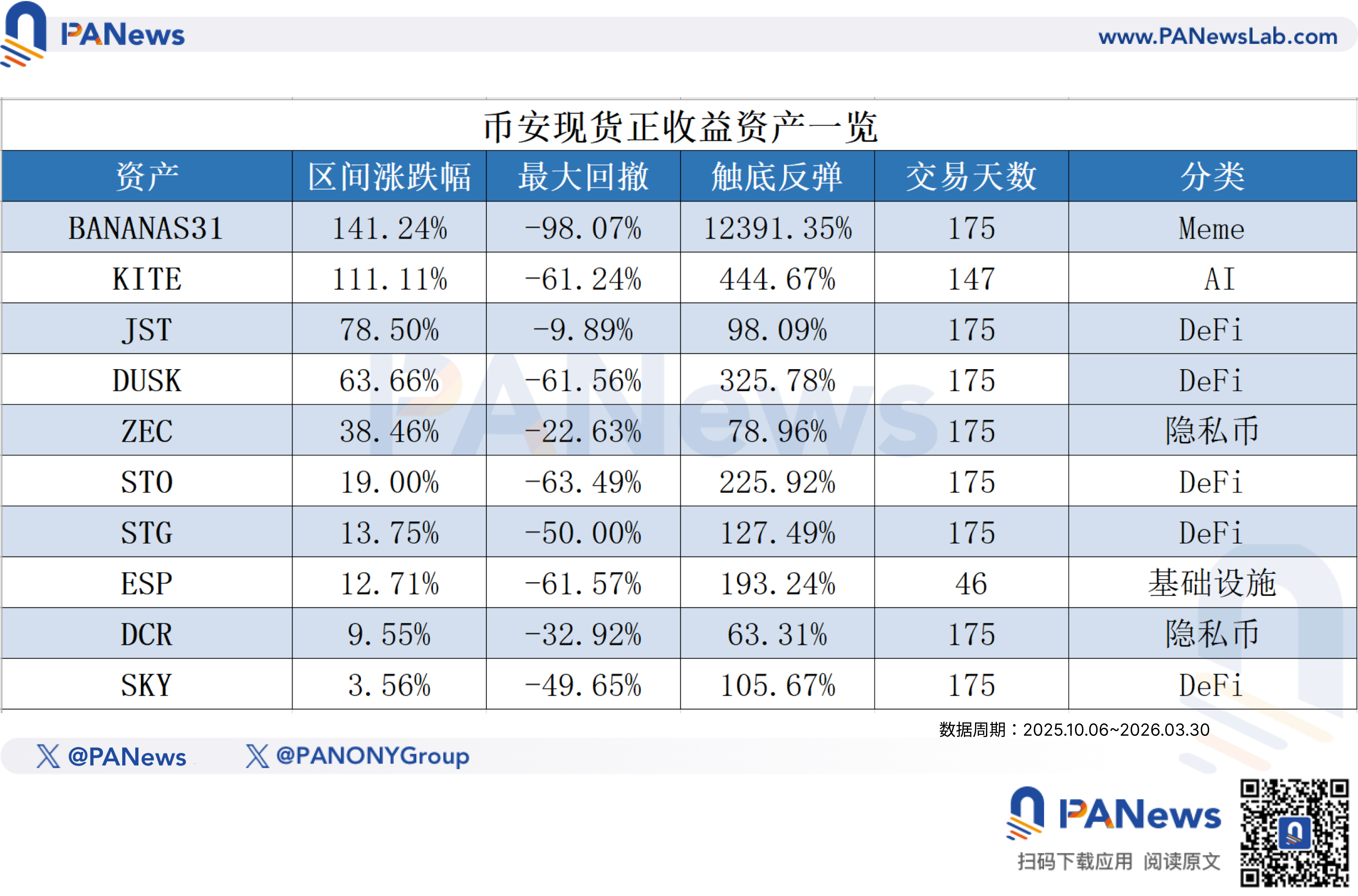
At first glance, BANANAS31 rose by 141% and KITE rose by 111%, seemingly impressive accomplishments. However, on closer inspection, these 11 "survivors" actually belong to three completely different categories.
The first category consists of those that truly held their ground, including JST, ZEC, and DCR.
Among them, JST is particularly noteworthy. It recorded a price increase of 78.5% while experiencing a maximum drawdown of only 9.89%, making it the only positive return asset that did not drop below 10%. Against a backdrop where 95% of assets suffered drawdowns over 50%, JST actually rose against the trend. The core reason is that JustLend DAO officially released its "JST Buyback and Burn Proposal" on October 11. The proposal uses DeFi revenue from the JustLend protocol to transparently buy back and permanently burn JST on-chain, achieving continuous deflation. This action demonstrated fundamental resilience amid market panic selling, quickly attracting capital inflow and driving price rebounds.
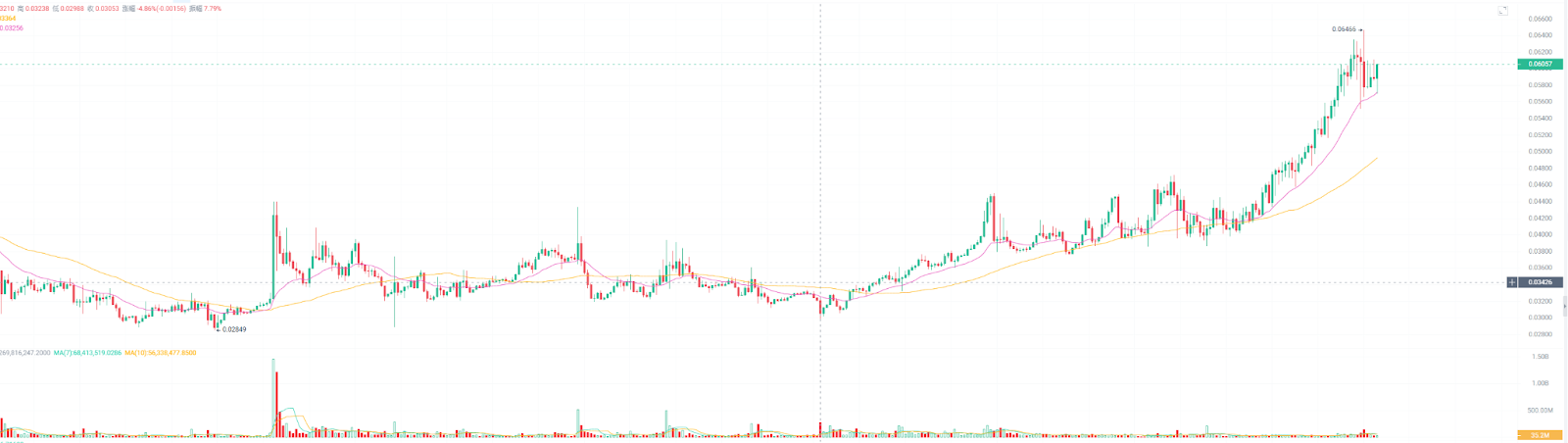
ZEC and DCR represent another logic: the safe haven effect of privacy coins in a bear market. ZEC experienced a maximum drawdown of 22.63%, while DCR saw a maximum drawdown of 32.92%; in this overall collapse, they displayed rare resilience. The ability of these two established privacy coins to hold up relies not only on their narrative but also on strong community foundations and ongoing demand for anonymous transactions.
Additionally, STG (Stargate, a cross-chain bridge protocol) increased by 13.75%, and SKY (the governance token after MakerDAO's rebranding) rose by 3.56%. Both belong to DeFi infrastructure. Cross-chain bridges have inherent demand in a weak market (users need to transfer funds across chains for risk aversion), and stablecoin governance protocols have ongoing revenue from the protocol, similar to JST's logic.
The second category consists of those that died and then revived. BANANAS31, DEXE, and others belong to this group. Their common feature is a deep maximum drawdown (87% to 98%), followed by a rebound from extremely low positions by several hundred to even a thousand percentage points. BANANAS31 saw a maximum drawdown of 98.07%, followed by a rebound of 12391%, appearing to increase by 124 times. However, essentially, it dropped too much due to the crash on October 11, leading to so small a buying volume being able to push up by several hundred percentage points, turning it into a playground for manipulation by wild speculators.
The third category consists of new coins listed mid-way. KITE has only 147 days of trading history, while ESP has only 46 days, and their high increases reflect stage performance post-listing, without having fully undergone bear market testing.
Removing these distracting factors, the assets truly worthy of being included in the "winter survivors" list are only JST, ZEC, DCR, STG, and SKY. They span the complete six-month cycle, have manageable declines, and genuine increases. The common feature among these five names is clear: either they have real on-chain use cases (lending, cross-chain bridges, stablecoins), or they have long-lived community support (privacy coins). This is the first sign of life: in the crypto world, "usefulness" lasts longer than "fame."
II. Among the 50 assets that "outperformed BTC," there are clues worth tracking
BTC itself fell by 46.56%, and the 50 assets that outperformed BTC, for the most part, do not mean "performed well," but rather fell relatively less. In terms of distribution, aside from the 11 that recorded positive returns, 14 fell between 0% and 30%, 25 fell between 30% and 46%, while the remaining 374 all underperformed the market, accounting for 88% of the total.
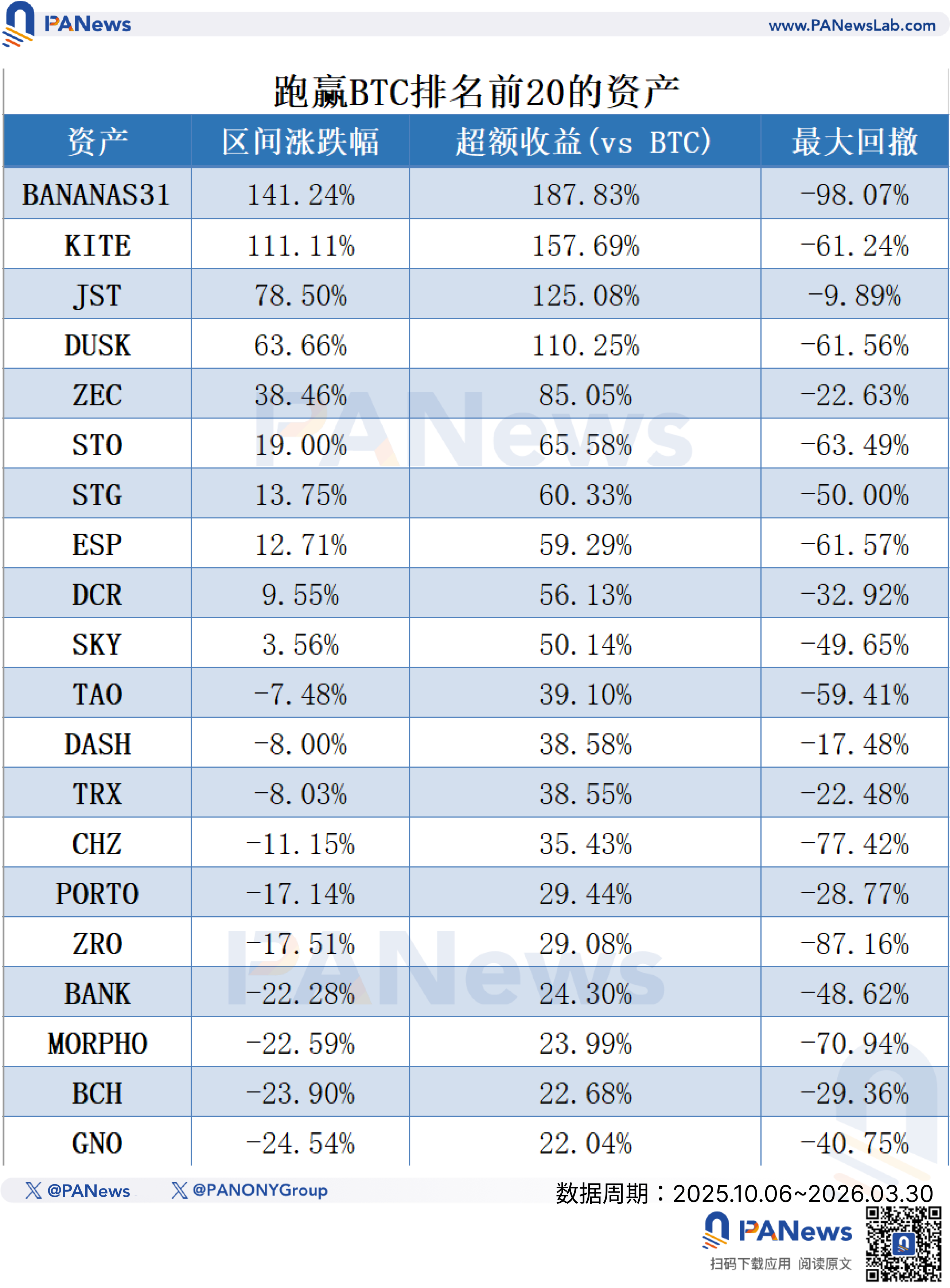 Among these 50 names, there are several clues worth tracking.
TRX (down 8.03%) is the token of the Tron public chain. Referring to JST's performance in the first section, a clear picture emerges: the Tron ecosystem has demonstrated overall resilience during this bear market. The token's decline is in single digits, and DeFi projects within the ecosystem have positive returns, supported by the genuine demand for stablecoin settlements. USDT circulates on Tron, holding the largest share across the network; this position as a settlement layer has not only remained unshaken in a weak market but has become even more solidified.
TAO (down 7.48%) is from Bittensor, the only project in the AI sector with a decline controlled in single digits. Amid the backdrop of a collective halving or even zeroing of AI agent concept tokens, TAO's resilience indicates that the market is distinguishing between "AI narratives" and "AI infrastructure." Projects with actual decentralized computing networks are operating, and their pricing logic has not collapsed.
VIRTUAL (down 44.32%) displays a relatively controllable decline in the overall background of AI agent sector seeing declines of 70% to 90%; however, in terms of actual chart movement, it appears to have started to decline ahead of the crash on October 11 and is currently still oscillating at low levels.
With 88% of altcoins underperforming the market, from the remaining 12%, we can slightly see some survivors. The resilience of the Tron ecosystem is attributed to stablecoin settlement demand, and the underlying value represented by Bittensor's AI computing network, along with the essential demand for certain large DeFi infrastructures. Although these clues are weak, they point in the same direction: real usage rather than narrative.
III. Health reports for 12 public chains: funds are re-selecting, and users are migrating
If token prices reflect market sentiment, then on-chain data reflects the true health status of an ecosystem. PANews conducted a comprehensive health check on 12 major public chains from two dimensions: fund retention (TVL, stablecoins, DEX trading volume) and user activity (daily active address numbers). By equally averaging the changes across dimensions without using a weighted method, a scoring standard was established.
The result shows that the vast majority of public chains are experiencing significant contractions in both funds and activity, yet amidst this shrinkage, a few exceptional highlights are shining through.
Fund retention: Polygon is the only positive value
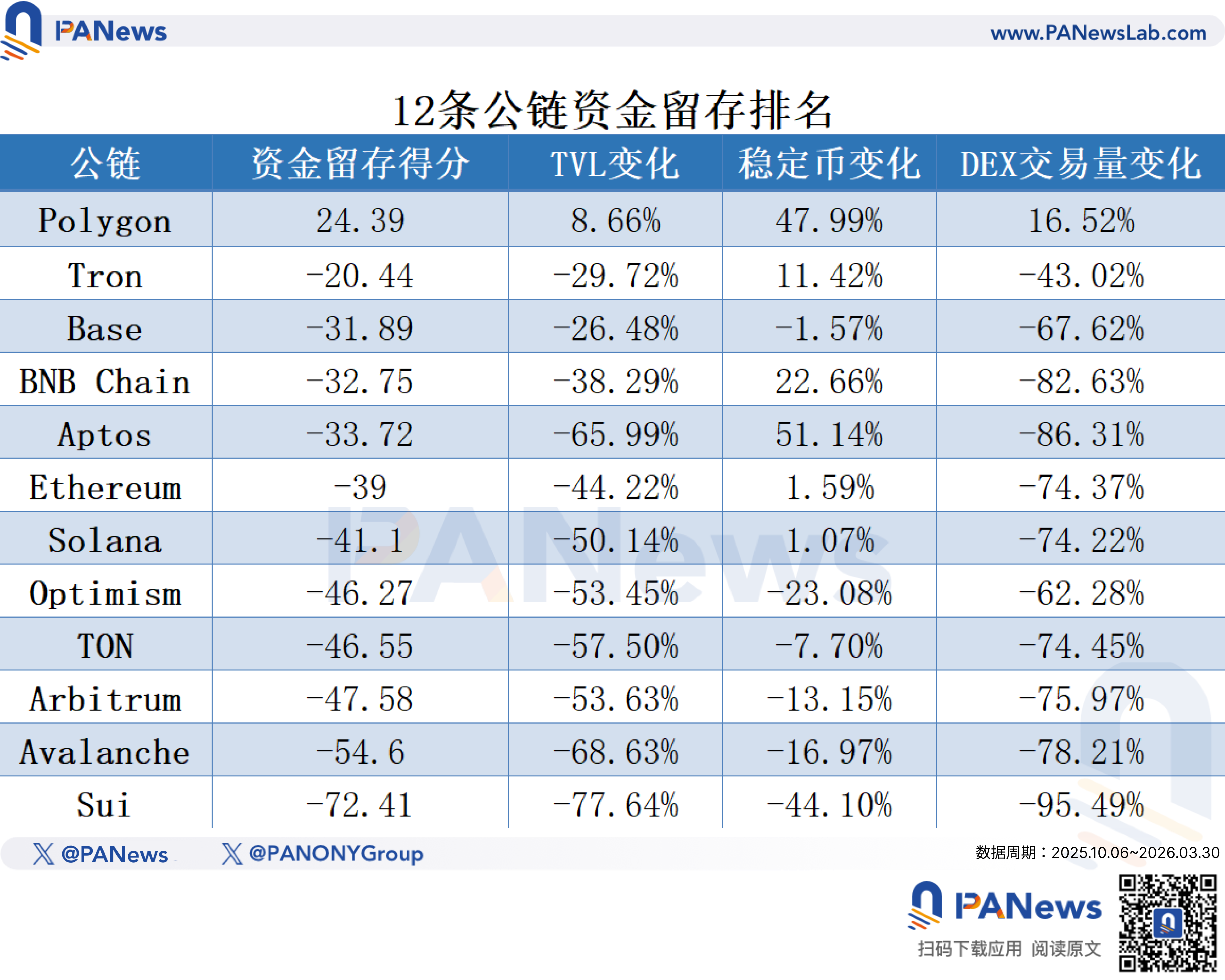 First, looking at the funding aspect, among 12 public chains, only Polygon shows the best performance in fund retention. TVL grew by 8.66%, stablecoins increased by 47.99%, and DEX trading volume grew by 16.52%, all three indicators are positive. In a market context of large capital outflows, it is the only public chain with "all three indicators in the green."
The main reason behind this is likely the explosive popularity of the prediction market Polymarket, which has energized the entire Polygon ecosystem, but beyond that, Polygon also underwent its Rio upgrade during this time, optimizing performance and taking in the heat from the prediction market.
Ranked second, Tron (-20.44) is negative but saw stablecoins grow by 11.42%, with trading volume declines being relatively small, rendering a decent overall performance. At the bottom of the ranking, Sui (-72.41) experienced a complete collapse, with TVL down 77.64%, stablecoins down 44.10%, and DEX trading volume down 95.49%, being nearly drained.
Stablecoin flow: the most genuine directional marker of capital
Among all on-chain indicators, changes in stablecoins might be the most noteworthy.
From the data, Aptos' stablecoins increased by 51.14%, the highest in the market, followed closely by Polygon at 47.99%, BNB Chain at 22.66%, and Tron at 11.42%. On the other hand, Sui's stablecoins decreased by 44.10%, Optimism decreased by 23.08%, and Arbitrum decreased by 13.15%. Meanwhile, Ethereum (+1.59%) and Solana (+1.07%) remained roughly flat.
This set of data reveals an important fact: stablecoins have not massively exited the crypto market, but are re-selecting their ports of call. Funds are withdrawing from high-risk DeFi protocols, L2 ecosystems, and MEME pools, flowing into those chains that are relatively stable or have narrative potential moving forward.
Notably, Aptos has received a 51% influx of stablecoins and is seeing growth in daily active users, yet its TVL has dropped by 65.99%. This contrast can be explained partly by Aptos' originally small stablecoin market capitalization, around $1.1 billion. On the other hand, the TVL reduction is primarily due to the market cap evaporation triggered by the plunge of the APT token. Overall, Aptos’ rapid growth in stablecoins has indeed placed it among the top ten public chains.
Daily active users: Avalanche's tenfold surge is the biggest surprise
Using data from growthepie (Ethereum and L2) and Token Terminal (L1 public chains), PANews also analyzed the daily active user metrics of all 12 public chains within the study period.
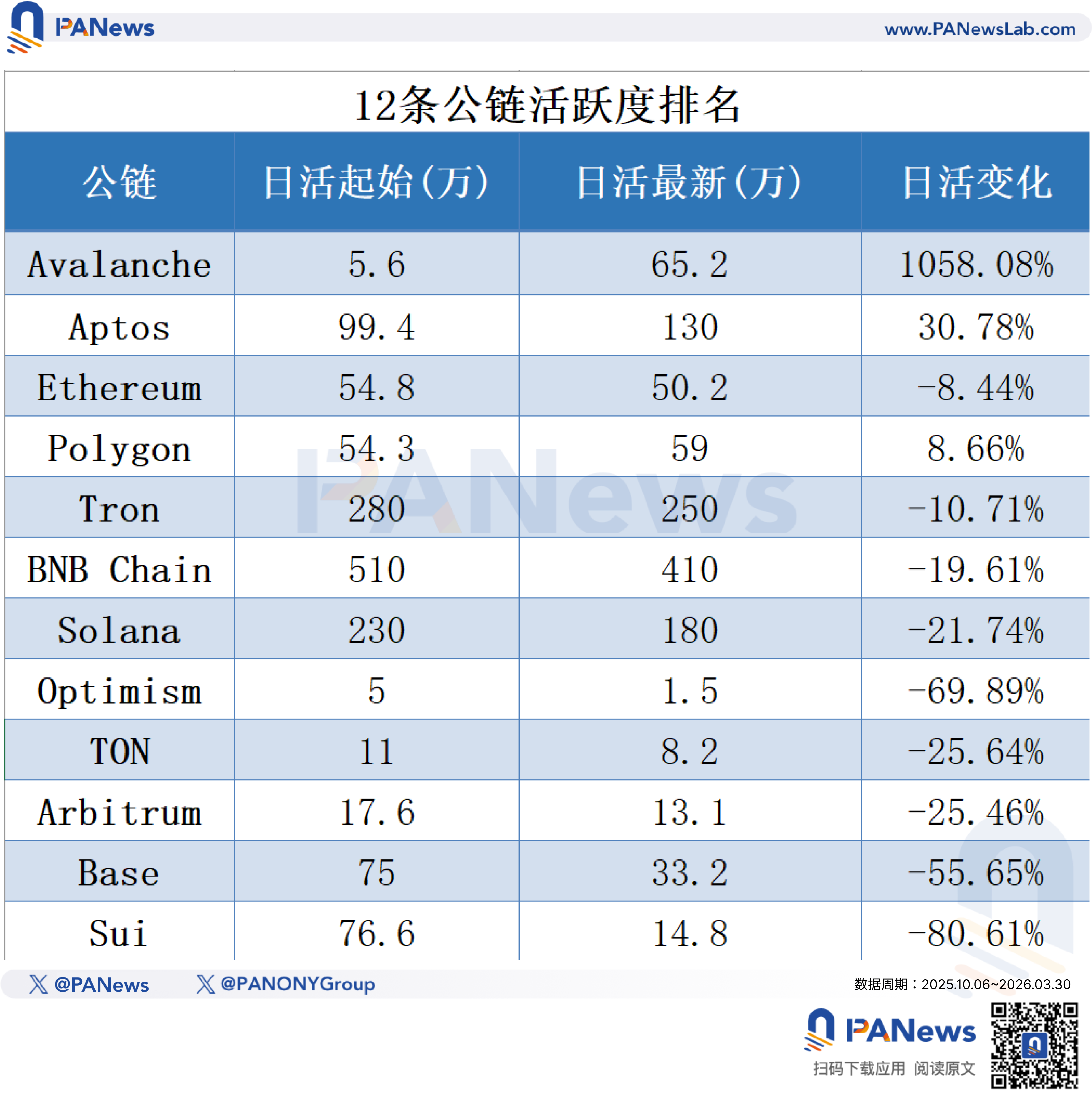
Among the 12 public chains, only 4 achieved positive daily active user growth (Avalanche, Aptos, Polygon, and Ethereum remained roughly flat), but there are two very important findings hidden within.
The biggest growth was seen in Avalanche, where daily active users surged from 56,300 to 652,000, increasing by more than ten times. However, at the same time, Avalanche's TVL dropped by 68.63%, and DEX trading volume fell by 78.21%. User numbers skyrocketed, yet funds are shrinking; the influx of new users cannot counteract the bear market's downward price trends. This growth primarily stems from January onward; according to a report by Avalanche in January, independent Avalanche L1 blockchains were able to communicate and transfer assets or data with each other after January 11 due to Avalanche Cross-Chain Messaging (ICM). Among these, three L1s related to gaming—CX, Grotto, and Henesys—contributed significantly to the trading volume.
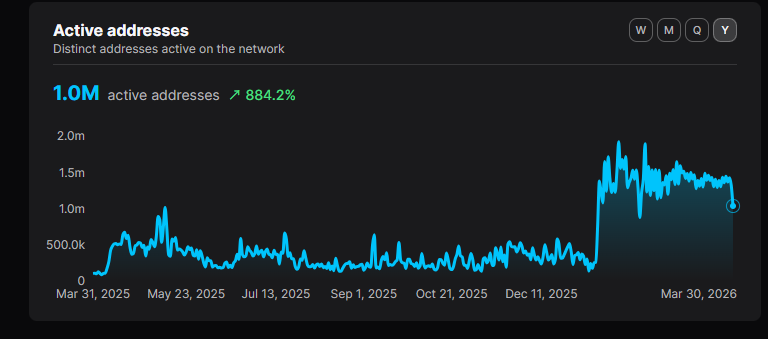
The second is Ethereum, which only saw a decline of 8.44% in daily active users but a significant increase of 58.19% in transaction counts. This indicates that users remaining on Ethereum have become more active; although there are slightly fewer of them, those who stayed are using it more frequently and extensively.
Aptos recorded a daily active user growth of 30.78%, coupled with a 51.14% increase in stablecoins; both capital and users are growing, yet TVL plummeted by 65.99%. The combined signals suggest that Aptos is attracting new participants, but they have not yet entered DeFi on a large scale.
In contrast, Sui's daily active users fell from 766,000 to 148,500, a decline of 80.61%, resonating with declines in TVL and stablecoins. The previous excitement surrounding the Sui ecosystem has completely dissipated, with funds, users, and trading volume fully retreating.
IV. Eight major sectors: DeFi is the only sector with winners; L2 has no pulse
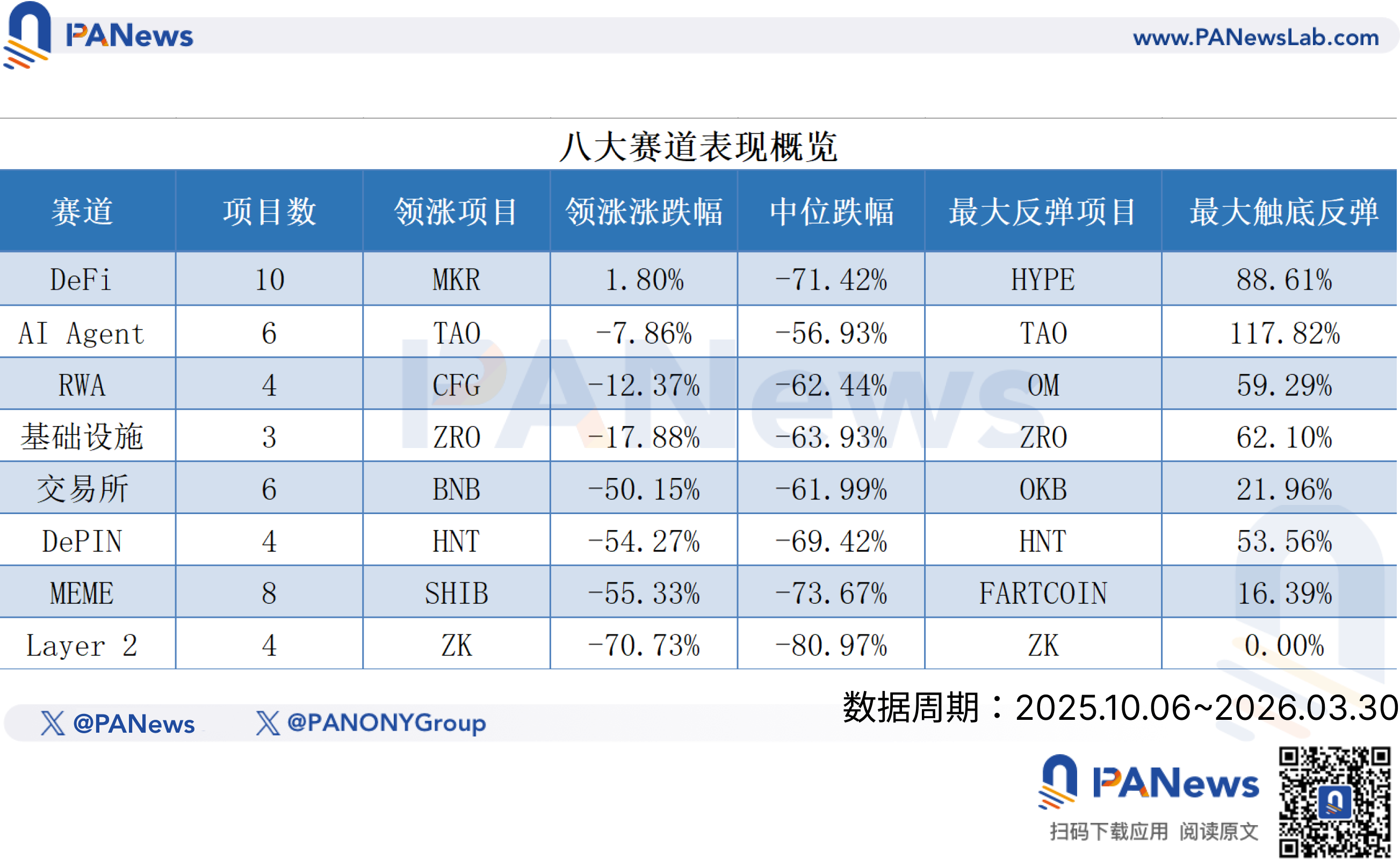
PANews selected eight major sectors: DeFi, AI Agent, RWA, infrastructure, exchanges, DePIN, MEME, and Layer 2, observing a total of 45 representative projects with the highest market capitalizations and visibility. From the sector perspective, the ranking from strongest to weakest is: DeFi, AI Agent, RWA, infrastructure, exchanges, DePIN, MEME, Layer 2.
DeFi: Cash flow is the only moat in a bear market
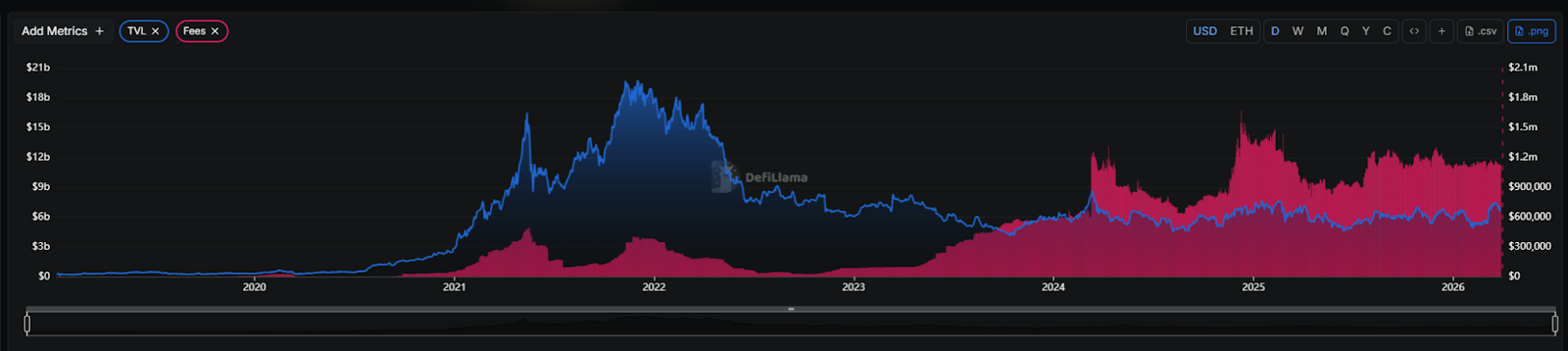
Of the 45 projects, only Maker (MKR) recorded a positive return (+1.8%) and was the only winner in the entire market. The reason for Maker's continued growth lies in its solid protocol revenue, which has remained high since 2025.
Hyperliquid follows with a 18.09% decline, ranking second in the DeFi sector. As a decentralized perpetual contract exchange, it also benefits from the logic that "trading demand does not disappear in a bear market."
However, the internal differentiation within the DeFi sector is severe. Ethena fell by 85.10%, Raydium by 81.05%, and Pendle by 77.71%. It is noteworthy that these projects are not income-deficient. In fact, many of the heavily declining projects within the DeFi sector have decent protocol revenue. The real dividing line is not whether they have income but rather the sensitivity of income to market cycles. Maker's stablecoin minting and RWA revenue are not affected by market conditions, while Pendle's token trading, Ethena's funding rate arbitrage, and Raydium's MEME trading all highly depend on bullish market conditions; when the market turns cold, both income and token prices collapse together.
Layer 2: The worst-performing sector
zkSync fell 70.73%, Arbitrum fell 80.58%, Starknet fell 81.37%, and Optimism fell 86.58%. The maximum rebound for all four L2 tokens is 0%, meaning that as of the data collection time, the latest prices are the lowest in the range, continuing to create new lows, with no signs of recovery.
Just as the L2 narrative was so hot in the previous cycle, this round of collapse has been equally thorough. Expectations for airdrops, TVL competitions, and technical route debates, all once engines driving valuations, have completely shut down as the market cooled.
MEME: Old MEME tokens have no takers
From SHIB (down 55.33%) to MOG (down 82.77%), all rebounds were in single-digit percentages, with the highest SHIB only at 8.51%, indicating that there seems to be no willingness for funds to step in for old MEMEs. However, the MEME market appears to be relatively lively, with platforms like Pump.fun maintaining high levels of revenue and token creation.
AI Agent: Platform-based is superior to socially-driven
AI agents Bittensor (down 7.86%) and Virtual Protocol (down 44.36%) are the only two projects in the AI sector that saw declines within 50%. In contrast, ElizaOS fell 91.90%, and AIXBT fell 75.15%. The differentiation logic is clear: projects with actual computing networks or platform functionality are still being valued by the market, while purely narrative-driven and socially-driven AI concept tokens are collapsing. This logic is consistent with the differentiation in the DeFi sector: those that survive are the "useful" ones.
V. Five signals discerned from the wreckage
When we overlay data on 424 assets, 12 public chains, and 8 sectors, it becomes evident that the market is undertaking a very harsh yet clear task: re-pricing everything within the crypto world. The pricing criteria are no longer story, hype, and expectations, but are based on usage, revenue, and retention.
From this clearing, PANews has discerned five signals worth continuous tracking.
First, cash flow has become a survival threshold. Of the 11 positive return assets, 4 are in the DeFi sector. Polygon, which has the strongest fund retention at the public chain level, relies on the continuous volume and active users generated by the prediction market, and Maker, the only winner at the sector level, depends on protocol revenue. "Having real income" is no longer just a bonus in this market; it has become the minimum threshold for survival. However, for now, this does not imply that these tokens will perform better.
Second, stablecoins are redistributing rather than leaving the market. Public chains such as Polygon (+47.99%), Aptos (+51.14%), and BNB Chain (+22.66%) are attracting stablecoin capital, indicating that these public chains with clear performance advantages seem to be gaining capital bets in the new stablecoin narrative.
Third, the value of active users is declining. Avalanche saw its daily active users surge tenfold, yet TVL plummeted; Aptos experienced simultaneous growth in funds and users, but TVL fell. Analyzing the underlying logic, generating a surge in active addresses seems not difficult, but retaining genuine financial flows requires effort.
Fourth, the previous cycle's hot narratives have all failed comprehensively. L2 tokens are all at historic lows with zero rebounds; AI Agent tail-end tokens have fallen over 80%; MEME has collapsed completely, and Sui is experiencing a three-dimensional resonance of decline. The narratives that drove the market in the second half of 2024 to the first half of 2025 have been deemed by the market to be severely overextended.
Fifth, what is genuinely useful only becomes visible after the tide recedes. JST's lending, Maker's stablecoin minting, Stargate's cross-chain bridge, and Ethereum's infrastructural attributes—these aren’t exhilarating stories, but they are irreplaceable when users need to transfer funds, hedge risks, and settle payments.
For ordinary investors, these data may not directly point to the next hundredfold coin, but they clearly outline a survival rule that transcends cycles. When narratives recede and liquidity dries up, those things that are truly being used will emerge like riverbeds exposed during a drought. This may be the most valuable insight every bear market leaves for the market.
免责声明:本文章仅代表作者个人观点,不代表本平台的立场和观点。本文章仅供信息分享,不构成对任何人的任何投资建议。用户与作者之间的任何争议,与本平台无关。如网页中刊载的文章或图片涉及侵权,请提供相关的权利证明和身份证明发送邮件到support@aicoin.com,本平台相关工作人员将会进行核查。


