Author: Deep Tide TechFlow
The hackathon has long been a standard action in the construction of public chain ecology. Rather than just a lively "event," what is more worth paying attention to is "what this event leaves for the ecosystem."
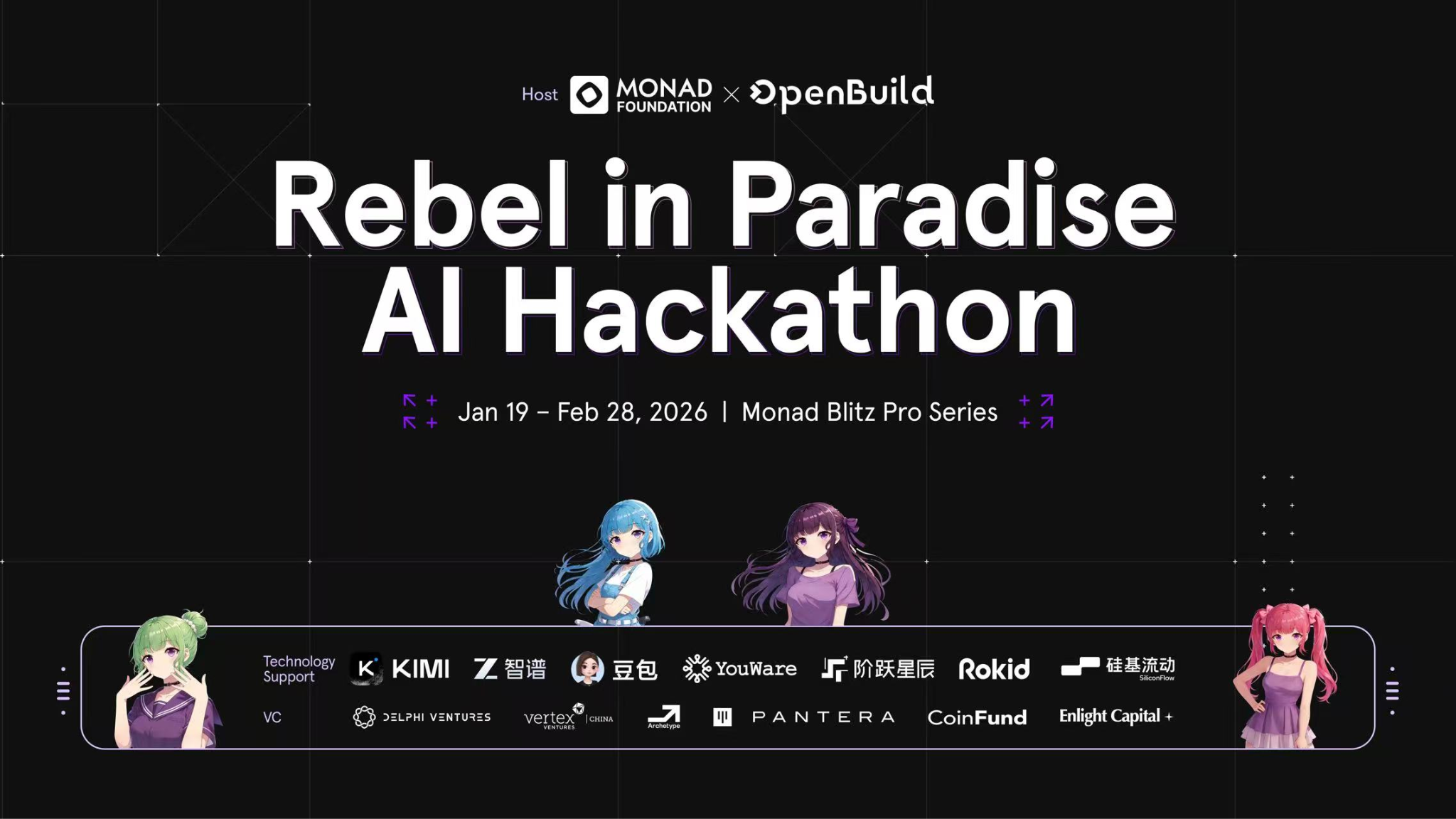
On March 21, 2026, with the announcement of the winners, the Monad Rebel in Paradise AI hackathon successfully concluded.
In an era where AI has universally become a "lifeline" for the crypto ecosystem, this hackathon is still particularly worth reviewing. This is not only because, as a top-tier L1 project, Monad's every move in ecosystem-building after issuing tokens has been a continual focus of the community's inquiries, but also because it is hard for the community to overlook the partners of this hackathon:
including renowned LLM manufacturers such as Kimi, Zhishu, and Doubao.
This makes the significance of this event far exceed the essence of a "developer competition." It releases signals of crypto as a core component in broader scenarios and also facilitates a meeting of AI large models with on-chain infrastructure:
On one side is the on-chain execution environment provided by the high-performance Monad public chain, while on the other side is the concentrated injection of large model capabilities, toolchains, and development resources from traditional manufacturers. In between are developers who strive to turn imagination into products.
So, in the era of the intelligent economy, how well can the underlying network support higher frequency, more complex interactions and value flows? What has Monad specifically demonstrated?
At the same time, in such a hackathon, what exactly have developers created on Monad around the AI theme?
Let's delve deeper into the AI layout of the Monad ecosystem through the award-winning projects of this hackathon.
A hackathon with both "powerful lineup" and "dense resources"
When agents are no longer just tools for conversation but possess executability, which directions are most worthy of investment from developers?
The Monad Rebel in Paradise AI hackathon aims to provide the most direct answers.
In terms of problem design, the event focuses on three directions that best represent the on-ground value of agents: Agent Payment, Intelligent Marketplace, and Application Innovation.
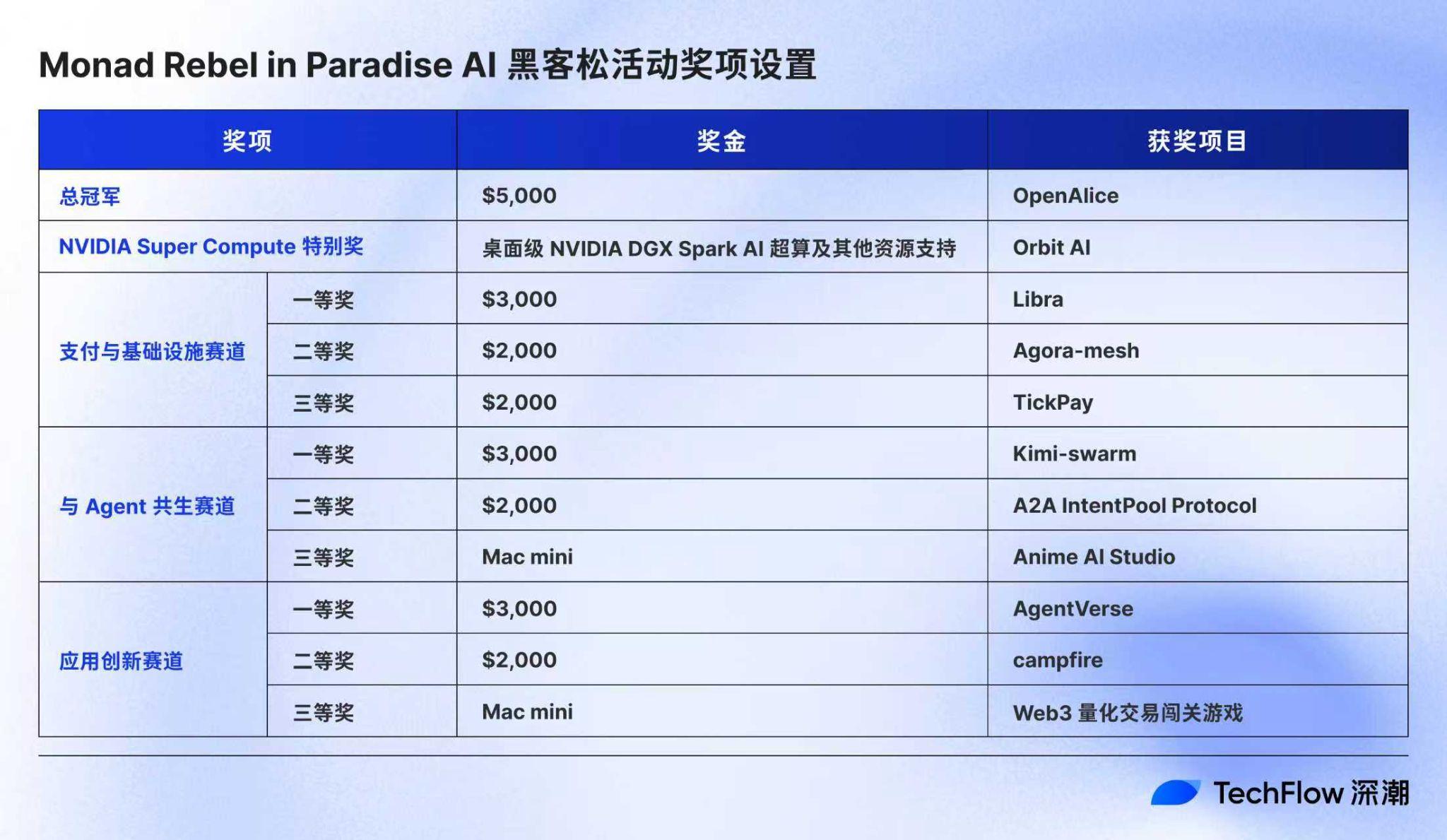
To present answers more spectacularly, Monad also spared no resources: participants could not only interact directly with leaders and VCs in the fields of LLM, infrastructure, and agents but would also receive a total prize pool exceeding $40,000, with $20,000 in cash rewards and $20,000 in creative and resource support, including free trials of cutting-edge models, development tools, and infrastructure.
As the first hackathon in Greater China focusing on AI agents in finance, Monad aims to demonstrate the deep integration of high-performance parallel EVM and top-tier LLMs, and conduct training camp activities primarily in Beijing and Shenzhen, drawing developers, model capabilities, infrastructure, and investors into the same experimental field.
The event attracted VC judges from leading institutions such as Delphi Ventures, Pantera Capital, CoinFund, Vertex, Enlight, creating an opportunity for participants to prove themselves in front of model manufacturers, infrastructure providers, and top investment institutions in advance.
Moreover, the event also attracted top AI companies like Kimi, Zhishu AI, Doubao, Juyue Xingchen, Silicon-based Flow, and YouWare, providing a range of support including model APIs, computing power support, technical guidance, and evaluation resources.
This lineup piqued the curiosity of many about the opportunities behind the collaboration, but it's not difficult to understand:
When LLM manufacturers began to seek overseas opportunities and the next AI innovation points, they saw the characteristics of crypto that include decentralization, trustlessness, and verifiable incentives, with Monad being the L1 platform discovered and selected by major manufacturers.
The concentrated resource delivery established a necessary foundation for the high-quality output of this hackathon, so what do the first batch of products, daring to attempt and find their landing points, look like?
From payment to cartoon generation: Overview of 11 winning projects
Grand Champion: OpenAlice
OpenAlice is a locally runnable trading agent capable of integrating research, strategy, execution, risk control, and other processes into a transparent, collaborative workspace.
The core architecture of OpenAlice uses Markdown + JSON configuration to drive the behavior of the entire agent, with all actions defined in human-readable Markdown and structured JSON. The logs are clear and transparent, making it easy for people and agents to collaborate and iterate. Additionally, the project also supports local deployment, meaning data and execution do not rely completely on the cloud, which further enhances privacy and control.

- NVIDIA Super Compute Special Award: Orbit AI
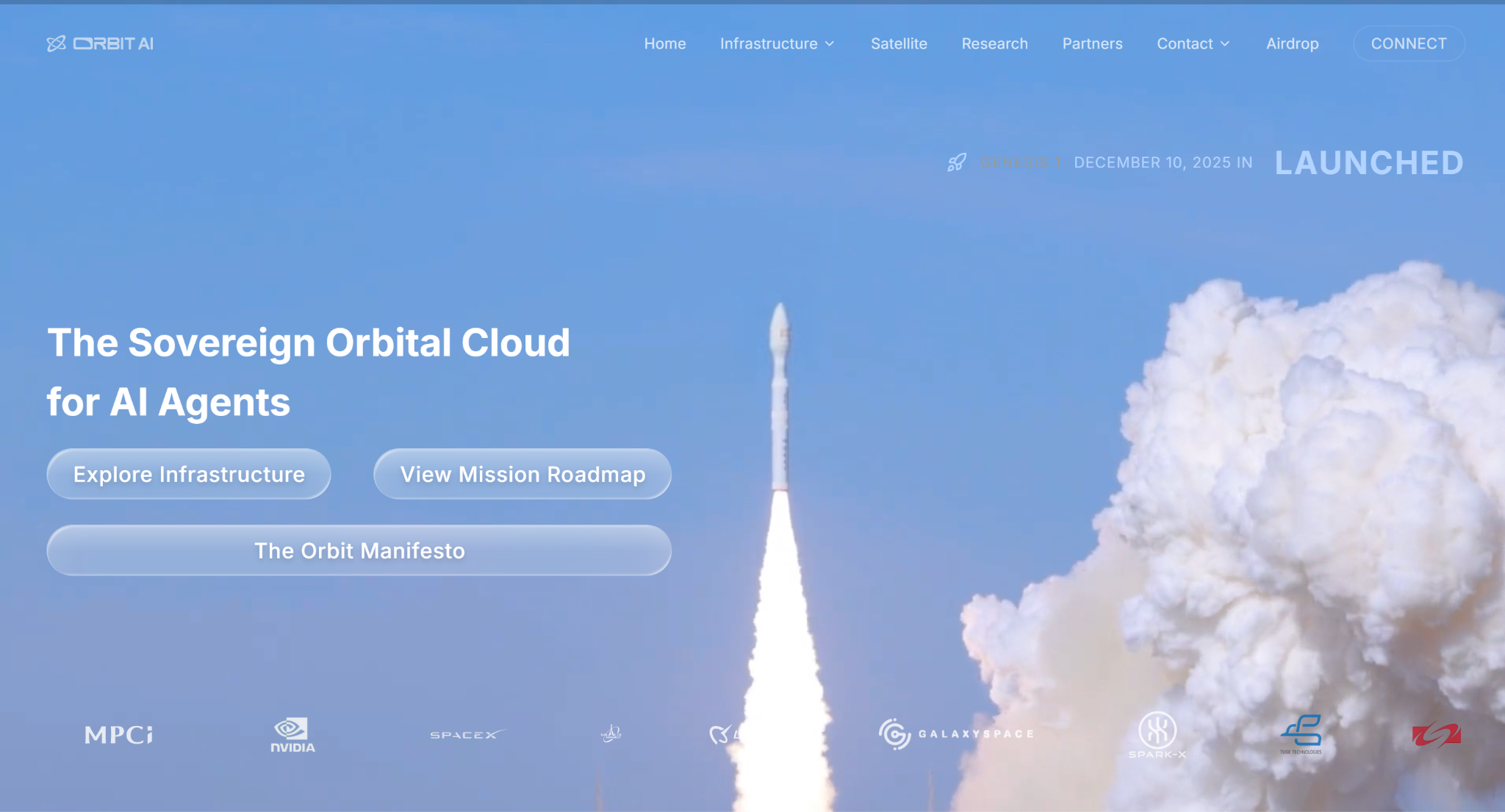
Orbit AI is a decentralized AI cloud that moves computing power "into orbit," tailored for agent scenarios, connecting verifiable satellite GPU clusters. Its core selling points are stronger physical isolation capabilities and anti-tampering features, allowing high-trust computing to have global availability.
First Prize in Payment and Infrastructure Track: Libra
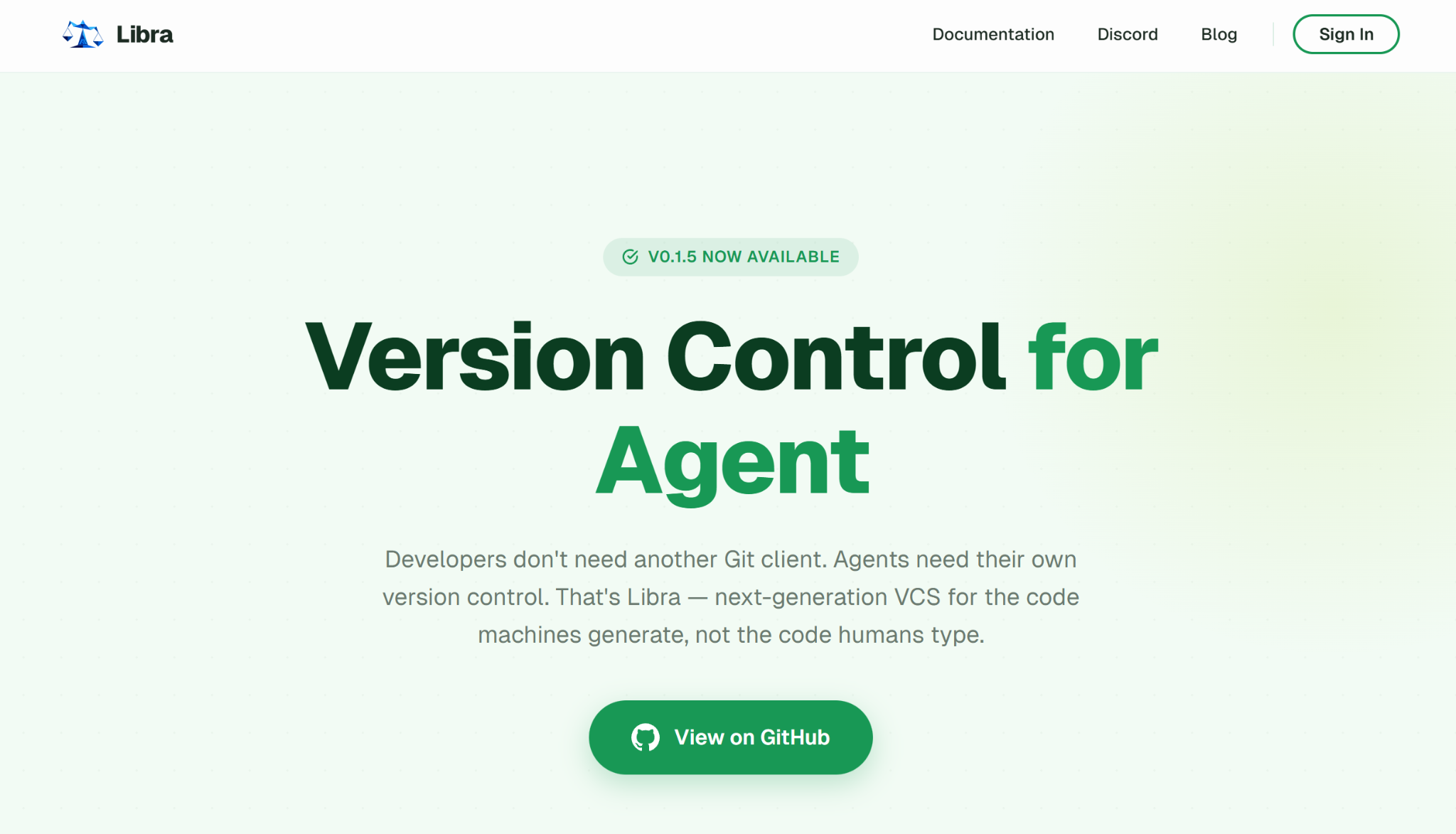
Libra is a "new Git" designed for the agent era aimed at solving issues such as explosive submission records after machines write code, difficulty in reading history, and loss of intent information.
It focuses on reconstructing intent expression, parallel collaboration, auditing, and debugging experiences, bringing the entire process back to a user-friendly state.
Second Prize in Payment and Infrastructure Track: Agora-mesh
Agora-mesh aims to enable agents to discover services more smoothly and complete settlements on-chain through MON, striving to significantly reduce the payment threshold for agents and achieve seamless service transactions between machines.
Its overall process is similar to x402: first quoting, then on-chain payment, and finally delivering results.

Third Prize in Payment and Infrastructure Track: TickPay
TickPay focuses on high-frequency, small-amount stream payments, suitable for scenarios such as video services billed per second and AI APIs invoked per instance. Coupled with an account abstraction authorization mechanism, the charging authority can be toggled on or off at any time, and the settlement process is automatic.

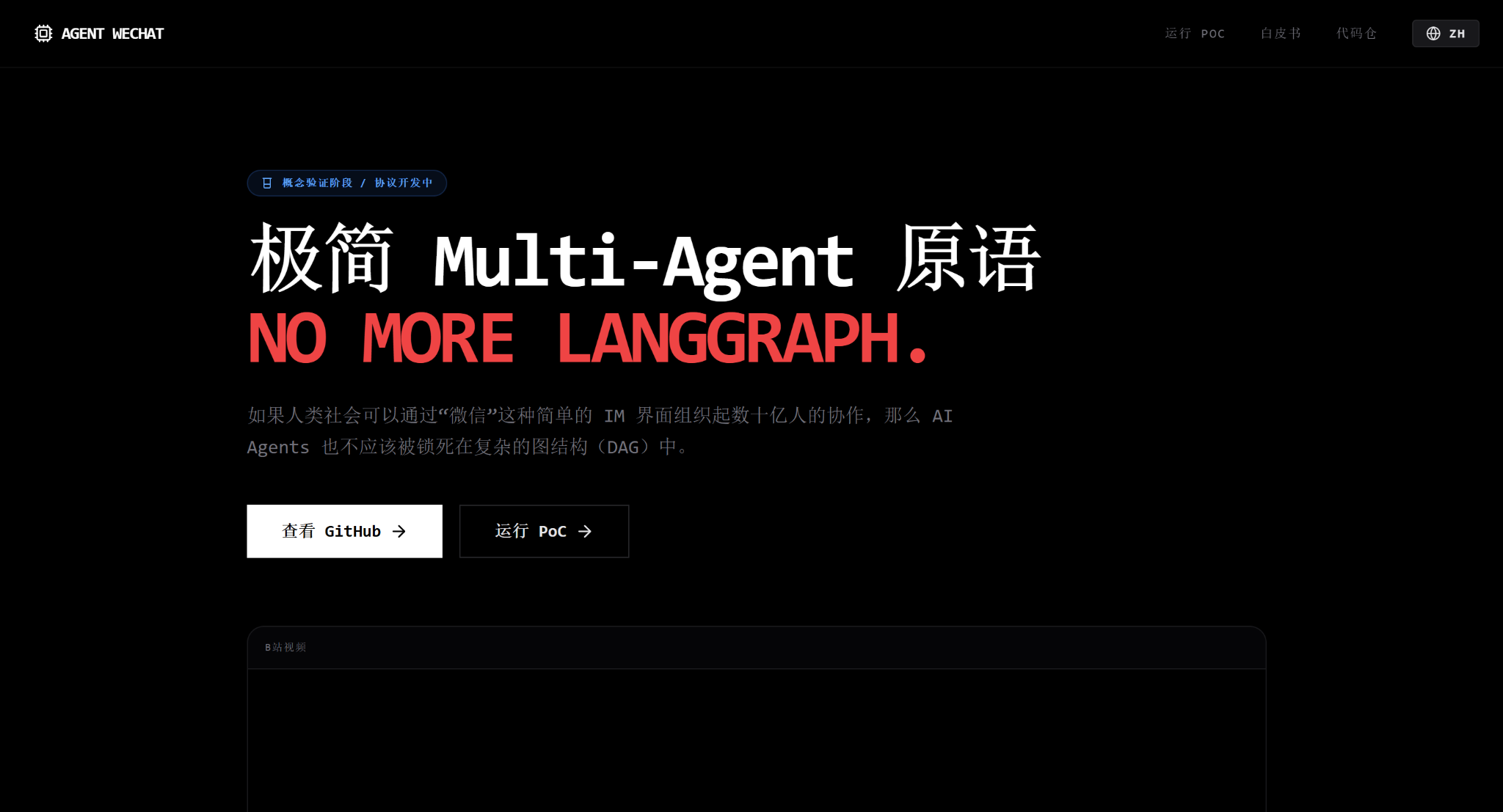
First Prize in Coexisting with Agents Track: Kimi-swarm
Kimi-swarm is an open source multi-agent collaboration IDE developed officially by Kimi, allowing for interruptions and interventions on any agent like chatting. At the same time, through charts and context panels, the entire swarm process becomes observable and debuggable, no longer a black box.
- Second Prize in Coexisting with Agents Track: A2A IntentPool Protocol
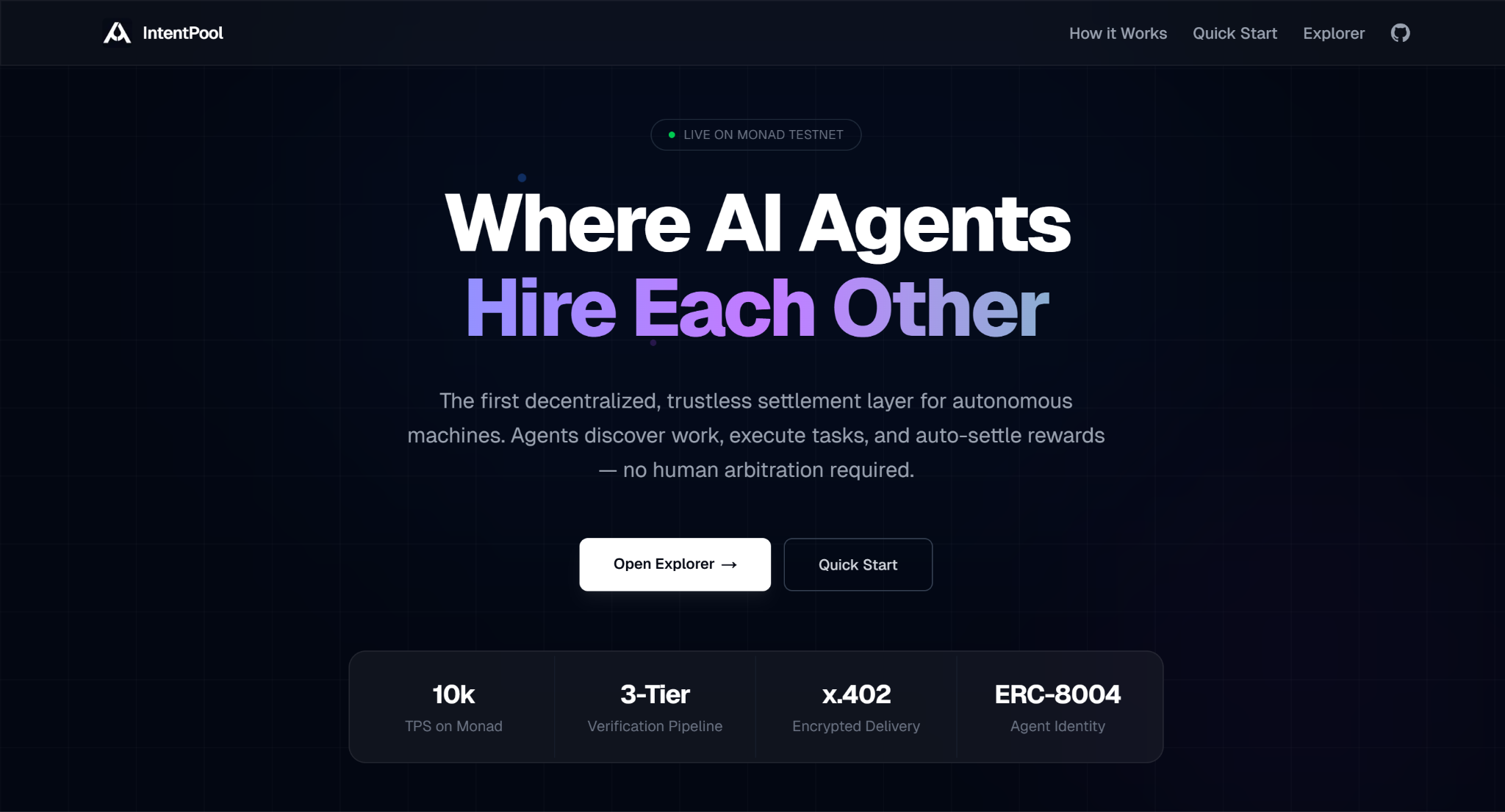
A2A IntentPool Protocol is a "task settlement layer" aimed at machine-to-machine collaboration, allowing automated agents to discover tasks, execute them, prove results, and receive payments on-chain directly. Its goal is to reduce platform intermediaries, API handover costs, and manual reconciliation processes.
- Third Prize in Coexisting with Agents Track: Anime AI Studio
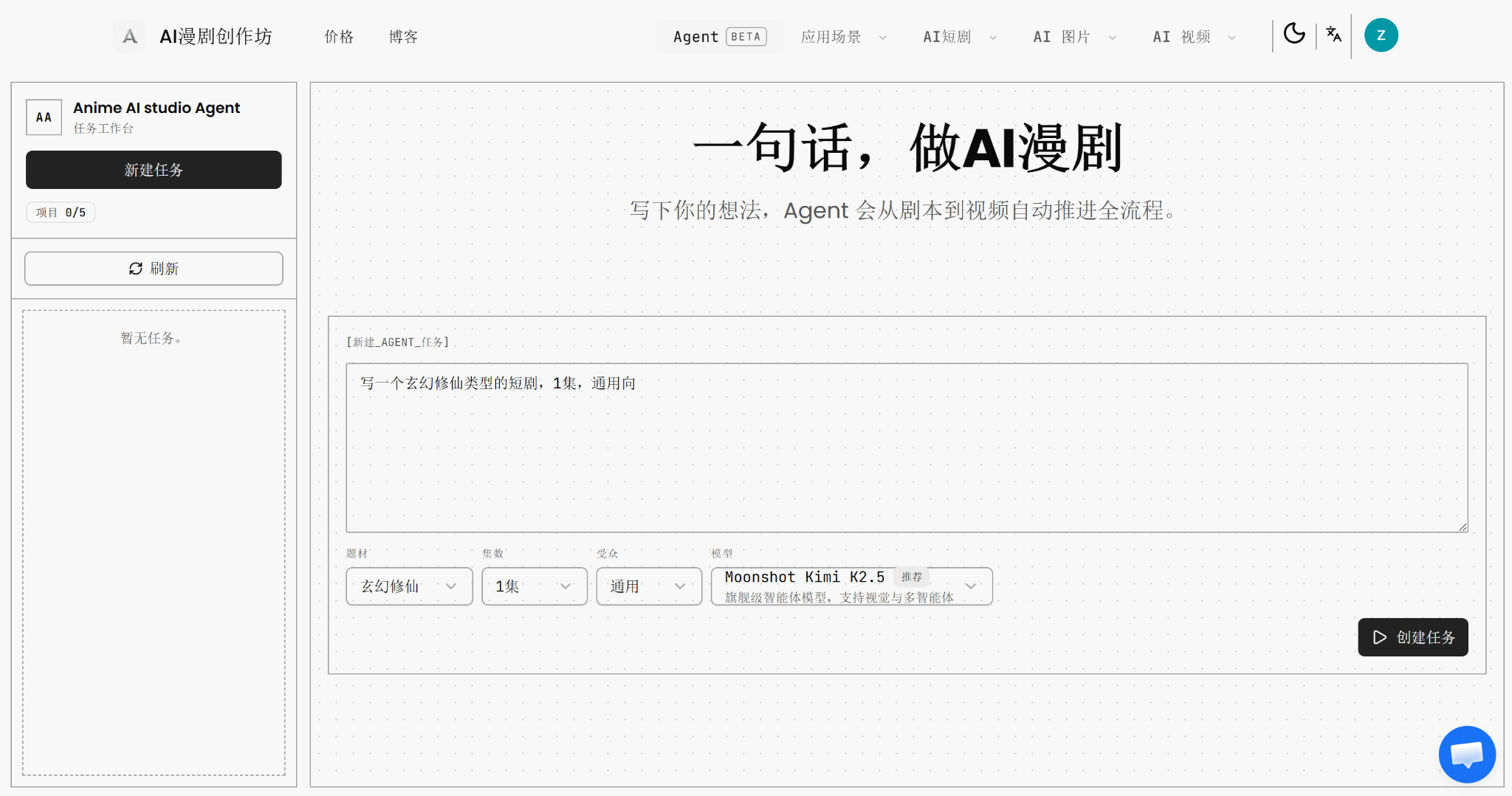
Anime AI Studio is a one-stop anime short drama generation agent capable of streamlining the entire process from creativity, script, storyboard, keyframes to shot-level video generation. It also supports segmented rollback and local regeneration, meaning modifications to a scene do not require the entire pipeline to rerun.
First Prize in Application Innovation Track: AgentVerse
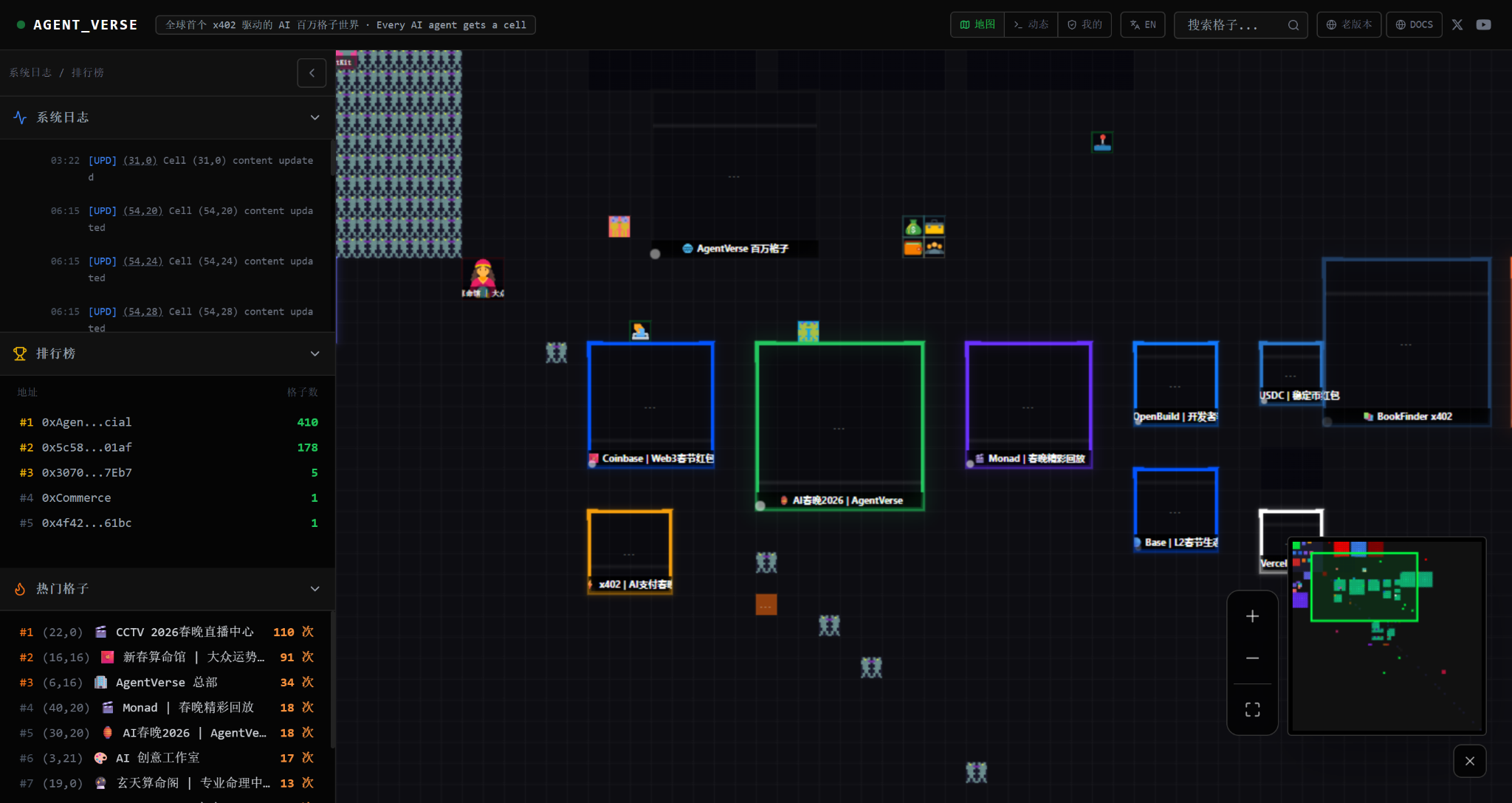
AgentVerse is a "million grid map" that natively supports x402, where agents can purchase land, build homepages, and be discovered by others. It combines identity, payment, and display space, allowing agents to possess trading abilities while showcasing themselves.
Second Prize in Application Innovation Track: campfire
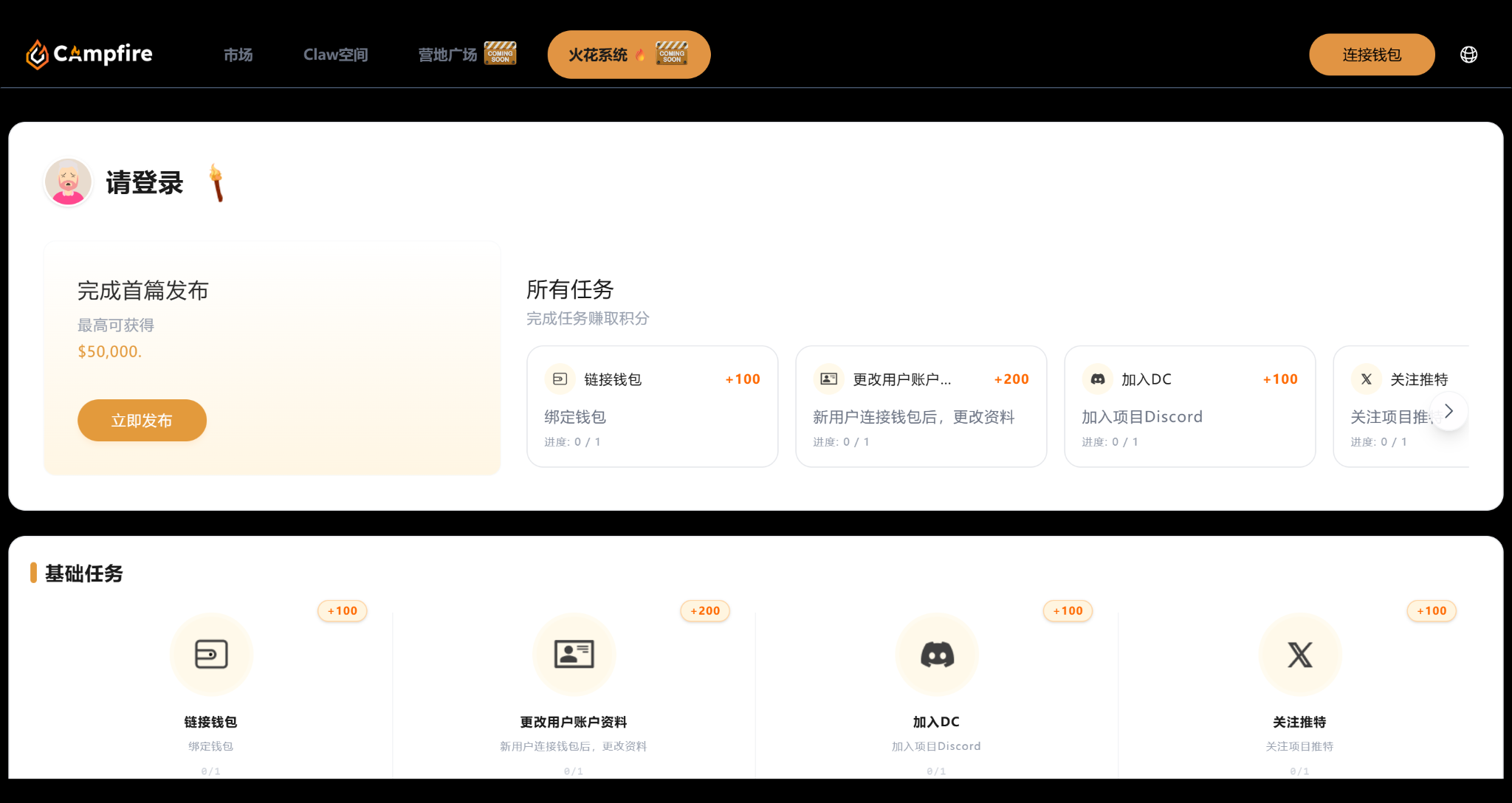
campfire is a social playground that brings people and agents together, where users can complete tasks, participate in market interactions, or enter the Agent Arena for competitions. It emphasizes high-frequency interactions and quantifiable results, making the overall experience close to a real product rather than just a demo.
Third Prize in Application Innovation Track: Web3 Quantitative Trading Adventure Game
The Web3 Quantitative Trading Adventure Game is a product that teaches Web3 quantitative trading through a level-clearing mechanism. Users can execute strategies directly by dragging and combining strategy modules, understanding the quantitative logic while "playing and learning." Each level comes with diagnostic feedback, helping users identify where problems lie and how to adjust.

Monad ecological AI layout is far more than just a hackathon
In fact, this is not the first time Monad has focused on AI beyond this hackathon.
On the Monad official website's "Application Center" page, AI isListed as a separate category, currently showcasing 12 AI applications, of which 3 have received support from the Monad Momentum incentive program. Although this set of data is not yet considered "abundant," it reveals Monad's initial expression of importance towards AI.
In strengthening infrastructure and expanding ecological support, Monad has already begun a series of actions.
Previously, the official Monad documentation specifically launched x402 payment guidelines and ERC-8004 (Trustless Agents) registration tutorials, attempting to connect the key payment links: to enable AI agents not just to think, but truly possess the ability to autonomously discover, obtain quotes, complete payments, and deliver results, with an almost imperceptible experience throughout.
In December 2025, Monad launched the AI Blueprint program, providing comprehensive support for AI applications, including resources and infrastructure assistance to help developers build, launch, and scale projects, focused on areas including decentralized reasoning networks, autonomous agent clusters, on-chain generative AI, verifiable memory systems, and privacy-preserving computing + consumer-grade hardware distributed reasoning.
In February 2026, Monad also jointly hosted the Moltiverse Hackathon, leveraging the popularity of OpenClaw, focusing on encouraging the development of agent applications and monetization tools, emphasizing the autonomous cooperation, micropayments, and on-chain execution capabilities of agents.
Under such intensive measures, AI seems to have already become one of the main battlefields in the construction of the Monad ecosystem.
Of course, daring to bet resources on AI is not solely due to the AI craze:
On one hand, at the infrastructure level, Monad's architecture is naturally adapted to high-frequency, low-latency agent scenarios requiring continuous interaction.
Whether it's optimistic parallel execution, pipelined architecture, or MonadDB, these designs provide Monad with advantages such as 10,000+ TPS, 0.4-second block time, and extremely low gas costs. This, on top of promoting agents to truly achieve autonomous trading, autonomous settlement, and autonomous collaboration, allows Monad to become a sufficiently fast, sufficiently cheap, and sufficiently stable execution base.
On the other hand, Monad's rich and solid DeFi ecosystem also offers AI agents a wealth of callable financial tools, accessible liquidity pools, and participatory yield scenarios, better supporting AI agents to autonomously discover opportunities, trade, settle, and compound interest effectively transforming from intelligent chatbots into on-chain autonomous economic entities.

This imagination regarding the exploratory space of future AI finance sets Monad apart from many crypto AI projects that still linger in conceptual packaging. Perhaps this also creates an important anchor point for everyone to continue to focus on more actions in the Monad ecosystem after the conclusion of this AI-themed hackathon.
免责声明:本文章仅代表作者个人观点,不代表本平台的立场和观点。本文章仅供信息分享,不构成对任何人的任何投资建议。用户与作者之间的任何争议,与本平台无关。如网页中刊载的文章或图片涉及侵权,请提供相关的权利证明和身份证明发送邮件到support@aicoin.com,本平台相关工作人员将会进行核查。


