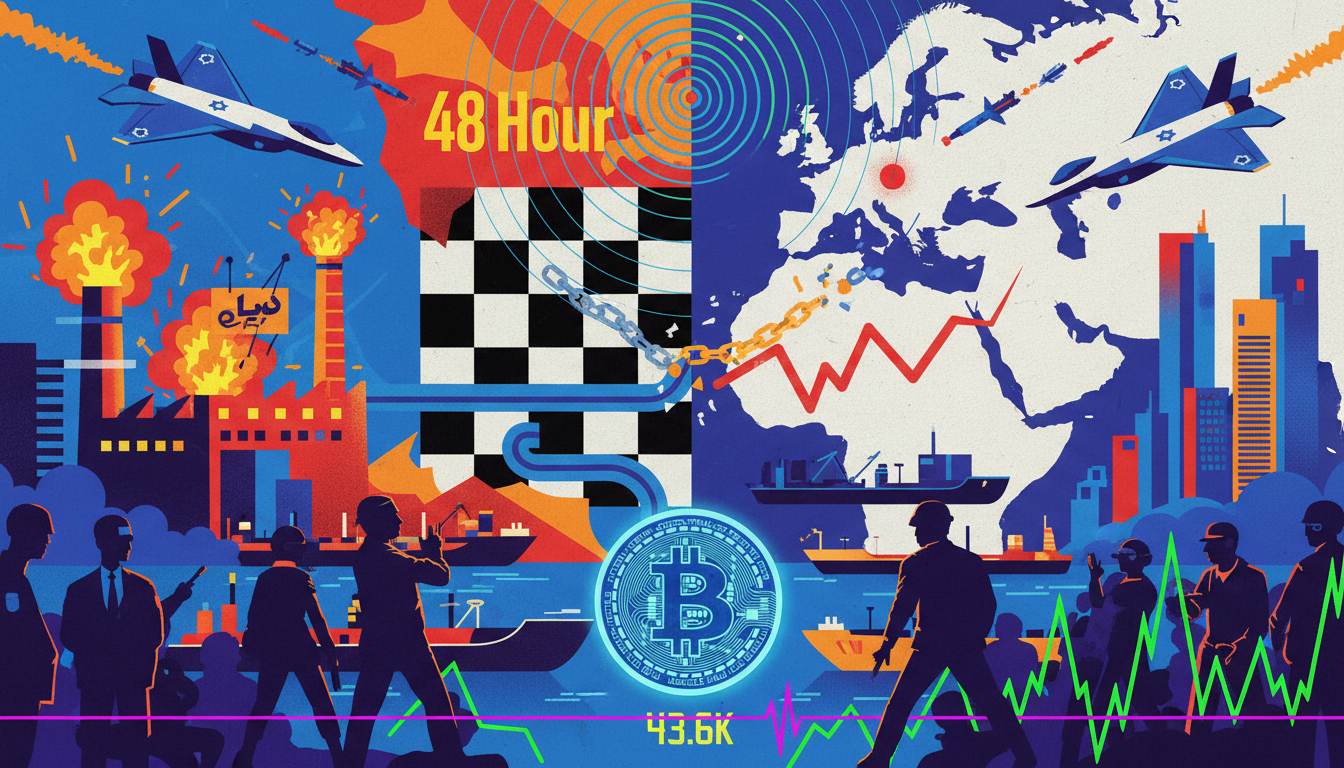
The disparity between the United States' external rhetoric and military actions is becoming increasingly apparent. On one hand, officials repeatedly signal that the military operations in the Middle East are "drawing to a close," while on the other hand, more troops are continuously being deployed to the front lines. The 31st and 11th Expeditionary Forces and the 82nd Airborne Division are successively being positioned, making the so-called "final stage" appear more like an escalating game of deterrence. Alongside the rising temperature on the battlefield, there is also a spike in on-chain price curves: SIREN rose 132.9% in a single day, and the total market capitalization of HyperEVM-related USD stablecoins surpassed 1 billion USD, becoming the most prominent financial coordinate during this round of geopolitical tension. The question arises—why are funds choosing to bet on these specific crypto assets while the shadow of war has not yet dissipated? Are they driven by hedging needs, or is this a collective speculation packaged as "war dividends"?
The Contradiction Between Claims of War Ending and Actual Troop Increases
The United States continually emphasizes that military operations in the Middle East have entered the "approaching end" phase, with such statements frequently appearing in media and official briefings, attempting to shape a controllable and predictable situation. However, in terms of actual deployment, the U.S. military has not genuinely "hit the brakes." The continued forward movement of the 31st and 11th Marine Expeditionary Units and the 82nd Airborne Division means that major combat forces capable of rapid response and long-range deployment are getting closer to the conflict zone, which is difficult to reconcile with the "final phase" narrative and is closer to a posture of continuously raising stakes.
At the same time, U.S. House Speaker Johnson publicly emphasized that U.S. forces "will not engage in ground operations in Iran," attempting to send a calming signal of "limited intervention" to the market and allies. In contrast, high-ranking Iranian officials have announced through the media that Iran will end the war according to its own conditions, firmly establishing the decision-making power within their own hands. This dialogue structure, in which one side emphasizes "not engaging in ground war" while the other insists on "deciding ceasefire conditions," essentially revolves around a game over deterrence boundaries and negotiation space.
From the perspective of the crypto market, the U.S. claim of "approaching end" appears more like managed rhetoric rather than a genuine easing of risk. The continuous troop increases and tough rhetoric enhance deterrence against adversaries while reserving a higher starting point for future negotiations. For funds, this contrast of "verbal de-escalation + actual escalation" often amplifies hedging demands: should the situation unexpectedly escalate, traditional assets and regional economies would be pressured, while on-chain assets are viewed as tools that can escape cross-border and cross-jurisdictional constraints, leading to rapid reflections of war uncertainties in prices.
Hedging or Speculation: SIREN...
In this narrative context, the most directly relevant tokens often get ignited first. According to CoinMarketCap data, SIREN surged by 132.9% in a single day, which falls under extreme market conditions within the framework of regular volatility. This surge occurred during a time window when geopolitical tension was being intensively amplified by the media, with the price curve almost rising in sync with the intensity of war reports. For a token with limited foundational information and a small market size, this level of single-day surge resembles market participants concentrating on grabbing "war stories" in a short period.
The true driver behind SIREN's surge is the juxtaposition of two forces: on one hand, some funds are indeed searching for "hedging targets" related to geopolitical events, hoping to hedge real-world uncertainties by allocating to tokens closely linked to war narratives; on the other hand, a larger pool of short-term funds views this conflict as an opportunity to amplify the narrative, packaging "war dividends" as marketable speculative stories, propelled by social media and emotional diffusion. Under this mechanism, hedging demands are rapidly financialized, turning into themes that can be frequently rotated.
Geopolitical conflicts do not directly create intrinsic value for tokens, but they provide a strong emotional amplifier for narratives. Once project fundamentals reveal limited public information, and governance and revenue models become ambiguous, prices are more easily dominated by emotions, resulting in pure theme speculation that focuses on "telling stories rather than assessing assets." The current surge of SIREN reflects more a chase after symbols of war rather than pricing for long-term value. This also implies that once news from the battlefield cools down, or funds shift to new hotspots, such "war concept coins" are likely to experience severe corrections, with their earlier gains swiftly retraced.
Geopolitical Risk Premium Observed from Iran's Statements...
High-ranking Iranian officials emphasizing that "Iran will end the war according to its own conditions" impacts market psychology by denying unilateral control over the pace of warfare by external powers. For investors accustomed to gauging situations based on U.S. narratives, the ceasefire timetable is no longer determined by "allied meetings" or "joint statements," but is dragged back into a black box filled with domestic politics, religion, and regional political variables. When and how the war will stop has become more uncertain.
From a diplomatic perspective, the existing differences in positions and mutual distrust create negotiating barriers, increasing the likelihood of a "prolonged conflict." The U.S. displays deterrence through continuous deployments, while Iran emphasizes autonomy to maintain its bottom line, with both sides probing each other's thresholds at the margins. This long-term tug-of-war may not immediately provoke comprehensive escalation, but it keeps the expectation of a "potential flashpoint at any time" looming over the market. This is crucial for asset pricing: the longer uncertainty persists, the more the risk premium tends to solidify within prices.
In the crypto market, this risk premium is manifested as: even with dramatic fluctuations and emotional reversals in short-term prices, the "war discounts/premiums" of certain assets remain difficult to dissipate quickly. Short-term traders engage in emotional speculation around news pop-ups, amplifying daily volatility; while medium to long-term funds begin to incorporate geopolitical risk constants into their valuation models, reassessing the risk resilience of assets relative to traditional financial systems. The result is an intertwining of short-term narratives and medium to long-term pricing: on one hand, surges during peaks of emotion may later be corrected; on the other hand, as long as the trigger for war is not completely removed, the risk premium will be written into the price floor in a slower but more enduring manner.
Migration Path of Funds: From Traditional Hedging...
In recent years, whenever a prominent geopolitical event occurs, the migratory path of funds between gold, U.S. Treasury bonds, and crypto assets has been relatively clear: during the initial shock phase, gold and high-rated sovereign debt are still the first reactive hedging outlets; as the situation develops and expectations of monetary policy adjust, some funds begin to attempt hedging against fiat currency and financial system risks via Bitcoin and mainstream public chain assets. In the multiple rounds of shock events since 2020, this "first traditional, then crypto" layered migration has played out multiple times, though the share of crypto within it has been slowly increasing.
In the current Middle East tensions, a more granular path has emerged: some funds still prioritize Bitcoin and Ethereum as their first choice, viewing them as high liquidity hedging tools akin to "digital gold"; while another portion aggressively flows into niche concept tokens strongly related to the war narrative, simultaneously parking on-chain via USD stablecoins, forming a three-layer structure of "mainstream hedging + conceptual speculation + stablecoin transit." Research briefs mentioned that the obvious layered flow of funds from mainstream coins to niche concept coins and stablecoins indicates that the market is splitting into different risk appetite tracks under the same macro narrative.
Some funds choose crypto assets because they are seen as a kind of "depoliticized asset": not wholly subjected to the capital controls of a single country, with settlements and transfers relying on consensus networks rather than central banks and clearing systems. This logic is indeed attractive under capital outflows and the shadow of sanctions. However, interpreting "depoliticization" as "completely detaching from politics" is a typical misunderstanding. Sovereign games, regulatory arbitrage, and sanction lists will all reassert their influence on these assets through exchange compliance pressures, on-chain monitoring, and project sustainability risks. The so-called haven from "political risks" fundamentally only shifts risks from one dimension to another without genuinely disappearing.
HyperEVM Fund Absorption...
In this round of fund migration, the total market capitalization of HyperEVM-related USD stablecoins surpassed 1 billion USD (according to Jinse Finance), becoming an important sample for observing the direction of on-chain funds seeking safety. The 1 billion USD scale indicates that not only speculative funds are playing within it, but it has also begun to absorb a considerable amount of "on-chain cash" parking demand. The brief also mentioned a market viewpoint: "USDC dominates the growth of stablecoins in HyperEVM", which, although currently from a single source, at least reflects a trend—during heightened hedging sentiment, funds tend to choose stronger brands and higher credibility USD stablecoins as their hedging vehicles.
Hedging sentiment has pushed up the demand for on-chain USD, and this portion of demand is not evenly distributed across all public chains and protocols but is highly concentrated in a few ecosystems deemed "safe and easy to access." The growth of HyperEVM is a reflection of this concentration effect: when risks in the real world impact asset prices, funds swiftly withdraw from local currencies and high-risk targets using stablecoins, temporarily seeking refuge in on-chain "USD pools," which happen to be distributed in networks that are deep in liquidity, mature in infrastructure, and relatively clear in compliance expectations.
However, there is a significant mismatch between on-chain liquidity and real-world geopolitical risks. On one hand, large amounts of funds can complete cross-border migrations within minutes, creating a "risk evasion"; on the other hand, the crypto market itself is under the scrutiny of regulators worldwide, especially as funds massively circumvent traditional financial systems, they are more likely to be included in discussions about anti-money laundering, sanction compliance, and capital flow controls. The rapid aggregation of stablecoins on HyperEVM both affirms its ecological absorption power and inevitably attracts more regulatory scrutiny—therefore, in this sense, the hedging sentiment does not drive "risk-free returns," but pushes funds into a new gray area at the intersection of regulation and geopolitical issues.
The Smoke of Battle Has Not Yet Cleared: The Crypto Market Still...
The rhetoric of "the war is approaching its end" and the reality of continuous troop increases form an intensifying tension field. For the price-sensitive crypto market, this tension is more lethal than a single piece of good or bad news: every "cleanup" statement may subsequently be corrected by new military deployments and escalations, causing prices to oscillate rapidly between optimism and panic. The battlefield has not truly cooled down, and volatility may instead be amplified.
For SIREN and other "war concept coins," this tension will ultimately be reflected in two curves: one is the short-term emotional curve, where prices may once again surge dramatically when the conflict narrative is reinforced; the other is the medium to long-term valuation curve, where limited fundamental information about the project and insufficient intrinsic value support often mean that early surges signify a long period of valuation correction ahead. After the emotional tide recedes, price retracements and turnover become high-probability events, and what can truly remain are a few projects that possess ongoing narratives and cash flow capabilities still after market re-evaluation.
Looking ahead, if the conflict escalates, mainstream coins and on-chain USD are likely to experience another round of "panic surges": assets such as Bitcoin and Ethereum will continue to be viewed as digital safe-haven assets, while stablecoins represented by USDC will take on the role of on-chain "USD warehouses," and the fund absorption effect of related ecosystems like HyperEVM may further amplify. Conversely, if the situation gradually eases and a ceasefire framework takes shape, mainstream coins' hedging premiums may be partially released, and capital may reassess the returns on risk assets, making it easier for tokens that previously surged based on "war dividends" to expose valuation vacuums during the tide's retreat.
For investors, the key is to distinguish between two completely different logical lines: one revolves around short-term trading games based on war themes amplified by social media; the other pertains to structural changes concerning how geopolitical risks are priced and how crypto assets are repositioned within global asset portfolios. The former can lead to astonishing intraday volatility and surface-level "get-rich-quick cases," but it also carries the same risk of severe pullbacks; the latter resembles a gradual reorganization of the asset landscape, requiring not the frequency of chasing battlefield news, but rather patient tracking of regulatory, macroeconomic, and on-chain structural changes.
Join our community, let's discuss together and grow stronger!
Official Telegram community: https://t.me/aicoincn
AiCoin Chinese Twitter: https://x.com/AiCoinzh
OKX Welfare Group: https://aicoin.com/link/chat?cid=l61eM4owQ
Binance Welfare Group: https://aicoin.com/link/chat?cid=ynr7d1P6Z
免责声明:本文章仅代表作者个人观点,不代表本平台的立场和观点。本文章仅供信息分享,不构成对任何人的任何投资建议。用户与作者之间的任何争议,与本平台无关。如网页中刊载的文章或图片涉及侵权,请提供相关的权利证明和身份证明发送邮件到support@aicoin.com,本平台相关工作人员将会进行核查。