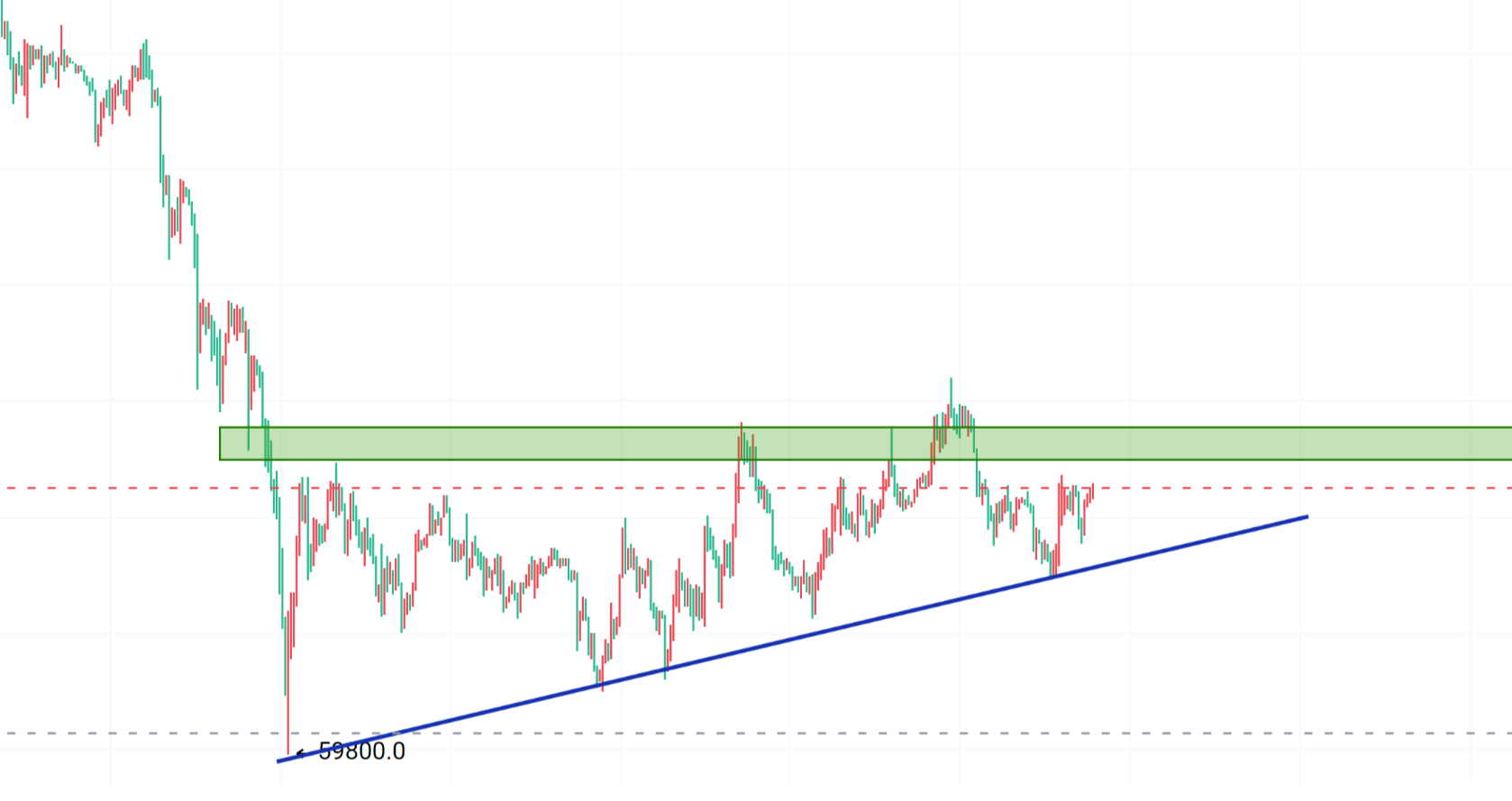
On March 25, 2026, Eastern Eight Time, Larry Fink named "cryptocurrency business" for the first time as one of BlackRock's core future income sources in the latest annual shareholder letter and provided a clear five-year target expectation. Behind this shareholder letter, BlackRock has already managed a massive position of nearly 800,000 BTC (approximately $55 billion) through spot Bitcoin ETFs, while in the past 10 hours, it has withdrawn 2,267 BTC worth about $157.8 million from Coinbase, a sharp contrast: on one side is an asset scale that has become formidable, while on the other is a meticulous action of continuously withdrawing liquidity from the market. The question has been pushed to the forefront: when one of the world's largest asset management giants starts publicly incorporating cryptocurrencies into its business plans, what kind of new profit engine is it seeking and how does it intend to reshape the power structure between traditional finance and the crypto market?
Shareholder Letter Reveals: Crypto is Officially Written into Long-term Profit Blueprint
In the 2026 annual shareholder letter, Fink listed "cryptocurrency business and other high-growth markets" as new revenue pillars for the next five years, with a quantified goal of approximately $500 million in annual revenue. The wording is no longer a conservative statement of "exploration" or "pilot," but rather places it within the company's overall business planning revenue model with clear amounts and timeframes. This shift from vague innovation to specific budgeting in itself is an attitude upgrade: crypto is viewed as a measurable, assessable business line accountable to shareholders, rather than a marginal project in a lab.
Over a longer timeframe, this shareholder letter also signifies a structural turning point in Fink and BlackRock's narrative towards crypto, from questioning to betting. Early concerns were more centered around volatility, compliance, and asset attributes, while today it enters the heart of the shareholder letter as an identity of "high-growth segment." This change is not revisited through specific past statements but is redefined by the clear profit targets given today, reflecting the extent of the shift in position: from observer to bettor, from market watcher to narrative participant.
In terms of scale, $500 million in annual revenue is obviously not a disruptive reconstruction for an asset management giant like BlackRock, but it is certainly not a trivial side project either. Considering the income pie currently made up of hundreds of billions in management fees and service fees, this figure seems more like the magnitude of a "new business hub"—enough to impact executive resource allocation, technical roadmap choices, and human resource configurations, while still allowing the company ample room for trial and error. This weight is a common transitional stage for traditional institutions moving from experimental innovation to structural planning.
More importantly, writing crypto into the shareholder letter itself is an open signal to regulators and institutional clients. For regulators, BlackRock is communicating that crypto-related businesses have been incorporated into serious long-term business planning and are willing to operate and disclose within existing regulatory frameworks; for institutional clients, this means they are no longer dealing with a "speculative product," but rather with a business line recognized by management, supervised by shareholders, and set to iteratively develop over many years. This signal often changes how institutional funding prices risks in the sector more than the short-term performance of a single product.
800,000 BTC in Hand: The Boundaries and Reality of Wall Street's Control
BlackRock's willingness to reveal in the shareholder letter largely stems from its position as one of the largest institutional holders of BTC globally through spot Bitcoin ETFs. According to briefing data, the scale of Bitcoin it manages approaches 800,000 BTC, valued at approximately $55 billion at current prices. This represents not only a massive base but also, post-ETFization, one of the most representative asset pools for traditional funds entering the crypto market. For Bitcoin, this resembles a process of "custody by Wall Street": a significant chunk of circulating chips being concentrated and locked into compliant products and custody systems.
In contrast to this giant stock is the subtle flow changes occurring on-chain. In the past 10 hours, BlackRock extracted 2,267 BTC from Coinbase, valued at about $157.8 million. If imagined along a timeline, it is as if a giant account continuously withdrew multiple transactions from the exchange, moving these chips from the market matching system to proprietary or custodial addresses. This does not necessarily imply clear manipulation intentions, but in a relatively limited market environment for spot liquidity, large withdrawals naturally reinforce the perception of "circulating supply being absorbed."
The changes in the flow of funds between on-market and off-market play potential impacts on the market at three levels. Firstly, as a supplier of spot liquidity, the available tokens withdrawn by exchanges will marginally weaken the short-term selling pressure carrying capacity, amplifying prices' sensitivity to new buying or panic selling; secondly, on-chain data indicating institutions are "accumulating coins" is often interpreted as a long-term bullish signal, shifting market sentiment from hesitation to following; thirdly, for other institutions, this may also become a reference for reallocation—when leading asset managers are using real capital to transport chips, the "zero allocation" position becomes one needing explanation.
However, from the perspective of BlackRock's overall holding structure, it still represents the realistic risk preferences and compliance boundaries of mainstream institutions: allocations are highly concentrated in crypto assets like BTC and ETH, which are implicitly recognized as "blue-chip" by the market, while maintaining distance from high-volatility, low-liquid long-tail assets. This is not only a constraint of internal risk control and custody capabilities, but also a natural result of regulatory friendliness. In other words, even with the management of 800,000 BTC already, BlackRock plays the role of "traffic hub for top-tier crypto pyramid assets," rather than indiscriminate, generalized crypto capital across the market.
From ETF to Tokenization: Reconstructing the Infrastructure Imagination of Traditional Finance
BlackRock's first incursion into crypto is through the Bitcoin spot ETF: repackaging a crypto asset that originally required setting up an exchange account, understanding on-chain transfers, and bearing private key risks, with the traditional financial world's most familiar ETF shell. For institutions and high-net-worth clients, what they see is a "normal product" that can be redeemed with one click in the brokerage system, accounts managed under traditional custodial frameworks, and can enter asset allocation reports, rather than a string of addresses and keys requiring self-custody. The psychological and institutional barriers are significantly lowered by the ETF intermediary form.
On this basis, BlackRock began to look toward more structurally imaginative tokenization directions. In traditional finance, tokenization is seen as a deep transformation tool for existing financial infrastructures using blockchain technology: allowing assets that originally existed in the form of accounts, paper, or centralized databases to be disassembled, registered, and circulated as on-chain tokens. Unlike the Bitcoin spot ETF, tokenization is not about packaging "existing crypto assets" into compliant products but rather migrating the traditional assets themselves to be represented and settled on-chain.
If we extend our view, long-term monopolized processes like clearing, settlement, and asset registration, controlled by a few infrastructure players, all have potential space for gradual reconstruction through tokenization. For example, cross-institutional security settlements can be completed on-chain in real-time through atomic settlements, reducing reliance on intermediary clearinghouses; private equity, debt, or real estate shares can enhance liquidity and transparency through on-chain registration, programmable exchange, and layered permissions. In this process, institutions like BlackRock, which possess vast assets and client resources, have the opportunity to take the lead in trialing and thereby establishing discursive power in the new infrastructure standards.
However, the practical constraints are equally clear: before tokenization can be scaled effectively, a complete set of supporting mechanisms including compliance, custody, valuation, and accounting processes must first be refined to a level that allows large institutions to feel secure moving on-chain. For instance, the legal attributes of tokenized assets in different jurisdictions, bankruptcy isolation arrangements, tax determinations, and paths for holders to assert rights are still in exploratory phases; how on-chain custody will draw boundaries with traditional custodial responsibilities, how the fair value of tokenized assets can be measured and reflected in financial statements, must also reach consensus with regulators and auditors. These unresolved issues dictate that tokenization currently resembles more of a medium-to-long-term direction outlined in a development plan, rather than a mature business expected to contribute immediate revenue next quarter.
AI Overlaid with Crypto: BlackRock's Bet on a "New Driver" Paradigm
In stark contrast to the old narrative of relying on altcoin expansion for trading volume in traditional crypto bull markets, BlackRock has clearly directed its focus toward the synergistic effects of AI and crypto. Its head of digital assets, Robbie Mitchnick, openly stated that artificial intelligence is becoming a long-term driver in the crypto space that is more significant than altcoin expansions, a judgment derived from direct observations of frontline business leaders, not hollow slogans at the macro level. In other words, from BlackRock's internal perspective, the incremental growth in the next phase will not rely on "issuing more new coins" but on "using smarter tools and data" to transform asset management itself.
The combination path of AI and crypto first manifests in trading and risk control models. Vast amounts of on-chain data, order book behaviors, and capital flow trajectories provide high-dimensional feature spaces for machine learning algorithms, enabling AI to capture patterns that humans may not easily detect, used to build more refined quantitative strategies and risk warning systems. Secondly, in the management of tokenized assets, AI can intelligently configure on-chain asset portfolios in real-time and personalized ways according to different clients' risk tolerance, liquidity needs, and regulatory constraints, extending the concept of “robotic advisors” to a more programmable, data-transparent asset pool.
This narrative of "AI+crypto" fundamentally differs even clashes with the idea in traditional bull markets of "raising on-chain activity and trading volume by relying on altcoins." The former emphasizes efficiency enhancements at the infrastructure and tools level, serving long-term asset management logic through higher information processing capabilities and automation; the latter often relies on rapidly expanding risk preferences, tightly-paced speculative cycles, and short-term games. For BlackRock, betting on the former makes it difficult to simultaneously play the principal engine of the latter—both models are incompatible in terms of resource investment, brand image, and compliance thresholds.
This also implies that in asset selection and business layout, BlackRock will naturally lean towards high-quality infrastructures and projects with long-term application value: on-chain settlement networks, compliant custody solutions, institutional-level data services, programmable asset platforms, rather than a vast number of short-term speculative assets being rolled out. For the entire market, this preference may compress a portion of high-leverage, quick-in-and-out speculative space, yet it may leave a more solid institutional and technical foundation for “patient capital” participation.
The U.S. Digital Race: "National Mission Sense" of Wall Street Giants
Putting BlackRock's crypto and tokenization layout back into a broader context reveals that it is not just a business choice of one company, but an experiment on how to sustain U.S. financial hegemony in the digital age. In the context of the global digital asset race, those who can master the standards of a new generation of cross-border payments, asset registration, and clearing networks are positioned to extend or even amplify their financial influence. BlackRock, as a giant asset management player, stands at the forefront, in some sense, also seeking to find an "on-chain version" extension path for the dollar system.
In terms of regulatory actions, U.S. regulators have released signals that are not simply unidirectional easing by approving spot Bitcoin ETFs and allowing more institutions to participate in digital asset-related businesses, but rather a strategic approach to "permit Wall Street giants to trial within a controllable framework." Institutions like BlackRock have a naturally "officially endorsed vanguard" attribute in this strategy: on one hand, it has a sufficiently robust compliance and risk control system that can reduce regulatory trial-and-error costs to some extent; on the other hand, its actions can also provide participation samples for other traditional institutions, expanding the coverage of dollar capital in new tracks.
Compared with other jurisdictions, Europe places greater emphasis on unified legislation and investor protection in its crypto regulatory framework, with some regions having advanced earlier in tokenization experiments; while some emerging market countries have adopted a more open stance to attract crypto enterprises. However, based on the actual capital volume and the radiating power of financial infrastructures, once the U.S. truly allows Wall Street giants to participate deeply, the global discourse power around digital assets and tokenization will likely be rapidly reshuffled: from technical standards to compliance templates to asset pricing benchmarks, all will increasingly revolve around the combination of "American compliance + Wall Street execution."
Within such a geopolitical financial framework, BlackRock's continued investment in crypto business goes beyond simply chasing profits from a singular track; it also resonates with the national demands of the U.S. in the digital finance race on some underlying logical level. For the company, this provides a longer-term, macro-level reason for betting: even if short-term returns do not meet expectations, as long as this path is still seen as one of the strategic options for the U.S. financial system's migration to the digital age, the involvement of leading institutions will have enduring tolerance and even encouragement.
The Five-Year Gamble Begins: Can Crypto Realize the Bold Claims of Tokenization and AI?
Returning to the shareholder letter itself, Fink set a $500 million annual revenue target range for BlackRock's crypto business and placed it alongside "other high-growth sectors," which in the context of managing nearly 800,000 BTC, worth about $55 billion, appears both ambitious and deliberately restrained. On one hand, given the extreme volatility and high leverage history of the crypto market, $500 million is not an unreachable figure; on the other hand, making a highly cyclical business into a stable, sustainable revenue engine itself requires a cut from the past model of "feeding on market conditions."
The real suspense lies in whether the crypto business driven by tokenization and AI can grow into a stable profit-generating machine amidst regulatory and technological uncertainties. Tokenization faces structural challenges such as legal attributes, clearing systems, and accounting processes, while AI must navigate regulatory red lines concerning data privacy, model governance, and black box decision-making, and both must find suitable business models for institutional long-term holding and service fees in the wildly fluctuating and narrative-driven crypto market. This five-year gamble is essentially a practical test of “reforming old finance with new technology,” rather than merely a bet on asset prices.
If BlackRock succeeds in this gamble, the boundaries between traditional finance and the crypto world will be further blurred: ETFs, tokenized assets, and on-chain settlement will be viewed under the same asset allocation logic. Other Wall Street giants will likely follow suit to capture incremental clients and maintain asset management scale, shifting this round of institutional competition from "who can bring products to market faster" to "who can hold more control in new infrastructures." At that point, individuals and smaller institutions participating in the crypto market will see not just a space dominated by decentralized narratives, but a highly institutionalized, regulated mixed ecology.
For ordinary participants, what truly needs guarding against is differentiating between the "Wall Street narrative" and the "on-chain reality". Wall Street can articulate compelling technical and macro narratives; shareholder letters and roadshow materials will continually emphasize long-term visions, but what ultimately lands on-chain are the real changes in fund flows, asset structures, and concrete business scenarios. When observing BlackRock and similar institutions, greater focus should be on where their funds actually flow, which infrastructures receive persistent investment, and which tokenization projects truly enter scaled applications, rather than being swept away by grand narratives and short-term price fluctuations while neglecting their risk tolerance and time horizons.
In this five-year gamble, BlackRock is betting on a "new type of crypto financial system" strengthened by tokenization and AI, while market participants are wagering on their ability to maintain clear judgment and discipline amidst institutional reconfiguration and narrative shifts.
Join our community to discuss and become stronger together!
Official Telegram community: https://t.me/aicoincn
AiCoin Chinese Twitter: https://x.com/AiCoinzh
OKX welfare group: https://aicoin.com/link/chat?cid=l61eM4owQ
Binance welfare group: https://aicoin.com/link/chat?cid=ynr7d1P6Z
免责声明:本文章仅代表作者个人观点,不代表本平台的立场和观点。本文章仅供信息分享,不构成对任何人的任何投资建议。用户与作者之间的任何争议,与本平台无关。如网页中刊载的文章或图片涉及侵权,请提供相关的权利证明和身份证明发送邮件到support@aicoin.com,本平台相关工作人员将会进行核查。