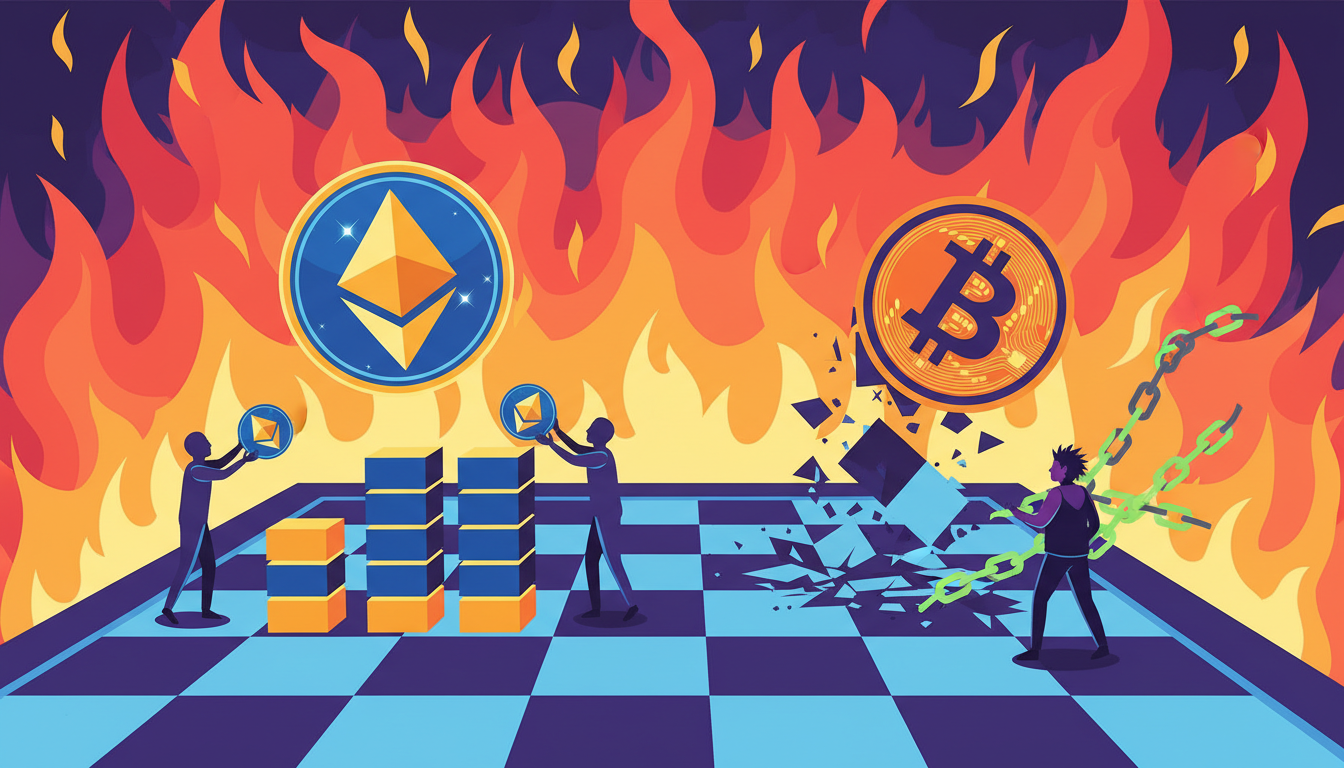
This week in East Eight Time Zone, the Russian Ministry of Finance proposed a new "regulatory blade" targeting the local crypto ecosystem: suggesting severe fines of 700,000 to 1,000,000 rubles for non-compliant cryptocurrency exchanges. This proposal has already passed review by the Government Regulations Drafting Committee, crossing a crucial threshold from discussion to early implementation. On the surface, this is an administrative restraint on "non-compliant services," but fundamentally it brings the struggle between regulatory upgrades and the free exchange of crypto assets to the forefront. How local licensed exchanges, professional investors, and ordinary retail investors will reshape their trading paths and risk boundaries in light of this seven-figure fine becomes the market's most sensitive suspense moving forward.
Seven-figure fine: Who will be hit hard?
From the disclosed information, the target of this fine proposal is licensed cryptocurrency exchanges rather than individual retail investors. The regulatory logic is closer to the idea of "controlling the entry point": as long as you are an institution included in the regulatory view and hold a license to provide exchange services, you will incur high costs if you offer services beyond the compliance red line. The penalties are aimed at providers rather than users; it is essentially about indirectly reshaping the overall trading environment by punishing service providers.
A particularly sensitive point in the proposal is the boundary of services related to non-professional investors. The Ministry of Finance identifies core violations as exchanges providing "excessive services" to such investors—whether in terms of limits, product complexity, or risk exposure. Once deemed out of line with the rules, fines in the range of 700,000 to 1,000,000 rubles may be triggered. In the current regulatory context of Russia, this means retail investors are considered subjects needing significant risk isolation, and all intermediaries that reach retail investors must proactively "hit the brakes."
In terms of scale, 700,000-1,000,000 rubles is no longer a "symbolic fine" for most small to medium-sized financial and compliant entities in Russia; it is real money that can significantly impact financial statements and cash flow. Compared to common administrative fines, this amount carries even greater deterrent power in the niche crypto industry: just one or two heavy penalties could wipe out the annual profit of a small exchange or even drive it out of the licensing system altogether. For this reason, this fine feels more like a signal to "set rules" rather than just a simple revenue-generating penalty tool.
It is important to emphasize that the current public information is still limited. Apart from the fine range, regulatory targets, and the trigger condition related to services for non-professional investors, the complete structure of the bill, specific calculation methods, and criteria for distinguishing circumstances have not been disclosed. Without reliable texts and more official explanations, any discussions about how specific violations will be defined and what operations will be considered "excessive services" remain at a principled understanding. Any further speculations regarding the terms carry a high risk of conjecture and cannot be responsibly pursued.
From tolerance to restraint: A turning point in Russia's crypto regulation path
If we extend the timeline, this fine proposal did not emerge out of nowhere; it is embedded in Russia's gradual shift in attitudes towards crypto assets. Early Russian regulatory thinking was more biased towards "coexistence of high pressure and ambiguity": on one hand, high vigilance against crypto payments and capital outflows, while on the other, leaving a considerable gray area in implementation, allowing individuals and institutions to explore within uncertain boundaries. As international compliance trends and domestic financial security considerations overlapped, the authorities began transitioning from "tolerant gray areas" to "limited releases + clear constraints."
The fine proposal reflects a typical gradual regulatory approach: it does not choose to indiscriminately ban crypto services, but rather first controls the most critical aspects—entry, licensing, and retail investor protection. The regulatory department clearly recognizes that completely shutting down crypto channels is unrealistic both technologically and from an enforcement perspective and would also undermine innovation and international competitiveness; instead, intensifying constraints on licensed exchanges through hefty fines maintains some level of innovation and capital flow while institutionally providing "fenced" protection for retail investors.
The bill's approval by the Government Regulations Drafting Committee is particularly crucial, as it signifies that the regulatory thinking has progressed from internal debates and principled discussions to the mid-to-late stages of concrete implementation. Although there will still be processes for formal approval, rule formulation, and law enforcement interpretation, the direction is relatively clear—Russia has moved beyond a stage of "ambiguous statements" regarding crypto assets and intends to lock market participants into more explicit game rules through regulations and penalties.
Compared to some countries that have taken the lead in issuing systematic crypto legislation, Russia resembles more of a "catch-up compliance" approach at this moment. It has not been ahead of the global regulatory curve but has chosen a compromise solution after observing multiple national paths: it neither completely replicates the complex rules of mature financial centers nor follows an extreme ban route, but instead, under the constraints of domestic capital controls and geopolitical realities, strives to create a regulatory framework that balances safety and usability.
Retail investors receive heightened protection while professional players gain more breathing space
This proposal sets a service cap specifically for "non-professional investors", reflecting the core policy intention of the regulatory authorities: to prevent high-risk, complex structure, or high-leverage crypto products from sinking massively to ordinary users. In the current economic and financial environment of Russia, once retail investors suffer systemic losses on highly volatile assets, the negative feedback will not only target a single institution but will also reflect back to macro stability and societal expectations. Therefore, regulators choose to build levees on the retail side in advance rather than provide after-the-fact bailouts.
For licensed exchanges, this is a business pressure that cannot be ignored. To avoid stepping on the "excessive service" red line, they will likely proactively reduce individual limits, streamline the product lines available to retail investors, and even add suitability questionnaires and risk assessments during account opening and trading. With increasing compliance costs and the looming risk of fines, many platforms will define retail investors through a more "conservative" customer profile, turning away potential demand that could have been served, thus lowering the chances of potential penalties.
Simultaneously, professional investors and institutions face relatively fewer direct restrictions when accessing crypto services. Under the existing information framework, regulators more hope to compress compliance risks within a more capable group, which will objectively drive the structure of Russia's local crypto market to tilt towards "institutional trading": on-chain and over-the-counter large transactions, complex strategies, and cross-border deployments will increasingly concentrate in the hands of a few resource-rich and duly qualified participants, while retail participation is intentionally cooled.
This "protective suppression" inevitably brings side effects. Demand that is blocked outside of the licensing system will not simply vanish; some retail investors may very well turn to gray channels or peer-to-peer (P2P) trading, circumventing licensed platforms and formal compliance systems. This not only weakens regulators' visibility over the flow of funds but also exposes retail investors to higher counterparty and fraud risks. In other words, while regulation raises the compliance threshold, it simultaneously elevates the proportion of "shadow trading," making this structural migration a key observation point moving forward.
The local crypto ecosystem's shocks: Reevaluation of license value and gray space
At the level of licensed exchanges, high fines mean an overall increase in compliance costs. Large platforms with ample capital, mature risk control, and legal teams will feel pressure but are more capable of adapting to new regulations through system upgrades and process optimizations; however, smaller players with limited scale and profitability may struggle to sustain operations under high regulatory pressure. Once fines take effect, it is highly likely that weaker entities will be eliminated, merged, or forced out of the mainstream market, which will simultaneously increase the scarcity and concentration of licenses.
Trading volume will also be redistributed accordingly. Some users will continue to stay on local licensed platforms, accepting higher thresholds and more "gentle" product combinations; another group may choose to migrate to overseas platforms, over-the-counter OTC intermediaries, and directly use on-chain protocols for self-service trading. For users with cross-border settlement capabilities and technical literacy, moving assets out of regulatory sight to obtain greater leverage and a richer array of products may become a more attractive option.
This brings about a subtle structure: on the surface, regulation has come down harshly on "licensed platforms," forcing them to self-restrain on the retail side; but at the structural level, on-chain pathways and cross-border routes are difficult to fully block. Under intense regulatory pressure, capital often seeks outlets that are technically harder to trace. The reality in Russia may evolve into a dual-track ecosystem of "safer and more compliant on the surface, while more hidden and decentralized below." The authorities maintain substantial control over the former while only being able to implement marginal interventions on the latter.
However, there remains a clear information gap regarding the number and specific list of affected exchanges. Without this foundational data, external evaluations of the industry's impact can only remain at the structural and mechanical level: we can deduce the direction in which regulatory mechanisms will reshape market behaviors, but we cannot provide concrete judgments about the fate of individual platforms or the speed of industry clearing. This uncertainty will continue to weigh on the psychological expectations of local practitioners and users in the short term.
The tug-of-war between regulation and freedom: The Russian version of the crypto balancing act
From the government perspective, this action is a result of seeking balance among multiple objectives. On one hand, there have long been concerns over capital outflow and financial security in Russia. As a cross-border flow and value transfer tool, crypto assets naturally sit at the center of regulatory radar; on the other hand, completely suppressing related technologies and businesses would weaken the country's competitiveness in digital finance and distributed technologies. Therefore, limiting exchanges and raising fines to keep risks within controllable limits becomes a pragmatic compromise.
For the industry, high fines represent a tough "rule-setting" measure and also the starting point for moving toward compliance. Institutions that hope to operate in Russia and even a broader region can no longer remain hidden in ambiguous areas, but must face the re-pricing of institutional costs, legal risks, and license values directly. In a sense, this is also a prerequisite for the industry to secure institutional dividends: only when rules are clear and responsibility boundaries defined can compliant players have the chance to gain formal financial identities and access to more traditional financial infrastructures in the future.
From the user's perspective, another layer of complex reality emerges. Some retail investors are being "expelled" from high-risk crypto products in the name of "protection," which in the short term indeed lowers their direct exposure to extreme volatility but also objectively accelerates the formation of a more closed and professionalized investment layer. Those who can cross the threshold through asset size, knowledge reserves, or relational networks will continue to compete in a higher-dimensional crypto market; while the majority of ordinary users are left outside, able to participate only through more limited and indirect means, or even being forced to engage with off-market channels beyond regulatory sight.
The key point of contention around future paths lies in which evolutionary direction regulators will choose: one route is to continue tightening limits and quotas, establishing more rigorous quota limits and more detailed investor classifications, thoroughly isolating retail investors from high-risk assets; the other route involves a gradual transition to more transparent registration and information disclosure rules, enhancing information symmetry and real-time monitoring, rather than simply using thresholds and fines to delineate people. How Russia ultimately chooses between these two approaches will determine the long-term shape of its crypto market.
After the seven-figure fine: Three crossroads for the Russian crypto ecosystem
In summary, this fine proposal led by the Ministry of Finance signifies that Russia's path in crypto regulation has shifted from a previous ambiguous attitude to a new stage of "promoting rules through penalties." By writing the fine range of 700,000 to 1,000,000 rubles into the proposal and fixing the core scenario of licensed exchanges providing excessive services to non-professional investors, the regulatory direction sends a clear message to the market: rules will no longer merely reside in policy statements but will bear real costs on practitioners.
In the more visible short term, the local ecosystem is likely to experience several synchronized changes: licensed platform businesses will contract on the retail side, compliance and risk control teams will be forced to upgrade; ordinary users' entry thresholds will rise, and the depth of accessible products will decrease; and the demand that is squeezed out will partially flow into gray trading spaces and cross-border channels. The industry will appear more organized on the surface, while its underlying structure may become more fragmented.
In the medium to long term, at least three distinct possible paths can be sketched: first, regulators continue to tighten, layering restrictions on quotas, access, and cross-border issues, closing the financial environment in Russia further with crypto assets being compressed within narrow compliance gaps; second, after a wave of pain and industry clearing, a relatively stable compliance framework will form, re-establishing license value and institutional roles, gradually embedding crypto services within a broader financial system; third, policies will oscillate long-term between safety and innovation, with regulatory cycles tightening and loosening, making it difficult for market participants to achieve clear long-term expectations while seeking phased opportunities amid uncertainty.
In the forthcoming observation window, several signals deserve special attention: first, the implementation timeline and transition arrangements will determine the pace and severity of industry adjustments (currently undisclosed and impossible to predict a specific time point); second, the enforcement standards and selective cases, including whether there will be symbolic platforms that are heavily penalized first, will directly impact how practitioners interpret regulatory lower limits; third, the follow-up supporting rules regarding the protection of non-professional investors will need to transition from a single penalty clause to more systematic suitability and information disclosure mechanisms. Only when these key signals are realized one by one will the true contours of Russia's crypto ecosystem under the shadow of seven-figure fines become genuinely clear.
Join our community to discuss and become stronger together!
Official Telegram community: https://t.me/aicoincn
AiCoin Chinese Twitter: https://x.com/AiCoinzh
OKX Benefits Group: https://aicoin.com/link/chat?cid=l61eM4owQ
Binance Benefits Group: https://aicoin.com/link/chat?cid=ynr7d1P6Z
免责声明:本文章仅代表作者个人观点,不代表本平台的立场和观点。本文章仅供信息分享,不构成对任何人的任何投资建议。用户与作者之间的任何争议,与本平台无关。如网页中刊载的文章或图片涉及侵权,请提供相关的权利证明和身份证明发送邮件到support@aicoin.com,本平台相关工作人员将会进行核查。