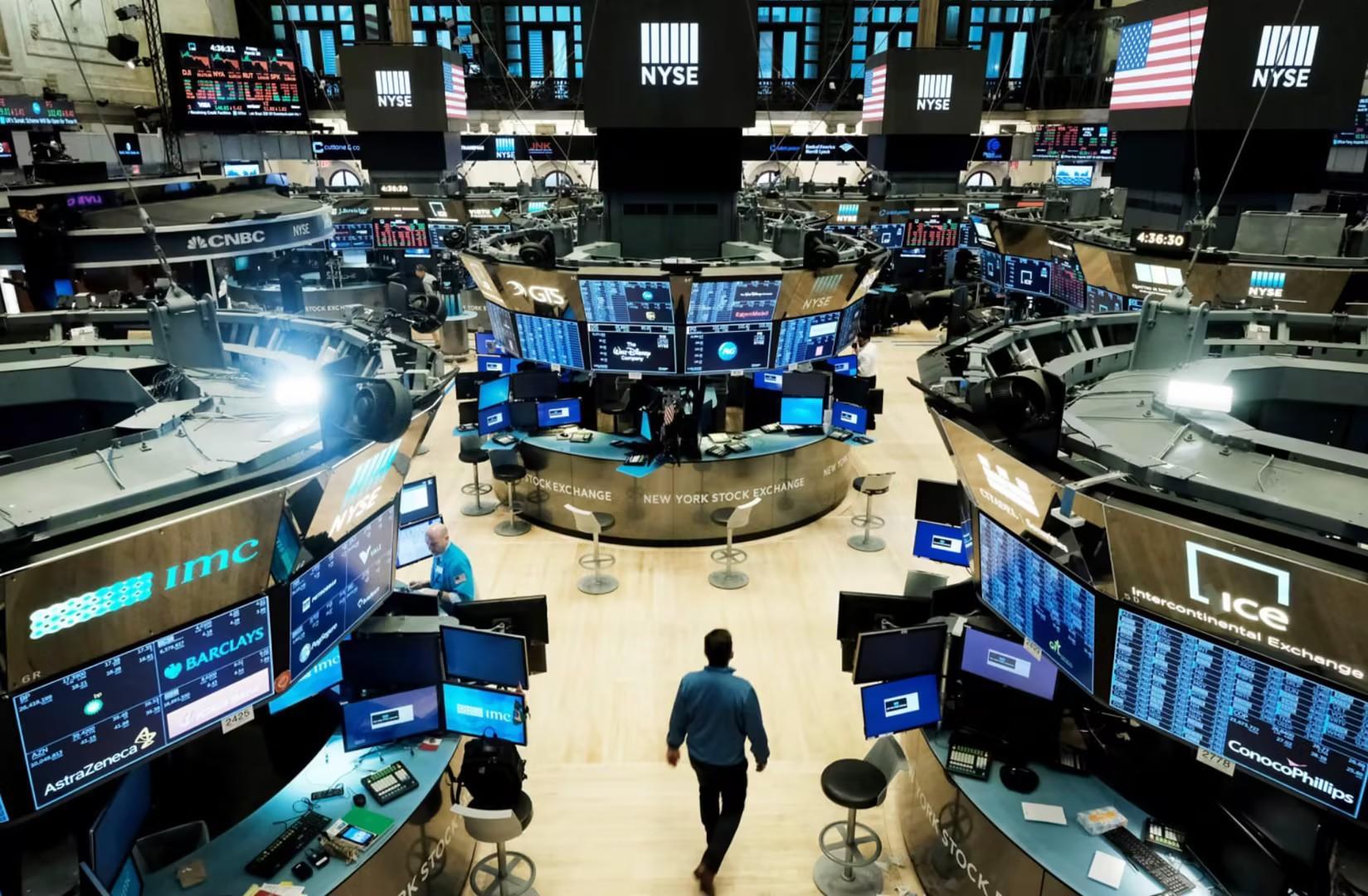
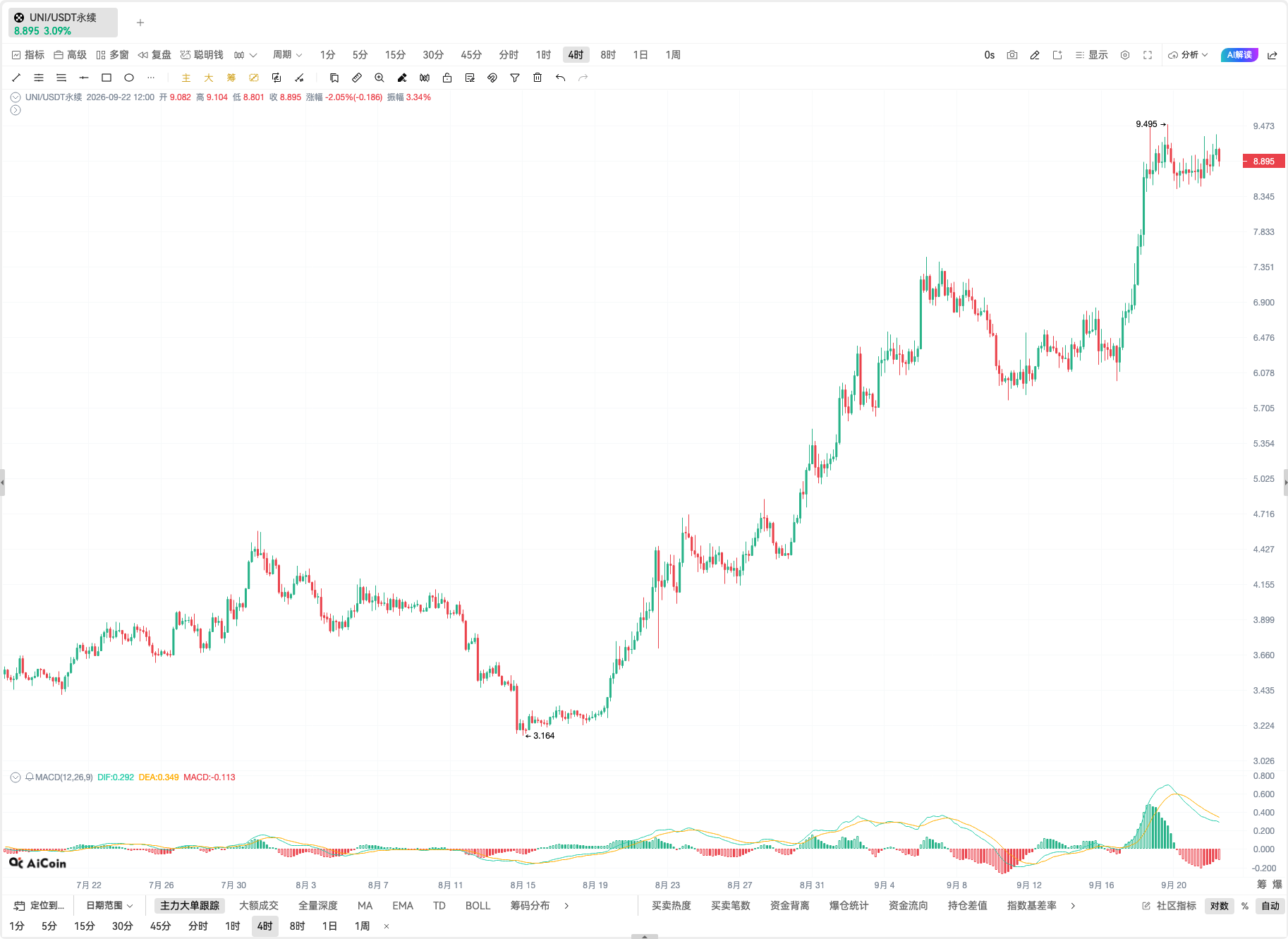
This week, in East 8 Time, the situation in the Middle East is rapidly escalating between Israel, the United States, and Iran: multiple media reports reveal that Israel and the U.S. will significantly increase military strikes against Iranian infrastructure, with the U.S. military dispatching three warships and approximately 2,500 Marine Corps personnel to the Middle East, making the Persian Gulf once again the focus of global attention. Against this backdrop, the Strait of Hormuz, a vital artery for global energy, faces the real risk of being "choked," with market expectations that its oil transportation volume may drop to about 7.5 million barrels per day, and scenarios of surging oil prices are quickly being integrated into asset pricing models. For global risk assets, this means dual pressures of a resurgence in inflation expectations and a tightening of monetary policy, while high-volatility, high-leverage crypto assets are being pushed to a new crossroads: under the combined shocks of energy and geopolitics, will it become a "digital safe haven" hedging against fiat currency and geopolitical risks, or will it be the first to suffer from liquidity withdrawal as a high β risk exposure?
Warships Enter the Persian Gulf: Conflict Escalates to Hard Fighting
From the media-released action images and official information, the current round of tension in the Middle East is not limited to verbal confrontations, but is quickly evolving into a tangible military buildup. Reports indicate that Israel and the U.S. will significantly enhance their strikes against Iranian infrastructure, while the U.S. military is directly increasing its personnel and equipment—with three warships and about 2,500 Marine Corps personnel dispatched to the Middle East, laying visible and perceivable war chips on the Persian Gulf table. This action itself serves as an open deterrent signal and emphasizes to the market: the situation has already departed from the comfortable zone of "controllable friction".
In contrast, Iran is similarly escalating its actions at sea. Briefings mention that the Iranian Navy has recently guided Indian oil tankers through the Strait of Hormuz, sending a clear signal that "I can influence this waterway." Behind this symbolic action lies a broader regional confrontation pattern: on one side, the U.S. and its allies reinforce their presence through warships and alliance systems; on the other, Iran is trying to shape the role of "gatekeeper" in this critical strait. The geopolitical game is gradually sliding from information warfare and proxy wars towards the substantive competition for control over critical infrastructure and waterways.
The capital markets have long had a "reflexive response" to Middle East issues. From multiple Gulf Wars to tanker attacks and facility explosions, traders have developed a rough experiential framework: as long as the tension in the Persian Gulf rises and key infrastructure or waterways face risks, commodities like crude oil must first factor in a risk premium, followed by relevant assets preemptively "pricing in war expectations." This time, the combination of U.S. military build-up and Iranian maritime signals has made this risk premium response more direct—capital will not wait for missiles to actually fall; instead, it will integrate "potential future conflicts" into current valuations the moment the warships arrive.
Hormuz Choked: Oil Prices Cast a Shadow Over All Risk Assets
The importance of the Strait of Hormuz to the energy market hardly needs elaboration; it is the key choke point connecting oil-producing countries in the Persian Gulf to the global market. Research briefings cite Vortexa data providing a market-discussed expectation: if the situation worsens, oil transportation through the strait may drop to about 7.5 million barrels per day. Even in the absence of longer time series comparative data, this figure alone is sufficient to alert Wall Street—once the capacity of this artery is significantly weakened, the supply-side shock will rapidly amplify through oil prices.
The rise in oil prices itself is not new; what truly merits caution is its secondary impact on inflation and monetary policy paths. On one hand, high oil prices will directly raise production costs for businesses and energy expenditures for households, reigniting inflation expectations that were already under control; on the other hand, central banks often prefer to maintain or reorient to a tight policy stance in the face of "geopolitical-driven inflation" to prevent price expectations from going out of control. This means that in the scenario of high oil prices, global liquidity may further tighten, increasing the discount rate for risk asset valuations, with valuation pressures cascading down to stock markets, high-yield bonds, and the crypto market.
In this round, traditional finance clearly identifies the focus of risk: BlockBeats cites market voices stating, "The trend of energy prices under the Iran war and its impact remains Wall Street's concern in the short term." This statement itself acts as a pricing guide: for most institutions, developments related to Iran will first be quantified into models through the route "oil prices → inflation → interest rates → valuations," rather than interpreted through ideological lenses. This also implies that if crypto market participants continue to understand Bitcoin solely from the "hedging narrative" while neglecting the hard constraints that energy prices impose on global liquidity, they may easily suffer unnecessary drawbacks in a misaligned narrative.
Oil at $180? Bitcoin Dropping to $51,000 is Just an Extreme Scenario
Amid the myriad of predictions, an extreme hypothesis from a single source has been widely circulated: if oil prices soar to $180 per barrel, Bitcoin could drop to $51,000. The research brief explicitly states that this claim comes from sources like Bitcoin News and emphasizes that this is a scenario simulation rather than a certain prediction. In other words, this is more like a "risk boundary line" drawn for the market rather than a price roadmap established for investors.
This scenario is not a baseless idea; it follows a clear logical chain: first, a surge in energy costs will significantly raise inflation pressures, forcing central banks worldwide to maintain or even further strengthen their tightening stances; second, under tighter monetary policies, real interest rates rise, financing costs increase, global risk appetite retreats, and capital withdraws from high-volatility assets, prioritizing the protection of cash flows and safe assets; ultimately, high β assets—be they certain tech stocks or cryptocurrencies—may face more severe liquidity withdrawal. In this mechanism, Bitcoin being "pushed" down to $51,000 serves to help the market understand: in extreme oil price scenarios, crypto assets find it hard to stand alone.
However, it is important to emphasize that a single price point output from a single model should not be and cannot be regarded as a "predestined endpoint" for the future. There are numerous nonlinear relationships among macro variables: the duration of the war, the strength of policy responses, changes in demand from other regions, and the spontaneous emergence of risk aversion can all create deviations in the path. For traders, a more reasonable approach is to view "oil at $180, BTC at $51,000" as a stress test scenario used to assess their position endurance and liquidity buffer, rather than treating this number as a mechanical signal for market entry and exit.
The Tug-of-War Between Hedging Narratives and High-Leverage Realities
Looking back over recent rounds of geopolitical conflicts, Bitcoin's role has always been in a tug-of-war. On one side, it is continuously branded as "digital gold"—decentralized, censorship-resistant, and not directly tied to any single sovereignty—endowing it with a natural narrative advantage during times of currency devaluation or rising risks of capital controls. Whenever new geopolitical tremors emerge in the world, this narrative is swiftly activated, pushing some capital to attempt to see Bitcoin as a tool to hedge against fiat currency risks and regional uncertainty.
On the other hand, historical price behaviors repeatedly remind the market that in genuine liquidity rebound phases, Bitcoin is often the first to be sold off as a high β asset. The reason is that the crypto market itself is highly leveraged, with a relatively small proportion of institutional allocation, and it tends to become a "quickly liquidable" pool of assets during panic phases. When margins are increased and credit spreads widen, whether or not the asset possesses long-term hedging attributes, short-term behaviors will devolve into being sold off as "cash machines." This is the sharp tension between the "digital gold narrative" and the "high-leverage reality."
In the current environment, where oil price shocks and war clouds intertwine, the behaviors of institutions and retail investors may further diverge. Some participants may choose to increase their allocations to Bitcoin and top crypto assets based on a long-term perspective, trying to hedge against fiat currency inflation and geopolitical tail risks; while others might be forced to reduce positions to recover margins due to pressures from traditional assets or crypto derivatives, prioritizing the safety of their overall portfolio. These two forces acting simultaneously in a market with thin liquidity and high leverage levels imply that, in the short term, the crypto market is likely to experience a high-volatility state where hedging buying and deleveraging intertwine, with vigilance warranted over the frequency and amplitude of instantaneous violent fluctuations.
Multiple Power Plays Between Wall Street, Washington, and On-Chain Funds
In this storm surrounding Iran and energy prices, the interaction between financial capital and political decision-making is highly synchronized. Research briefings emphasize that Wall Street is focusing on the trend of energy prices under the Iran war in the short term, which directly drives macro hedge funds, commodity traders, and large institutions to adjust their weights among futures, options, and various risk assets. On the other side, the Trump administration has been reported to have considered actions targeting key nodes of Iran's oil exports, highlighting Washington's tough stance on energy and geopolitical issues. Here, political willingness and market expectations form a closed loop: signals of "striking oil exports" at the political level are often magnified by capital markets into the trading logic of "supply contraction → rising oil prices."
This interaction does not stop at traditional financial domains; core figures in the crypto circle have also been drawn into the larger narrative. Briefings mention that SBF publicly supports U.S. actions against Iran, leading to speculations about whether he might gain some sort of pardon or judicial "deal" as a result. Although these speculations lack confirming information and should not be extrapolated into established facts, they themselves reveal a key reality: the leading figures in crypto are not isolated from traditional power structures but are interwoven with complex interplay of public opinion, interests, and compliance. This intertwining makes the crypto industry no longer merely an "island of technology and financial innovation," but part of a broader political-economic game network.
These political and public opinion signals will feedback into the on-chain funds and exchange sentiments through multiple channels: on one hand, institutions and large wallet addresses will adjust their holdings and on-chain activity for BTC, ETH, and other core assets based on their judgments on war and oil prices; on the other hand, retail investors, driven by emotions on social media, may form emotional concentrated buying or panicked selling. For observers, key indicators worth closely tracking next include:
● Large on-chain transfers and changes in holding structures: Is there significant "whale accumulation" or "sustained offloading" behavior?
● Net inflows to exchanges and futures open interest: Is capital concentrating in exchanges to prepare for liquidation, or conversely being transferred out to cold wallets for hedging?
● Implied volatility and skew of options: Is the market paying for hedging against downside risks, or betting on the upward tail of the hedging narrative?
This data will help investors weave together political signals, Wall Street pricing, and real on-chain behaviors into a complete causal chain, understanding the competitive paths of different forces in the crypto market.
The Fires of War Still Burn: A Survival Manual for Crypto Investors
In summary, the escalation of Middle Eastern conflicts, rising expectations for energy prices, and the potential tightening of global liquidity are collectively shaping the risk profile of the crypto market. The former determines the height and duration of geopolitical risks, the latter amplifies shocks to the macro level through oil prices and inflation, and the latter directly constrains whether funds can continue to provide pricing support for high β assets. In this framework, crypto assets are no longer "isolated alternative assets" but are more deeply embedded in the global macro cycle.
In the short to medium term, a more robust baseline judgment is: increased volatility is nearly unavoidable, and the chain liquidation risks in a high-leverage environment need to be seriously addressed. In the complex situation of coexisting risk aversion and selling sentiment, at certain points you may simultaneously see "war risk buying pushing BTC up" and "futures market leverage liquidation triggering flash crashes" as seemingly contradictory phenomena coexisting—this is precisely the result of multiple narratives and overlapping funding motivations. For ordinary participants, managing risks is far more important than grasping trends.
In this highly uncertain environment, investors can at least build self-protection mechanisms from three dimensions: first, closely monitor oil prices and the rhythm of policy statements, treating WTI, Brent prices, and the attitudes of the Federal Reserve and other central banks as a gauge of overall risk appetite, rather than solely focusing on BTC's own candlestick; second, strictly control leverage exposure and liquidity buffer, actively reducing overall leverage during periods of rising volatility and leaving sufficient margin and cash positions to cope with potential extreme fluctuations and "liquidity vacuums"; third, establish extreme scenario planning thinking, treating various extreme simulations like "oil at $180, BTC at $51,000" as stress tests, rather than trading scripts, and based on this, proactively consider position adjustments and risk tolerance boundaries in different scenarios.
The fires of war still burn, and pricing continues. The situation in the Middle East and the trajectory of oil prices will not be determined by the crypto market, but crypto market participants can decide their positioning in this global-level volatility: whether to passively follow emotions and be repeatedly reshuffled or, upon understanding macro logic and risk structures, seek a rhythm and position more suitable for their own endurance.
Join our community to discuss and grow stronger together!
Official Telegram community: https://t.me/aicoincn
AiCoin Chinese Twitter: https://x.com/AiCoinzh
OKX benefit group: https://aicoin.com/link/chat?cid=l61eM4owQ
Binance benefit group: https://aicoin.com/link/chat?cid=ynr7d1P6Z
免责声明:本文章仅代表作者个人观点,不代表本平台的立场和观点。本文章仅供信息分享,不构成对任何人的任何投资建议。用户与作者之间的任何争议,与本平台无关。如网页中刊载的文章或图片涉及侵权,请提供相关的权利证明和身份证明发送邮件到support@aicoin.com,本平台相关工作人员将会进行核查。