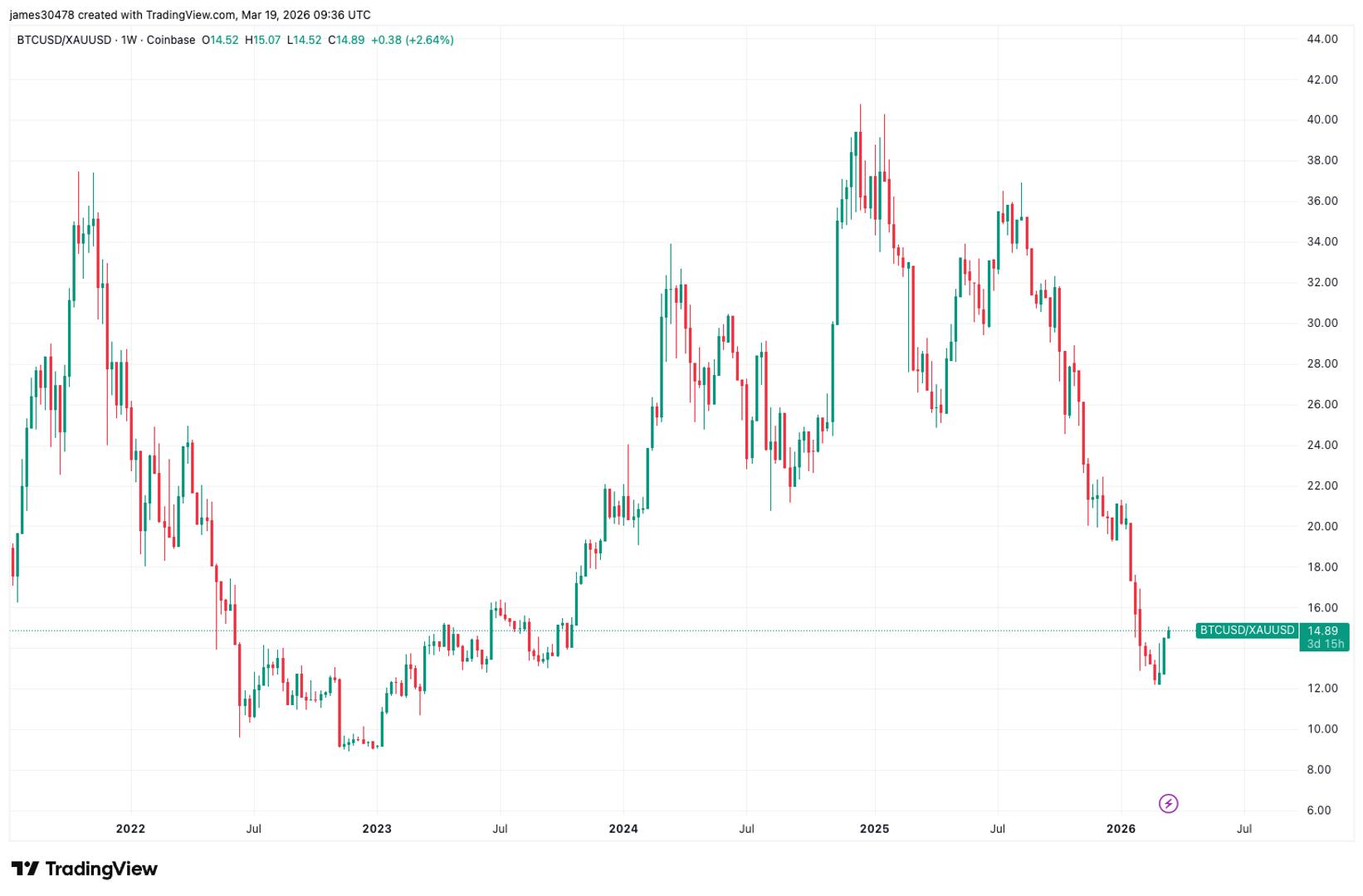
What to know : Bitcoin outperformed gold, falling 1% while the precious metal dropped twice as much to approach bear-market territory. Macro pressures are intensifing as a hawkish Federal Reserve and a spike in oil prices weigh on risk assets and inflation expectations.
Bitcoin is, unusually, outperforming gold even as rising oil prices and hawkish signals from the U.S. Federal Reserve fuel increased risk aversion in financial markets.
Gold, traditionally a store of value and haven investment in times of trouble, has dropped 2% since midnight UTC while the largest cryptocurrency lost only half that amount. The performance has lifted the ratio between the two by 1% in 24 hours, and one bitcoin now buys about 15 ounces of gold.
Part of the reason for the unexpected trading pattern stems from gold's surge in February. Before the Middle East conflict started at the end of the month, it had already locked in a 90% gain over the course of a year and was trading at a record high. That left it overbought, making the rally difficult to sustain even as the geopolitical situation worsened.
Since the war began, the performance of bitcoin — seen by some supporters as digital gold — and the precious metal has diverged. Bitcoin has been one of the strongest performing assets outside energy after falling 50% since October and leaving it oversold. Gold is now some 17% below its January peak, edging toward bear-market territory.
The macroeconomic backdrop is adding to the pressure. The Federal Reserve delivered a more hawkish-than-expected tone in Wednesday's comments, pushing back against market expectations for imminent interest-rate cuts in the world's largest economy.
This has weighed on risk assets, with U.S. equities lower in premarket trading and the Invesco QQQ exchange-traded fund, which tracks the Nasdaq 100 index, falling 0.5% on Thursday. Crypto-related equities have also declined, with Strategy (MSTR), Galaxy Digital (GLXY) and Coinbase (COIN) all falling in pre-market trading.
At the same time, the war with Iran has pushed Brent crude oil up more than 6% in the past 24 hours to around $117 per barrel. The widening gap between Brent and West Texas Intermediate, now the largest since 2013, signals global supply disruptions and logistical constraints, adding to inflationary pressures and complicating the outlook for central banks.
免责声明:本文章仅代表作者个人观点,不代表本平台的立场和观点。本文章仅供信息分享,不构成对任何人的任何投资建议。用户与作者之间的任何争议,与本平台无关。如网页中刊载的文章或图片涉及侵权,请提供相关的权利证明和身份证明发送邮件到support@aicoin.com,本平台相关工作人员将会进行核查。


