Author: Nishil Jain
Translated by: Deep Tide TechFlow
Deep Tide Guide: DeFi on-chain lending hit a historic high of $90 billion in Q4 2025, but institutional capital only accounts for 11.5% of TVL—this contrast reveals the core of this article. Regulatory barriers are gradually collapsing (GENIUS Act passed, SEC closed multiple investigations), what truly holds back institutions is the lack of risk isolation infrastructure: no fixed rates, no risk grading, and no tools that can be embedded into internal compliance frameworks. The author systematically outlines how Aave V4, Morpho curator model, Pendle yield separation, and Maple structured credit each fill this gap, making it one of the most complete roadmaps for DeFi institutionalization currently.
The full text is as follows:
According to data from DeFiLlama, crypto collateralized lending reached a historic high of $90 billion in Q4 2025. On-chain lending currently accounts for about two-thirds of this, whereas at its peak in 2021, this proportion was less than half. On the other hand, the market capitalization of private credit has more than doubled in the past year, from $10 billion in February 2025 to $25 billion today.
DeFi has grown into a credible credit market, but institutional capital from asset management companies, pension funds, endowments, and sovereign wealth funds only accounts for 11.5% of the total locked value in DeFi.
The gap between the maturity of DeFi infrastructure and institutional adoption rate is the most core structural tension in this cycle.
In the previous article, we explored how the DeFi treasury ecosystem achieves scaling through open, verifiable infrastructure—the trust layer of the blockchain replaces the cost of manual verification that makes traditional asset management difficult to dismantle. It is this same attribute that makes the next evolutionary step possible.
When risk parameters, curator actions, and liquidation logic are all on-chain and auditable, it becomes possible to construct a risk management infrastructure that cannot be coordinated in traditional finance due to opacity or excessive cost.
The curator treasury is the first embodiment of this idea. However, institutions need more than just curation—they need cross-market risk isolation, fixed-rate tools, and structured credit. This article delves into the broader emerging risk tech stack present in DeFi.
One of the regulated digital asset banks, Sygnum Bank, released a straightforward assessment in mid-2025: Despite DeFi protocols operating normally, permissioned pools existing, KYC frameworks in place, and tokenized real-world assets in operation— they believe that until legal enforcement and regulatory risks are fully resolved, no major institutional decision-maker will allocate funds to crypto assets.
Sygnum adds that almost all inflows still come from asset management companies, hedge funds, or crypto-native institutions with higher risk tolerance. KYC-gated treasuries and permissioned lending pools are often presented as breakthroughs for institutions, but they have not attracted meaningful institutional fund inflows.
The need for DeFi exposures is real. A survey conducted by EY-Parthenon and Coinbase in January 2025 with 352 institutional investors showed that 83% of respondents plan to increase crypto allocations, with 59% intending to invest more than 5% of AUM. However, currently only 24% of institutions are actually participating in DeFi.
These concerns are well-founded. When asked about the reasons for not participating in DeFi, regulatory uncertainty ranked first at 57%. This is a genuine obstacle—but it is also a barrier that is being actively dismantled. The GENIUS Act has passed, MiCA is being comprehensively enforced in Europe, and the SEC closed investigations into protocols like Aave, Uniswap, and Ondo without taking enforcement action.
Other barriers revealed by the survey are even more telling: compliance risk ranks second at 55%, followed closely by lack of internal expertise at 51%. These issues are not about whether DeFi is legal, but whether institutions can operationalize DeFi exposures within existing risk frameworks. Can compliance teams map a lending position to internal authorized limits? Can risk officials isolate exposures to specific types of collateral? Can portfolio managers allocate funding to professional curators within defined parameter ranges?
In most DeFi today, the answer is still no. However, on-chain risk dynamics are changing.
The Missing Layer
The reasons behind this are rooted in the structure of the crypto industry. According to research by Fidelity, institutional investors allocate about 41% of their portfolios to fixed income. Insurance companies, pension funds, and endowments do this not due to a lack of risk appetite—but because their mandates require predictable cash flows to match long-term liabilities.
The infrastructure that makes all this possible—just the interest rate swaps alone have a nominal outstanding amount of $469 trillion according to the Bank for International Settlements—fundamentally relies on a basic primitive: risk separation—splitting exposures into fixed and floating components, allowing different participants to take what they need.
The first cycle of DeFi omitted these risk separation primitives. The design philosophy from 2020 to 2021 focused on shared liquidity pools, unified risk parameters, governance voting to decide collateral, and floating rates.
Every depositor bore equal exposure.
For crypto-native capital—hedge funds running basis trades, yield farmers chasing incentives—this model worked. DeFi lending grew from hundreds of millions to hundreds of billions. But this architecture set a ceiling. When there are no mechanisms to separate risk, no way to isolate exposures to specific types of collateral, and no way to delegate risk decisions to professional curators, there is virtually no pathway for capital managing over $130 trillion in fixed income to enter.
Changes Happening
A structural shift is underway across several major protocols.
The common thread among them is the introduction of risk management tools that allow institutions to customize experiences based on their own compliance and risk preferences.
Risk Isolation
In Aave V3, each lending market is an independent pool—having its own liquidity, assets, and risk parameters. Creating a new market for different risk tiers requires building liquidity from scratch, which is costly and results in thin liquidity pools with high interest rates.
Aave V4 is currently running on a public testnet, with a mainnet release targeted for early 2026, splitting the system into two layers. The central liquidity hub holds all assets across networks, while user-facing spoke nodes define their own risk rules, collateral types, and access controls.
The spoke nodes obtain liquidity from the hub rather than maintaining it themselves. In this new model, liquidity is shared, but risk is isolated. A spoke node that borrows stablecoins against tokenized government bonds can set independent LTV ratios, liquidation parameters, and access controls—completely independent from the spoke node operating high-volatility crypto assets next door.
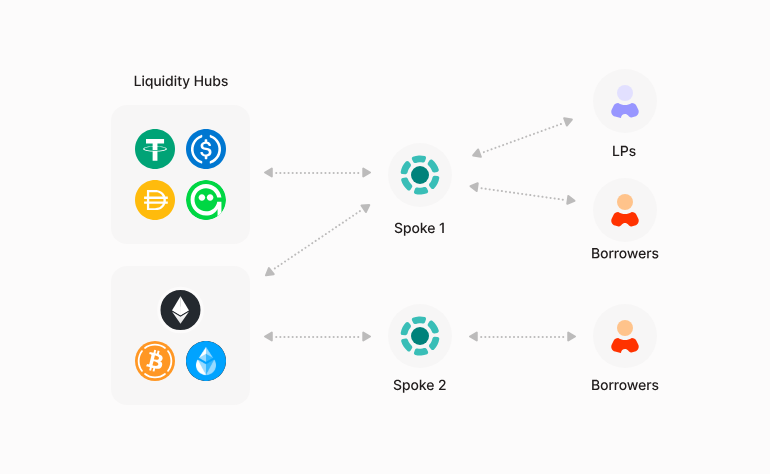
Both share the same deep stablecoin pool, but any cascading liquidation that occurs in one does not contaminate the other.
Aave's Horizon platform operates RWA markets in a similar permissioned manner, with net deposits exceeding $550 million, as Kulechov aims to reach $1 billion by 2026 through partnerships with Circle, Ripple, Franklin Templeton, and VanEck.
Delegated Risk Curation
Morpho might have paved the UX path for institutions to enter DeFi lending. Remember the issue of "lack of internal expertise" for institutions? The Morpho treasury system may be the solution. Its treasury system introduces professional curators, separating liquidity provision from risk management—independent teams represent capital providers, responsible for defining collateral policies, setting exposure limits, and allocating funds in the lending market.
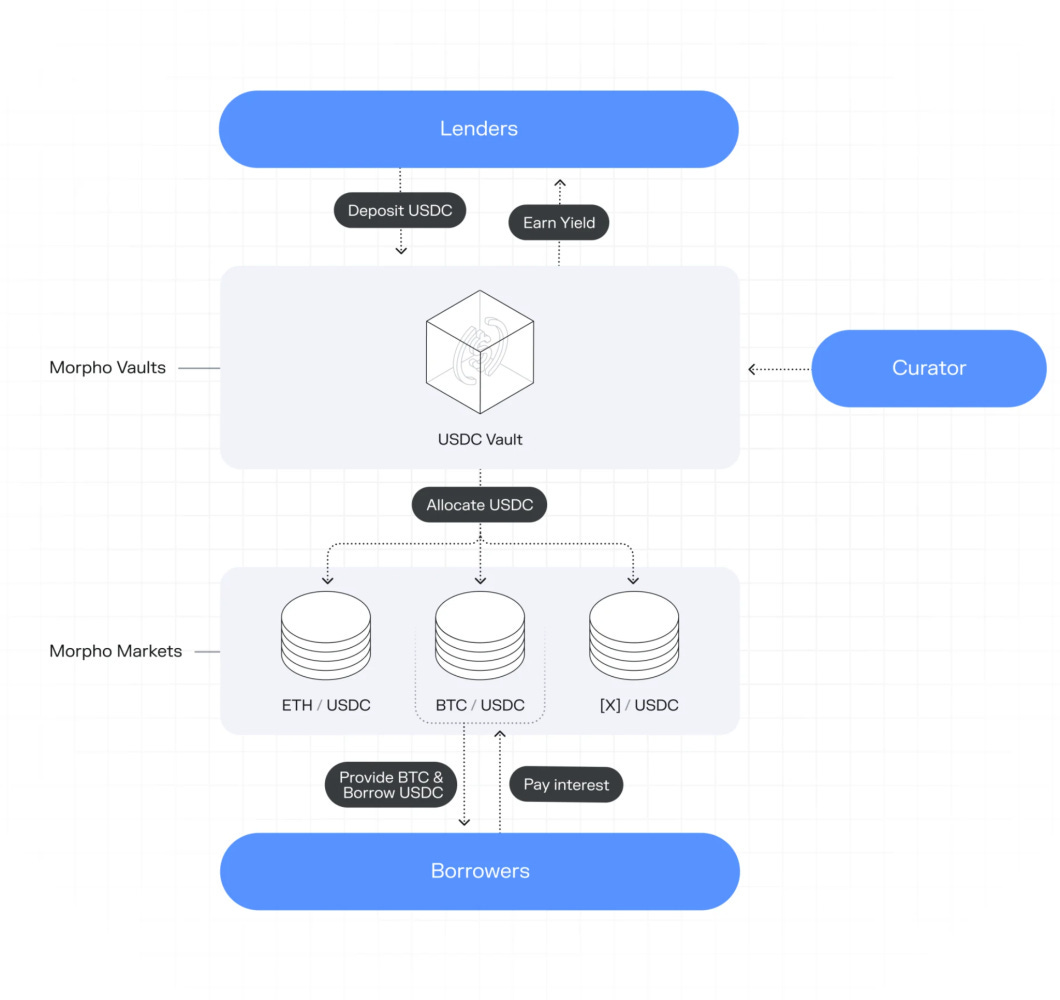
Currently, over 30 curators operate on Morpho, with total deposits increasing from $5 billion to $11 billion and active loans reaching $4.5 billion.
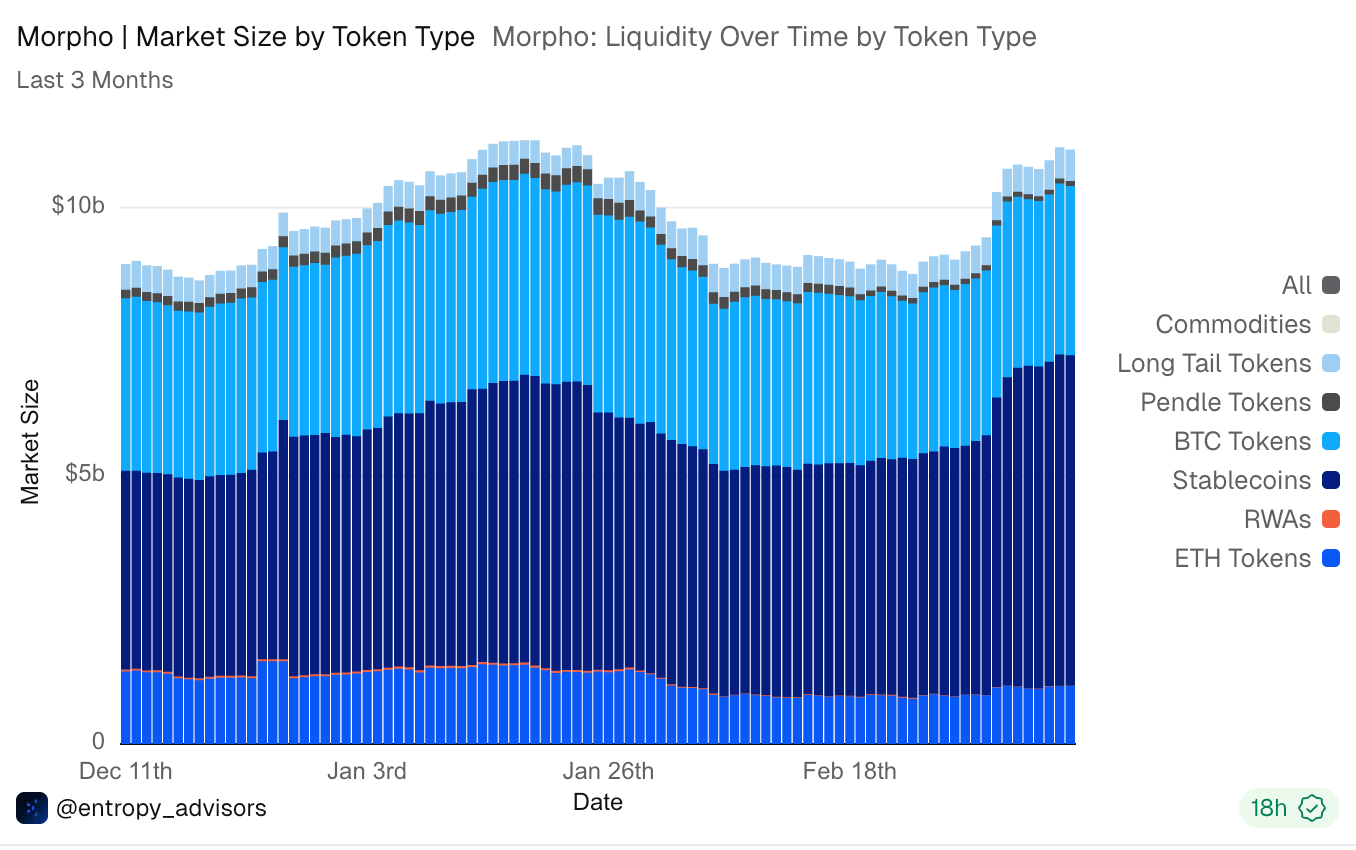
By providing an optimal balance between generating passive yield and managing risk, Morpho is starting to show its value to institutions.
In January 2026, Bitwise, a registered asset management company managing over $15 billion in client assets, launched its first non-custodial treasury on Morpho, with dedicated portfolio managers responsible for strategy and risk management.
Anchorage Digital, the first federally regulated digital asset bank in the U.S., now offers institutional clients direct access to Morpho treasuries and custodians for the treasury tokens generated.
Coinbase integrates Morpho to support its crypto collateralized lending products, with over $960 million in active loans. Société Générale Forge, Gemini, and Crypto.com have established similar integrations.
Yield Predictability
One of the most fundamental misalignments between DeFi and institutional capital lies in the interest rate structure. DeFi lending rates are by default variable, fluctuating with liquidity pool utilization, sometimes dropping from double digits to single digits within days.
This is unfeasible for pension funds or insurance companies that need to match predictable cash flows with long-term liabilities. If your yield source might drop by 5% next month, you cannot commit to paying beneficiaries a 7% return.
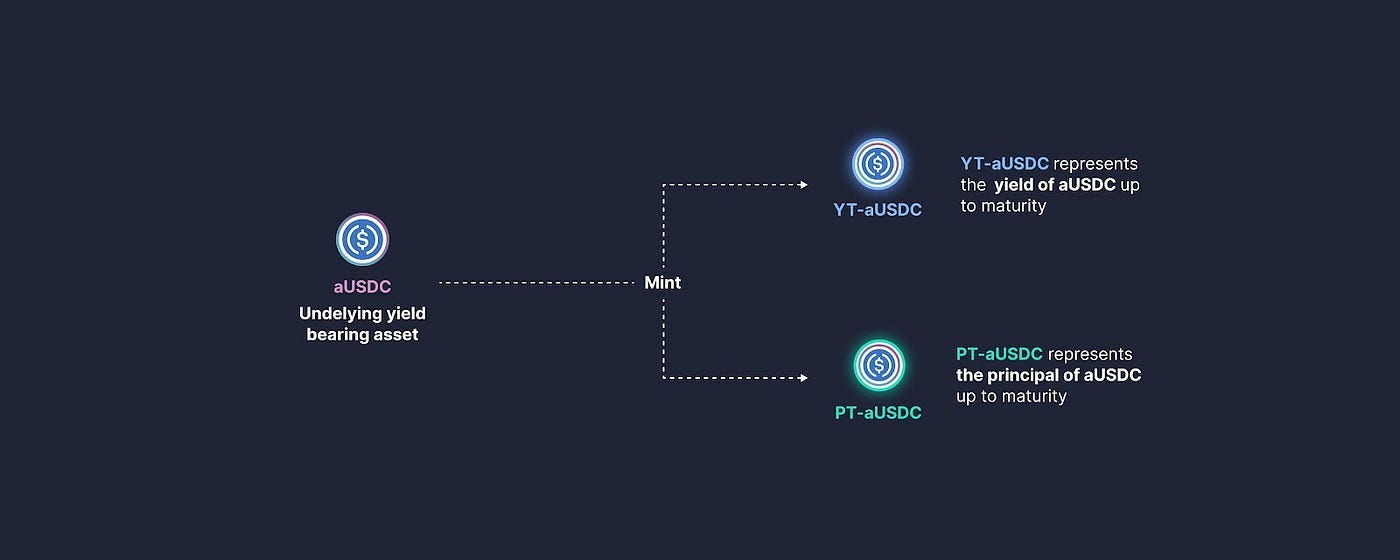
Pendle addresses this by splitting yield-bearing assets into two tradable tokens: Principal Token (PT), representing the underlying asset, redeemable at maturity; and Yield Token (YT), capturing all variable yield accrued until the maturity date.
This split mirrors traditional fixed-income instruments—PT functions similarly to zero-coupon bonds, while YT isolates variable rate exposure for those looking to speculate or hedge against interest rate changes.
Institutions buying PT lock in fixed returns; traders buying YT leverage their exposure to variable yields. Both parties can get what they need from the same underlying position.
Pendle settled $58 billion in fixed income in 2025, a 161% year-on-year increase, generating over $40 million in annualized protocol revenue.
Its Boros platform launching in early 2026 will extend this logic to funding rate derivatives—allowing institutions to hedge or go long on perpetual contract funding rates, in a market that previously had no on-chain hedging tools, with a daily trading volume of over $150 billion.
On-Chain Credit Diversification
Most DeFi lending protocols generate returns from a single source: over-collateralized crypto loans with variable interest rates. When the market cools, utilization decreases, rates compress, and yields decline.
Maple Finance has been diversifying its sources of returns. Its core product offers fixed-rate over-collateralized loans to institutional borrowers—trading firms, market makers—providing transparency through on-chain real-time visible collateral. Currently offering a 30-day annualized yield of 5.3%.
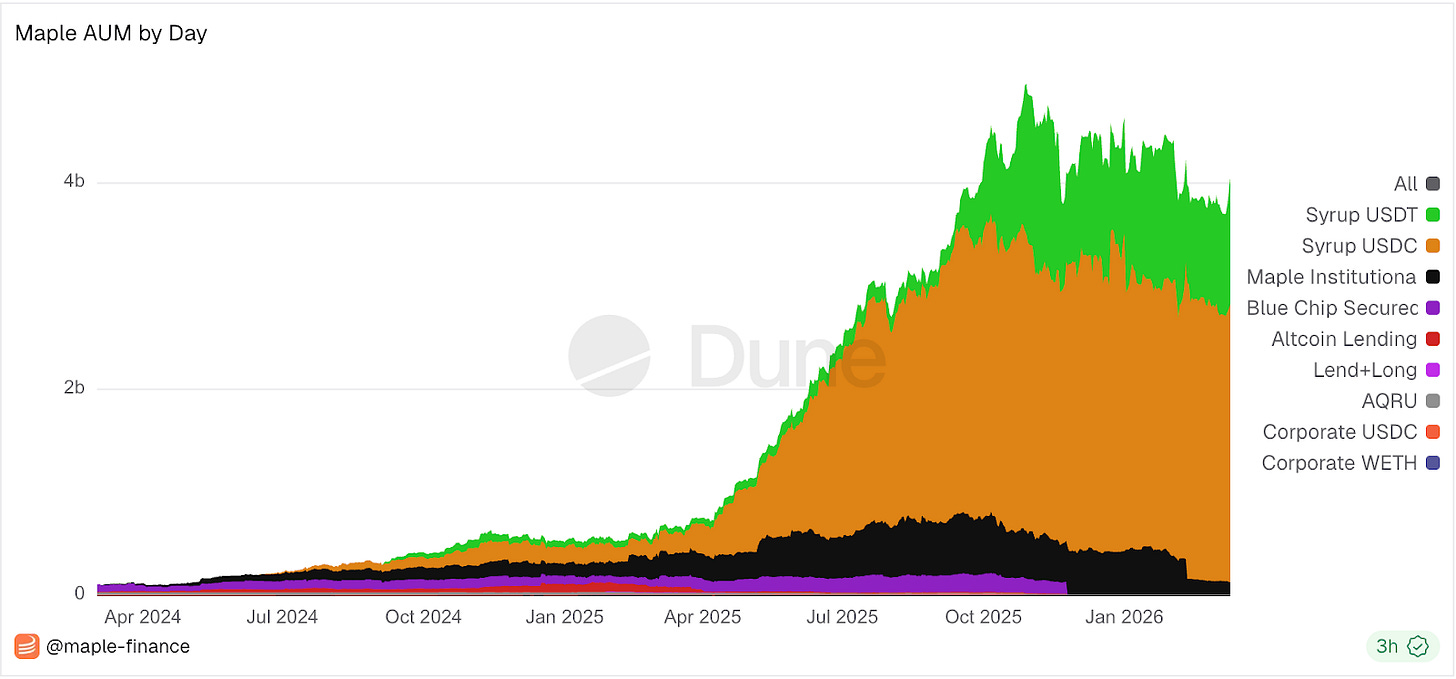
In addition, it launched a BTC yield product in early 2025, generating returns quoted in Bitcoin; also launched high-yield collateral pools, achieving a 9.2% yield in Q2 2025 through active credit underwriting.
Its syrupUSDC token—a liquidity receipt for participation rights in the lending pool—integrates with Aave, Morpho, Spark, and Pendle, allowing depositors to aggregate yields across protocols or lock in fixed rates through Pendle’s yield tokenization. The result is a multi-strategy credit platform, rather than a single lending pool.
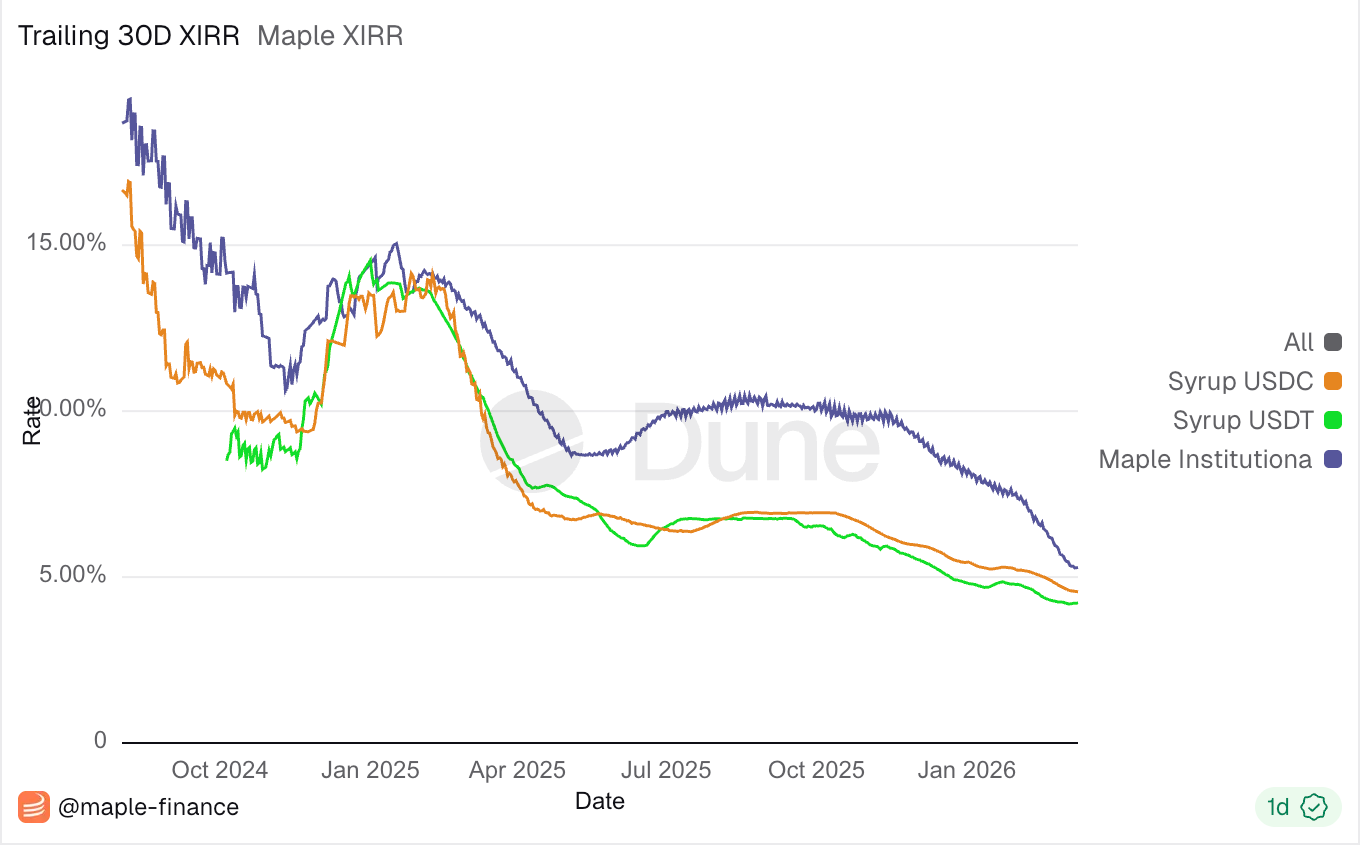
Maple’s AUM grew from $516 million to $4.59 billion throughout 2025, with outstanding loans increasing eightfold, and annualized income hitting $30 million in Q4.
CEO Sid Powell has signaled an intent to venture into structured credit—securitizations and asset-backed products. In practice, this means acquiring a set of on-chain loans and slicing them into tranches: senior tranches receive payments first, with lower risk; junior tranches absorb losses first but offer higher returns.
This mechanism is what scaled traditional credit markets from billions to trillions—enabling the same loan pool to be simultaneously invested in by conservative pension funds and yield-seeking hedge funds. These products have yet to launch, but the direction signals a move towards diversifying on-chain credit products to cover all risk tiers.
Patterns
The details of individual protocols are far less significant than the structural patterns they reveal. DeFi is rebuilding the risk management primitives of TradFi in a programmable, transparent, and composable form—risk isolation, curation, grading, fixed rates, compliance gating.
This distinction is crucial. Smart contracts are auditable, settlements are real-time, treasury allocations are visible on-chain, curator actions are time-locked and observable.
All the opacity present in traditional risk infrastructure is no longer necessary. What is being introduced is a functional architecture—where focus separation allows different types of capital to coexist within shared infrastructure.
The treasury ecosystem is the clearest manifestation of this integration. Bitwise's 2026 outlook describes on-chain treasuries as "ETF 2.0," predicting their AUM will double this year. Morpho believes its treasury is the next layer of savings accounts following the success of stablecoins as checking account layers: stablecoins bring money on-chain, and treasuries make it operate.
As more institutions, fintech companies, and new banks embed treasury-driven yield products into their services, end users may not even realize they are interacting with DeFi infrastructure.
The crypto collateralized lending market is healthier than ever. Galaxy's research indicates that the current leverage cycle is built on collateralized, transparent structures, replacing the opaque, uncollateralized credit that defined 2021.
However, breaking through the scale ceiling of crypto-native capital requires a risk layer aligned with institutional mandates. The protocols building this layer—through modular risk isolation, professional curation, fixed-rate infrastructure, and on-chain structured credit—are the ones poised to capture the next order of magnitude of capital.
Whether they will succeed is less related to their TVL and more dependent on whether institutions will gradually come to trust these on-chain risk controls as reliably as the traditional risk control mechanisms they already operate within. This question remains unresolved. But for the first time in history, the architecture necessary to answer it exists.
免责声明:本文章仅代表作者个人观点,不代表本平台的立场和观点。本文章仅供信息分享,不构成对任何人的任何投资建议。用户与作者之间的任何争议,与本平台无关。如网页中刊载的文章或图片涉及侵权,请提供相关的权利证明和身份证明发送邮件到support@aicoin.com,本平台相关工作人员将会进行核查。


