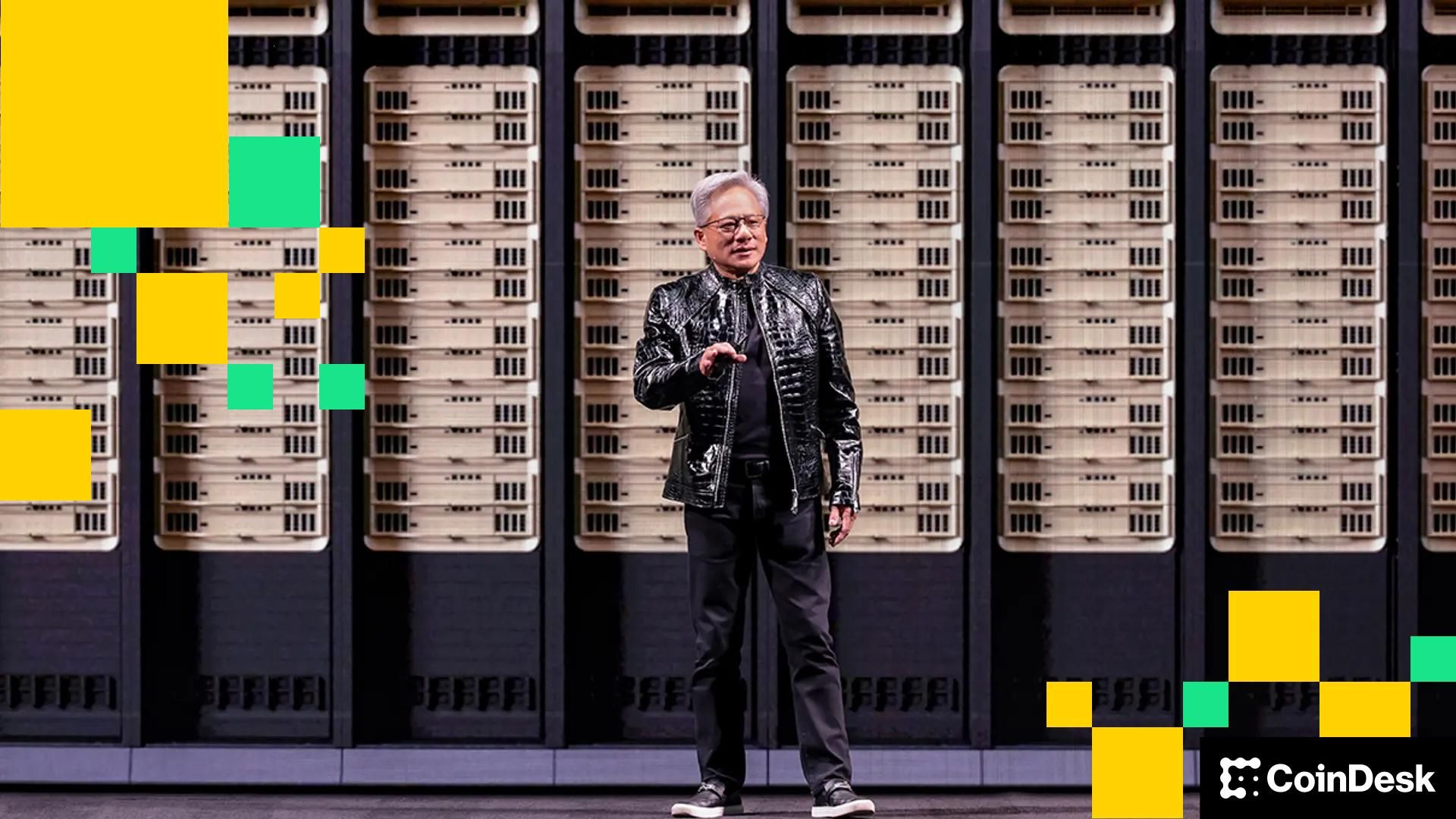
What to know : Nvidia CEO Jensen Huang argues that AI is an industrial buildout comparable to electrification, requiring trillions of dollars in new energy, chip, and data-center infrastructure. Huang contends that the AI boom will create a vast number of skilled, well-paid blue-collar jobs—such as electricians, plumbers, and steelworkers—rather than simply eliminating white-collar roles. By casting energy as the binding constraint on AI growth and embracing open-source models like DeepSeek-R1, Huang says the sector’s expansion depends on real-time power supply and will ultimately boost demand for chips and infrastructure.
The AI jobs debate got its sharpest rebuttal yet on Tuesday, from the person selling the hardware.
Nvidia CEO Jensen Huang published a rare standalone essay on Tuesday laying out what he calls the "five-layer cake" of AI infrastructure: energy at the base, then chips, then physical infrastructure, then models, then applications.
It positioned AI not as a software product or a chatbot but as an industrial buildout on the scale of electrification, one that requires trillions of dollars in physical construction and a massive workforce of electricians, plumbers, pipefitters, steelworkers, and network technicians.
"These are skilled, well-paid jobs, and they are in short supply. You do not need a PhD in computer science to participate in this transformation," he said.
Huang's argument for why the buildout needs to be so large starts with a fundamental shift in how computing works.
Traditional software retrieves stored instructions, while AI generates new outputs in real time, with every response created fresh based on the context provided. It isn't looking up an answer, but instead, reasons through one on demand.
Because intelligence is produced in real time, the entire computing stack beneath it has to be reinvented, which is why AI requires purpose-built infrastructure from the energy layer up rather than running on existing data centers.
The timing is pointed. The essay arrives after weeks of mounting anxiety about AI's impact on employment, from Block Inc.'s mass layoffs to Anthropic CEO Dario Amodei's comments about job displacement. Tech stocks had been selling off on the combination of those fears since early this year.
Huang's essay is a direct counter-narrative, however. He used radiology as his example, arguing that AI assists with reading scans but demand for radiologists keeps growing because productivity creates capacity and capacity creates growth. "That is not a paradox," he wrote.
Huang puts energy as the the foundation of the AI era.
"Intelligence generated in real time requires power generated in real time," he wrote. "Energy is the first principle of AI infrastructure and the binding constraint on how much intelligence the system can produce."
That framing has implications beyond Nvidia's supply chain. If energy is the binding constraint on AI, then anything that disrupts energy supply, including the current war in the Middle East, isn't just a macro headwind for markets. It's a direct bottleneck on how fast AI can scale.
Huang acknowledged the buildout is still early. "We are a few hundred billion dollars into it. Trillions of dollars of infrastructure still need to be built," he said, adding that AI factories are being constructed "at unprecedented scale" around the world.
He also gave a notable nod to open-source models, citing DeepSeek-R1 as an example of how making strong reasoning models freely available "accelerated adoption at the application layer and increased demand for training, infrastructure, chips, and energy beneath it." Open-source doesn't threaten Nvidia's business. It feeds it.
免责声明:本文章仅代表作者个人观点,不代表本平台的立场和观点。本文章仅供信息分享,不构成对任何人的任何投资建议。用户与作者之间的任何争议,与本平台无关。如网页中刊载的文章或图片涉及侵权,请提供相关的权利证明和身份证明发送邮件到support@aicoin.com,本平台相关工作人员将会进行核查。


