Original author: Sanqing, Foresight News
On March 9, the Zcash development organization Zcash Open Development Lab (ZODL) announced the completion of over $25 million in seed round financing. Participants in this round of financing include Paradigm, a16z crypto, Winklevoss Capital, Coinbase Ventures, Cypherpunk Technologies, Maelstrom (Arthur Hayes' family office), Chapter One, and well-known individual investors such as Balaji Srinivasan, David Friedberg, Haseeb Qureshi, Mert, and James Nicholas.
It is reported that the funds from this round of financing will be used to expand the engineering team of ZODL and accelerate the development of the Zcash protocol and its self-custodial privacy wallet Zodl.
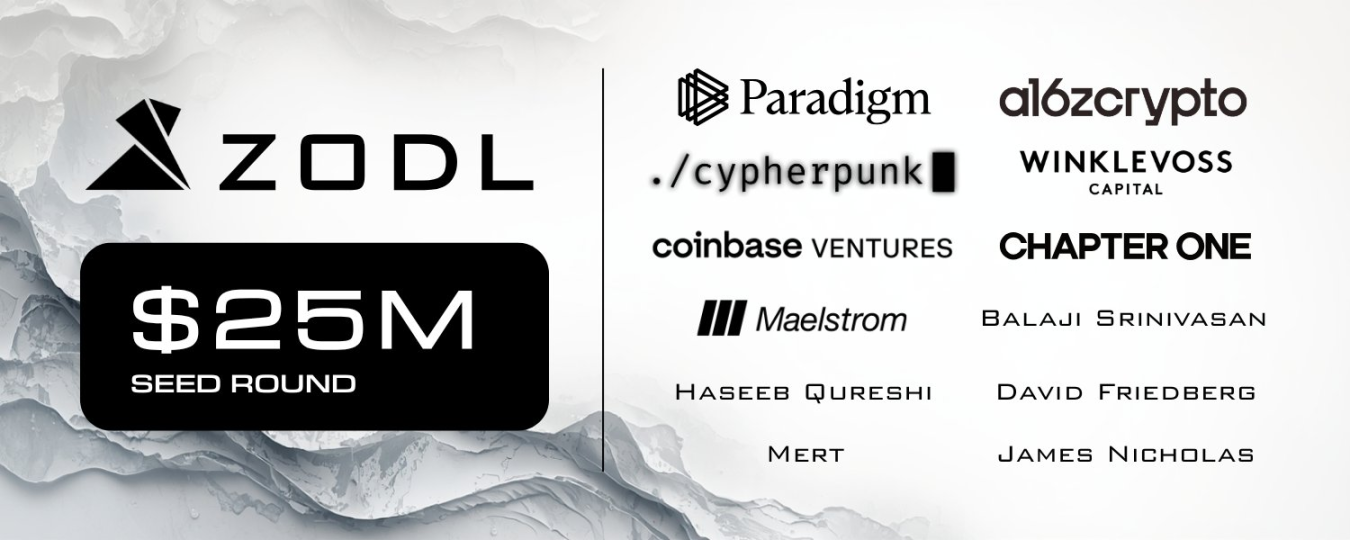
Image source: ZODL tweet
The core development strength of Zcash has officially transitioned from a non-profit governance model to an independent commercial startup entity. Boosted by this financing, the price of Zcash (ZEC) has slightly rebounded, reaching $225. Market attention may stem from ZODL's unique background. ZODL was founded by Josh Swihart, the former CEO of Electric Coin Company (ECC), which led the original development of Zcash, gathering the entire engineering and product team that collectively left ECC in January this year due to governance disagreements.
From ECC Crisis to ZODL Independence
Since its inception in 2016, Zcash has been primarily developed by Electric Coin Company (ECC) as a pioneer in zero-knowledge proofs (zk-SNARKs). ECC operated for many years under the governance framework of the non-profit organization Bootstrap, aiming to achieve truly shielded private transactions.
After Josh Swihart took over as CEO of ECC at the end of 2023, he initiated a crucial process of transforming Zcash towards user experience (UX). The flagship wallet he led to launch, Zashi (now renamed Zodl), became a turning point for the ecosystem.
According to ZODL in the financing announcement, since its launch in 2024, the app has driven the growth of the Zcash Shielded Pool by over 400%.
By partnering with Flexa for retail payments, collaborating with Keystone for cold storage solutions, and working with the NEAR team to enable seamless exchange of ZEC through NEAR intents, the platform has processed over $600 million in ZEC exchange volume since the Swap feature went live in October 2025.
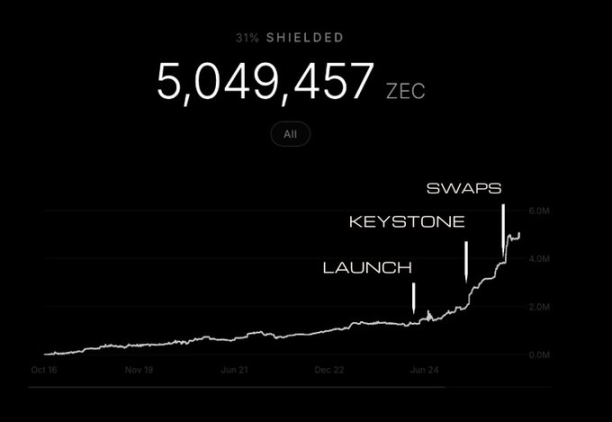
Image source: Josh Swihart tweet
However, issues with the governance structure erupted in January 2026. Josh pointed out that there were irreconcilable differences between the team and the Bootstrap board (a key non-profit governance entity in the Zcash ecosystem, registered in the U.S.) regarding the operational direction of the Zcash privacy protocol, leading to substantial changes in employment conditions.
This crisis ultimately resulted in the collective departure of the entire engineering and product team at ECC, including CEO Josh Swihart, Chief Scientist Chelsea Komlo, Senior Engineer Sean Bowe, and about 25 others. After the news broke, ZEC once fell below 400 USDT, plummeting over 14% within four hours.
ZODL's marketing director peacemonger tweeted: "We left without taking any capital, just the team and unfinished work." This group of Zcash OGs completed an uncompromising rebirth under the name ZODL.
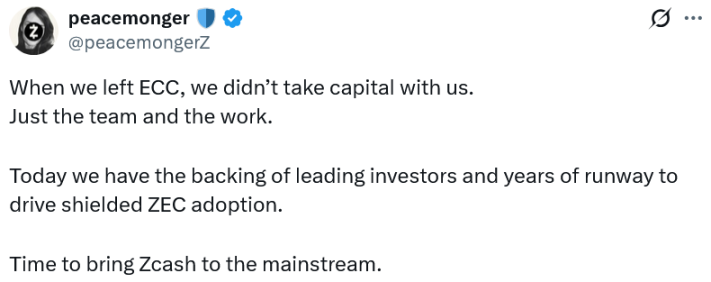
Image source: peacemonger tweet
After its establishment, ZODL not only seamlessly took over the operation of the Zodl wallet but also achieved a leap from being a "funded entity" to an "independent commercial entity."
Josh emphasized that the over $25 million in financing allows the team to turn their ambitions into reality without relying on the Zcash developer fund (Dev Fund) for funding. This independence grants the team more pure decision-making power.
For investors, ZODL's moat may not only lie in the battle-tested code but also in its core team, which has deep roots in the privacy sector for a decade and maintained a high level of consistency during the crisis.
Why Are Top Capital Investors Acting Now?
The privacy sector has seen an explosion since the end of 2025. According to Bitget market data, ZEC peaked at 557.56 USDT, while XMR (Monero) peaked at 799.10 USDT. The total market capitalization of privacy coins surpassed $24 billion.
Against this backdrop, the over $25 million financing obtained by ZODL is not only the largest private investment in the history of the Zcash ecosystem but also a collective vote from top Web3 capital on the narrative of the privacy sector.
Among the investors, Paradigm and a16z crypto represent the top institutional judgments in the cryptocurrency infrastructure field. a16z partner Ali Yahya openly stated that "privacy will be the biggest moat in crypto," and privacy has become a core investment theme for them in 2026.
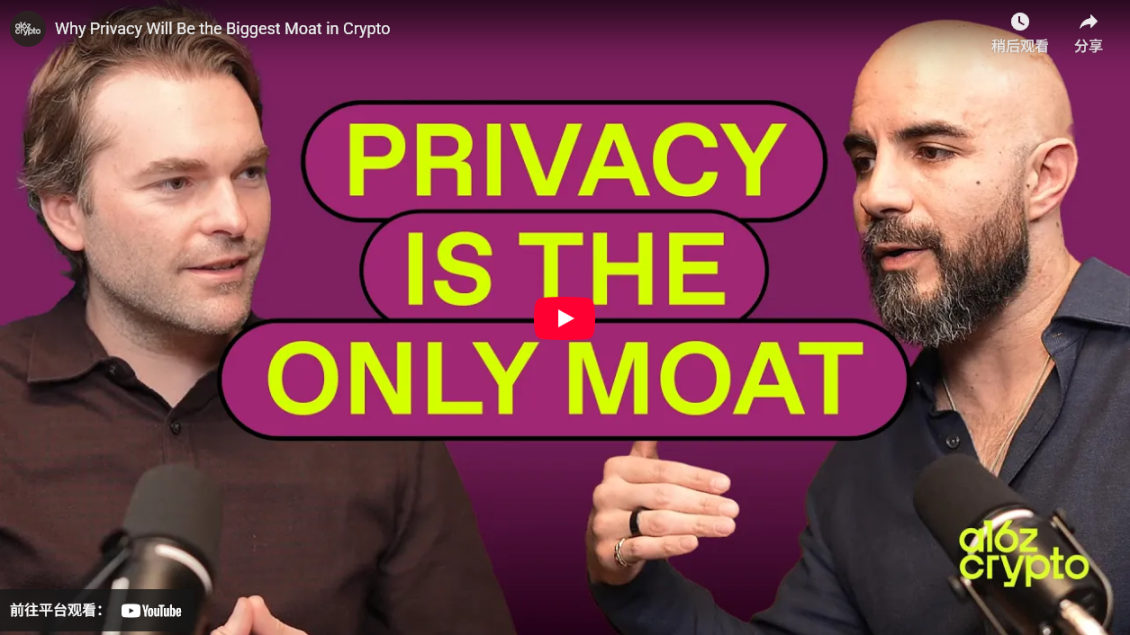
Image source: a16zcrypto podcast
Winklevoss Capital, established by the founders of Gemini, has long heavily invested in Zcash, viewing it as a core target for privacy infrastructure in the AI era; the participation of Coinbase Ventures also brings compliance endorsement and room for mainstream ecosystem integration to the project.
Angel investor Balaji Srinivasan, a well-known advocate for the "ZK-everything" vision, defines privacy as the third stage of crypto after PoW and programmability. The intersection of five parties in the same project itself is a signal.
Will ZODL Issue Tokens? What Will the Ecosystem Look Like?
Currently, the official stance on token issuance remains unclear, with the core narrative of the financing announcement still centered on "serving the ZEC ecosystem."
Moreover, directly issuing competitive tokens does not make logical sense. Investors such as Winklevoss Capital and Cypherpunk Technologies themselves hold significant amounts of ZEC, creating clear conflicts of interest.
However, investments from Paradigm and a16z in Web3 rarely occur without accompanying token subscription terms. Additionally, the $25 million seed round significantly exceeds the mere needs of developing the protocol and open-source wallet.
A more likely path is to use ZEC as the core value, complemented by lightweight governance tokens for ecosystem incentives. The possibility of tokens being issued in the short term is low, but in the medium to long term, some form of token mechanism is almost inevitable, which is also the most natural way for top institutions to achieve liquidity exit.
At the same time, the disagreement between ZODL and Bootstrap is rooted in the control of development funding and decision-making power regarding the direction of the protocol. The $25 million independent financing completely frees ZODL from reliance on the developer fund, and the negotiation leverage no longer exists.
Although there is currently no signal for a direct fork, a soft division has already occurred. ZODL controls the wallet IP and core engineering talent, while the Zcash Foundation focuses on an independent roadmap for nodes and infrastructure; these two forces will run parallel in the long term.
In the next 6 to 12 months, if public disagreements arise between the two sides over the direction of protocol upgrades, it will be a moment that ZEC investors need to be truly cautious about.
免责声明:本文章仅代表作者个人观点,不代表本平台的立场和观点。本文章仅供信息分享,不构成对任何人的任何投资建议。用户与作者之间的任何争议,与本平台无关。如网页中刊载的文章或图片涉及侵权,请提供相关的权利证明和身份证明发送邮件到support@aicoin.com,本平台相关工作人员将会进行核查。


