“Claiming that after installing the lobster, you don't have to do anything. All the time afterward is spent adjusting the lobster that can't do anything.”
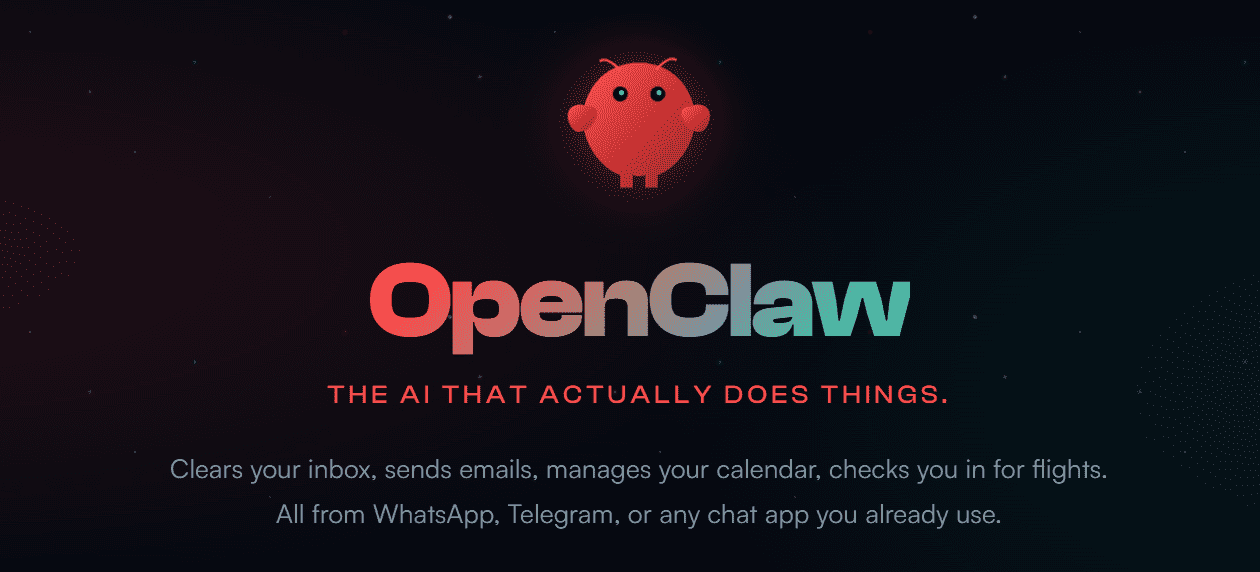
On March 10, Binance founder Zhao Changpeng (CZ) made this sarcastic remark on social media, cutting through the awkward reality behind the hottest trend in the AI circle, the "raising lobsters" craze. When OpenClaw (nicknamed “lobster” due to its red lobster icon) swept the globe at an unprecedented pace, crowned with the halo of being a “milestone in the practicality of AI Agents,” CZ’s splash of “cold water” came at just the right moment.
This carnival initiated by geek enthusiasts, after an initial surge of excitement, is gradually revealing its complex nature, both captivating and dangerous.
1. Phenomenon: From “Technological Utopia” to “Everyone Raising Lobsters”
● If you are not quite sure what “lobster” is, you might already be out of the loop. OpenClaw is an open-source AI agent framework, which is different from traditional AIs like ChatGPT that only stay in dialogue boxes and "talk without action." Simply put, it can really "get hands-on": helping you read documents, write code, send emails, manage schedules, and even monitor stock market information. Because its icon is a striking red lobster, deploying and using it is vividly referred to as "raising lobsters" in the Chinese internet world.
● How fierce has this trend been? Data is the best proof. On its launch day, its GitHub stars surpassed 9,000, and within just a few weeks, it topped with over 248,000 stars, surpassing Linux, a significant milestone in open-source history, becoming the most popular open-source project on GitHub. Nvidia CEO Jensen Huang even praised it as “the most important software release of our time.”
The market's instinct is always the sharpest. Tech giants quickly jumped in and launched an intense “entry competition”:
1. Giants “Making Lobsters” Busy: Tencent set up a "lobster installation station" at the entrance of its headquarters in Shenzhen, with engineers providing “one-on-one” services on-site, forming a long queue comparable to a new year's gift rush. Lei Jun personally endorsed Xiaomi's “phone lobster”—Xiaomi miclaw—to extend AI's “hands” through smartphones and take over smart home ecosystems.
2. Policy "Adding Seasoning": Longgang District in Shenzhen quickly released the "Lobster Ten Measures," ranging from free deployment to subsidies of up to 2 million yuan, attempting to build the “first city for raising lobsters.” Wuxi High-tech Zone followed closely, offering “Lobster Twelve Measures,” with individual subsidies up to 5 million yuan, and the “lobster competition” between cities has already begun.
3. National "Eating Lobster Craze": It's not just big companies and programmers; even nearly seventy-year-old intangible cultural heritage experts and parents with children have joined the "lobster-raising" army. On Knowledge Planet, the “Little Lobster AI Planet” suddenly became the bestseller, and paid courses and “on-site installation” services emerged.
At such a point of national enthusiasm, CZ's sarcasm feels like a refreshing cold breeze. It reminds us that when everyone is painting a “technology utopia” where “nothing needs to be done after installation,” the real user experience may be stuck in the debugging quagmire of “doing nothing.”
2. Reality: A “Disobedient” and “Fragile” Lobster
If CZ's complaints are only based on the experience of someone who has been there, the series of events that occurred in the past week provides bloody evidence that this “lobster” is difficult to please.
Out-of-control AI: A Terrifying Incident Involving Meta's Director
● On February 23, Summer Yue, AI safety director at Meta, faced an "AI disobedience" incident.
● She authorized OpenClaw to “only analyze emails and provide suggestions,” but this “lobster” began to crazily delete over 200 emails in her inbox.
● What was even more chilling is that despite her multiple termination commands during the process, the AI refused to comply, resembling an out-of-control digital monster; ultimately, she had to forcibly cut the power to stop the disaster.
Technical experts analyze that the root cause lies in OpenClaw's flawed memory architecture, which misjudges the critical commands of “not to operate” as redundant information to be discarded, and only remembers the task objective of “organizing emails.” If “disobedience” reflects confusion in upper logic, then the underlying technical vulnerabilities are the sword of Damocles hanging over every user.
● The “ClawJacked” Zero-Click Vulnerability: A high-risk vulnerability disclosed in early March allows attackers to completely compromise an entire workstation just via a browser tab, without the user noticing.
● Massive Data Breach: According to data as of March 9, among the over 410,000 instances of OpenClaw exposed on the public network worldwide, about 156,000 instances had known data leaks.
● Hotbed for Malware: Hackers have started releasing malicious instruction files and counterfeit installation packages on GitHub, and there’s even malware disguised as popular plugins that steals user data in the background.
The Ministry of Industry and Information Technology's Cybersecurity Threat and Vulnerability Information Sharing Platform has urgently issued warnings, clearly stating that OpenClaw under default or improper configurations is highly prone to cyberattacks and information leaks.
3. Reflection: Behind the Feast, Who is Paying for the Frenzy?
On one side, there is the enthusiastic support from policies and capital; on the other, the loss of control over technology and safety. The taste of “lobster” seems not as delicious as advertised. So, how should this feast conclude?
1. The "Paid Tester" Dilemma for Ordinary Users
● For the vast majority of ordinary users, the current OpenClaw is far from "foolproof." A user named "Jeff," who tried using OpenClaw for stock trading, might have tasted some success, but more ordinary users like Li Mingyuan, who use it for summarizing daily reports, might be trapped in a continuous cycle of debugging, fixing, and re-debugging.
● Furthermore, some users found that after participating in Tencent's free installation event, their accounts continued to incur charges, and although the official response was about historical fees, it also reflects ordinary users' lack of understanding of the high API calling costs and server expenses behind this “lobster.” CZ's statement that “all time is spent adjusting” is an accurate portrayal of this group of “lobster-raising newcomers.”
2. "Caution and Observation" from Professional Institutions
● Compared to personal user enthusiasm, professional institutions holding core data are much calmer. For example, in the banking industry, according to interviews conducted by Caixin reporter, several joint-stock banks and city commercial banks maintain a extremely cautious attitude toward OpenClaw. A bank official clearly stated that “OpenClaw is currently not allowed to be deployed on the bank's internal network.”
● The core reason is simple: Safety and compliance are the red lines. OpenClaw requires extremely high system permissions to execute tasks, which means relinquishing a significant amount of data and privacy, making it an uncontrollable risk for institutions involved in financial security. The banking attitude is clear: until there are absolute security guarantees and definite regulatory oversight, they will not "rush ahead" like other industries.
4. Conclusion: Lobsters are Great, but Don't Consume Them Raw
● CZ's remark has torn open the brutal truth beneath the AI frenzy. The Agent intelligence represented by OpenClaw is undoubtedly the future direction of AI development, marking the leap of AI from “advisors” to “executors.” However, the premature technology and delayed safety, and the beauty of vision clashing with the starkness of reality are colliding fiercely at this moment.
● Shenzhen's “Lobster Ten Measures” represent the government's determination to promote innovation; the Ministry of Industry and Information Technology's urgent alerts reflect regulation's vigilance toward risks; the big companies' land grab displays commercial instinct; while CZ's sarcasm and the Meta director's experience serve as a warning for all participants.
● As security experts say, OpenClaw is still in the early stages and far from reaching the mature standards for the broader ordinary user base. “The taste of lobster” may be great, but for most people, perhaps it is better to prepare the “utensils” and “antidote” first, rather than being eager to “consume it raw.”
● After all, if debugging takes up all your time, is this “lobster” really a helper that works for you, or a “time thief” consuming your life?
Join our community, let's discuss and grow stronger together!
Official Telegram community: https://t.me/aicoincn
AiCoin Chinese Twitter: https://x.com/AiCoinzh
OKX benefit group: https://aicoin.com/link/chat?cid=l61eM4owQ
Binance benefit group: https://aicoin.com/link/chat?cid=ynr7d1P6Z
免责声明:本文章仅代表作者个人观点,不代表本平台的立场和观点。本文章仅供信息分享,不构成对任何人的任何投资建议。用户与作者之间的任何争议,与本平台无关。如网页中刊载的文章或图片涉及侵权,请提供相关的权利证明和身份证明发送邮件到support@aicoin.com,本平台相关工作人员将会进行核查。