Author: Zen, PANews
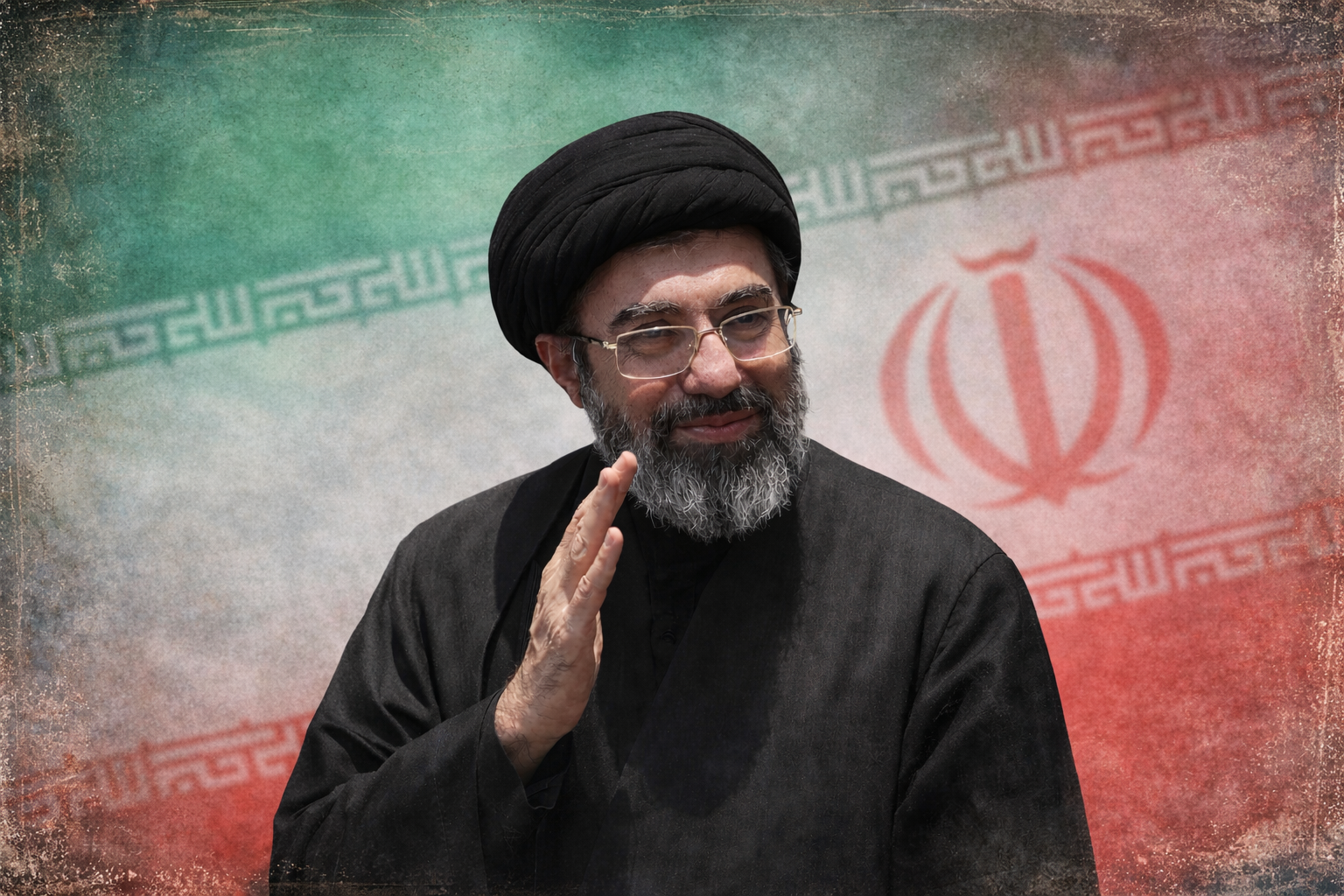
In a moment of crisis faced with external attacks and a vacuum in the highest leadership, under pressure from the Islamic Revolutionary Guard Corps (IRGC), Iran's Expert Assembly has determined that Mojtaba Khamenei, the son of the assassinated Supreme Leader Ali Khamenei, will serve as the third Supreme Leader of Iran.
Those unfamiliar with Iranian politics may have never heard of Mojtaba's name, which is not surprising. Even within Iran, he has long been out of public view. He has never risen to power through elections or been formally appointed to any government position, consistently acting in a mysterious and low-key manner. Since the deaths of his father and wife, this figure, seen as a leading candidate for Supreme Leader, has not made any public appearances.
U.S. President Trump is evidently dissatisfied with Iran's new Supreme Leader. He previously stated that while Mojtaba is the most likely successor, this outcome is unacceptable to him. Trump also dismissively stated: “They are wasting time, Khamenei’s son is a insignificant figure.” He further claimed that if this candidate did not gain his prior approval, then the new leader would not be able to hold power for long.
Perhaps, in the face of military pressure from the U.S. and Israel, Mojtaba may not be a decisive variable. But domestically in Iran, this long-avoided figure has actually been at the center of power.
Additionally, a survey published by Bloomberg earlier this year brought to light Mojtaba’s hidden business empire: a cross-border real estate network allegedly operated through intermediaries, covering London, Dubai, Frankfurt, and Mallorca, with cryptocurrencies becoming an important medium for its financial flows.
Mojtaba: From Behind the Scenes to the Forefront
Mojtaba Khamenei was born in Mashhad, Iran in 1969, as the second son of Iran’s Supreme Leader Ali Khamenei. As the son of the Supreme Leader, Mojtaba's public identity is that of a mid-level cleric, who has maintained a low profile and rarely speaks publicly.
On the surface, Mojtaba's life has been spent outside of government departments, having never held any official position. However, he has actually maintained close contact with the center of power, or rather, he has long been at the center of power.
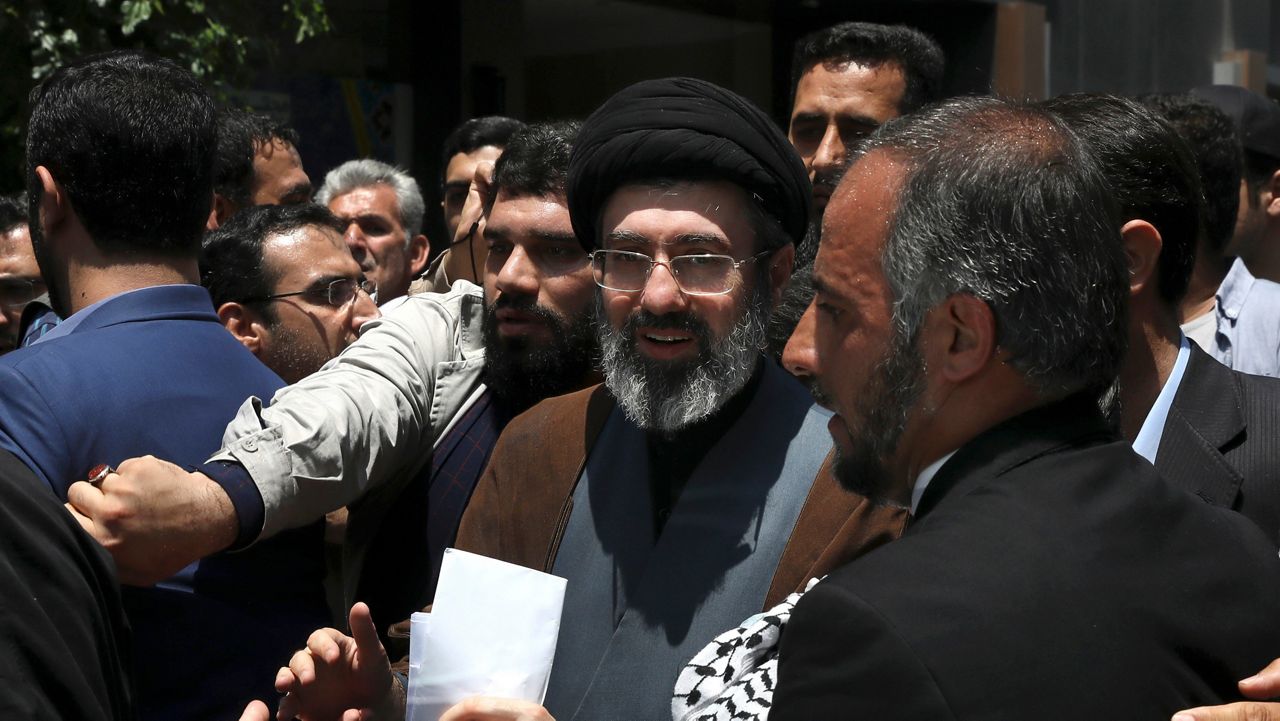
In 2019, the U.S. Treasury announced sanctions against Mojtaba, stating that he had never been elected or appointed to a government position but acted in an official capacity on behalf of the Supreme Leader. The statement also mentioned that Mojtaba was entrusted with certain leadership responsibilities by Khamenei and cooperated closely with the IRGC-QF commander and the Basij resistance organization.
Iran International reported that for at least the past twenty years, Mojtaba has been Khamenei’s closest advisor, effectively controlling the Supreme Leader's office. As Iran’s highest power institution, the Supreme Leader's office combines the traditional religious institution "Beyt" (the office of the religious authority "Marja") and bureaucratic models, controlling the vital arteries of the country: key security, political, and financial levers. Mojtaba has long lurked within the Supreme Leader's office, acting as gatekeeper and power broker beside his father.
During the Iran-Iraq War of the 1980s, Mojtaba served in a unit belonging to the Islamic Revolutionary Guard Corps, and many of his comrades later rose to senior positions in Iran's security and intelligence agencies. These wartime relationships helped lay the groundwork for Mojtaba’s long-term connections within Iran’s security apparatus.
As a key figure in Tehran's power structure, the long-hidden Mojtaba has closely linked with the IRGC and has thereby consolidated his influence within the regime's power structure. In 2009, Mojtaba orchestrated electoral fraud to help then-President Mahmoud Ahmadinejad win re-election, provoking a protracted protest that ultimately evolved into a nationwide movement against the government and the Supreme Leader. Subsequently, Mojtaba led the crackdown on the protests known as the "Green Movement" after the election.
Over the years, Mojtaba has been considered a potential successor to Khamenei. The house-arrested former Iranian Prime Minister Mir-Hossein Mousavi noted in a collection published in 2022: “Rumors about the son plotting to inherit his father's throne have been circulating for thirteen years. If this isn't true, why has no one denied it?” Afterward, Ibrahim Raisi, a former Iranian president who was once rumored to be in the "finals" with Mojtaba, also died in a helicopter accident in 2024.
Therefore, for a war-torn Iran, particularly for the hardline political core composed of Iranian politicians and security institutions, the nomination of Mojtaba—who possesses both legitimacy and control—seems to be a natural progression.
Building a Global Real Estate Empire
Having established a strong influence within the political, security, and religious institutions of the Iranian regime, Mojtaba's control and domination of the financial network is even more covert.
In January of this year, Israel's Channel 14 claimed to cite a source familiar with the IRGC's economic activities, revealing that Iranian leaders transferred 1.5 billion U.S. dollars to a trust account in Dubai through cryptocurrencies within two days, and Mojtaba was one of the individuals involved in these maneuvers.
The Khamenei family has been portrayed in official Iran as leading a simple and devout life, showing no signs of extravagance. However, according to a year-long investigation by Bloomberg, Mojtaba’s hidden immense wealth contradicts the promoted image of piety. As one of the most powerful figures in Iran and the Middle East, Mojtaba possesses a vast investment empire.
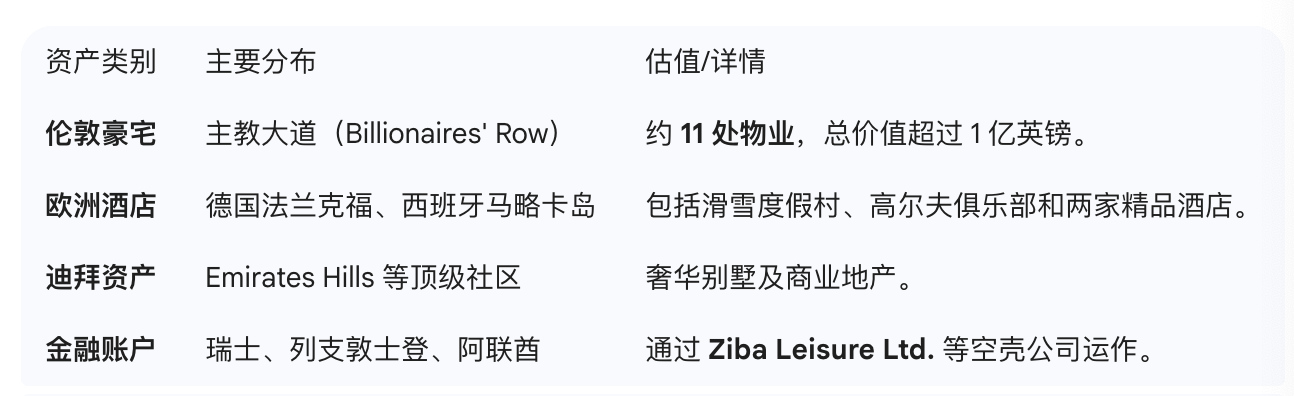
It is estimated that although the U.S. imposed sanctions on him in 2019, Khamenei still manages to funnel billions of dollars into Western markets through his extensive business network. Insiders reveal that Mojtaba's financial network encompasses a range of assets, from shipping in the Persian Gulf to Swiss bank accounts, upscale hotels in Europe, and luxury properties in the UK worth over 100 million pounds (about 138 million dollars). The funds used to acquire these assets predominantly stem from Iran's oil sales.
However, after reviewing all documents, Bloomberg found that these assets were not under Mojtaba's name but were purchased and held by an Iranian businessman named Ali Ansari. “Analyzing his (Mojtaba's) financial network, you’ll find that Ali Ansari is his principal account holder. This makes Ansari one of the most influential oligarchs in today's Iran,” said Farzin Nadimi, a senior researcher at the Washington Institute for Near East Policy, who has studied the Khamenei family's financial empire.
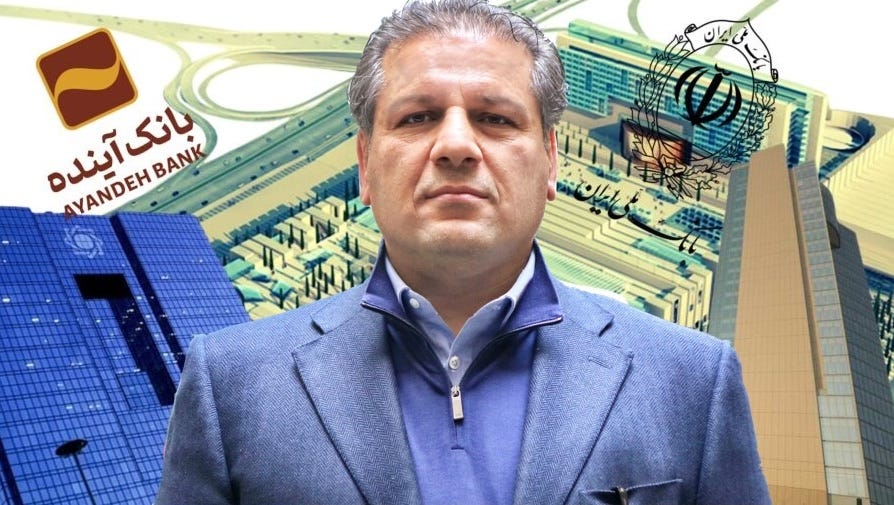
57-year-old Ansari was designated by British authorities last year as “corrupt Iranian banker and businessman” and was sanctioned for “financing” the activities of the IRGC. Domestically in Iran, Ansari's vast business network has made him one of the most outstanding private entrepreneurs.
It is said that during Ansari's youth, his father joined a reconstruction committee funded by the Supreme Leader's office, responsible for repairing religious sites, which acquainted Ansari's father with senior clerics, including members of Khamenei's inner circle. Additionally, Ansari enlisted during the late stages of the Iran-Iraq War, forming a “brotherhood” with Mojtaba, who was then the son of the Iranian president Khamenei. In June 2025, at Ansari's father's funeral, family and senior advisors of the Supreme Leader were in attendance, highlighting the ongoing close relationship between the Ansari family and the Iranian leadership.
After the Iran-Iraq War, Ansari gradually emerged as a rising entrepreneur in Iran. In 2009, he founded TAT Bank, later merging to establish Ayandeh Bank in 2013. According to Ansari's vision, the bank officially began construction of a lavish shopping mall named “Iran Mall” in 2018. Iran Mall is touted as the largest shopping mall in the world and set the Guinness World Record for the longest continuous concrete pouring during its initial phases.
Last year, Ayandeh Bank went bankrupt due to debt issues, internal lending and Ponzi scheme allegations, and controversies stemming from close political relationships with officials, and was merged into Iran's National Bank. Publicly, Ansari is the principal shareholder of Ayandeh Bank. However, insiders reveal that Mojtaba is the central figure behind the operational and shopping mall projects of Ayandeh Bank. It is said that Ansari would privately meet with Mojtaba in upscale neighborhoods of Tehran and often held secret discussions in Ayandeh's office.
According to insiders, as Ansari's business empire continues to expand within Iran, his role as Mojtaba's financial channel overseas has become increasingly significant—he has established banking relations across Europe and transferred oil export profits through a complex network of companies in the UAE. U.S. officials and insiders indicate that sanctions have forced the majority of Iran's National Oil Company (NOC) crude oil transactions into opaque channels involving shell companies, intermediaries, and informal traders.
Tracing the complex company network, the Ansari Group has built a massive overseas real estate commercial empire. Bloomberg tracked this network to own dozens of properties in London alone, as well as several five-star hotels in Germany’s financial hub Frankfurt and Spain.
“The Iranian government is trying to solidify its presence in the German financial system,” stated Nargis Eskandari-Grunberg, the Vice Mayor of Frankfurt, who was born in Tehran and has long criticized the leadership of the Iranian Islamic Republic: “They are abusing our systems.”
Supreme Leader Position Intensifies Power Struggle in Iran
From political and military influence to financial network layouts, Mojtaba has quietly prepared everything for inheriting the Supreme Leader's power.
However, the long-hidden Mojtaba also faces dissent. According to Iran International, a group of opposition members contacted the Chairman of the National Assembly and leadership committee members last Wednesday, warning that Mojtaba’s succession could raise public concerns about dynastic leadership and an Islamic Republic that resembles a monarchy.
One assembly member, in a phone call with the chairman and parliamentary leadership, stated: “Ayatollah Ali Khamenei opposed the idea of his son holding a leadership position and has never allowed this question to be raised during his lifetime.” Additionally, other members expressed that Mojtaba does not have an established and public religious and jurisprudential status, thus making his selection as the country's highest jurist (Vali-ye Faqih) lack religious legitimacy. These opposing representatives called for Mojtaba to step down, or the election process could be deemed “invalid.”
Amid increasing reports of discord and stalemate, Iran's Expediency Council decided to suspend the operations of the Expert Assembly (the constitutionally mandated body responsible for selecting the Supreme Leader) and transfer power to a temporary leadership institution. According to Article 111 of the Iranian Constitution, this shift elevated the status of Iranian President Masoud Bezazehkian to that of the Supreme Leader, granting him many Supreme Leader powers, including command over the armed forces.
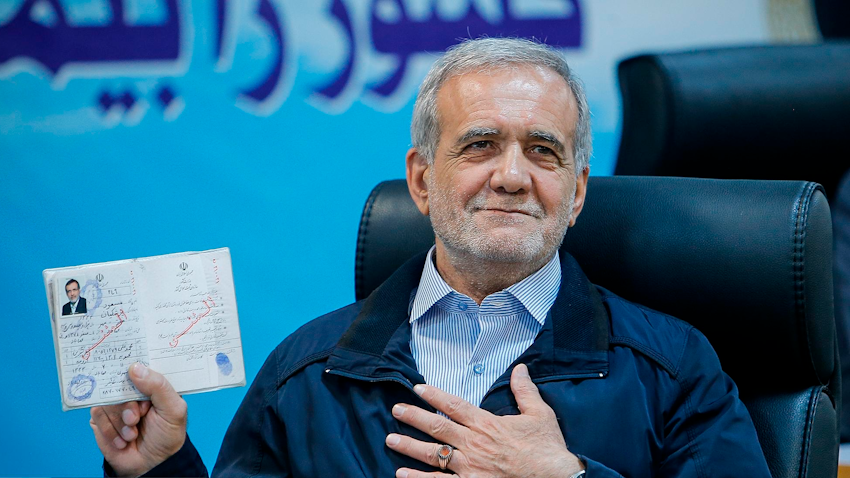
However, Bezazehkian clearly lacks the ability to control the situation. On March 7, the Iranian president claimed that the temporary leadership committee had approved that it would not launch attacks or missile strikes against neighboring countries. Yet, several Gulf countries were still subjected to drone airstrikes. Following criticism from other hardline Iranian leaders, Bezazehkian retracted his apology statement.
Clearly, the IRGC continues to play a central role in both war and domestic politics, heavily involved in the selection and determination of the power successor. Despite constitutional sensitivities and resistance from some religious institutions, the organization remains steadfast in supporting Mojtaba. Insiders reveal that the IRGC commanders have been directly contacting and lobbying members, exerting pressure to persuade opposing representatives.
For Mojtaba, starting from the ruins of his father's era, this new leader, who has consistently projected a hardline image, faces perhaps even greater difficulty in reaching any compromise, following the events where both his father and wife died in airstrikes.
However, as Israel and the U.S. view a threatening successor as "a clear target for elimination," if Mojtaba adheres to Islamic law's “eye for an eye” (qisas), he will inevitably face greater risks; yet if he accepts Trump's demands to shift policies, that would mean abandoning his father's political legacy of 37 years.
Now, the Islamic Republic of Iran, mired in war and economic crisis, stands at a crossroads. And for the long-dominant Khamenei family, it seems that for the first time in forty years, time has become the scarcest resource.
免责声明:本文章仅代表作者个人观点,不代表本平台的立场和观点。本文章仅供信息分享,不构成对任何人的任何投资建议。用户与作者之间的任何争议,与本平台无关。如网页中刊载的文章或图片涉及侵权,请提供相关的权利证明和身份证明发送邮件到support@aicoin.com,本平台相关工作人员将会进行核查。


