The time has moved to the year 2026, and the narrative logic of the cryptocurrency market has fundamentally reversed. If the industry tone a few years ago was "crypto natives trying to disrupt Wall Street," then today's reality is — traditional financial giants (TradFi) have not only completely taken over the pricing power of this emerging asset class but are also completing a textbook "reverse takeover" through extremely deep penetration of underlying infrastructure.
Two landmark events that occurred in the past 24 hours have completely torn this layer of warmth apart: first, Morgan Stanley officially confirmed the selection of Coinbase and the over 200-year-old BNY Mellon as its joint custodians for a spot Bitcoin ETF; second, Intercontinental Exchange (ICE), the parent company of the NYSE, announced a strategic investment in the leading crypto trading platform OKX, valuing it at $25 billion, gaining a board seat and establishing an unprecedented deep bond in data acquisition and asset tokenization (RWA).
These two events are not isolated news, but rather key pieces dropped by traditional financial giants in the process of crypto asset compliance. As practitioners, we must penetrate the surface benefits and re-examine the profound alienation that Bitcoin and the entire crypto market are undergoing from the perspective of quantitative microstructure, asset custody logic, and the global financial power game.
At the beginning of the approval of the spot Bitcoin ETF, Coinbase, with its first-mover advantage in the crypto space, almost monopolized the custody business of all Wall Street issuers. However, Wall Street's DNA is filled with extreme fear of "single points of failure." Morgan Stanley's introduction of BNY Mellon as a co-custodian is essentially a long-planned act of "usurpation" and risk dilution.
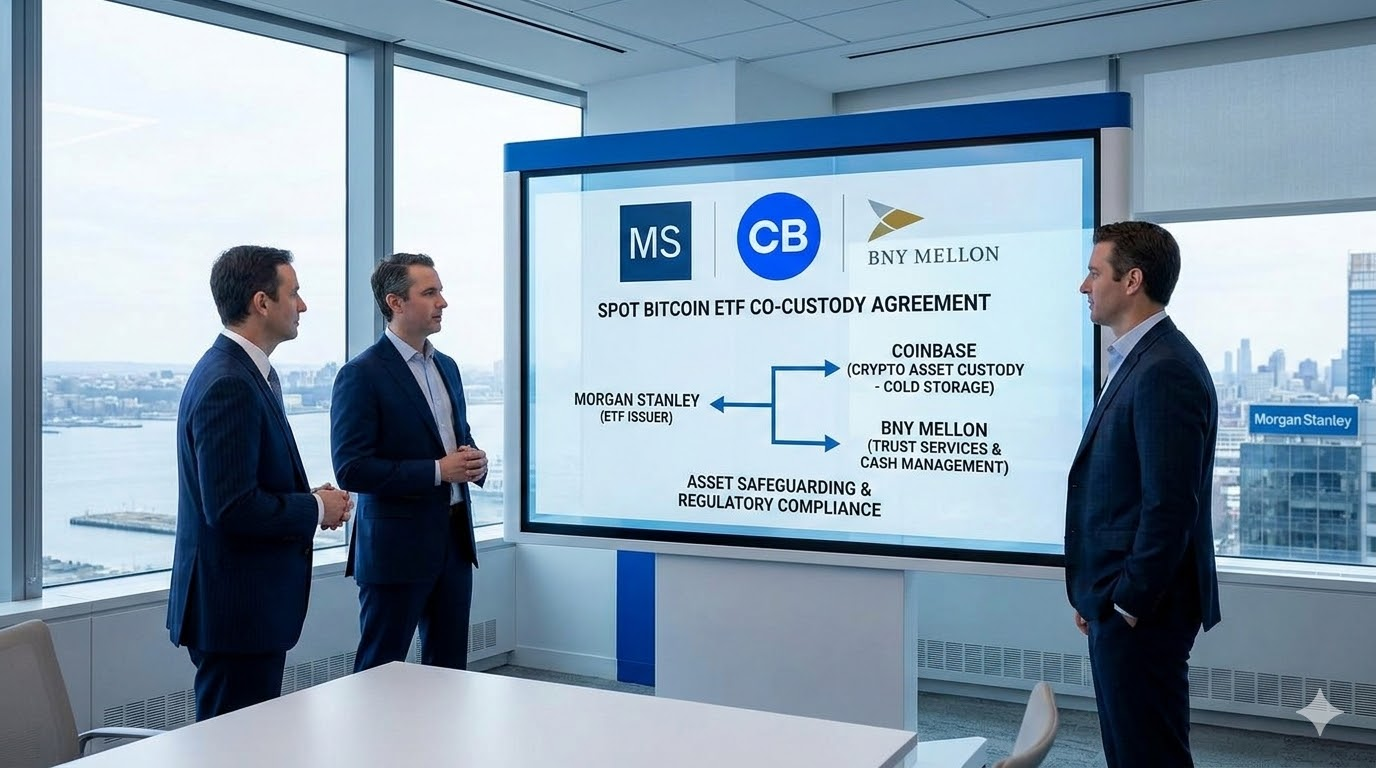
Previously, crypto-native companies sought traditional finance to connect to their fiat gateways, but now, Morgan Stanley, through a "hybrid" custody model (native crypto oligarchs + century-old banks), has directly stripped Coinbase of its absolute voice in the custody field. As the largest custodian bank globally, BNY Mellon, with over $40 trillion in assets under custody, indicates that the storage standards for Bitcoin are being forcibly pulled into the DTCC (Depository Trust & Clearing Corporation) system of traditional securities.
From the perspective of quantitative trading, the decentralization of custody rights means a reevaluation of counterparty risk. When all underlying assets of ETFs are concentrated in a single crypto institution, any liquidity crunch triggered by a hacker attack or internal compliance will be transmitted to the U.S. stock market through the ETF’s redemption mechanism, causing a systemic disaster.
Morgan Stanley's "dual-track system" has established a firewall. In the future, market makers engaged in basis trading or ETF redemption market making will directly interface with BNY Mellon's API for margin calculations and risk exposure management, instead of solely relying on on-chain data. This transfer of underlying credit is the first step of Wall Street’s takeover of crypto infrastructure.
If Morgan Stanley is fortifying its defenses, then the Intercontinental Exchange's (ICE) high-profile investment in OKX is a direct acquisition of liquidity in crypto assets on the offensive front. The $25 billion valuation and a board seat represent not just a financial investment, but a strategic merger concerning the restructuring of the market's microstructure.
A key point in the agreement is: "OKX will provide ICE with real-time cryptocurrency price information". In quantitative finance, high-frequency data is the essence of pricing power.

As one of the largest financial data and exchange operators in the world, ICE's mastery of dedicated lines and microsecond-level data distribution capabilities is a lifeline for Wall Street's high-frequency trading firms. When the depth of OKX's order book and trade-by-trade data is directly connected to ICE's global data sources, it means Wall Street's quantitative models can seamlessly and without delay incorporate Bitcoin as a macro factor into their cross-asset volatility arbitrage models.
Traditional funds no longer need to sidestep inefficient crypto APIs but can directly pour liquidity into the crypto market via the familiar Bloomberg terminal or ICE's own network.
The "OKX users trading NYSE tokenized stocks and derivatives" feature launching in the second half of 2026 is further proof of ICE’s strategic maneuver.
On the surface, this broadens the crypto exchange business, allowing crypto-native users to trade derivatives of Apple, Tesla, or the S&P 500 around the clock. However, in essence, it is Wall Street’s approach to siphoning off the native liquidity of the crypto market using RWA. When the crypto market's whales and retail investors discover they can directly trade traditional securities, which are backed by the NYSE and have absolute liquidity, using USDT on OKX, the existing funds of Bitcoin and altcoins will be massively absorbed. Wall Street did not destroy crypto exchanges; rather, they transformed them into “digital storefronts” for traditional finance to dump US assets into the global sinking market.
With the implementation of these two events, we must confront a harsh reality: the pricing power of the crypto market has experienced an irreversible transfer.
In the past, Bitcoin's volatility was dominated by crypto whales, on-chain liquidation leverage, and unregulated offshore exchanges. But now, as the holdings of the spot ETF occupy an increasingly high proportion of the circulating supply, the microstructure of the Bitcoin market has been thoroughly transformed by Wall Street.
When institutions representing the strictest compliance standards and the highest concentration of power, such as Morgan Stanley, BNY Mellon, and ICE, become the largest gatekeepers, data distributors, and actual controllers of Bitcoin, we can't help but return to that soul-stirring deep reflection: Is Bitcoin still that "anti-censorship asset"?
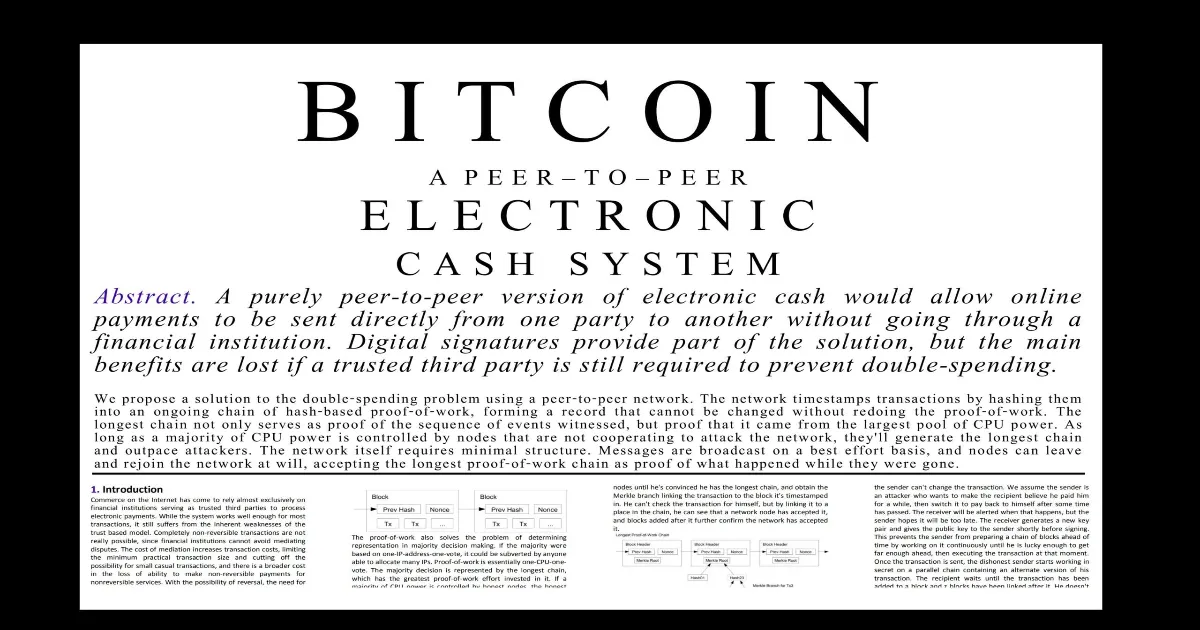
The Bitcoin conceived by Satoshi Nakamoto in the 2008 white paper is a "peer-to-peer electronic cash system," whose core philosophy is to decentralize, resist censorship, and physically isolate against the excessive issuance systems of traditional central bank fiat. However, today, when millions of Bitcoins are locked in strictly regulated cold wallets at BNY Mellon, and when these assets are packaged into ETF shares that are strictly audited by the SEC and bound by DTCC clearing rules, their "anti-censorship" attributes have effectively been indefinitely suspended.
For traditional investors purchasing ETFs, they own not private keys, but a string of numbers on the custodian's ledger. If an extreme regulatory event occurs in the future, the U.S. government need not breach Bitcoin's SHA-256 cryptographic defense; a mere administrative order can freeze significant assets in BNY Mellon or Coinbase custodial accounts. In this sense, Bitcoin has been successfully "reconciled," transformed from an experiment attempting to disrupt financial hegemony into an extremely successful, Wall Street-audited "securitized tool."
Wall Street hasn't eliminated Bitcoin; they merely bought it, made it compliant, and ultimately became its new owners. The once-proud "technological moat" of crypto-native companies has ultimately been reduced to a highly valuable stepping stone in the face of Wall Street's trillions of dollars in capital and centuries of global clearing networks.
For professional quantitative traders and financial practitioners, this is not a bad thing — it means tighter bid-ask spreads, larger derivatives capacity, and richer arbitrage strategies. But for those early evangelists still holding onto the "cypherpunk" ideal, this is a tragic metaphor-filled era.
In the spring of 2026, Bitcoin's price may continually set new highs, but behind that flashy K-line, holding the reins of Satoshi's horse are Wall Street bankers in tailored suits. Power has executed a silent transfer, while most only hear the cheers of gold coins clashing.
免责声明:本文章仅代表作者个人观点,不代表本平台的立场和观点。本文章仅供信息分享,不构成对任何人的任何投资建议。用户与作者之间的任何争议,与本平台无关。如网页中刊载的文章或图片涉及侵权,请提供相关的权利证明和身份证明发送邮件到support@aicoin.com,本平台相关工作人员将会进行核查。