Written by: Liang Yu
Reviewed by: Zhao Yidan
In February 2026, China's regulatory authorities clearly delineated the future path for real-world assets (RWA) and virtual assets: comprehensive and strict regulation domestically, and encouragement of compliant operations abroad. This clear signal of "opening" and "prohibition" points the direction for the entire industry.
On February 6, the China Securities Regulatory Commission (CSRC) issued the "Regulatory Guidelines for the Offshore Issuance of Asset-Backed Securities Tokens for Domestic Assets," establishing a clear filing framework for domestic assets to issue RWA abroad for the first time. The following day, the People's Bank of China and eight other departments jointly published a document strictly prohibiting any issuance of offshore RMB stablecoins without approval. This set of measures established the core principle of "real assets can go abroad in compliance, but the bottom line of monetary sovereignty cannot be violated."
Once domestic assets obtain the "permit" to go abroad, where will they flow? Currently, among institutions that can provide complete services for compliant listing, custody, and trading abroad, Hong Kong's licensed virtual asset trading platforms (VATPs) are a key option with distinct characteristics and clear advantages. Other licensed platforms in places like Singapore also offer similar services, but Hong Kong's irreplaceable position lies in the categories of trading assets (tokenized securities) and policy alignment. Unlike traditional license Type 1, which can only act as a distributor, VATP acts as a key hub connecting compliant assets with global investors. Even more transformational is that Hong Kong's VATP is about to be authorized to offer margin trading. This means that RWA will fully integrate into the efficient trading logic of traditional finance, and its capital leverage efficiency will far exceed that of the DeFi model, which requires full pre-funding.
China's new regulatory framework is forming a powerful synergy with Hong Kong's unique functional advantages. The mainland has constructed a safe "factory standard," while Hong Kong, with its uniquely global institutional advantages, is ready to upgrade to an "international trading market" with both depth and efficiency. A new chapter focused on the development of RWA driven by policy and centered in Hong Kong has already been unveiled.
1. The Formal Establishment of the RWA Regulatory Framework in China
After months of market speculation and window guidance, domestic assets' issuance of RWA abroad has received a clear legal identity. The CSRC's announcement No. 1 of 2026, released on February 6, marks the formal establishment of the regulatory framework in this field.
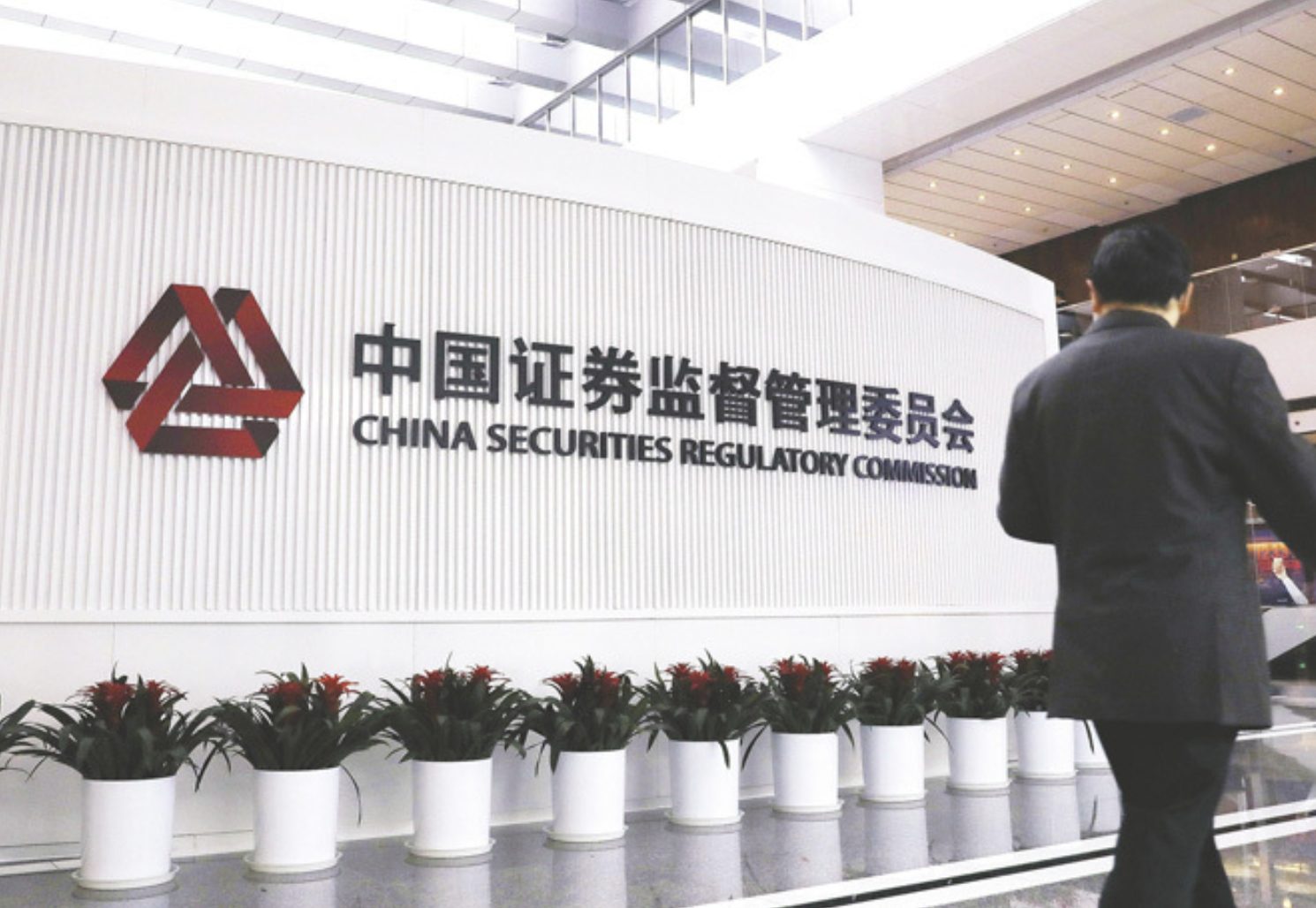
This document, entitled "Regulatory Guidelines for the Offshore Issuance of Asset-Backed Securities Tokens for Domestic Assets," for the first time defines RWA positively from an official level. According to the Guidelines, such activities refer to "the issuance of tokenized equity certificates overseas, supported by cash flows generated from domestic assets or related asset rights, utilizing encryption technology and distributed ledger or similar technologies."
The core principle of the regulatory authorities is "same business, same risk, same rules." This means that tokenized securities do not gain regulatory exemption due to their technological facade, but are included in the existing securities regulatory framework.
In terms of responsibility division, the CSRC is in charge of regulating equity and asset securitization-related RWA, while the National Development and Reform Commission (NDRC) is responsible for the regulation of foreign debt-related RWAs. Similarly, just like traditional overseas financing, matters related to foreign fundraising returning to the mainland are regulated by the State Administration of Foreign Exchange in accordance with the law. This arrangement clearly delineates the responsibilities of various departments, providing market participants with a clear compliance path.
2. The Unique Positioning and Functional Evolution of Hong Kong VATP
When the mainland policy clearly defined the basic path of "domestic assets, overseas issuance," Hong Kong's role as a "super connector" became crucial. The licensed virtual asset trading platforms in Hong Kong are the core hub for this role to materialize.
The positioning of Hong Kong VATPs has long surpassed that of a mere trading venue. It is currently the only "one-stop" platform overseas capable of completing compliant listing, custody, and trading simultaneously. In contrast, traditional Type 1 licensed institutions in this field have limited functions and can only engage in distribution activities.
Recently, the Hong Kong Securities and Futures Commission is actively considering allowing licensed VATPs to provide secondary trading services for tokenized securities to retail clients. Previously, retail investors could only subscribe and redeem tokenized products in the primary market, and the lack of liquidity seriously constrained market depth. The opening of the secondary market will allow tokenized securities to be traded freely like traditional securities, greatly enhancing capital efficiency and market attractiveness.
Crucially, Hong Kong has established the clearest and most direct regulatory framework for tokenized securities trading on virtual asset trading platforms globally. Through a special licensing system, the Hong Kong SFC has clearly allowed licensed VATPs to provide such services to retail investors, which, compared to Singapore's use of existing securities licenses and the EU's ongoing implementation of new regulations, endows Hong Kong with unique institutional advantages and first-mover momentum in constructing a "mixed asset" trading market. Investors are looking forward to achieving seamless trading from Bitcoin to tokenized treasury bonds within one account.
3. Complementarity and Synergy: How Policies from Both Places Form a Strategic Closed Loop
If we shift our gaze from a single document to overlook the recent series of regulatory actions in mainland China and Hong Kong, we will find a strategically synergistic picture forming. The introduction of the mainland regulatory framework addresses the issues of "where the assets come from" and "how to go abroad in compliance."
The filing system established by the Guidelines paves a clear compliance path for high-quality domestic assets (such as infrastructure revenue rights, accounts receivable, lease claims, etc.) to be transformed into tradable digital securities abroad through technological means. Meanwhile, the evolution of the Hong Kong market addresses "where to trade after going out" and "how to circulate efficiently."
The secondary market liquidity provided by Hong Kong VATPs, the upcoming introduction of a margin trading mechanism, and the open environment for global investors together provide a mature market for value discovery and efficient circulation for these "going abroad" RWA products. The policies from both places, sequentially working together, form a complete business closed loop from the asset end to the trading end.
This synergy not only serves market efficiency but also facilitates a higher-level financial strategy. Against the backdrop of RMB internationalization and financial opening, allowing domestic assets to connect with global capital markets through RWA in a controlled and transparent manner is a proactive attempt to explore new channels for cross-border financing. Hong Kong, with its common law system, free flow of funds, and international market environment, becomes the most ideal "testbed" and "firewall" for implementing this strategy.
4. Market Impact: How Will the New Regulations Change the Rules of the Game for Participants
The new regulatory landscape delineates new action quadrants for different types of market participants. For domestic asset holders (such as enterprises and financial institutions), the clear filing process represents opportunities. They can seek better financing conditions and a broader investor base for assets that were previously difficult to activate or had high cross-border financing costs through the RWA structure abroad.
For international capital and professional investors, a RWA market supported by compliant Chinese underlying assets and traded on compliant platforms in Hong Kong provides an extremely attractive alternative investment option. This differs from the highly volatile cryptocurrency, as it is a robust asset supported by real cash flows and enjoys legal and regulatory protection in Hong Kong.
For fintech companies and service providers, opportunities exist at both ends. In the mainland, the opportunity lies in providing asset holders with RWA structure design, technical support, and filing guidance that meet regulatory requirements. In Hong Kong and overseas, the opportunity lies in providing trading platforms, custodians, market makers, etc., with technical solutions to enhance the liquidity, security, and user experience of RWA products.
However, challenges coexist with opportunities. Compliance costs are the primary threshold, as cross-border filing involves multiple departments and complex processes. Technological risks cannot be ignored either; the security and interoperability of blockchain systems, as well as the reliability of smart contracts, are the business foundation. Additionally, market education is a heavy responsibility, requiring a clear explanation to global investors about the structure, risks, and value of Chinese RWA products.
5. Clear Red Lines: Why Issuing Stablecoins Pegged to RMB is Strictly Prohibited
Along with the release of the RWA Guidelines, a more stringent document was also published. The People's Bank of China, in conjunction with the NDRC, CSRC, and eight other departments, issued the "Notice on Further Preventing and Addressing Risks Related to Virtual Currency and Other Related Risks."
This notice, referred to by the industry as "the strictest in history," reiterates that virtual currency-related activities are considered illegal financial activities while drawing a non-negotiable red line regarding monetary sovereignty.
The notice clearly states, "Without the legal approval of relevant departments, no entities or individuals domestically or abroad may issue stablecoins pegged to the RMB overseas."
The logic of the regulation is that stablecoins pegged to fiat currencies, in circulation, indirectly fulfill some functions of legal tender, which concerns monetary sovereignty and financial stability. The aim is to cut off the issuance channel of "shadow currencies" that may impact the status of the RMB from the source, preventing them from becoming vehicles for illegal cross-border capital flows.
It is noteworthy that the notice also expresses its stance on RWA tokenization activities, distinguishing them from purely speculative virtual currency trading. Although it stipulates that engaging in related activities and providing intermediary services domestically is suspected of illegal financial activity, it also leaves room for exceptions for "related business activities conducted with the lawful approval of business authorities, relying on specific financial infrastructure."
This reflects a differentiated regulatory approach of "blocking the illegal and retaining the compliant," preserving space for the regulated development of RWA under a strict framework.
6. Future Outlook: Three Major Trends in the Development of RWA
With the implementation of the regulatory framework, the development path of China's relevant RWA market is becoming clearer. First, the types of assets will undergo an evolution from simple to complex. In the initial phase, cash flow-stable and clearly structured asset securitization products (such as accounts receivable, financed leasing claims) and money market funds will become mainstream.
As the market matures and regulatory experience accumulates, more complex asset types, such as commercial real estate, infrastructure revenue rights, and even intellectual property, may gradually be included.
Second, Hong Kong's trading ecosystem will become increasingly rich and specialized. In addition to spot trading, margin trading, lending, and derivatives are complex financial features that may unfold around RWA products, enhancing the capital efficiency and financial depth of the entire ecosystem. A series of traditional financial market intermediary services, such as professional market makers, rating agencies, and audit firms, will also be introduced, making the market more robust.
Finally, regulatory technology and compliance technology will experience explosive growth. How to continuously regulate on-chain RWA assets, ensure that fund flows meet filing purposes, and prevent money laundering risks will create a huge demand for RegTech and SupTech. Technology companies capable of providing penetrating and automated regulatory solutions will occupy a leading position in the new round of financial infrastructure upgrades.
The global tide of RWA is unstoppable. According to industry data platforms, by the end of 2025, the total value of global RWA issuance has exceeded $18 billion, with a striking eightfold year-on-year growth. Mainland China and Hong Kong are proactively embedding themselves into this transformation through a dual-driven approach of "regulatory framework" and "market practice."
In the future, when investors are easily buying and selling a tokenized security backed by the revenue rights of a certain highway in China on compliant trading platforms in Hong Kong, they may truly understand how the seemingly independent announcements of February 2026 have quietly reshaped the global flow map of assets.
Part of the information comes from:
· "Heavyweight! Hong Kong SFC Considers Allowing Retail to Trade Tokenized Securities: Is the 'Hong Kong Moment' for RWA Here?"
· "The Central Bank and Eight Departments: No Units or Individuals May Issue Stablecoins Pegged to RMB Overseas Without Relevant Department Approval"
· "Caixin: The Chinese Government Allows Domestic Assets to Issue RWA Offshore Regulatory Framework Announced"
免责声明:本文章仅代表作者个人观点,不代表本平台的立场和观点。本文章仅供信息分享,不构成对任何人的任何投资建议。用户与作者之间的任何争议,与本平台无关。如网页中刊载的文章或图片涉及侵权,请提供相关的权利证明和身份证明发送邮件到support@aicoin.com,本平台相关工作人员将会进行核查。


