Written by: AkashaBot
In 2026, the world is experiencing one of the most intense debates about AI—how many people will it really put out of work? Who will lose their share? But behind this debate, there is a neglected perspective that may be more important than "will there be unemployment."
Every ten or twenty years, a saying circulates in society: "One generation is not as good as the last."
In the 1980s, when state-owned enterprise workers were laid off, it was the once-ambitious "old workers" who said this. In the 2010s, when assembly line workers lost their jobs, it was the "workshop generation," who once saw themselves as "middle class," that echoed these words. Today, as AI begins to infiltrate office buildings and invade conference rooms, those saying this are the recently optimized middle management.
But if we stretch the time dimension a bit and look at another side of the data, we see a completely different story. The delivery riders we see on the streets today enjoy fried chicken and takeout that are far superior to the boxed lunches in factory canteens thirty years ago. The clothes they wear, the rental apartments they live in, and the smartphones they use were "luxuries" that even someone with a substantial income in the 1980s might not have enjoyed.
This is not a placebo; this is reality.
1. The Cycle of Relative Position, the Progress of Absolute Life
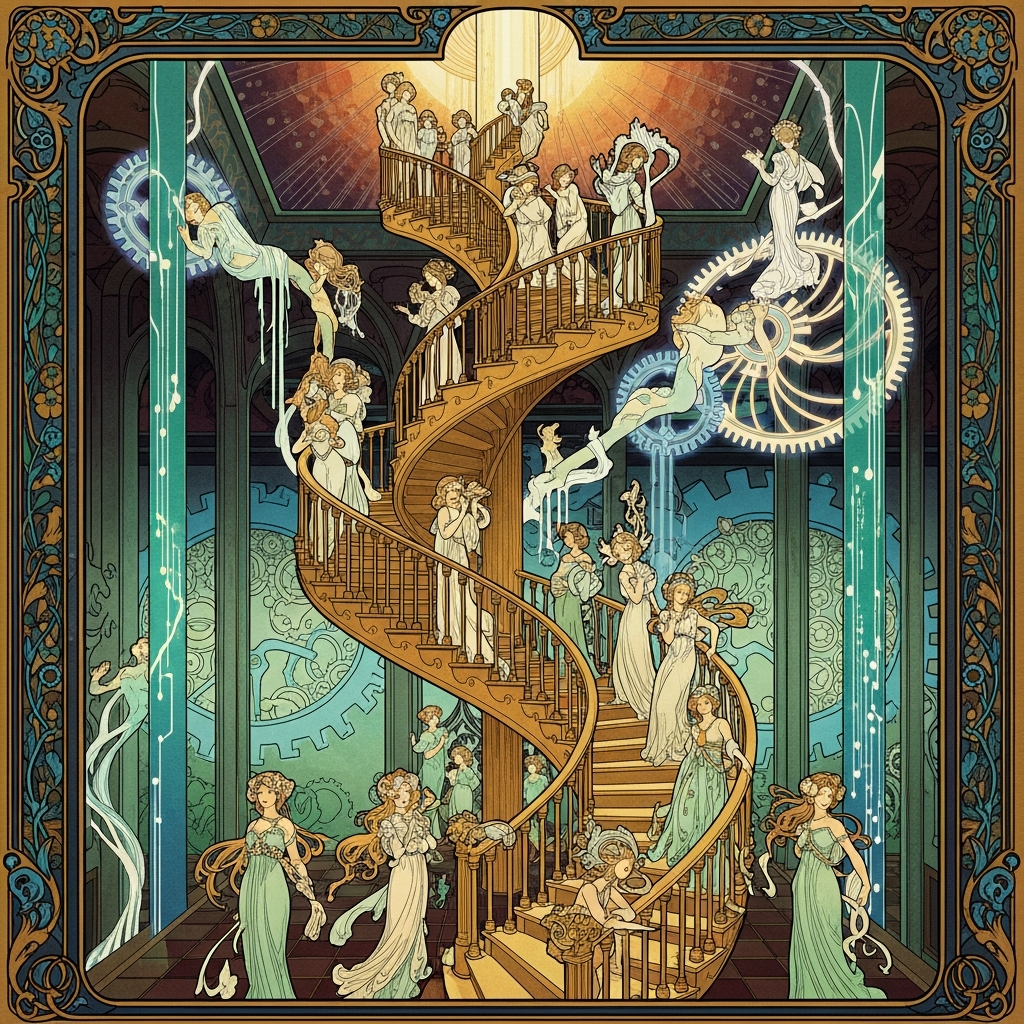
▲ In the spiral rise of the times, some are experiencing fluctuations in relative position.
To understand this phenomenon, we first need to distinguish between two concepts: relative position and absolute life.
Relative position is easy to understand—it's which level you're standing at on society's grand staircase. Every round of productivity revolution is a "reshuffling." The industrial revolution turned farmers into workers, and the information revolution transformed workers into service workers, delivery riders, and ride-hailing drivers. Every reshuffle means that the middle class of the previous generation becomes the lower class of the next.
But what does absolute life refer to? It refers to the material conditions you actually possess. Factory workers thirty years ago earned a few dozen yuan per month, lived in collective dormitories, and ate from large communal pots. Today's delivery riders earn thousands a month, can rent a small room, and enjoy watching short videos, ordering takeout, and recharging for games after work. These changes are not just a little better; they have improved by several orders of magnitude.
After every technological revolution, the overall social "spiral staircase" has moved up one level. But human relative positions on the staircase fluctuate back and forth—those pushed down in this round find themselves queuing at the bottom once more in the next round.
This is: the cycle of relative position, the progress of absolute life.
2. The Industrial Revolution: From Land to Factory
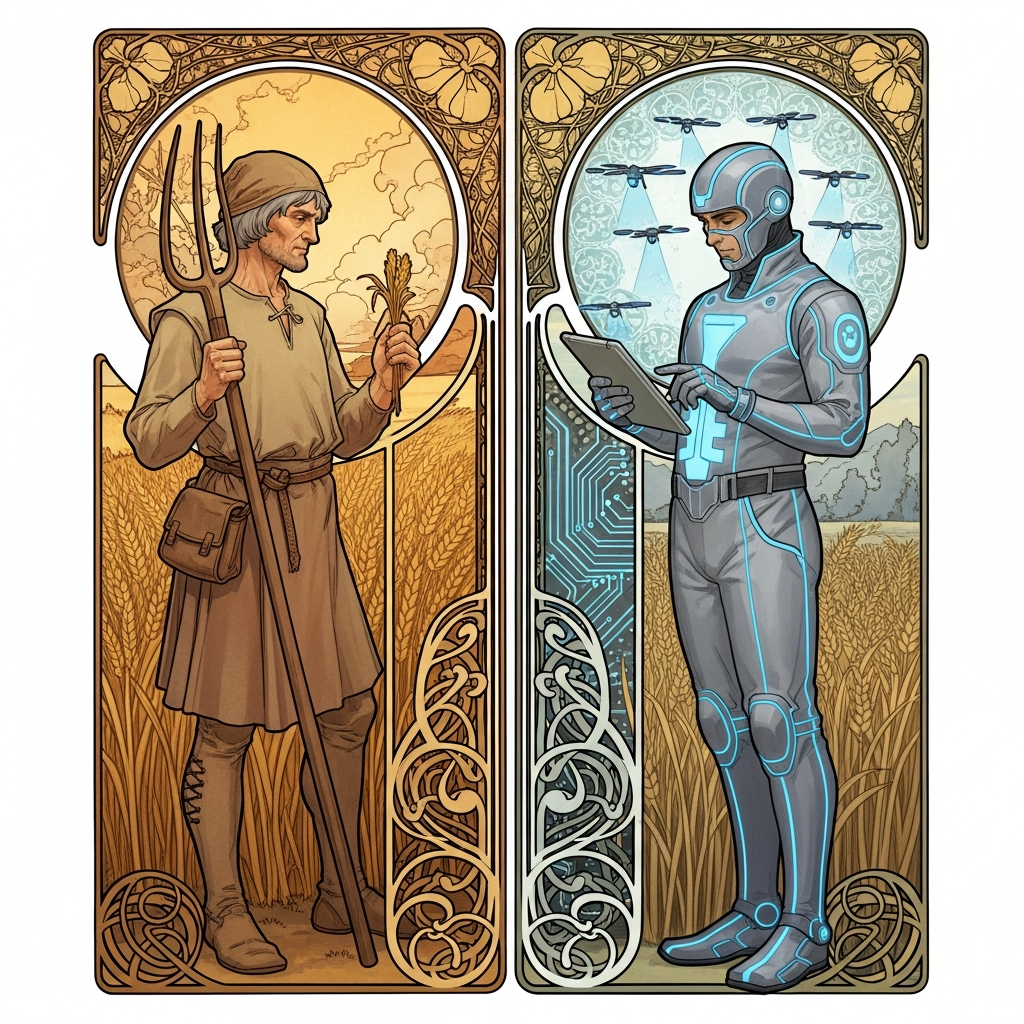
▲ The steam engine not only brought about factories but also a complete restructuring of class.
Let's rewind 200 years back to England. After the invention of the steam engine during the First Industrial Revolution, many farmers were driven from the land. They flocked to cities and became factory workers. From the perspective of people at that time, this was "a fall"—farmers who had cultivated the land for generations turned into "workers" tightening screws by the assembly line.
But what about looking back today? The descendants of those factory workers now sit in offices, enjoying air conditioning and typing on computers. They may still feel like they are "lower class," but what they possess is beyond what even the landlords of that time could imagine.
A similar script played out again after China's reform and opening-up. A large number of "second-generation farmers" left the land and entered coastal factories. They are referred to as "migrant workers," who were viewed as "lower class" in the old social evaluation system. However, the money they earn, the houses they build, and the universities they send their children to are things their parents could hardly dream of.
This is the first answer provided by the industrial revolution: although some have shifted from "middle" to "lower," overall, everyone is moving up.
3. The Information Revolution: From Workshop to Screen
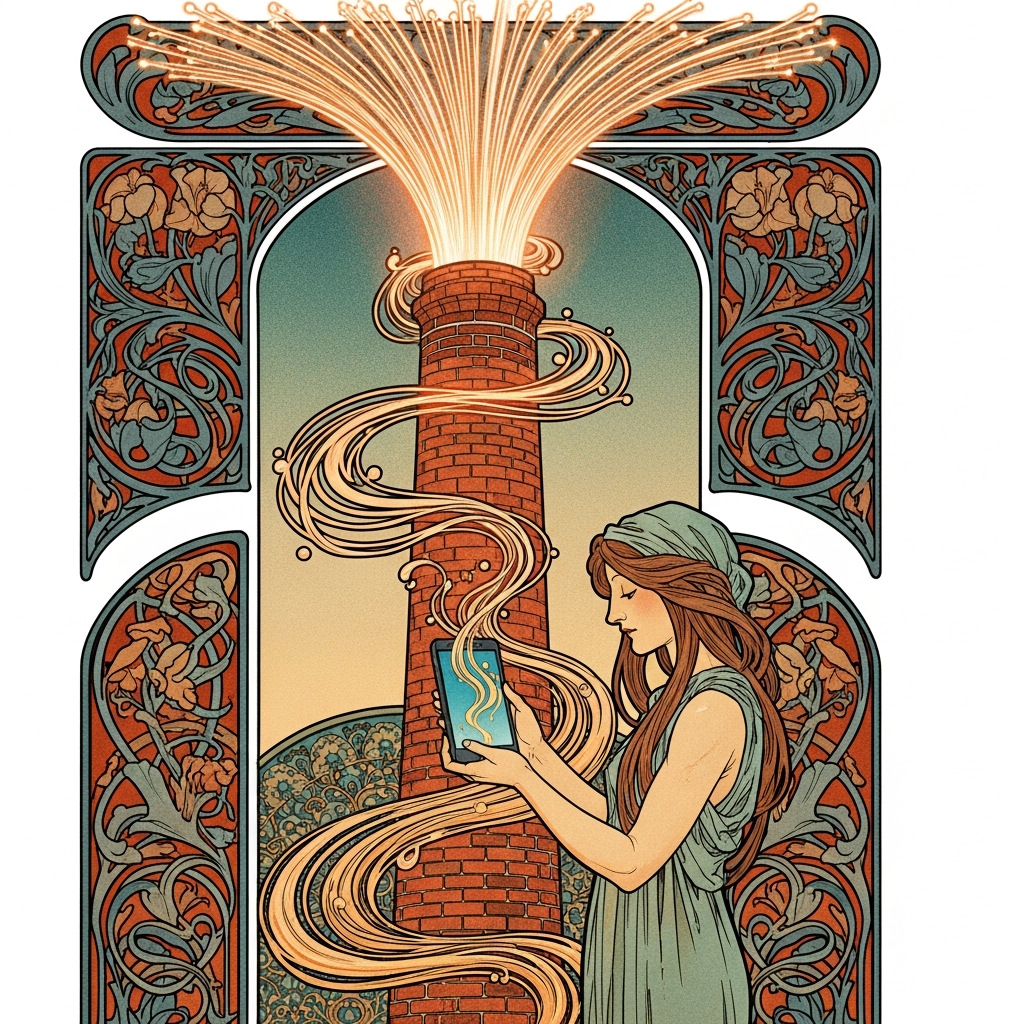
▲ The disappearing assembly line and the rise of the digital service industry.
The second round of major reshuffling occurred from the 1990s to the 2010s. The information technology revolution arrived, and automated machines began to replace workers on assembly lines. Countless manufacturing jobs disappeared, replaced by a massive expansion of the service sector.
China experienced the latter half of this process. The wave of layoffs at the end of the 1990s pushed many state-owned enterprise workers into the market. Many of them went on to become security guards, cleaners, and couriers—at that time, this was referred to as "transforming from state-owned enterprise workers to social lower class."
But interestingly, these "lower-level jobs" still have gaps even today, two decades later. Delivery riders, ride-hailing drivers, and couriers—professions that hardly existed before 2015—have absorbed tens of millions of displaced workers.
Why? Because the information revolution not only eliminated old jobs but also created new demands.
This is the answer provided by the information revolution: while assembly line jobs disappeared, the service sector has absorbed these workers. Although relative positions have declined, absolute living standards continue to rise.
4. The AI Revolution: What is Different This Time?
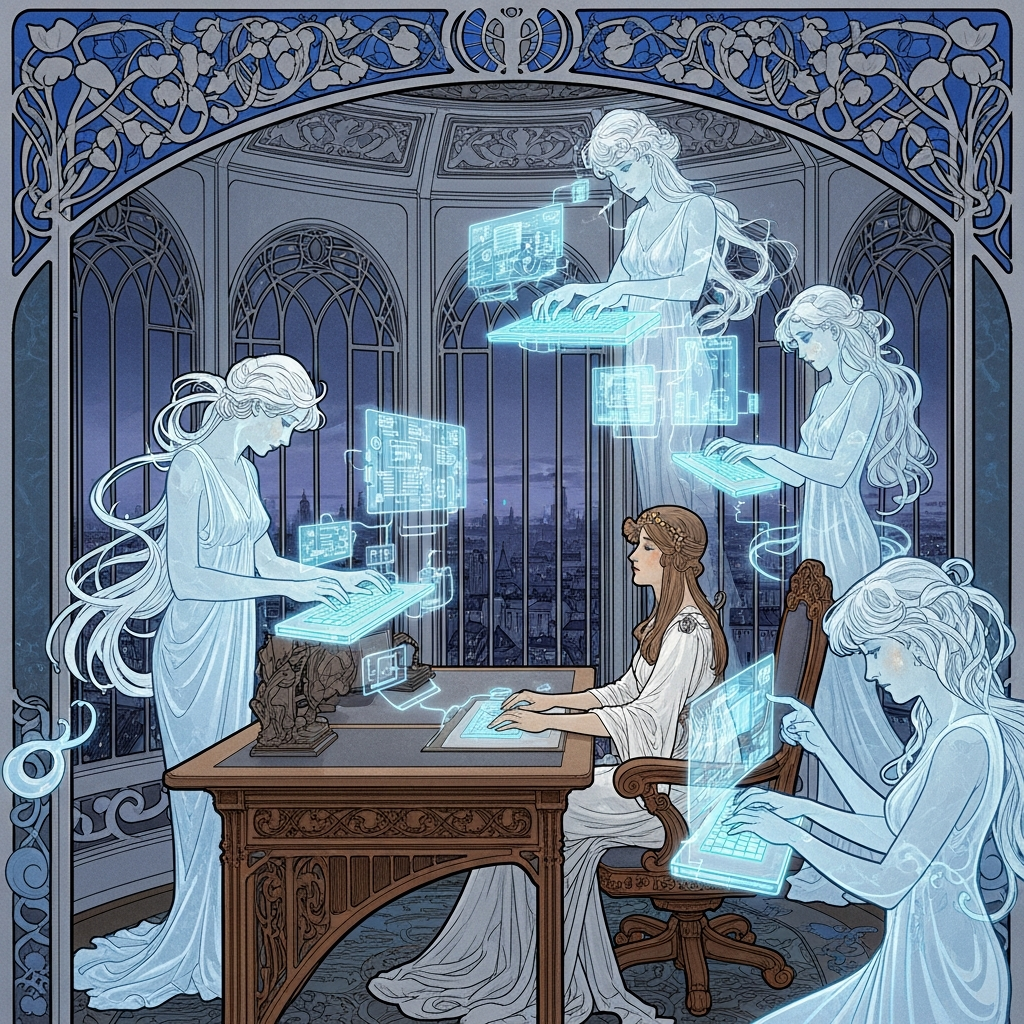
▲ When intellectual labor is reshaped by algorithms: new anxieties in office buildings.
Now it is AI's turn.
History is always strikingly similar yet different. AI is not only replacing manual labor; it is encroaching upon the territory of intellectual labor. Coding, copywriting, designing, and data analysis—skills that were once deemed "middle class standards" are now being replaced en masse by algorithms.
But looking back at history, every leap in productivity has been accompanied by similar worries. During the industrial revolution, people worried that machines would render humans "excess labor." During the information revolution, people feared automation would take away everyone's job. The result? In both cases, there was no true "lack of work"—rather, entirely new industries and jobs were created, assimilating the displaced individuals and advancing on a new foundation.
AI will likely follow the same path. There may be temporary pain, and a generation might need to "queue up again," but new positions, new industries, and new lifestyles will emerge in corners we have not yet thought of.
5. The Lower Class is Changing, but the Lower Class is also Upgrading
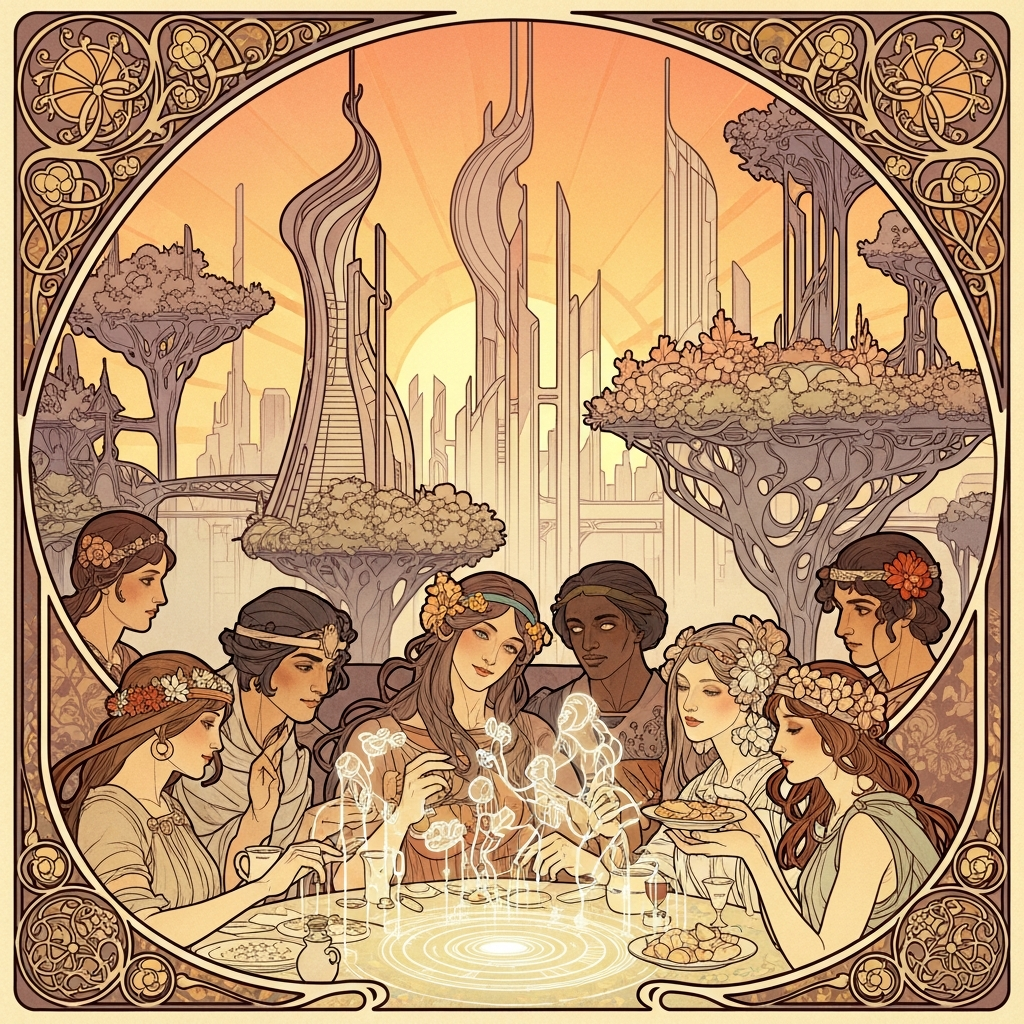
▲ The standards defining "lower class" are also in a spiral ascent.
Even if AI truly eliminates a large number of jobs, the term "lower class" itself will be redefined.
Today's "lower class" includes delivery riders, ride-hailing drivers, and cleaning staff. But what about ten years from now? When these positions are also filled by AI and automation, the new "lower class" may take on another form. Yet what they possess at that time—perhaps an AI assistant, some form of social security, or even more basic life assurance—might still be beyond what today's middle class can imagine.
This is the spiral ascent of productivity. Regardless of how you sway in relative position, the overall social grand carousel consistently moves toward greater heights.
Conclusion: The Meaning of Progress
With every round of productivity leaps, some will transition from "middle" to "lower." This is a trend, and it is a fact. But equally true is that after each leap, the quality of life possessed by everyone—including so-called "lower class" individuals—is better than that of the previous generation.
This is not consolation; it is data. It is an objective fact that every generation cannot deny.
AI will not be an exception to this trend. It may bring about pain and may require a generation to "queue up anew." But history has proven one thing: the carousel of productivity will not stop. It will only carry everyone forward to greater heights.
What we need is perhaps just to accept this trend—and then queue when it's time to queue, and move forward when it's time to move forward.
免责声明:本文章仅代表作者个人观点,不代表本平台的立场和观点。本文章仅供信息分享,不构成对任何人的任何投资建议。用户与作者之间的任何争议,与本平台无关。如网页中刊载的文章或图片涉及侵权,请提供相关的权利证明和身份证明发送邮件到support@aicoin.com,本平台相关工作人员将会进行核查。


