Original author: Nicky, Foresight News
Binance founder Zhao Changpeng has recently encountered "trouble" again.
In a photo on the X platform, CZ stands in front of an event backdrop, next to a user who claims to be a "long-term supporter of BNB." However, CZ quickly noticed something was off: the blue-purple shirt was one he had never owned, the backdrop did not exist, and the resolution of the person was inconsistent, clearly edited. Meanwhile, the original photo of another edited image was a group photo of CZ with Aster CEO Leonard.
More intriguingly, this account with 863,000 followers had already blocked CZ.
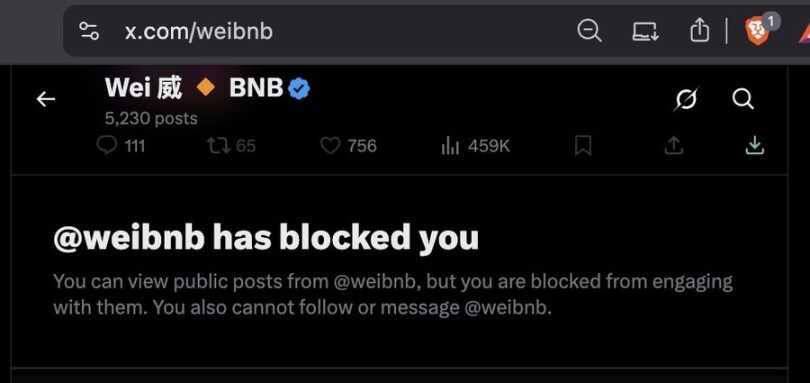
On February 4, CZ publicly posted to dissect the details of the image, pointing out that the account's historical trajectory had obvious gaps: early content was almost unrelated to crypto, but later shifted to focus on BNB activities, lacking a reasonable transition in identity. In his view, such accounts that operate long-term but are based on fabricated materials are not just a joke; they resemble a form of image manipulation with a preset goal.
CZ stated that he does not know the account holder and does not remember when he blocked them, but it seems that this action was correct. Regarding the so-called "lawyer's letter" that circulated earlier, he initially thought the signs of forgery were obvious and did not need clarification, but still saw some media reposting related images and reporting on them. He warned that if even obvious PS or AI-generated content cannot be distinguished, it could ultimately lead to consequences.
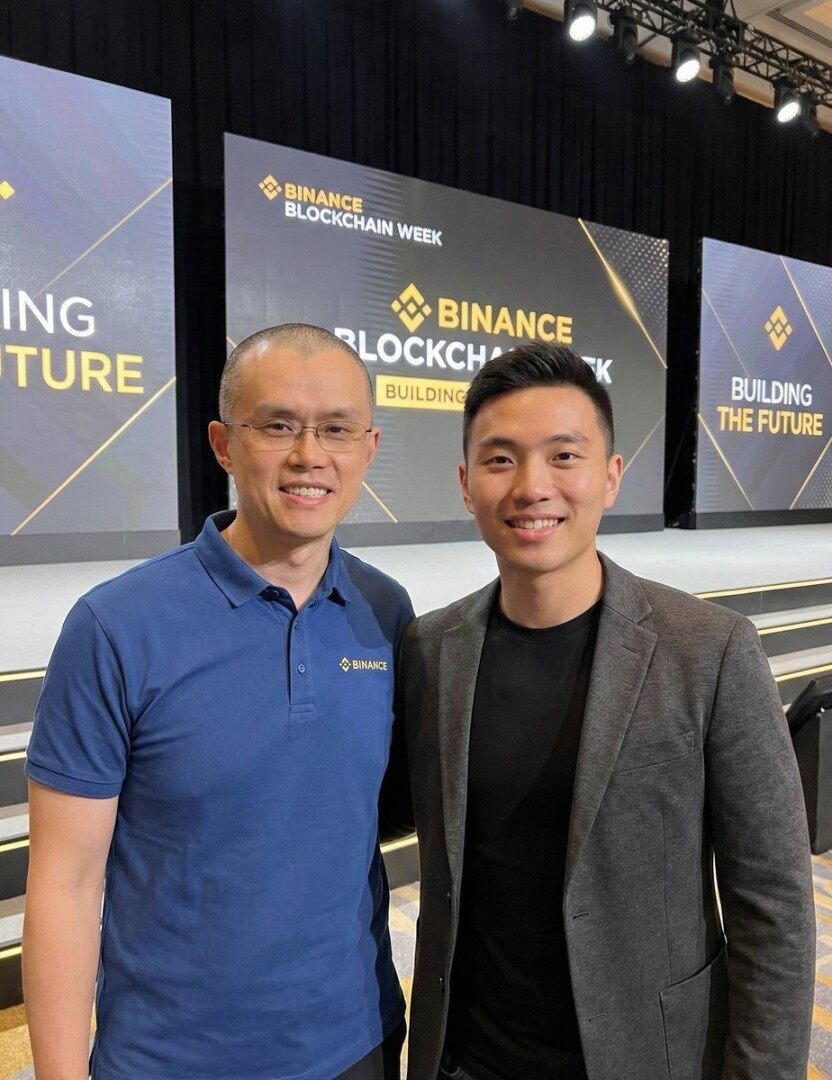
At the same time, some bloggers in the Chinese community have also discovered that many accounts in the English area with names containing Chinese or nicknames including "🔸BNB" are posting similar AI-generated group photos and uniformly stating "account cancellation" and other content.
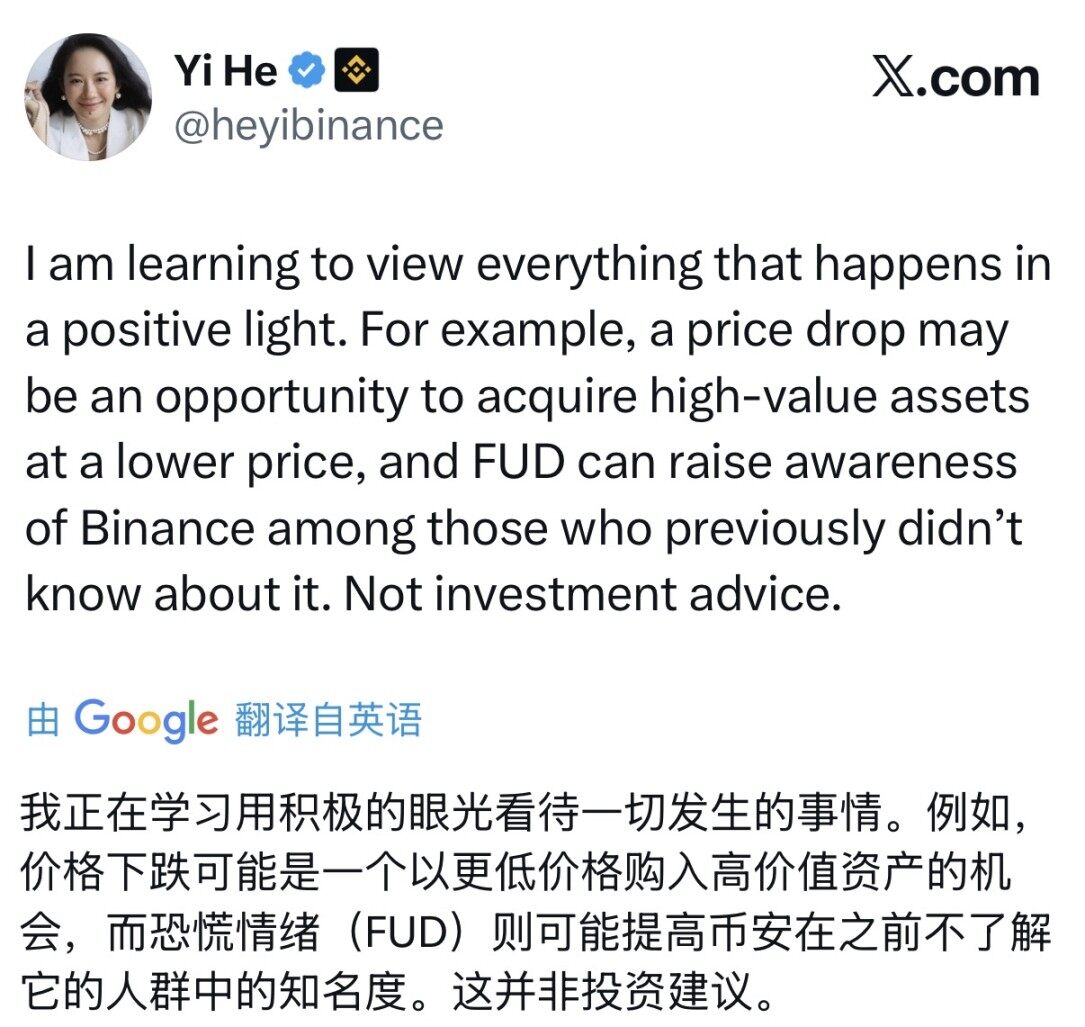
Binance co-founder He Yi stated on social media: Next time someone fabricates facts, at least find a real name on LinkedIn. Who would send both a lawyer's letter and a compliance notice? Those who believe in such content need to improve their risk assessment abilities. As for the FUD rhetoric, she said she is looking at everything that happens with a positive perspective, which may even increase Binance's visibility among certain groups.
Meanwhile, since January 15, Bitcoin has fallen from about $97,000 to below $71,000 on February 5, a drop of over 26%; BNB has similarly decreased from $948 to $696 during the same period. On February 5, the cryptocurrency fear and greed index dropped to 12, indicating "extreme fear."
Targeted in the crypto circle
Unlike text, images more easily create a "sense of connection." A photo with a well-known figure in the industry is often subconsciously understood as "having had contact," "standing in the same camp," or "having received some form of recognition." The dissemination efficiency of such materials is often higher than lengthy arguments because it lowers the understanding threshold and weakens the fact-checking process.
So, why do some people repeatedly create such images?
One possibility is to establish a "trustworthy persona" for the account. In the crypto community, traffic and trust are often highly intertwined. An account that appears to have "interacted with industry celebrities" is more likely to gain attention, retweets, and private message interactions. Once this persona is established, subsequent project promotions, token calls, or guiding users to join communities become easier, reducing users' defensive mindset.
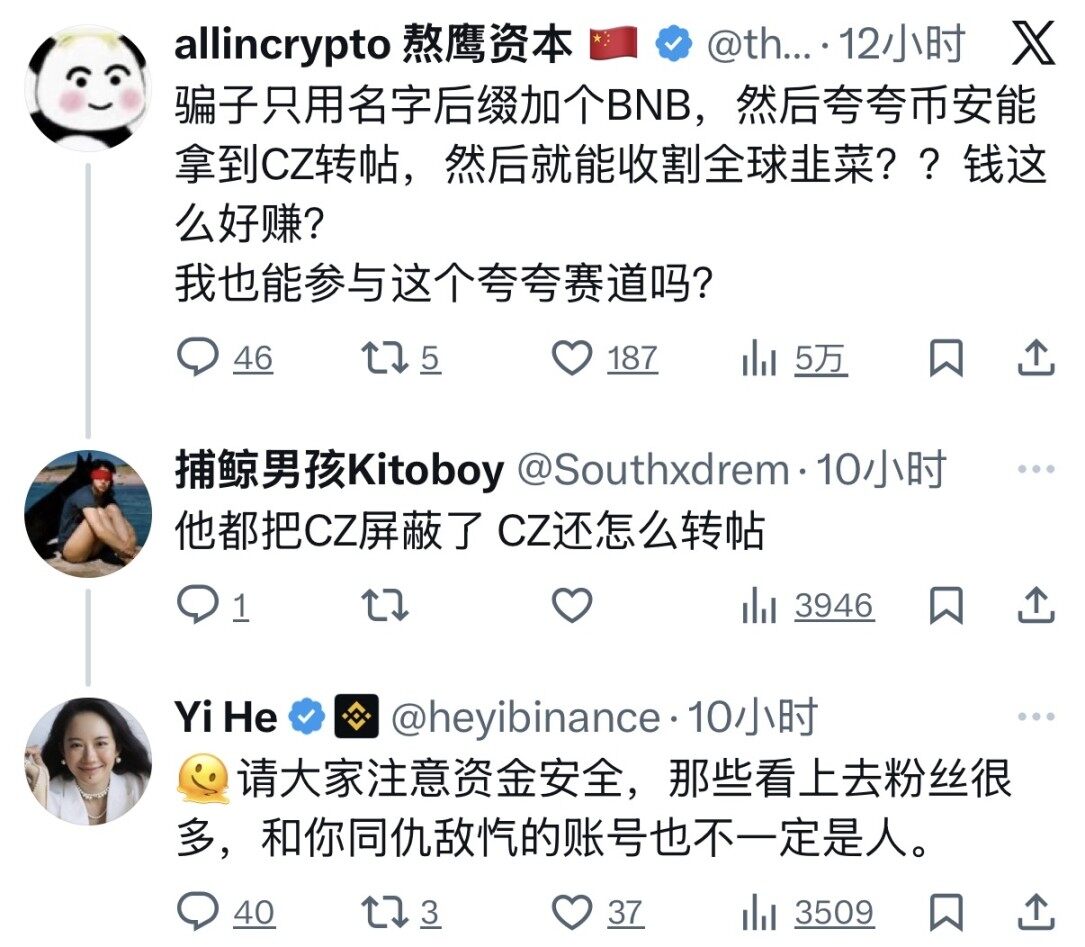
Some bloggers have stated that scammers simply add "BNB" after their names, and once they receive a retweet from CZ, they can gain hundreds of thousands of units of traffic, thereby obtaining significant economic benefits.
On January 28, CZ posted that recent discussions surrounding him had shown signs of organized public opinion manipulation. He pointed out that some accounts that were previously inactive or lacked connection to him concentrated on posting highly similar content in a short period, exhibiting clear characteristics of replication and diffusion, with overall behavior resembling systematic operation rather than a naturally formed discussion atmosphere. This also suggests that the motives behind these actions may not be pure.
Another, more gray path is to lay the groundwork for subsequent fraudulent activities. In common crypto scam chains, scammers often need to establish trust through "professional backgrounds" and "connections within the circle" before gradually guiding users into private communication scenarios. Group photos, event pictures, and so-called "offline meeting" records are frequently used types of materials. The emergence of AI has merely transformed these materials from "hard to forge" to "easily mass-produced."
Additionally, some behaviors may be related to the logic of KOL account creation. Currently, personal IP remains one of the fastest paths for traffic growth. By creating visual evidence of "having participated in industry activities" or "being in the same frame as well-known figures," some new accounts can quickly shed their "bystander identity" and gain initial attention. In the traffic economy, even if the trust established through this method is not solid, it is sufficient to support short-term monetization.
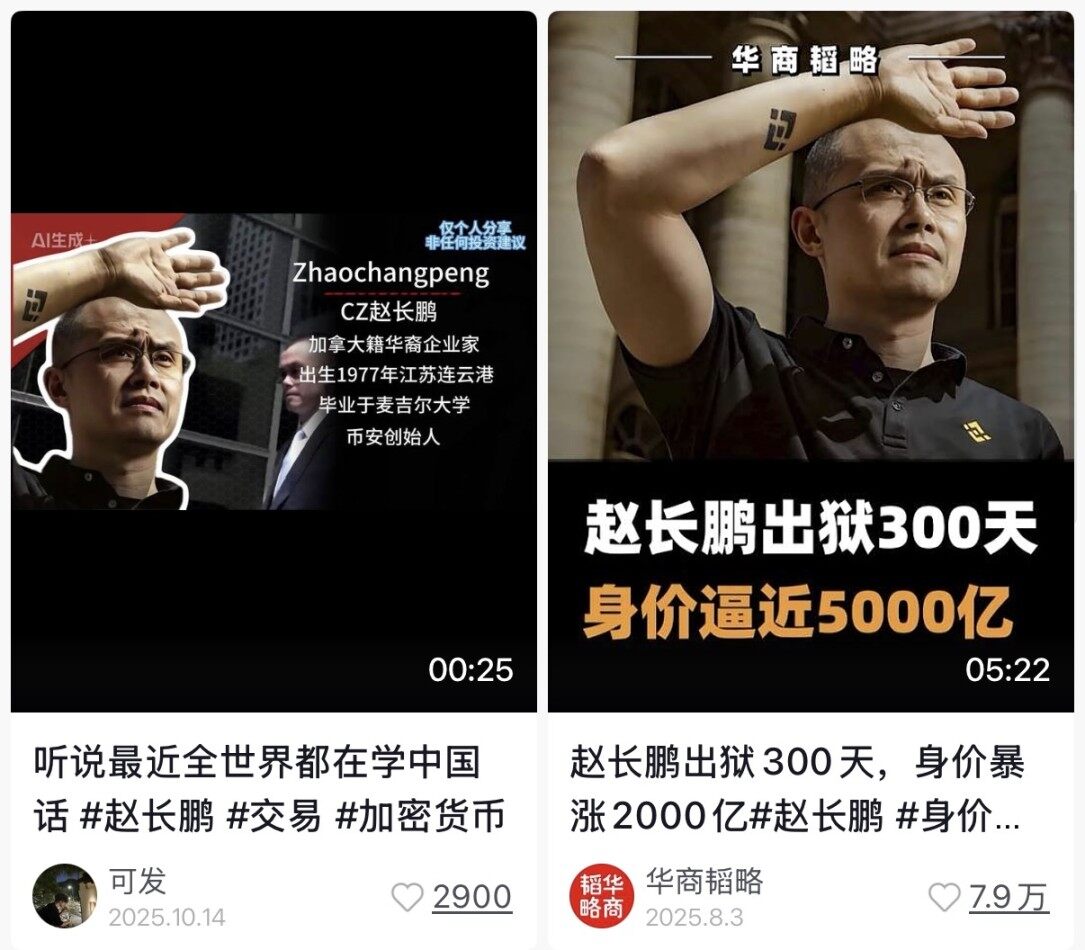
Currently, on platforms like Douyin and WeChat Video Accounts, content related to CZ has received over 100,000 likes. In such a traffic environment, if someone uses AI-generated photos, videos, and other materials to forge interactions or private communications with CZ, and uses this to attract attention and establish trust, it could mislead a large number of ordinary users, leading to actual economic losses.
AI has not created new motives but has amplified existing traffic logic and gray profit paths. From this perspective, editing images of celebrities does not necessarily point to the same purpose, but they often share similar dissemination logic: utilizing celebrity symbols to shorten the time cost of trust establishment.
In such an environment, what a group photo can convey may be far less than we imagine. And before clicking to share, asking "What is the source of this image?" has become the most basic yet increasingly rare ability in the AI era.
免责声明:本文章仅代表作者个人观点,不代表本平台的立场和观点。本文章仅供信息分享,不构成对任何人的任何投资建议。用户与作者之间的任何争议,与本平台无关。如网页中刊载的文章或图片涉及侵权,请提供相关的权利证明和身份证明发送邮件到support@aicoin.com,本平台相关工作人员将会进行核查。


