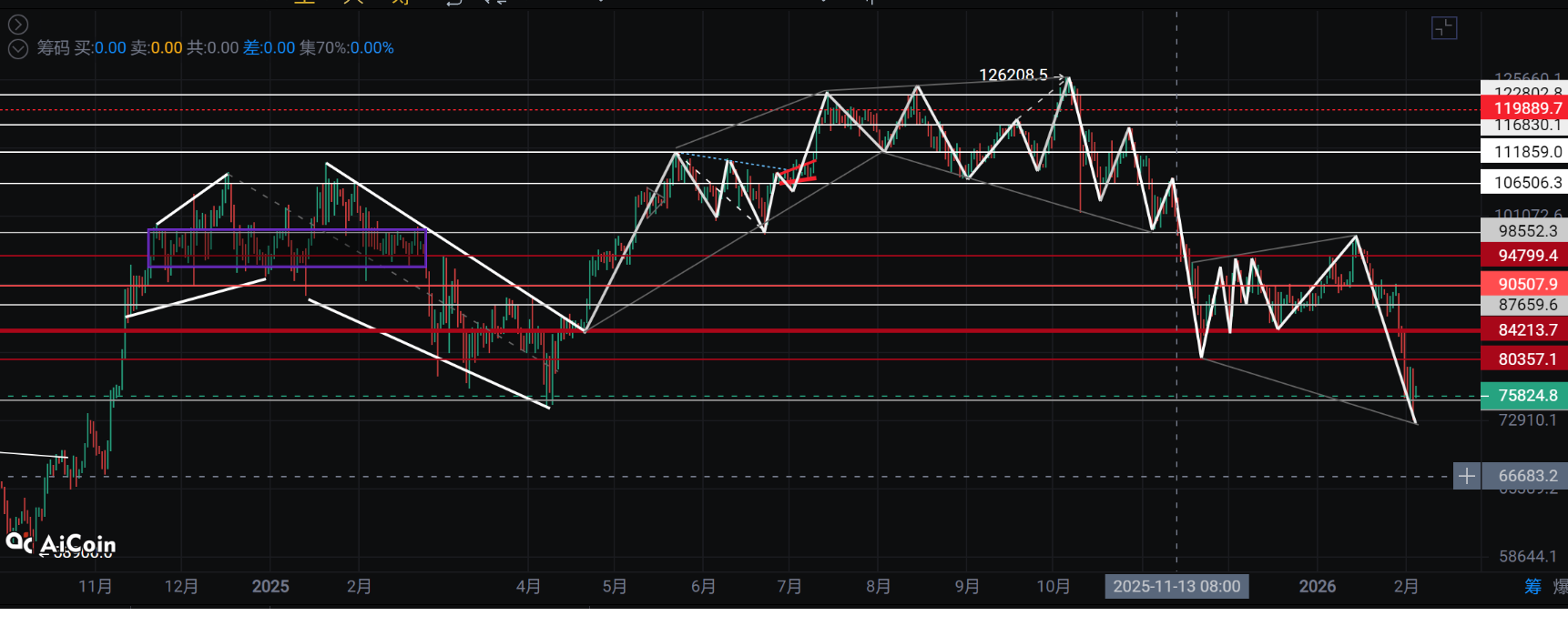
In 2025, the Norwegian sovereign wealth fund NBIM, managing assets worth up to $1.8 trillion, was revealed to be indirectly positioning itself in high-volatility assets like Bitcoin stocks through U.S. and Japanese markets. According to various sources, NBIM holds shares in companies such as MicroStrategy, Marathon Digital, and Metaplanet, which collectively correspond to an exposure of approximately 9,573 BTC, a staggering 149% year-on-year increase, with a market value estimated at around $837 million (approximately 8.5 billion Norwegian Krone) according to K33 Research. On one side, sovereign-level funds are entering Bitcoin assets under the guise of national wealth, while on the other, the cold reality is that 89% of family offices still have zero exposure to crypto assets, as reported by JPMorgan. The contrasting attitudes of sovereign funds and traditional wealthy classes towards the same asset are reshaping the narrative of this crypto cycle.
Diverging Views: Sovereign Funds Enter, Family Offices Watch
● Indirect bets by sovereign funds: NBIM has chosen not to publicly disclose on-chain addresses or directly hold BTC, but instead, it packages Bitcoin assets into its stock investment portfolio by holding shares in MicroStrategy, Marathon Digital, and Metaplanet. This approach transforms Bitcoin from a highly controversial crypto asset into a traditional “corporate asset exposure,” making it more acceptable within its investment decision-making framework in terms of compliance, risk control, and parliamentary oversight.
● Cautious retreat of family offices: In stark contrast to the sovereign funds' indirect entry, the figures provided in JPMorgan's 2026 report are quite grim—72% of family offices have no gold investments, and 89% do not hold cryptocurrencies. In many high-net-worth families' asset allocation tables, crypto assets like Bitcoin have not only failed to be “institutionalized” but have been actively marginalized, becoming synonymous with the “lessons” of the previous bull and bear cycles. This sharply contrasts with sovereign funds beginning to increase risk exposure through compliant means.
● The contradiction of regulatory and accountability logic: Sovereign funds need to report performance to voters and parliaments, necessitating their presence in the “most clearly regulated” arenas, thus turning to Bitcoin asset vehicles in U.S. and Japanese markets; family offices, on the other hand, bear the weight of family reputation and intergenerational wealth stability, being more concerned about drawdowns and narrative risks. They would rather forgo potential gains than be labeled as “chasing speculative bubbles.” The differences in accountability targets and time dimensions between these two types of funds are leading to completely different exit strategies for the same asset.
Interwoven Funding Paths: Stock Shells, On-Chain Large Orders, and ETF Rebalancing
● Bitcoin within listed company shells: NBIM has built a layer of “stock shells” using MicroStrategy, Marathon Digital, and Metaplanet, transforming what should be an on-chain holding issue into a traditional operation of holding publicly traded company stocks. Meanwhile, on-chain monitoring data shows that a certain address directly spent $20 million USDT to buy 8,806 ETH, while BlackRock transferred 6,648 ETH to Coinbase Prime, showcasing distinctly different entry paths: one through compliant listed companies, ETFs, and brokerage accounts, while the other continues to execute high-frequency large trades on-chain.
● Compliant products and regulatory shadows: In traditional finance, a Singapore asset management company reduced its holdings in BlackRock's ETHA ETF by about $1.62 million, while at the same time, Coinbase is facing pressure from a lawsuit in Nevada regarding its market products. ETFs and trading platforms have become compliant entry points for institutional involvement in crypto assets, yet they also endure ongoing regulatory and legal uncertainties. This intertwining of entry and exit creates a complex picture of funding behavior, where some are increasing their positions through indirect means while others are seizing the opportunity to reduce their holdings.
● Fragmented mapping of multi-layered games: From NBIM obtaining indirect exposure through Bitcoin stocks to the different operational paths of on-chain addresses and large asset management institutions around ETH and ETFs, it is evident that the flow of funds in crypto assets has been split into multiple layers: sovereign funds prefer the layer of listed companies and ETFs that are most friendly to regulation, while some high-risk participants remain active in the on-chain spot layer, with various brokerages and trading platforms oscillating between compliance pressures and profit demands. Each layer of funding is redefining “acceptable crypto risk” based on its own constraints, collectively weaving a capital structure for this cycle that is markedly different from that of 2021.
Deep Game: Who Will Price Bitcoin in the Next Round
The emergence of NBIM complicates the question of “who will price Bitcoin in the next round”: the price discovery process, previously dominated by miners, exchanges, and hedge funds, is being diluted by the slow but determined entry of sovereign funds, pension funds, and global asset management institutions. Some funds are competing for excess returns in the first half of the cycle through high beta Bitcoin stocks, while others are using ETFs and on-chain allocations to absorb volatility in the second half. The hesitation of family offices and traditional wealthy classes makes this financialization feel more like an “upper structure entering first,” with retail investors and private wealth retreating to the background. Who ultimately secures the pricing power in this cycle will depend on the extent to which these sovereign and institutional funds are willing to endure Bitcoin's inherent volatility, rather than merely how many BTC they have on their balance sheets.
Strategic Recommendations: The Future of Bitcoin Wrapped in Financial Shells
In the future, compliance and institutionalization will continue to be the main theme for Bitcoin assets. The case of NBIM indicates that Bitcoin has already been viewed by some national-level wealth management institutions as an asset that can be included in their allocation menu, but the prerequisite is to complete the “packaging” through traditional financial shells like stocks and ETFs, rather than directly holding on-chain assets. More sovereign funds and large pension funds are likely to reference a “Bitcoin stocks + ETF” combination scheme within their internal governance structures and regulatory permissions, starting from the most easily explained and audited positions. For family offices and high-net-worth individuals, this cycle feels more like a compulsory “delayed make-up class”: they can continue to observe, but as the Bitcoin ecosystem becomes increasingly surrounded by financial shells and liquidity and pricing power are reshaped by sovereign and institutional funds, they will no longer face the decentralized imaginations of 2017 or 2021, but rather a new asset form transformed by deep financialization. The industry stands at a crossroads, with decision-making power having shifted from in-circle narratives to the balance sheets of global asset management and public finance.
Join our community to discuss and grow stronger together!
Official Telegram community: https://t.me/aicoincn
AiCoin Chinese Twitter: https://x.com/AiCoinzh
OKX benefits group: https://aicoin.com/link/chat?cid=l61eM4owQ
Binance benefits group: https://aicoin.com/link/chat?cid=ynr7d1P6Z
免责声明:本文章仅代表作者个人观点,不代表本平台的立场和观点。本文章仅供信息分享,不构成对任何人的任何投资建议。用户与作者之间的任何争议,与本平台无关。如网页中刊载的文章或图片涉及侵权,请提供相关的权利证明和身份证明发送邮件到support@aicoin.com,本平台相关工作人员将会进行核查。