On January 30, the U.S. Department of Justice first disclosed a large number of "Epstein documents," which immediately attracted significant global attention and discussion. As we see whether Musk "went to the island," Bill Gates' extramarital affair, or the next Federal Reserve chair nominee Kevin Warsh appearing on Epstein's party invitation list, these newly disclosed documents also threw a lot of shocking revelations about the cryptocurrency industry.
The history of the cryptocurrency industry may finally be revealing just the tip of the iceberg and rewriting its narrative from here on out.
Is Epstein a "Crypto OG"?
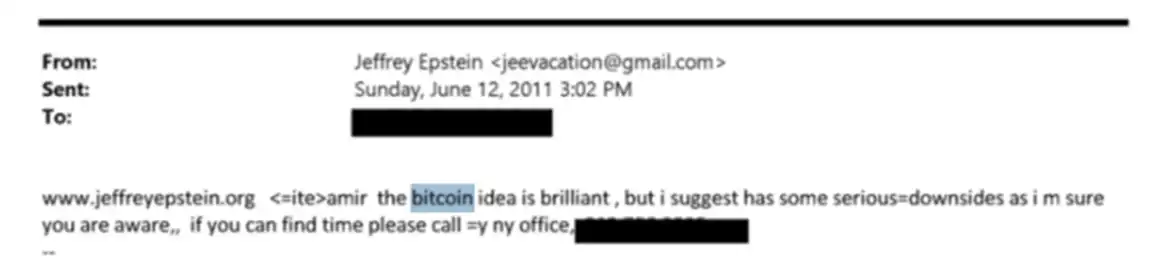
As early as 2011, Epstein had already taken an interest in Bitcoin, a year when Bitcoin's total annual transaction volume had not yet exceeded $100 million, and its price had once broken $30 before plummeting by 90%.
The following email is dated June 12, 2011, just around the peak price of Bitcoin that year. Epstein stated in the email, "Bitcoin is a brilliant idea, but it also has some serious drawbacks."
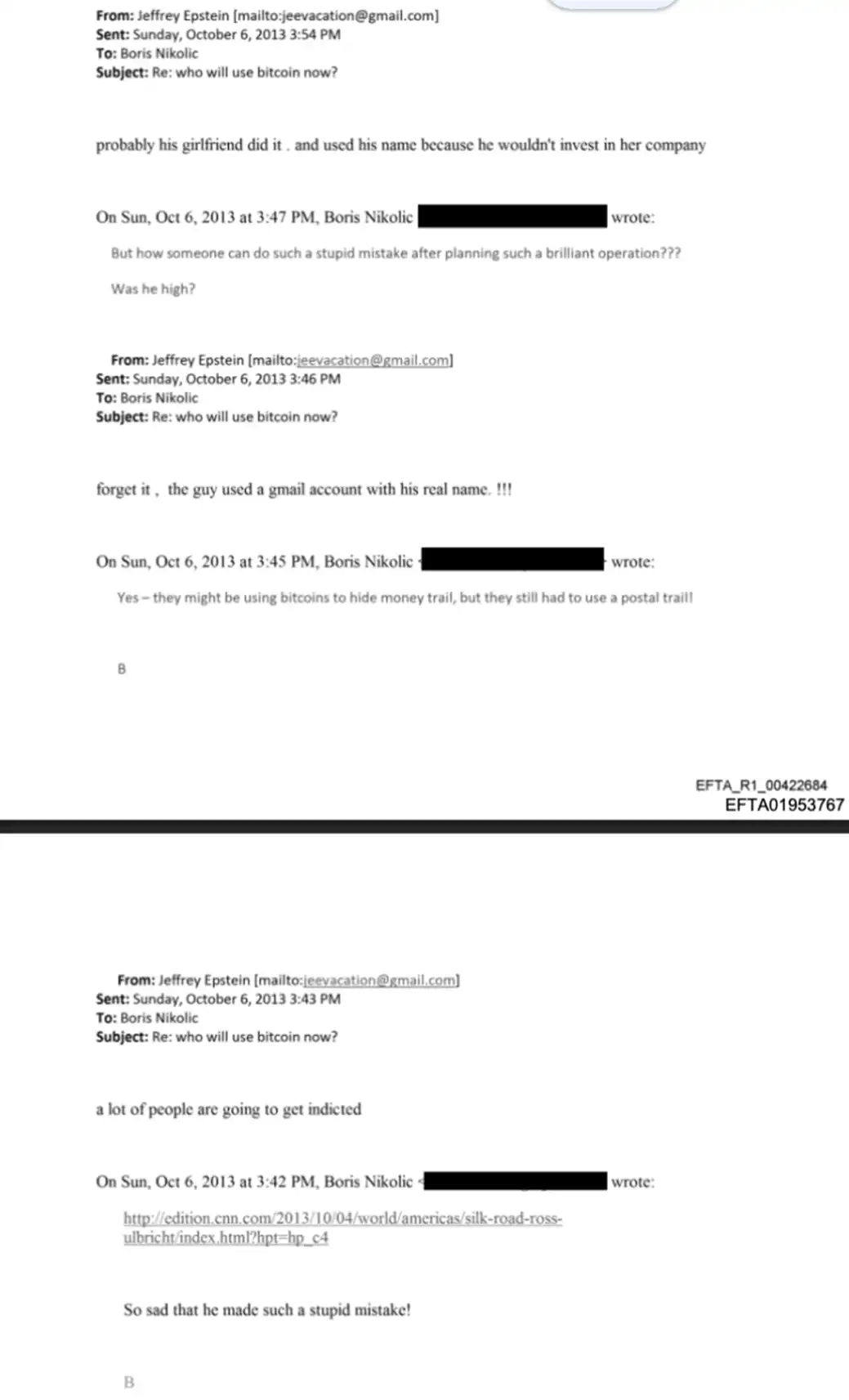
In 2013, the frequency of cryptocurrency mentions in Epstein's correspondence increased.
First, there was an email exchange with Boris Nikolic (who served as Bill Gates' chief technology advisor and was listed in Epstein's will) titled "Who still uses Bitcoin now?" They mockingly discussed the arrest of Silk Road founder Ross Ulbricht, saying that Ross's use of a Gmail account with his real name was a foolish mistake.
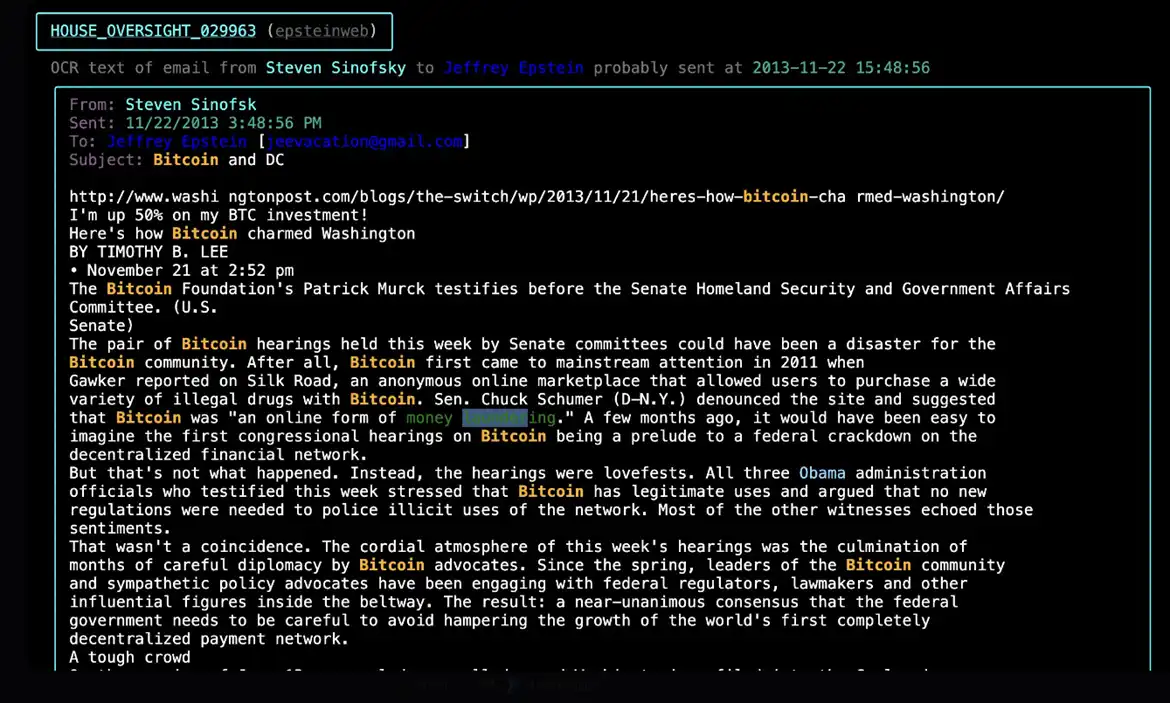
Steven Sinofsky, a board partner at a16z and former president of Microsoft's Windows division, informed Epstein in an email that his Bitcoin investment had risen by 50% and shared Timothy B. Lee's article "How Bitcoin Captivated Washington."
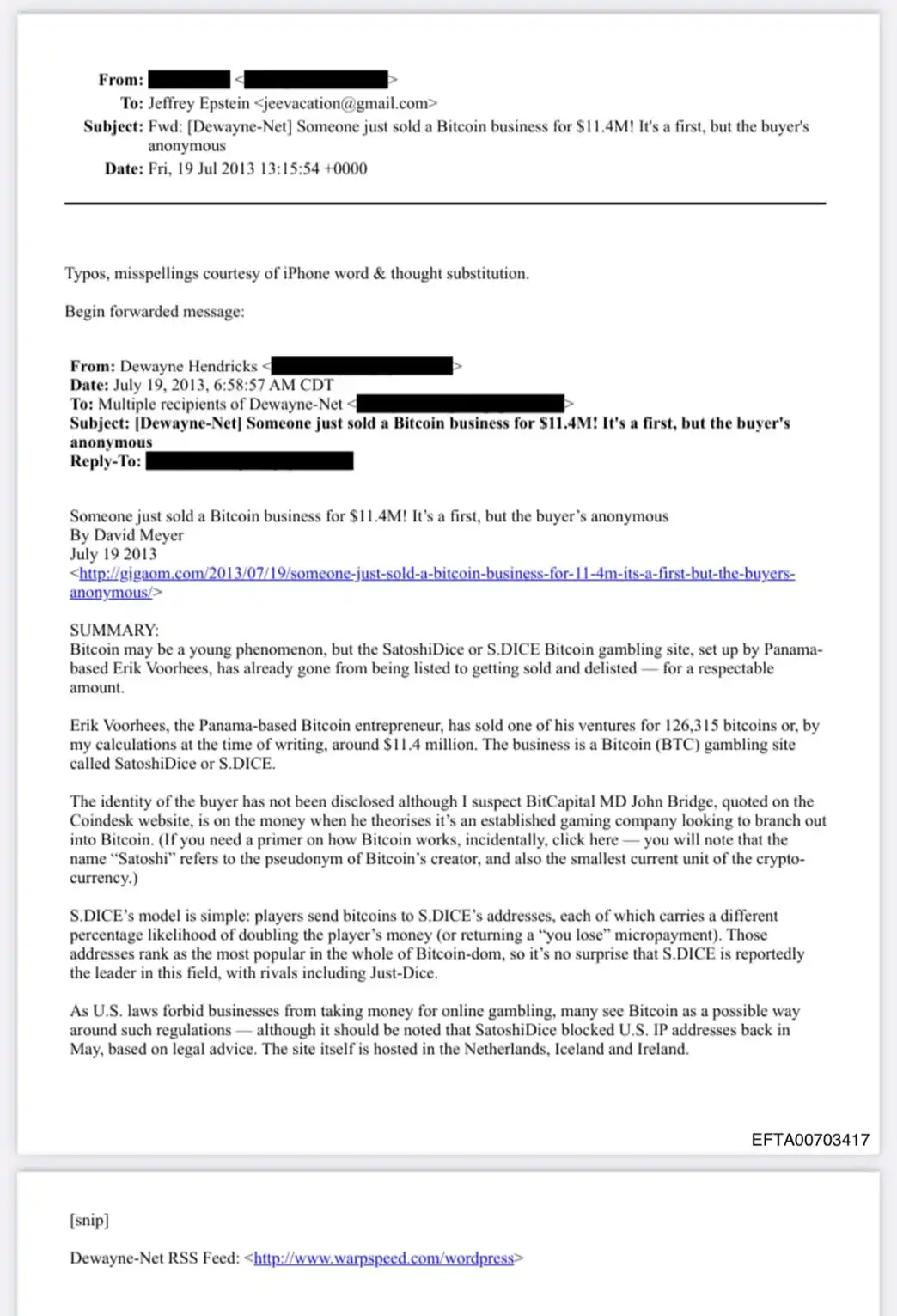
He also received news that the once-famous Bitcoin site Satoshi Dice had been sold for $11.4 million.
In 2014, Epstein engaged in an in-depth discussion with PayPal co-founder Peter Thiel about the nature of Bitcoin.
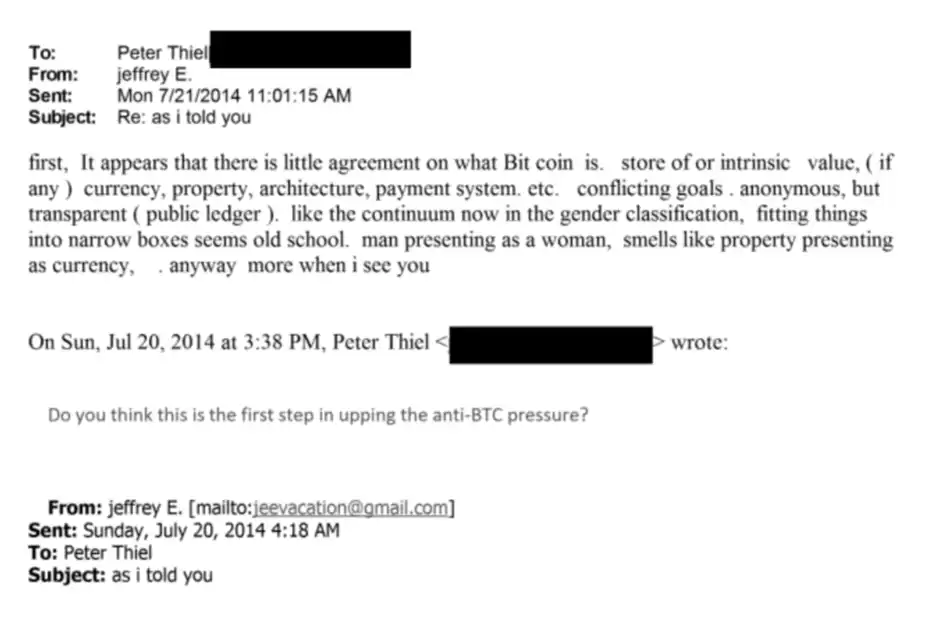
"There is no consensus on what Bitcoin really is, whether it is a store of value, currency, or property… just like a man dressing as a woman, like property masquerading as currency."
This conversation indicates that Epstein was already very familiar with the ideological debates surrounding the essence of Bitcoin in the early stages of the cryptocurrency market, even comparing it to gender identity.
Another email shows that Epstein participated in the seed round financing of the Bitcoin infrastructure company Blockstream, which raised a total of $18 million, with Epstein's investment increasing from $50,000 to $500,000.
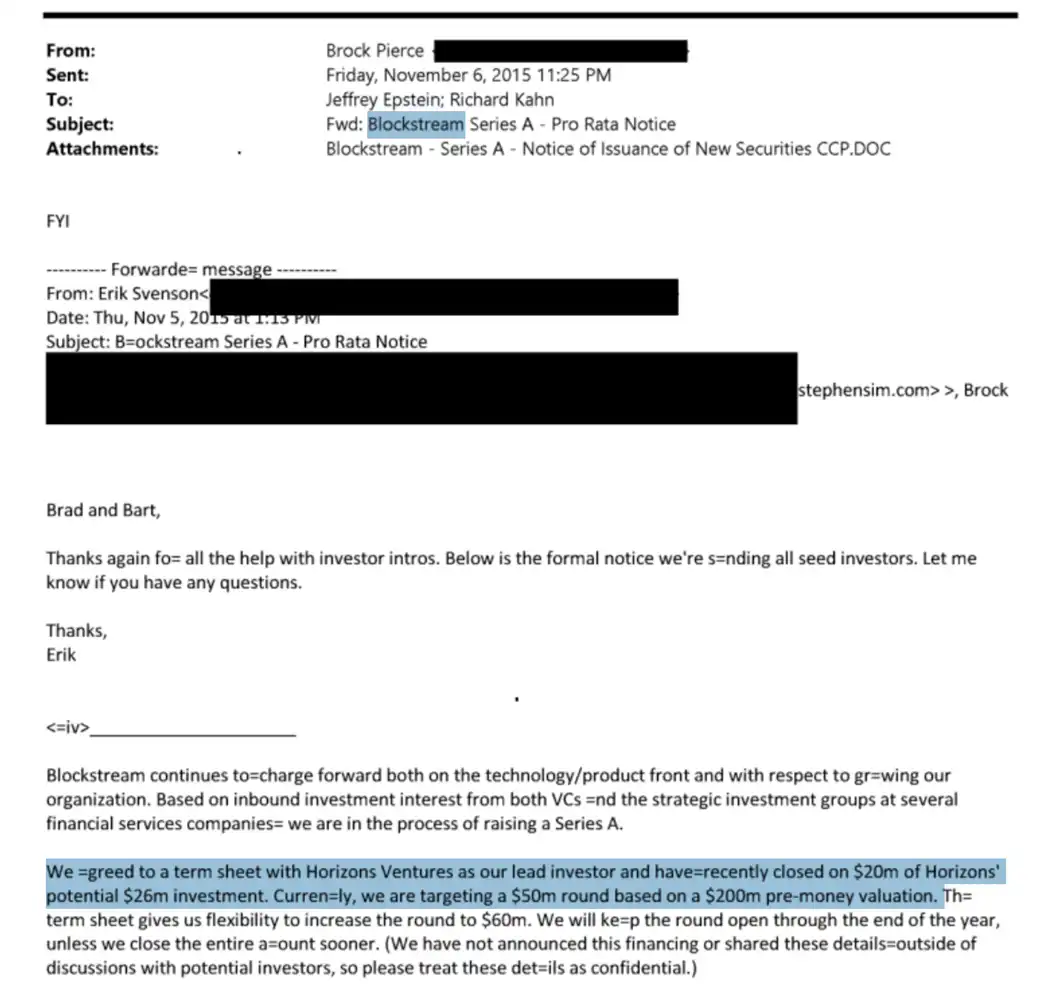
Blockstream CEO Adam Back recently issued a statement denying any direct or indirect financial ties between the company and Epstein or his estate. He explained that Epstein was a limited partner in a fund that once held a minority stake in Blockstream but had since fully divested.
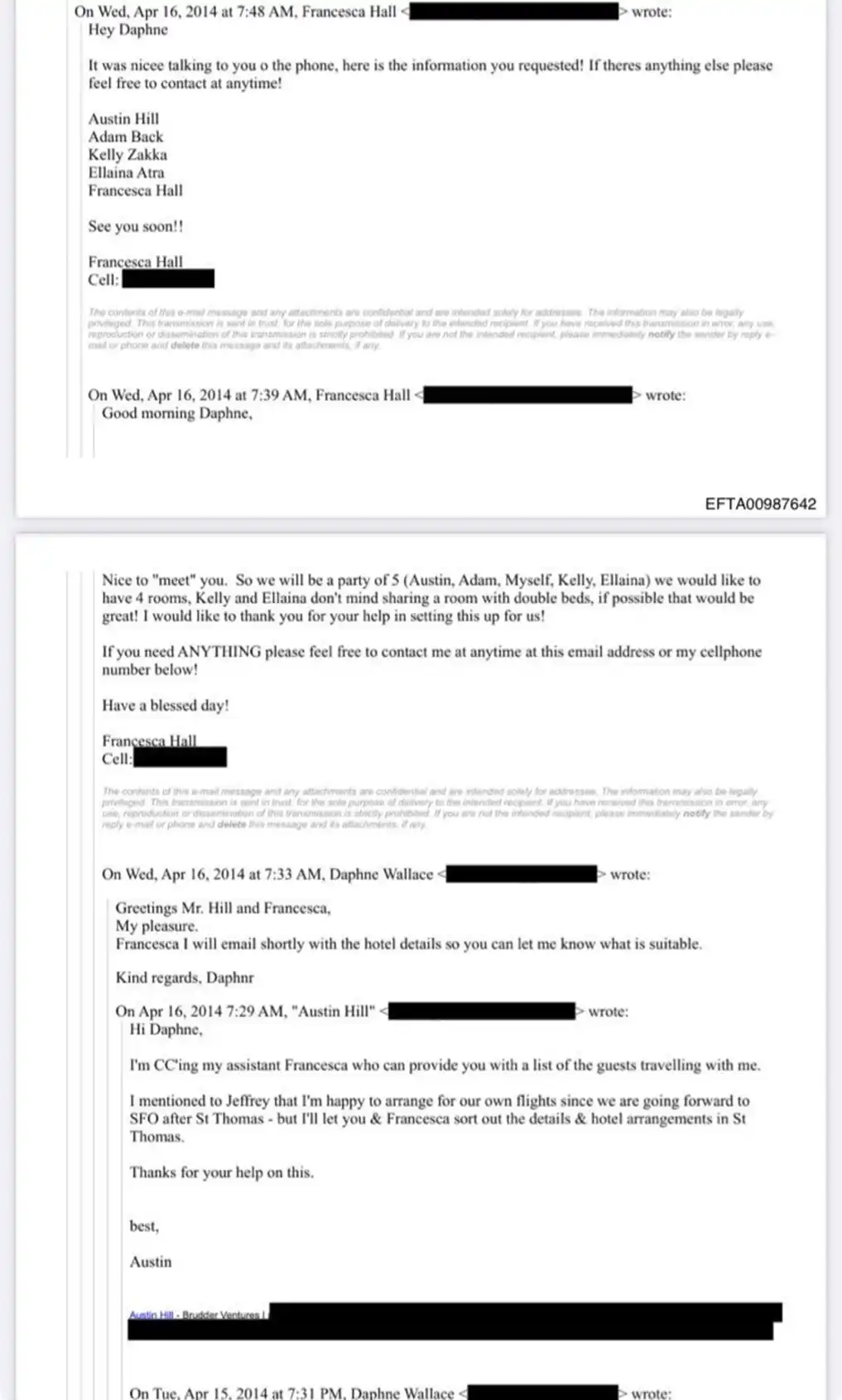
However, Adam Back and Austin Hill (Blockstream co-founder) appeared in travel arrangement emails related to St. Thomas Island (about 2 miles from "Epstein Island"):
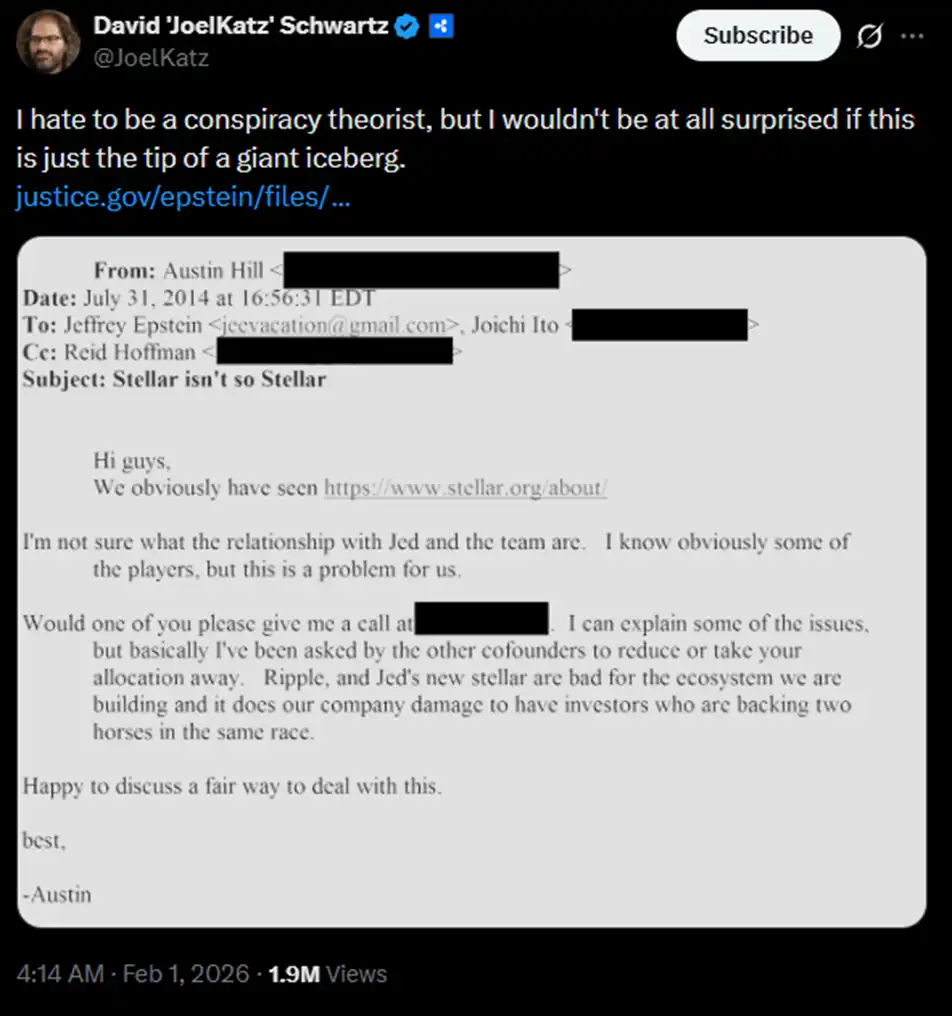
Additionally, Austin Hill emailed Epstein and Joi Ito (former director of the MIT Media Lab, through which Epstein invested in Blockstream) in 2014, stating that Ripple ($XRP) and Stellar (a new project by Ripple founder Jed McCaleb after leaving Ripple) negatively impacted the ecosystem built by Blockstream and harmed Blockstream because their investors were "supporting two horses in a race at the same time."
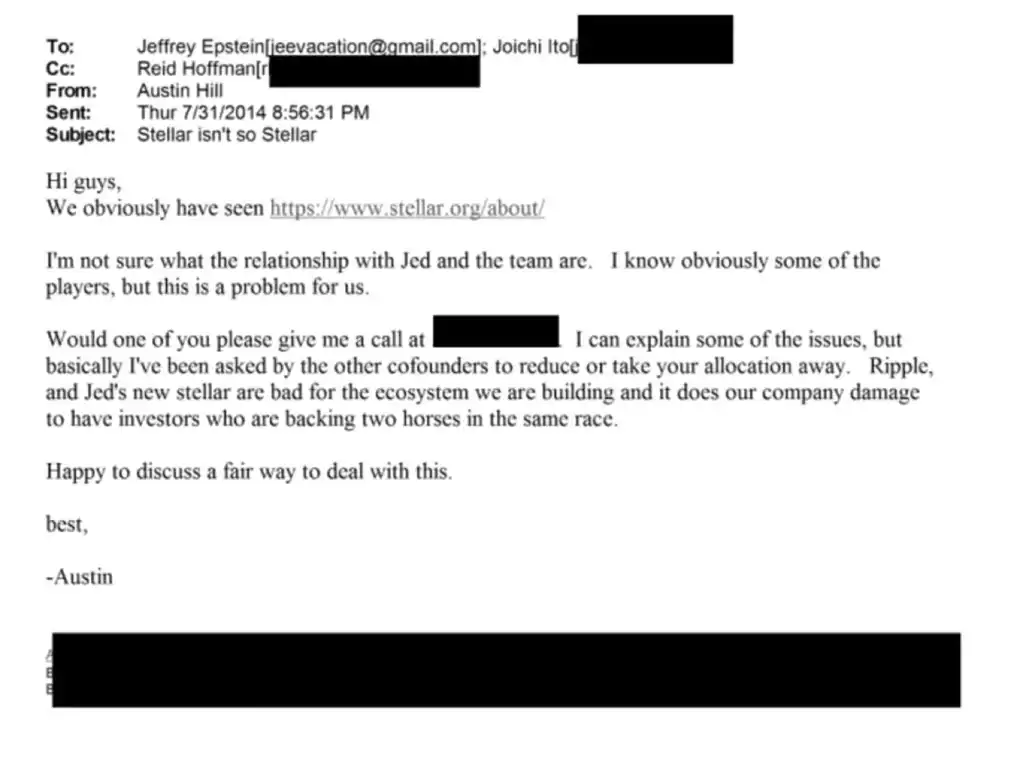
There is some divergence in interpretation within the English-speaking community; based on the context, I personally lean towards the interpretation that Epstein may have also invested in Ripple/Stellar at the time, which caused dissatisfaction for Blockstream, leading Austin Hill to state in the email, "I have been asked by other co-founders to reduce or even eliminate your share."
Although the growth of Ripple and Stellar was not affected, we do not know if there are more excellent cryptocurrency projects from the past to the present that have been stifled in their infancy through such behind-the-scenes pressure.
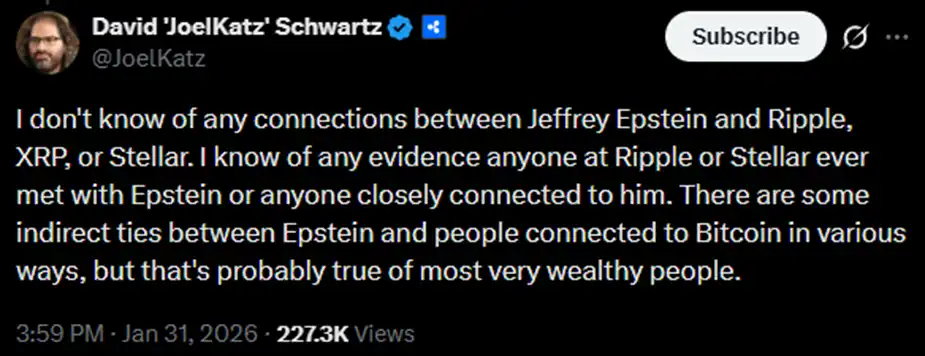
In response, former Ripple CTO David Schwartz tweeted, "I don't want to be a conspiracy theorist, but if this is just the tip of the iceberg, I wouldn't be surprised at all."
So does this indicate that Epstein's evil also exists in the cryptocurrency field? David Schwartz also stated that for most super-rich individuals, having a connection to Bitcoin might be very common.
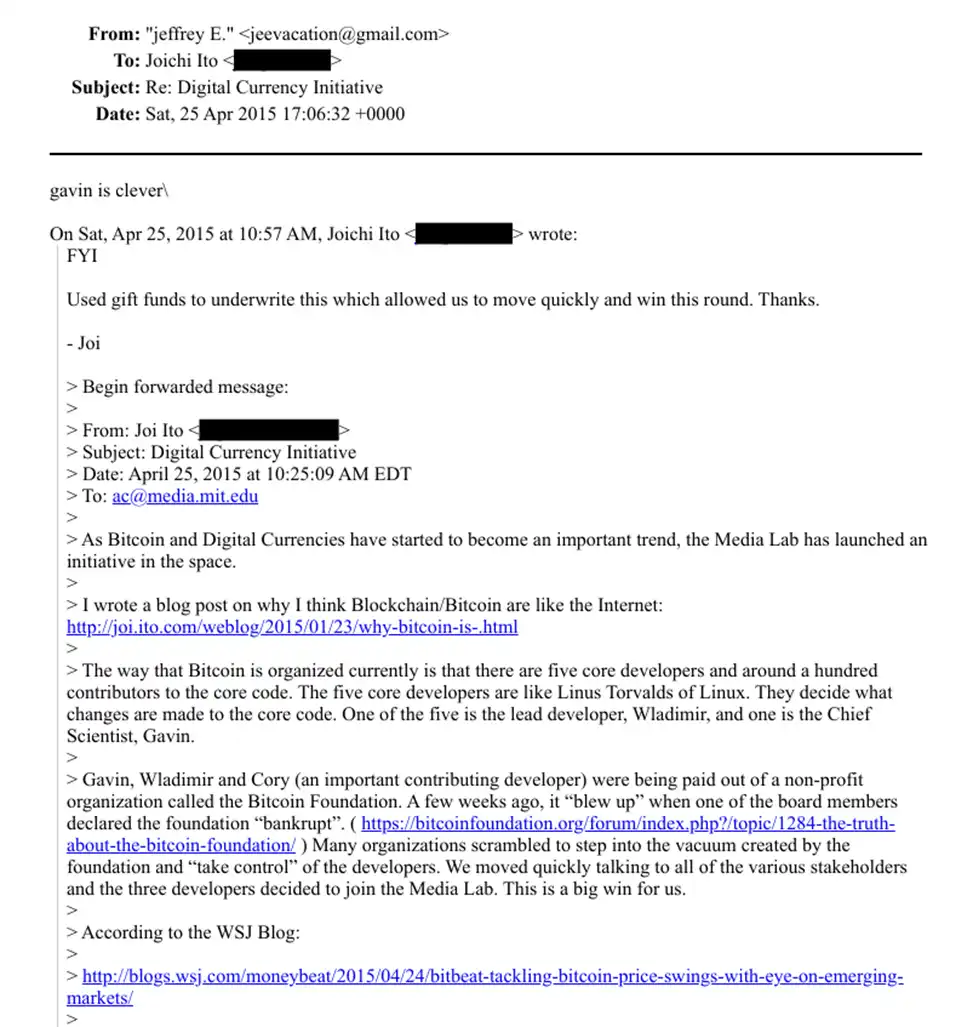
Even during 2014-2015, the collapse of the Bitcoin Foundation left Bitcoin Core developers without stable salaries, prompting the MIT Media Lab's Digital Currency Initiative (DCI) to start paying several Bitcoin Core developers, leading Gavin Andresen, Wladimir van der Laan, and Cory Fields to decide to join the MIT Media Lab.
At that time, the scandal had not yet been exposed, and the public was unaware of Epstein's anonymous donations to the MIT Media Lab. Joi Ito expressed gratitude to Epstein via email, explaining not only the development operations of Bitcoin but also stating that thanks to this funding, the lab "was able to act quickly and achieve great victories," as "many organizations wanted to take advantage of the situation to control Bitcoin developers."
Epstein's reply was a simple compliment to Gavin Andresen, "Gavin is very smart."
Did Epstein meet Satoshi Nakamoto?
In 2016, Epstein emailed Raafat AlSabbagh, an advisor to the Saudi Royal Court, and Aziza Al Ahmadi, an advisor to the Abu Dhabi Department of Culture and Tourism, proposing two "radical ideas for creating two new currencies," one being a "Sharia-compliant" dollar, similar to how all U.S. dollar bills have "In God We Trust," suggesting that the Middle East could have its own "Sharia dollar" for internal use.
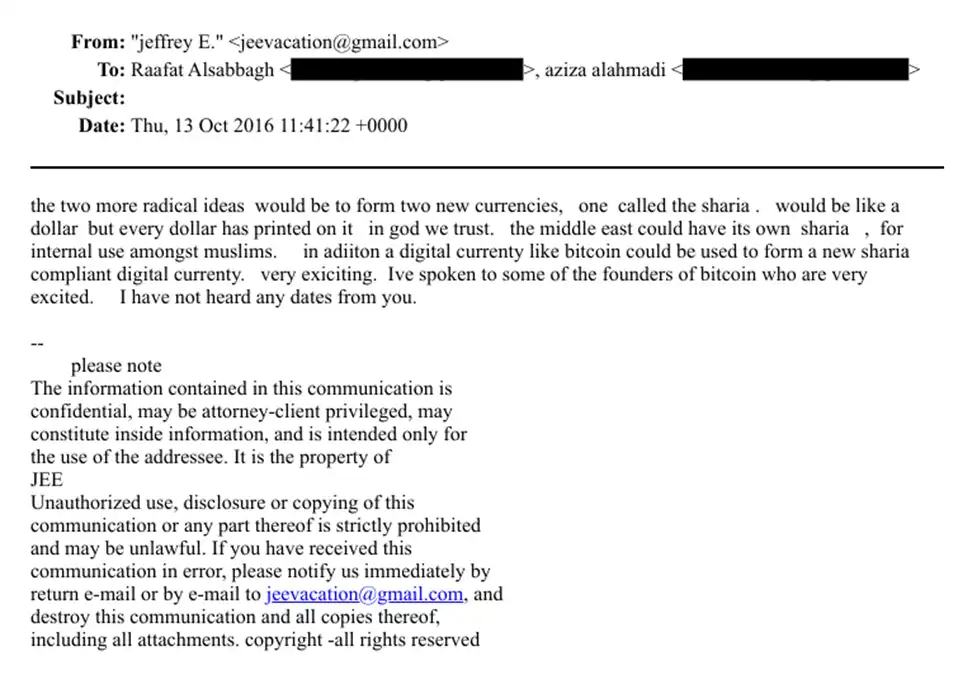
The other idea was to create a digital currency like Bitcoin that would comply with Sharia law. Then, in a seemingly casual manner, he dropped this message:
"I have already communicated with some Bitcoin creators, and they are very excited."
Epstein's purpose at the time may have been more about showcasing his connections to enhance his reliable image, casually mentioning it, but this could potentially rewrite the entire history of Bitcoin and the cryptocurrency industry. "Some Bitcoin creators"—does this imply that Satoshi Nakamoto is not an individual but a team? If so, many of the mysteries surrounding Satoshi Nakamoto could have reasonable explanations.
There are even more chilling questions. Who is this team? What was the motivation behind creating Bitcoin? If Epstein really met them, how did he first learn who they were and establish a relationship with them? If even Epstein knows who the creators of Bitcoin are, wouldn't the U.S. government know? What motives does the U.S. government have for remaining silent on this issue?
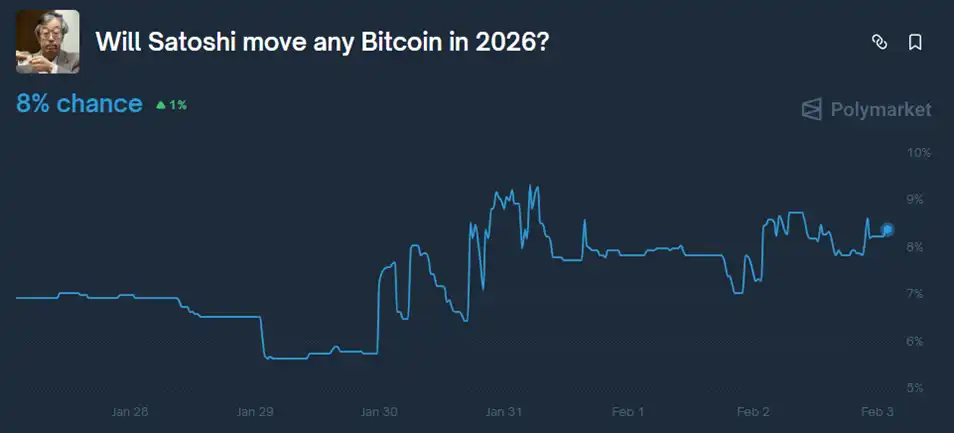
After the latest disclosure of Epstein documents, the probability of "Satoshi Nakamoto's Bitcoin address showing activity in 2026" on the prediction market Polymarket rose from about 6% to around 9.3%, currently maintaining at 8%.
If Epstein really met Satoshi Nakamoto, it seems that Satoshi did not successfully preach Bitcoin to him during their interactions. In an email exchange on August 31, 2017, when Epstein was asked, "Is it worth buying a Bitcoin?" he simply replied, "No." At that time, one Bitcoin was worth less than $5,000.

Whether Epstein actually met Satoshi Nakamoto is still unknown. However, we do know that he met the most well-known Bitcoin bull today—MicroStrategy CEO Michael Saylor.
For years, Saylor's determination to only buy and never sell Bitcoin has been described as extreme, but in 2010, he was not yet famous for this identity.
That year, Saylor spent $25,000 to attend a party organized by Epstein's publicist Peggy Siegal, where he initially displayed his "autistic" traits. Peggy Siegal described Saylor as follows:
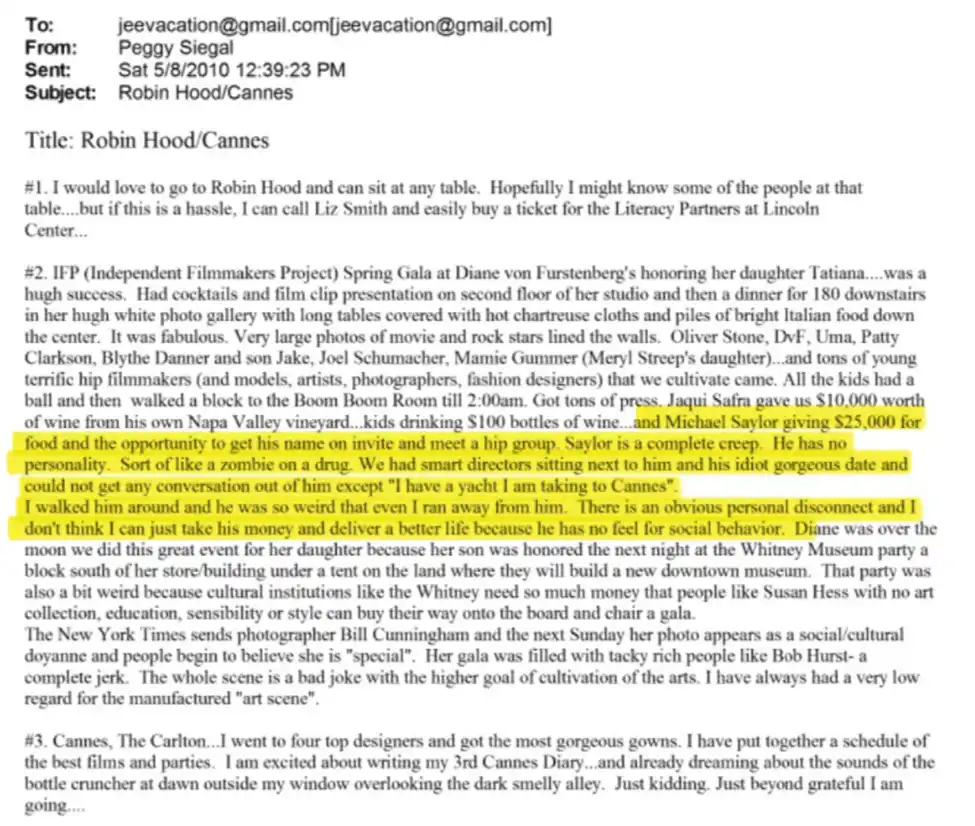
"This guy is a complete weirdo, totally lacking charm, like a zombie who has overdosed on drugs. We had smart directors at our party sitting next to him and his beautiful idiot girlfriend, and aside from him saying he had a yacht and was going to Cannes, there was no conversation at all. I took him around, but he was so strange that I had to run away. He has no personality and doesn't understand socializing; I don't even know how to get money from him."
Being called weird by a fellow weirdo shows just how strange Saylor really is. Perhaps only a great invention like Bitcoin could accommodate the eccentric Saylor and help him build a great career.
Conclusion
About half of the Epstein documents have yet to be disclosed. What other shocking revelations related to the cryptocurrency industry are hidden in the remaining documents?
Will time clear the fog?
免责声明:本文章仅代表作者个人观点,不代表本平台的立场和观点。本文章仅供信息分享,不构成对任何人的任何投资建议。用户与作者之间的任何争议,与本平台无关。如网页中刊载的文章或图片涉及侵权,请提供相关的权利证明和身份证明发送邮件到support@aicoin.com,本平台相关工作人员将会进行核查。


