Written by: Eric, Foresight News
On February 1, 2026, Beijing time, Bitcoin briefly fell below $76,000, breaking the cost line of Strategy for the first time in nearly two and a half years, and also marking the first time it has fallen below the $80,000 threshold since April 12, 2025, just a step away from the low of around $74,500 set on April 7, 2025.
According to CoinAnk data, the total liquidation amount of cryptocurrency contracts across the network in 24 hours reached nearly $2.2 billion, with over 335,000 investors being liquidated, setting a record for the highest single-day liquidation amount since "10·11." Among them, Ethereum saw liquidations of about $961 million, Bitcoin liquidations of $679 million, and SOL liquidations of $168 million.
Several high-profile whales were also not spared. "Brother Maji" Huang Licheng's position was completely liquidated on the evening of January 31; the address starting with 0x9ee, known as "CZ's counterpart," was liquidated for over $60 million, completely reversing profits and incurring losses of over $10 million; the so-called "insider big shot" who shorted after the flash crash on October 11 was also liquidated for over $200 million, going from a profit of $142 million to liquidation in just 56 days.
At the same time, as Ethereum briefly dropped to $2,240, Trend Research, under Yilihua, faced a maximum unrealized loss of nearly $1.2 billion on its holding of 651,300 Ethereum. Trend Research is currently collateralizing 175,800 WETH on Aave, borrowing about 274 million USDT, with a loan health ratio of 1.29 and a liquidation price of $1,558. Although the liquidation price is still some distance from the current price, if the market's downturn continues, $1,500 is not out of reach.
Recent fluctuations in the financial markets have been extremely severe. Based on closing prices, spot gold and silver fell by more than 10% and 26%, respectively, on the last trading day of the week, marking a significant decline not seen in decades. Microsoft's Azure growth rate fell by 1% quarter-over-quarter, leading to a market value evaporation of over $350 billion. These exaggerated figures indicate that capital has become highly concentrated in a few assets, and the tension is palpable; even a slight crack could trigger a stampede out of the market.
Geopolitical Risks Intensify, U.S. Government Faces Shutdown Again
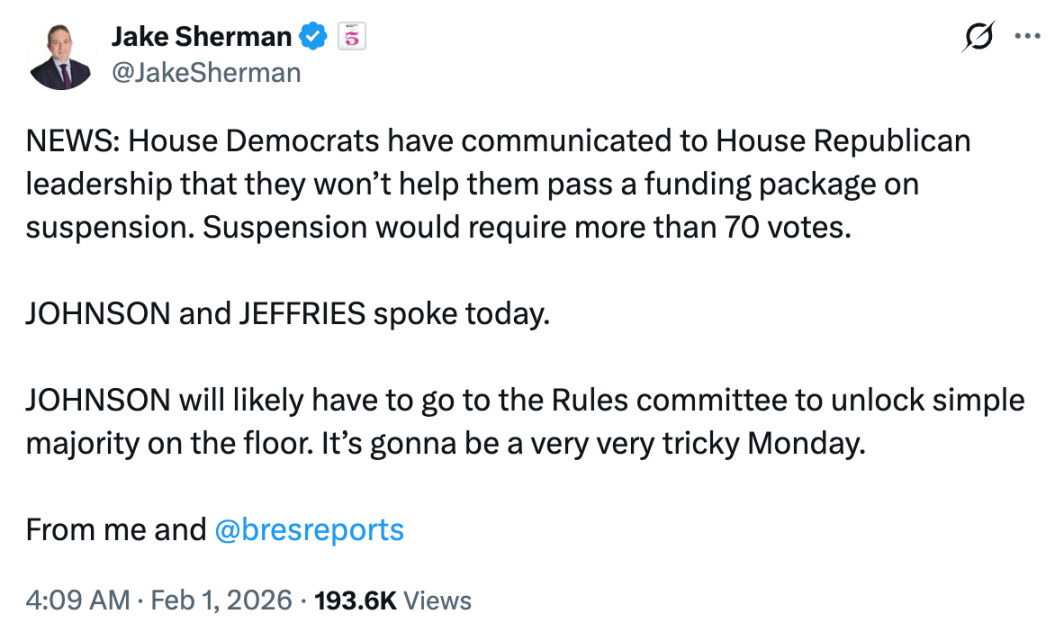
According to Xinhua News Agency, on the evening of January 31, Beijing time, an explosion occurred in a residential building in Iran's Bandar Abbas port. The instability of the critical oil hub in the Strait of Hormuz, which handles about 20% of the world's maritime oil, combined with escalating U.S.-Iran conflicts, has further heightened market concerns about the situation in the Middle East. The risk aversion to the international situation may only be a trigger; Punchbowl News founder tweeted around 4 a.m. today that House Democrats have informed House Republican leadership that they will not assist Republicans in passing funding proposals under the current funding pause. This suggests that what was originally thought to be a government shutdown lasting only a few days could evolve into a second prolonged shutdown within months.
Although the timing of this news came after the decline began, the panic triggered by various uncertainties, combined with thin weekend liquidity, was enough to cause continuous liquidations without large-scale sell-offs. Abraxas Capital's Heka fund transferred 2,038 Bitcoin to Kraken last night.
Regulatory Bills Deal a Blow to Confidence, Bitcoin's Status in Question
Since "10·11," the performance of the cryptocurrency market has gradually lagged behind that of stocks, precious metals, and commodities. In addition to a significant reduction in liquidity, the newly proposed regulatory framework that treats crypto assets with the same intensity as securities, which was originally highly anticipated, may also be one of the "culprits." The previous boom in cryptocurrencies largely benefited from a relaxed regulatory environment, and the development of stablecoins and RWA tokenization has begun to integrate into the mainstream, yet the survival of "crypto native" entities has unexpectedly faced suppression. The gap between ideals and reality has led to a backlash against previous excessive optimism.
On January 29, Beijing time, the U.S. Securities and Exchange Commission (SEC) released new regulatory guidelines, clarifying that tokenized stocks are subject to the same regulatory rules as ordinary stocks, effectively sentencing the expectation of "weak regulation" for tokenization to death.
In addition, the recent divergence in the performance of risk assets and safe-haven assets has raised questions about Bitcoin's own attributes. For a considerable period, Bitcoin has typically followed the trends of tech stocks or gold, but since October, Bitcoin has neither kept pace with the rising U.S. stocks and silver driven by AI nor followed gold's surge due to geopolitical risks. Clearly, whether one is optimistic about AI development or seeking safe havens, there are better assets than Bitcoin in the market.
The continuous net outflow of nearly $3 billion from spot ETFs over the past two weeks also corroborates this point. Last weekend, both U.S. stocks and gold and silver experienced significant declines, yet funds did not flow into the cryptocurrency market, indicating that market interest in cryptocurrencies has already waned.
2026 is an extreme test of the resilience of the crypto market. While we do not wish for the industry to be hit again, we believe most people will agree with one viewpoint: a major reshuffle is not a bad thing for the current crypto industry.
免责声明:本文章仅代表作者个人观点,不代表本平台的立场和观点。本文章仅供信息分享,不构成对任何人的任何投资建议。用户与作者之间的任何争议,与本平台无关。如网页中刊载的文章或图片涉及侵权,请提供相关的权利证明和身份证明发送邮件到support@aicoin.com,本平台相关工作人员将会进行核查。


