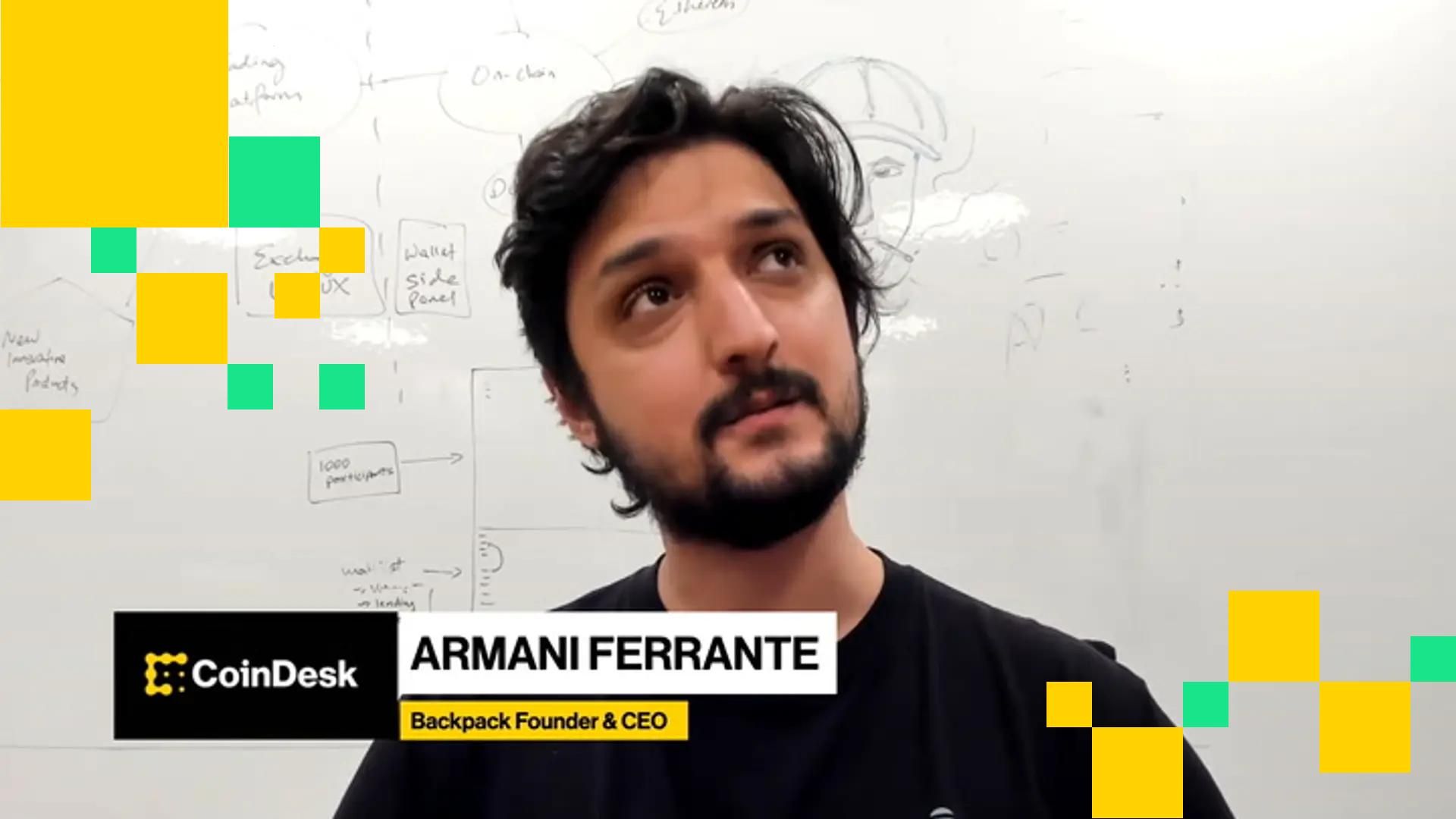
What to know : Solana’s latest phase looks a lot less flashy than its memecoin-fueled highs, and that may be the goal. Armani Ferrante, CEO of crypto exchange Backpack , told CoinDesk in an interview the Solana ecosystem has spent the past year doubling down on a more sober focus: financial infrastructure. A fter years of experimentation as the wider crypto industry focused on NFTs, games and social tokens, attention is now shifting back toward decentralized finance, trading and payments.
Solana’s latest phase looks a lot less flashy than its memecoin-fueled highs, and that may be the goal.
Armani Ferrante, CEO of crypto exchange Backpack, told CoinDesk in an interview the Solana ecosystem has spent the past year doubling down on a more sober focus: financial infrastructure. After years of experimentation as the wider crypto industry focused on NFTs, games and social tokens, attention is now shifting back toward decentralized finance, trading and payments.
“People are really starting to think about blockchains as a new kind of financial infrastructure,” Ferrante, who will be speaking at CoinDesk's Consensus Hong Kong conference next month, said. “It’s less about NFTs, less about random moonshot-like games, and much more about finance.”
That shift has made Solana feel dull to some outside observers, but Ferrante framed it as a sign of maturity. The network is increasingly positioning itself around high-throughput onchain trading, market structure and settlement, what some have dubbed as “internet capital markets.”
The pivot comes amid a stark divide between crypto sentiment and traditional finance. While crypto prices remain subdued and crypto-native investors remain cautious, Ferrante said institutional interest has rarely been stronger.
“If you ask anyone on Wall Street, they’ve never been more bullish,” he said, pointing to growing momentum around tokenization, stablecoins and onchain settlement.
Ferrante argued that the long-term case for Solana, and blockchains more broadly, rests on their role as neutral settlement layers. In that future, assets like stocks and derivatives move seamlessly across platforms as standardized tokens rather than sitting in siloed databases.
“A token is just a canonical, agreed-upon ledger entry for who owns something,” Ferrante said. “That concept applies everywhere.”
Crucially, Ferrante emphasized that real-world adoption will require deeper integration with regulatory frameworks, not an escape from them. As crypto moves from speculative experimentation toward embedded financial infrastructure, compliance and legal clarity become prerequisites rather than obstacles.
“What maturity actually means is the real world,” he said. “And the real world isn’t a free-for-all.”
In Ferrante’s view, Solana’s bet is that building for that reality, even at the cost of hype, will pay off as more of global finance moves on-chain.
Read more: Ethereum and Solana set the stage for 2026’s DeFi reboot
免责声明:本文章仅代表作者个人观点,不代表本平台的立场和观点。本文章仅供信息分享,不构成对任何人的任何投资建议。用户与作者之间的任何争议,与本平台无关。如网页中刊载的文章或图片涉及侵权,请提供相关的权利证明和身份证明发送邮件到support@aicoin.com,本平台相关工作人员将会进行核查。


