Author | Lin Wanwan @linwanwan823 Dongcha Beating
January 20, 2026 marks the one-year anniversary of Trump's official inauguration.
Rewind to a year ago, 72 hours before the inauguration ceremony, a crypto wallet codenamed 6QSc2Cx began to buy a new token in large quantities, priced at 18 cents each. This token had just been created a few hours earlier and had not received any public promotion.
A few hours later, Trump announced on social media that he had issued a cryptocurrency named after himself, $TRUMP.
After the news broke, the token's price skyrocketed from under $1 to $75 within 48 hours. The wallet that entered early cashed out at the peak, making a profit of $109 million.
The New York Times commissioned an on-chain analysis company to track this and found that there was more than one such "mysterious prophet."
On the same day, an American truck driver with the username Mike invested his daughter's college fund entirely into TRUMP tokens. He posted on overseas media: "The president won't let us lose money."
Three weeks later, he lost $47,000.
Six months later, the team that issued this token had cashed out over $1 billion in total.
Trump said six years ago: "Cryptocurrency is completely based on air." He was right. He just didn't say it completely: how much air can be sold depends on who is selling.
Appetizer
No one knows who they are on the other end of the wallet. No one knows how they knew in advance. But one thing is certain: when these people exited, another group was entering.
Data from Chainalysis shows that 810,000 wallets lost money on the TRUMP token, totaling over $2 billion. The average loss per person was $2,500.
Nearly half of these individuals were newcomers who created crypto wallets for the first time on the day of the token's issuance. They saw the news of the "president issuing a coin," downloaded the app, and transferred their savings.
Further analysis by Chainalysis revealed that the average holding time for these new wallets was 47 hours. They bought near the peak and sold after the price was halved. On-chain data reconstructed a typical path: download app → deposit → buy → bullish → increase position → crash → cut losses → uninstall app. The entire process took less than a week.
Someone posted on Reddit: "I used my daughter's college fund." The most upvoted reply was: "Bro, the president won't let you lose money."
The president indeed didn't let everyone lose money; after all, many people made life-changing money that day. It's just that the majority did not profit.
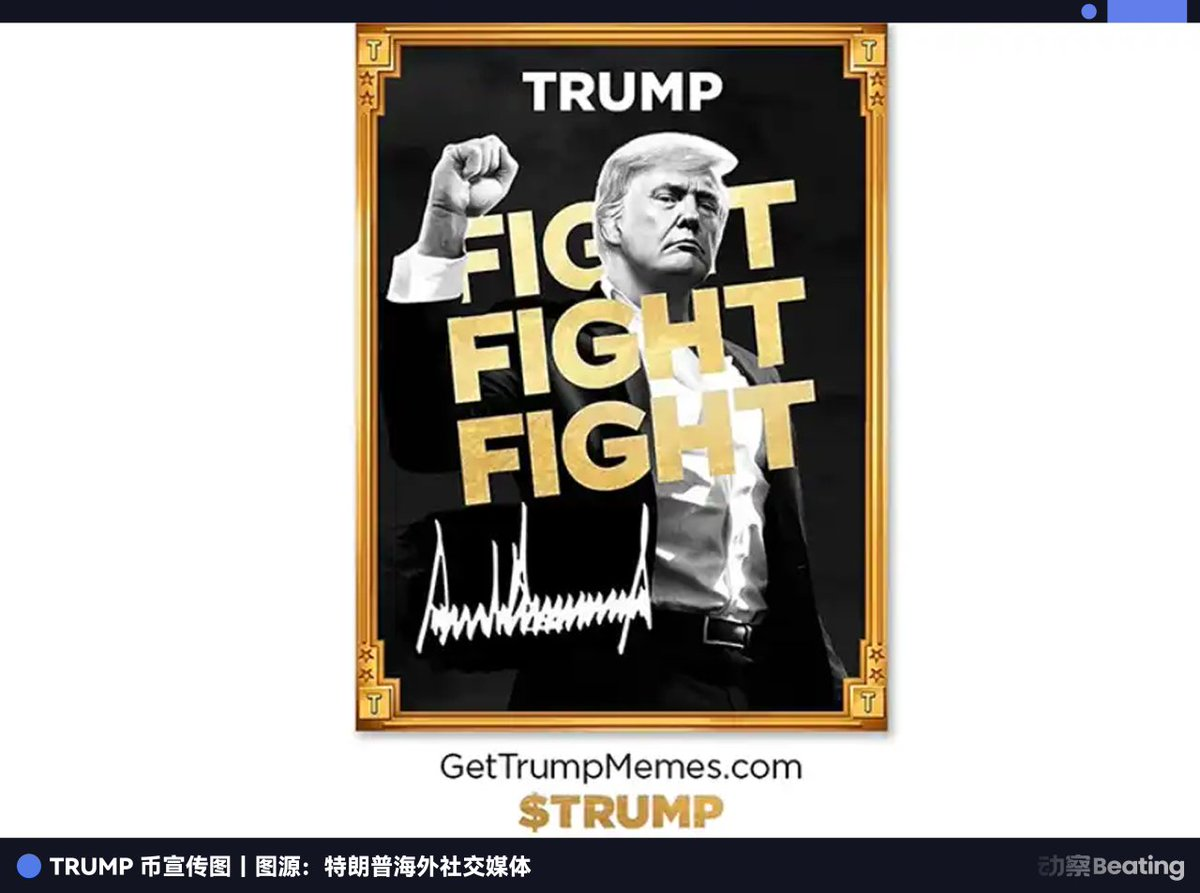
Someone tweeted a rocket emoji with the caption "TRUMP to the moon." Eleven days later, he tweeted again: "I'm done with this TRUMP garbage, sold everything."
When he sold, the token price was between $24 and $27. If he had held on for a few more months, he would have seen the price drop below $5, a decline of over 90% from the peak.
Meanwhile, the issuers of the $TRUMP token, two companies associated with the Trump family, earned over $320 million from transaction fees in the first year alone. This does not include the 800 million tokens they held, valued at tens of billions of dollars at the issuance price.
Interestingly, the purchase terms of the token included a line in small print: buyers agree to waive their right to participate in any class action lawsuits.
Another line stated: this token "is not an investment opportunity" and "is not related to any political activity or government position."
Translation: If you buy and lose, you can't sue me. The money I made has nothing to do with me being president.
Main Course
$TRUMP is just the appetizer.
The real main course is called World Liberty Financial. This is a "decentralized finance platform" co-founded by the Trump family and several partners in September 2024. The platform issued a governance token called WLFI and a stablecoin called USD1.
The equity structure is as follows: the Trump family holds 60%. Seventy-five percent of the net revenue from token sales belongs to the family. The reserve assets of the stablecoin USD1 are invested in U.S. Treasury bonds, generating about $80 million in interest annually, of which 75% also goes to the family.
In other words, this is not a project that Trump "supports" or "endorses." This is a project directly owned by the Trump family, from which they receive dividends. 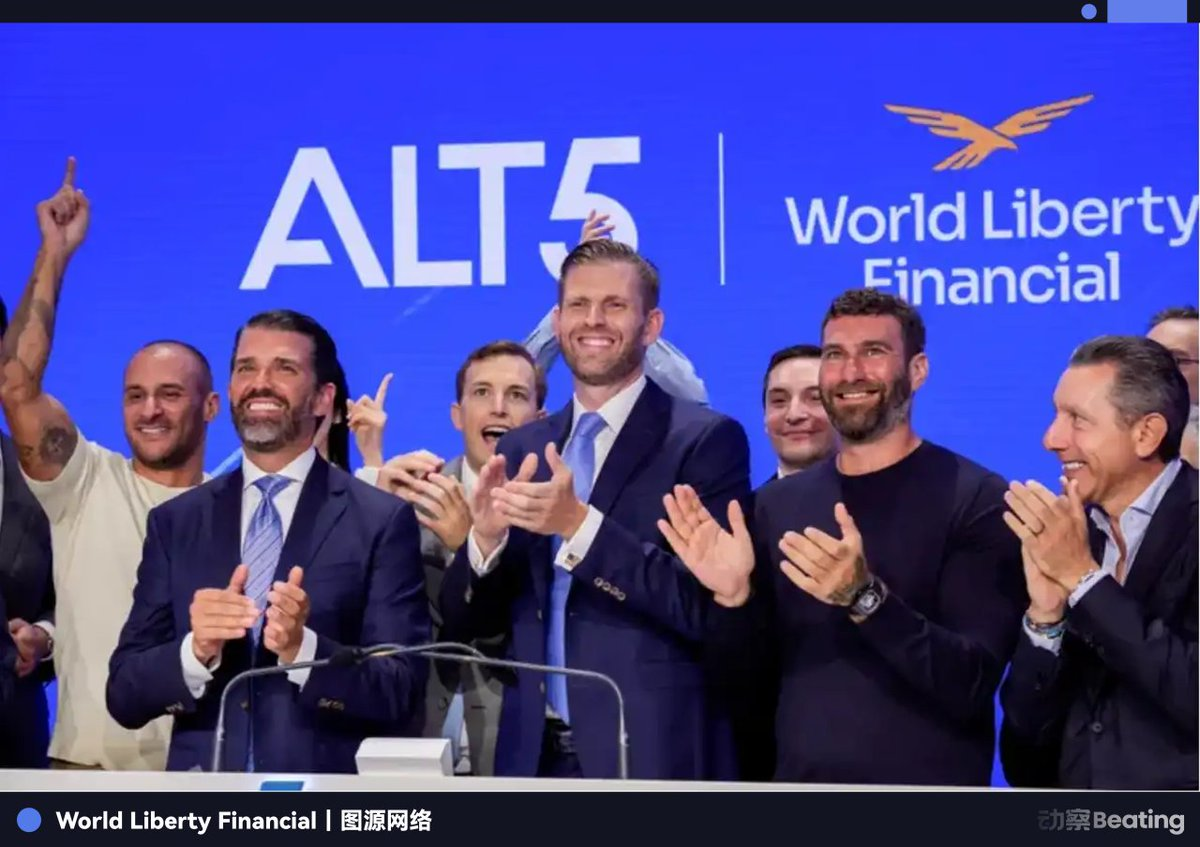
By the end of 2025, World Liberty had raised over $550 million. The list of investors reads like an Interpol watchlist:
MGX, a sovereign fund from Abu Dhabi, led by members of the UAE royal family. In May 2025, they invested $2 billion in USD1 stablecoin into Binance, meaning that UAE government funds flowed into the world's largest crypto exchange through a stablecoin issued by the Trump family.
Why would these people invest in a crypto project associated with an American presidential family?
Reuters interviewed several investors, and the answers were surprisingly consistent: "Access to the president."
There is an old joke on Wall Street: How much is a round of golf with the president worth?
The answer is: It depends on whether you are playing golf or paying legal fees.
World Liberty rewrote the answer to this joke. Now there is a clear price: WLFI tokens start at $250,000. "Platinum seats" are $1 million. "Founding partners" are $20 million.
What you are buying is not a token. You are buying a photo op, a dinner, a name to be remembered.
In political science, this is called "access capitalism." It used to be hidden in super PACs, charity dinners, and lobbying firm bills. Now it is written in smart contracts, traded 24/7, and accessible globally.
The democratization of corruption.
A financial commentator put it more directly: "Eric Trump is selling $20 million token packages in Dubai while his father is formulating U.S. crypto policy. You call that a business model? I call that a pay-to-play scheme."
Clearing the Field
But this pay-to-play scheme has one prerequisite: no one can come to investigate.
So the first thing Trump did after taking office was to clear out anyone who might investigate him. The speed and efficiency were nothing short of artful.
First, there was a personnel purge.
On inauguration day, SEC Chairman Gary Gensler resigned. This "crypto hunter" had sued almost all major exchanges during his tenure. His successor, Paul Atkins, had previously served as an advisor to the crypto industry association.
The newly formed SEC "Crypto Special Task Force" was led by Hester Peirce, nicknamed "Crypto Mom" in the industry, who had opposed regulation for years.
Next came the case dismissals.
Cases from the Gensler era were withdrawn one after another. The Coinbase case was dismissed. The Ripple case was dismissed. The Kraken case was dismissed. The OpenSea investigation was terminated. The Uniswap investigation was terminated. The Robinhood investigation was terminated.
The New York Times reported that the SEC's case dismissal rate for crypto cases was 33%, while for other cases it was 4%. This disparity had never occurred in SEC history.
Finally, there was the dissolution of institutions.
On April 7, 2025, Deputy Attorney General Todd Blanche signed a memorandum announcing the immediate dissolution of the "National Cryptocurrency Enforcement Team." This team was established in 2021 to investigate crypto money laundering, hacking, and fraud.
Blanche wrote in the memorandum: "The Department of Justice is not a digital asset regulatory agency."
What he didn't write was that at the time of signing this memorandum, he personally held over $150,000 in crypto assets. Blanche was later asked about this during his testimony in Congress. He said: "My crypto holdings are 'compliance disclosures.'"
He was right. Once disclosed, it was compliant. Once compliant, it was no longer a conflict of interest.
This is the brilliance of this play: it doesn't need to hide conflicts of interest; it just needs to turn conflicts of interest into a form.
Within three months, personnel changed, cases were dismissed, and the investigating agencies were all dissolved.
The referee doesn't play on the field; the referee directly dismantles the field.
The Price List of Pardons
This business still lacks one final component: credibility.
To attract global funds, Trump's crypto empire needs to restore the dignity of those "with a record." They have money, resources, and connections, but their identities are "convicted criminals" or "defendants under indictment."
What to do?
Pardons.
On January 21, 2025, the day after Trump took office, he signed the first crypto-related pardon. The person pardoned was Ross Ulbricht, the founder of the Silk Road dark web marketplace, originally sentenced to two life terms plus 40 years for operating a platform that facilitated $1 billion in drug transactions. Court records show that at least six people died from purchasing drugs on that platform.
Trump wrote on Truth Social: "Those who prosecuted him are scum."
After Ulbricht was released, he appeared on stage at the 2025 Bitcoin conference, addressing the cheering crowd: "A few months ago, I was in prison; now I am free, thank you all, thank you, Trump."
In March, the four founders of BitMEX were pardoned; they had pleaded guilty to violating anti-money laundering laws and were referred to by prosecutors as operators of a "money laundering platform." In October, Binance founder Changpeng Zhao was pardoned; he had pleaded guilty and served time in 2023 for allowing the platform to be used for money laundering.
Three pardons, totaling six individuals, spanning dark web drugs, money laundering, and regulatory violations. All cleared within ten months.
But what is more noteworthy are those who were not pardoned.
Sam Bankman-Fried, founder of FTX, was sentenced to 25 years in 2024 for fraud, resulting in an $8 billion loss for customers. He donated $5.2 million to Biden's campaign in 2020.
No pardon.
Do Kwon, founder of Terra/Luna, was sentenced to 15 years in December 2025; the algorithmic stablecoin he designed collapsed, causing investors to lose $40 billion.
No pardon.
In terms of severity of crimes, the losses caused by SBF and Do Kwon far exceed those of the pardoned individuals. Legally, the FTX case is a clear case of customer fund fraud.
What is the difference?
The pardoned individuals: either invested money in Trump's projects, or their companies had business dealings with Trump, or they had significant influence in the crypto community that could help promote.
The non-pardoned individuals: donated to the Democratic Party or had no business relationship with Trump.
This is a price list for pardons.
It is not written on paper; it is written in judgments, pardons, and on the walls of the cells of those still serving time.
The true function of a pardon is not to exempt punishment. The punishment has already ended. Ross Ulbricht served 11 years, Zhao spent 4 months, and the BitMEX founders paid a $100 million fine.
The function of a pardon is to send signals.
Signal One: I will protect those who cooperate with me. Signal Two: For those who do not cooperate with me, look at Sam Bankman-Fried. Signal Three: The rules are set by me, and I can change them.
You follow the organization, and the organization protects you.
Trump wrote this into the Federal Register.
The Assembly Line of Corruption
Is this corruption?
Of course not; corruption is sneaky, it needs to be hidden, and it can be investigated.
This is a well-designed system. Every component is legal, every transaction is recorded on the blockchain, and every disclosure is written in government documents. It does not need to hide. It is designed not to need to hide.
Traditional corruption is a workshop. You have to find intermediaries, launder money, worry about being recorded, and fear witnesses turning against you. Every transaction is a risk.
This play is an assembly line. Token contracts automatically distribute profits, the blockchain automatically records, and disclosure forms are automatically compliant. There are no intermediaries, no cash, no witnesses. Only code.
Code does not turn against you. Code does not lie. Code only operates as designed.
And the person who designed it is also the one who sets the rules.
Genius
Trump's genius does not lie in corruption. Anyone can be corrupt.
His genius lies in designing corruption as a product.
Bribery becomes "investment." Receiving bribes becomes "dividends." Pardons become "judicial reform." Regulatory rollbacks become "support for innovation."
Everything is written in the terms, recorded on the blockchain, legal and compliant, open and transparent.
In 2019, Trump said cryptocurrency is "completely based on air."
He was right.
He just omitted the second half of the sentence: air can also be sold, as long as the seller can decide what is legal.
This system is still in operation. Tokens are still being traded, stablecoins are still accruing interest, and money from around the world is still flowing into those few wallet addresses printed with Trump's name.
And those 810,000 retail investors who lost money, those newcomers who rushed in upon seeing "the president issuing a coin," those who thought buying TRUMP tokens was patriotic.
They are not investors. They are fuel.
Casinos do not thank gamblers. Casinos only drain them dry.
Some may ask: Is this legal? The question itself is already outdated.
In this game, "legal" is not a description but a product feature. Just as the iPhone has a waterproof feature, this system has a "legal" feature.
It is designed to be legal, just as it is designed to make money.
The real question is not "Is this legal?"
The real question is: When the person defining legality and the person profiting from it are the same person, what does the word "legal" even mean?
In 2019, Trump said cryptocurrency is based on air. In 2025, he proved himself: air can be priced, traded, and can make a president a billionaire.
The only prerequisite is that you must be the one who can decide what "air" is.
免责声明:本文章仅代表作者个人观点,不代表本平台的立场和观点。本文章仅供信息分享,不构成对任何人的任何投资建议。用户与作者之间的任何争议,与本平台无关。如网页中刊载的文章或图片涉及侵权,请提供相关的权利证明和身份证明发送邮件到support@aicoin.com,本平台相关工作人员将会进行核查。


