At present, three camps have taken shape: those who anticipate a sizable liquidity injection that could lift the U.S. economy and support a prolonged period of expansion. Others hold a bearish view, pointing to structural weaknesses that may overpower even aggressive liquidity efforts, recalling 2008, when capital infusions steadied banks but failed to revive broader consumption, setting the stage for the Great Recession. Then there are those who simply have no idea and are content to watch from the sidelines, popcorn in hand.
The economic expansion camp points to ongoing fiscal and monetary stimulus momentum, reinforced by proactive policy signals under Trump 2.0. The U.S. Federal Reserve has already trimmed rates several times, and Trump has hinted that replacing Fed Chair Jerome Powell with a more dovish successor could pave the way for “ultra-dovish” rate cuts and a hefty infusion of liquidity into the economy. Some argue that this liquidity is being timed to help Republicans lock in midterm victories and mend approval ratings.
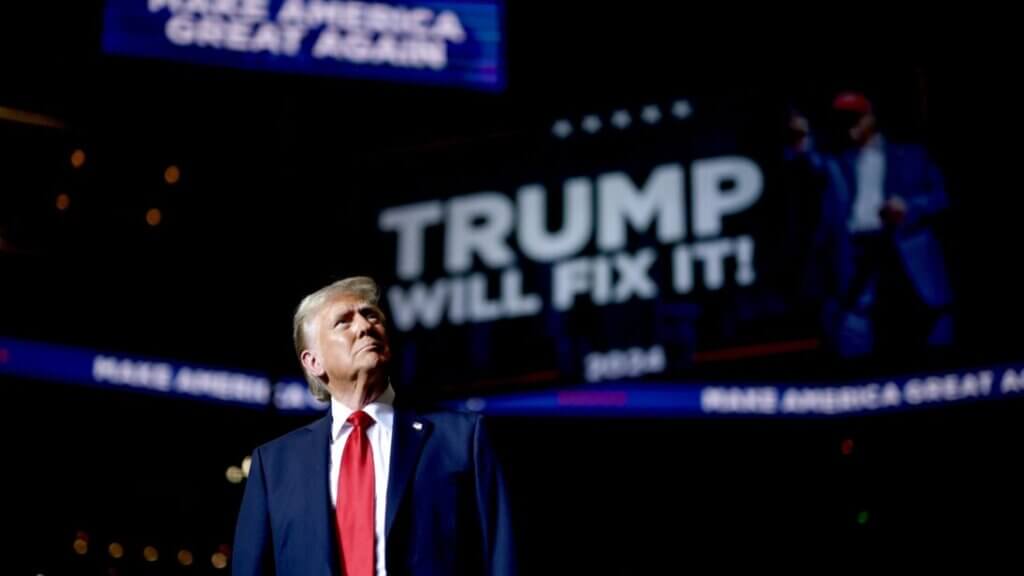
Many draw historical comparisons to earlier Trump-era policies, often invoking Reagan’s 1980s deregulation, arguing that similar shifts can extend economic growth if liquidity arrives at the right moment. In a recent episode of Token Narratives, Bitcoin.com’s Graham Stone and David Sencil explored this theme, with the conversation ranging across Venezuela, oil markets, and direct liquidity actions, including when Trump directed Fannie Mae and Freddie Mac to jointly buy up to $200 billion in mortgage-backed securities (MBS) from public markets to lower mortgage rates and improve housing affordability.
“I mean, look at the news that came out yesterday or while I was sleeping,” Sencil remarked to Stone. “Trump just went out and posted something like, ‘I’m telling Freddie Mac to buy MBS.’ That’s like straight-up 2020, 2008-style QE, righ—just max liquidity. That’s QE. That’s QE infinity. So if that kind of thing does happen, and that’s being articulated in January, what happens when he gets control of the Fed when Powell steps down?”
He added:
“If that kind of liquidity comes into the market like that, that’s got to be good for risk assets like crypto.”
Then there’s the bear camp. This group contends that while the flow of liquidity injections may be unstoppable, it cannot prevent an eventual downturn. Marc Faber, editor of the Gloom Boom & Doom Report, expects “doom” in 2026, urging investors to exit U.S. equities as uneven asset price inflation persists and the Federal Reserve loses its grip on bond markets, arguing that the era of “exceptional years” of gains has ended, with inflationary pressure and wider economic strain on the horizon.
Many bears argue that mounting consumer strain and rising debt levels will outweigh liquidity effects, while inflated asset prices—particularly across tech and AI—appear increasingly frothy. They also flag political and global spillover risks, noting that sliding approval ratings for Trump and the 2026 midterms could prompt an early “Trump put.” In short, these analysts contend that the era of quantitative easing has largely passed, and even if interventions return, they may arrive too late to change the outcome.
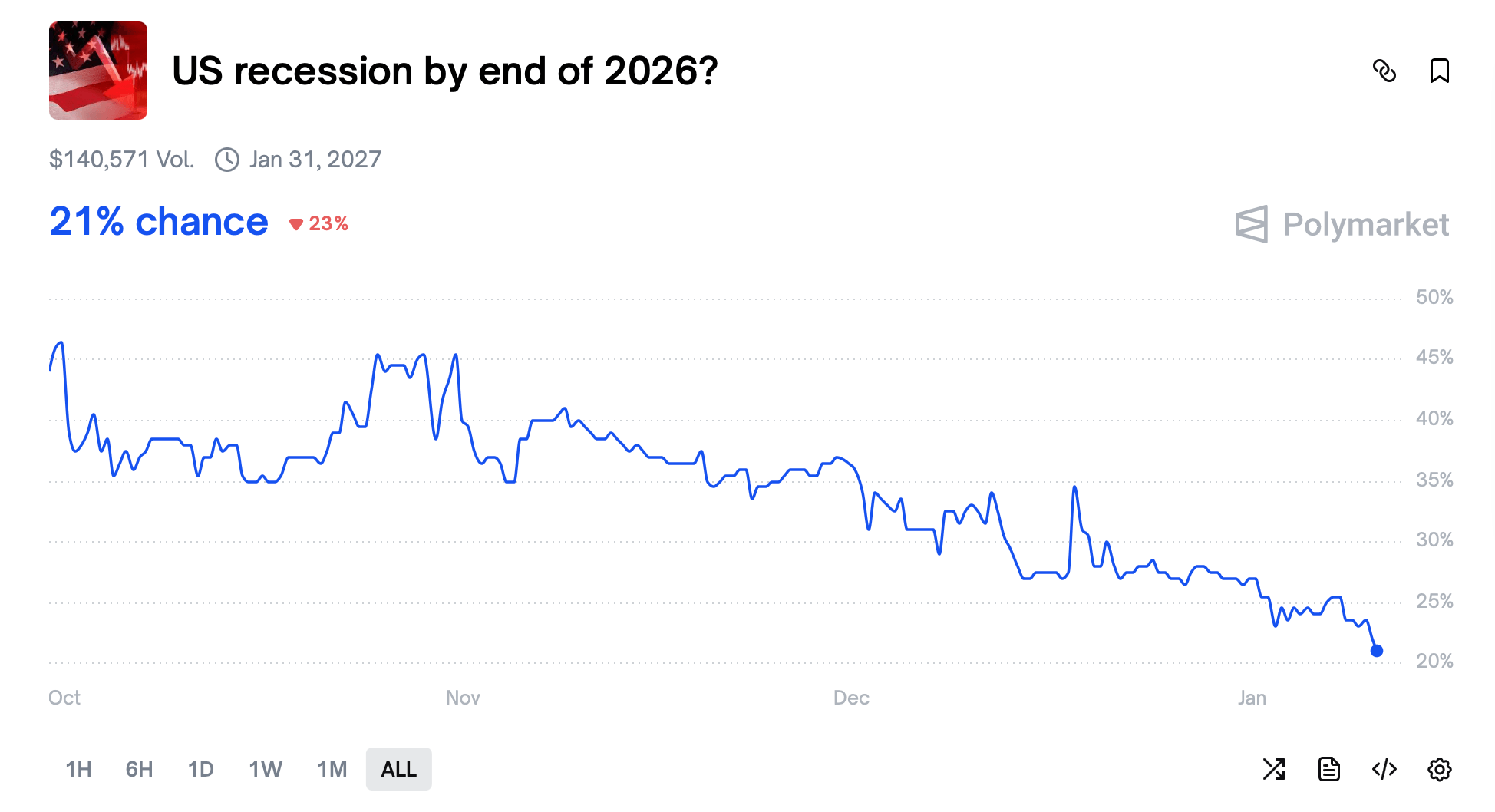
Many are now assigning meaningful odds to a U.S., and even global, recession in 2026. JPMorgan Global Research pegs the probability of a U.S./global downturn that year at 35%, citing persistent inflation and decelerating growth as the primary headwinds. On prediction markets, the odds appear lower, with Polymarket bettors pricing in a 21% chance, as of Jan. 10, 2026, of a U.S. recession by year’s end. That wager has drawn roughly $140,571 in volume.
Also read: XRP Stalls Despite Bullish Developments and Ripple’s Institutional Momentum
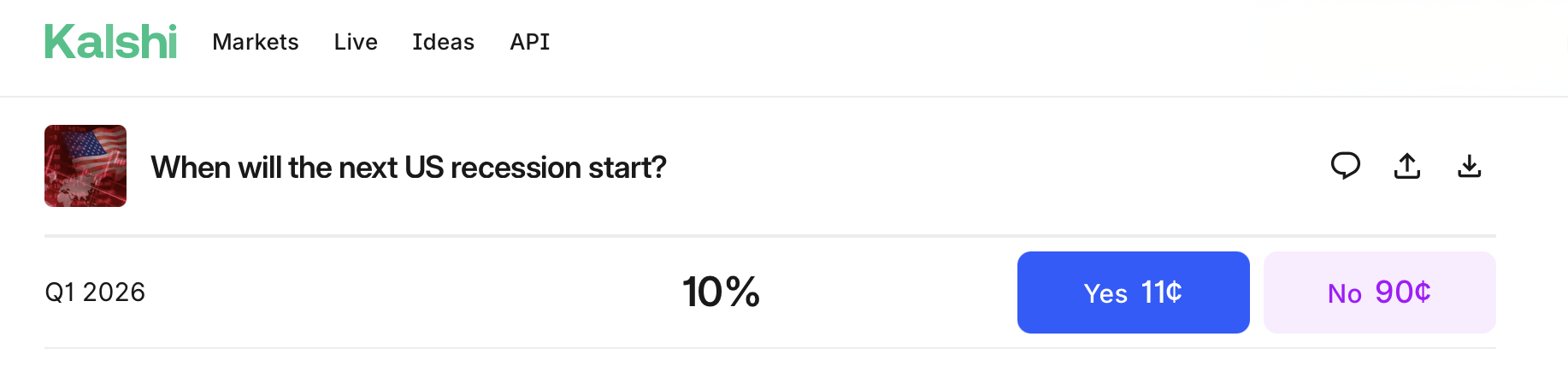
A separate Kalshi contract places the odds of a recession beginning in the first quarter at 10%. It is fair to say that whether 2026 delivers a liquidity-fueled continuation of growth or a sharp turn lower remains an open question. Policy cues, market pricing, and historical comparisons are pointing in different directions, leaving investors to balance stimulus rhetoric against debt burdens, inflation pressure, and political timing.
For now, markets appear guardedly optimistic, pricing in risk without fully committing to either outcome. That push and pull is likely to shape the year ahead. If liquidity arrives early and with conviction, risk assets could respond favorably, lending weight to the expansion narrative. If it arrives late—or falls short—the bear case could take hold, with recession probabilities quickly marked higher. Until clearer signals emerge, the sidelines may end up being the most crowded trade of all.
- What are the recession odds for the U.S. in 2026? Prediction markets price the chance between 11% and 21%, while JPMorgan and others assign higher probabilities.
- Why do some investors expect liquidity to support growth in 2026? Supporters point to rate cuts, potential policy shifts, and renewed stimulus efforts aimed at extending economic expansion.
- What is driving the bear case for a 2026 recession? Bears cite rising debt, consumer strain, elevated tech and AI valuations, and political uncertainty as key risks.
- How are markets positioned heading into 2026? Markets appear cautiously optimistic, pricing in risk without fully committing to either a growth or recession outcome.
免责声明:本文章仅代表作者个人观点,不代表本平台的立场和观点。本文章仅供信息分享,不构成对任何人的任何投资建议。用户与作者之间的任何争议,与本平台无关。如网页中刊载的文章或图片涉及侵权,请提供相关的权利证明和身份证明发送邮件到support@aicoin.com,本平台相关工作人员将会进行核查。


